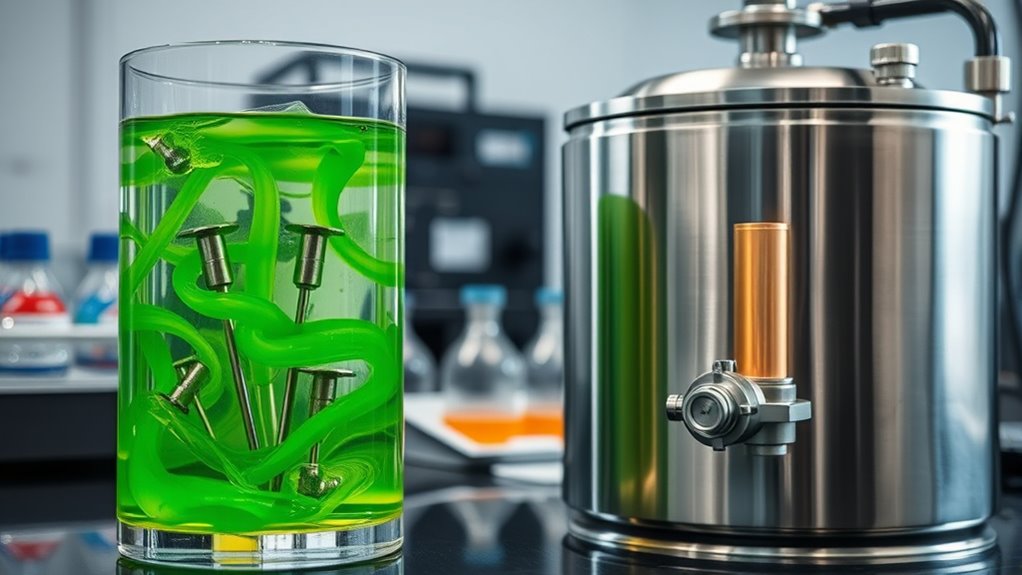

Hydrothermal and bioleaching are eco-friendly battery recycling techniques that use environmentally safe processes to recover valuable metals like lithium, cobalt, and nickel from spent batteries. Hydrothermal methods rely on high-pressure, high-temperature water to dissolve metals, while bioleaching employs microorganisms to break down battery materials organically. Both techniques reduce toxic waste and energy consumption compared to traditional methods. Continue exploring to discover how these innovative approaches are shaping sustainable battery recycling.
Key Takeaways
- Hydrothermal recycling uses high-temperature aqueous solutions to extract metals from batteries efficiently.
- Bioleaching employs microorganisms to bioaccumulate or solubilize metals for environmentally friendly recovery.
- Both techniques offer sustainable alternatives to traditional methods by reducing energy consumption and emissions.
- Hydrothermal processes are effective for recovering lithium and cobalt from battery waste.
- Bioleaching is suitable for processing complex or contaminated batteries with minimal chemical use.
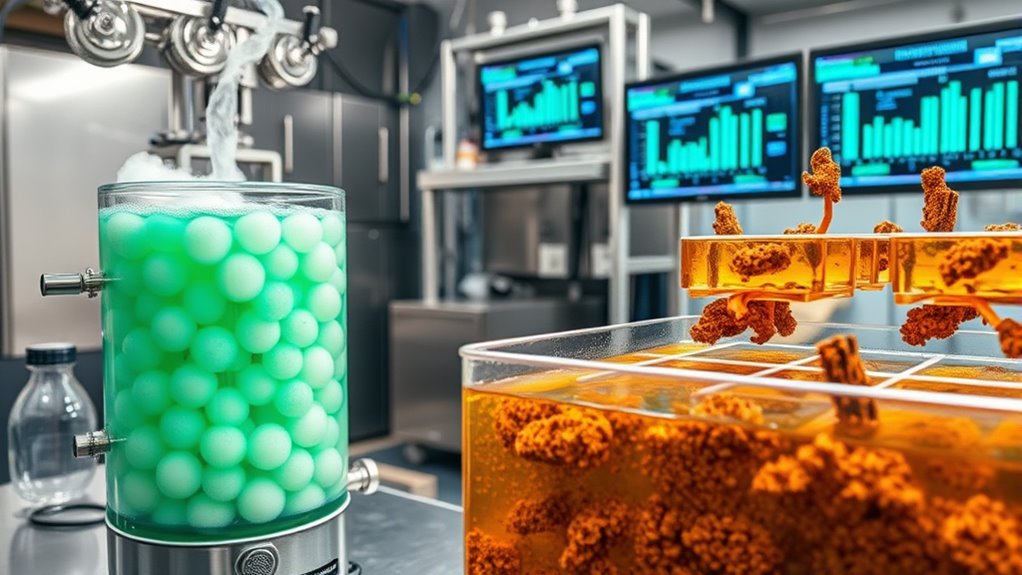
Battery recycling techniques play a crucial role in reducing environmental impact and conserving valuable resources. When you consider recycling batteries, you’re helping to prevent hazardous materials from polluting ecosystems and reducing the need to mine new raw materials. Two main approaches in battery recycling are electrochemical methods and thermal processing, each offering unique advantages for extracting useful components.
Electrochemical methods involve applying electrical currents to break down battery components and recover valuable metals like lithium, cobalt, and nickel. These techniques are efficient because they operate at relatively low temperatures and can precisely target specific materials. For instance, you might use processes such as hydrometallurgy, where you leach metals out with acids or other solutions, and then electroplate them back onto electrodes for reuse. These methods are beneficial because they often consume less energy than traditional thermal processes and produce fewer emissions. As you immerse yourself in electrochemical recycling, you’ll notice that it’s well-suited for high-purity recovery, making it ideal for reusing critical materials in new batteries or other electronic devices. Understanding these techniques can help you appreciate the importance of sustainable resource management in modern electronics.
Electrochemical methods efficiently recover high-purity metals with low energy and emissions.
On the other hand, thermal processing involves heating batteries to high temperatures to decompose their components and recover materials. This method, often called pyrometallurgy, requires significant energy input but can process large quantities of batteries quickly. During thermal processing, plastics and other non-metallic parts burn off or melt away, leaving behind a metal-rich slag that can be further refined. While thermal techniques might produce more emissions compared to electrochemical methods, they’re effective in handling mixed or contaminated battery waste, making them useful in large-scale recycling facilities.
Both techniques are essential in the broader scope of battery recycling. Electrochemical methods tend to be more environmentally friendly and precise, while thermal processing offers scalability and efficiency for bulk operations. As you explore these methods, you’ll see that choosing the right one depends on factors like the type of batteries, recovery goals, and available infrastructure. Advances in these areas are continually improving the sustainability of battery recycling, helping reduce the reliance on virgin raw materials and lowering the overall environmental footprint. By understanding and supporting these techniques, you contribute to a more sustainable future, where valuable resources are reused efficiently and environmental harm is minimized.
As an affiliate, we earn on qualifying purchases.
Frequently Asked Questions
What Are the Environmental Impacts of Hydrothermal Recycling?
Hydrothermal recycling can pose environmental risks and ecological effects that you should consider. It may generate hazardous waste or emissions if not managed properly, impacting local ecosystems. The high-pressure, high-temperature processes could lead to water contamination or soil pollution if leaks occur. While effective, you need to guarantee strict controls and proper disposal methods to minimize ecological effects and reduce negative environmental impacts associated with this recycling technique.
How Cost-Effective Is Bioleaching Compared to Traditional Methods?
Bioleaching is generally more cost-effective than traditional methods due to lower energy requirements and reduced chemical use, making it economically viable. However, you should consider implementation challenges like slower processing times and the need for specialized microbial cultures. While initial investments might be higher, the long-term savings and environmental benefits can make bioleaching a practical choice for sustainable recycling.
Can These Techniques Recover All Valuable Battery Materials?
You might think these techniques recover all valuable materials, but they don’t. For example, bioleaching efficiently extracts copper and cobalt, achieving high recovery efficiency, yet struggles with material purity when dealing with complex battery mixtures. Hydrothermal methods can improve purity, but some rare earth metals remain challenging. So, while both methods recover many materials, they don’t fully recover everything, especially when high purity is essential.
What Safety Measures Are Necessary During Hydrothermal Processing?
You should always wear protective gear, like gloves, goggles, and a lab coat, to prevent exposure to hazardous materials during hydrothermal processing. Confirm emergency protocols are in place, including readily accessible safety showers and fire extinguishers. Proper training on handling high-pressure equipment is essential. Regularly inspect equipment for leaks or damage, and never bypass safety features, so you minimize risks and maintain a safe working environment.
How Scalable Are These Recycling Methods for Industrial Use?
Sure, because scaling up these methods is as simple as flipping a switch, right? In reality, scalability challenges hinder widespread industrial implementation. You’ll face hurdles like high costs, technical complexities, and limited infrastructure. While promising, hydrothermal and bioleaching techniques still need significant development before they can handle mass battery recycling efficiently. Until then, expect a few more teething problems before these methods become mainstream solutions.
lithium battery recycling machine
As an affiliate, we earn on qualifying purchases.
As an affiliate, we earn on qualifying purchases.
Conclusion
So, now you see how hydrothermal and bioleaching methods revolutionize battery recycling, making it more sustainable and efficient. With these techniques, you can help save the planet, one lithium-ion at a time—no need to be a wizard from the Renaissance! Embracing these innovative methods guarantees your future is powered by eco-friendly choices. Remember, even in this high-tech age, old-school care for the Earth is still the best strategy.
battery metal recovery equipment
As an affiliate, we earn on qualifying purchases.
As an affiliate, we earn on qualifying purchases.
eco-friendly battery recycling tools
As an affiliate, we earn on qualifying purchases.
As an affiliate, we earn on qualifying purchases.