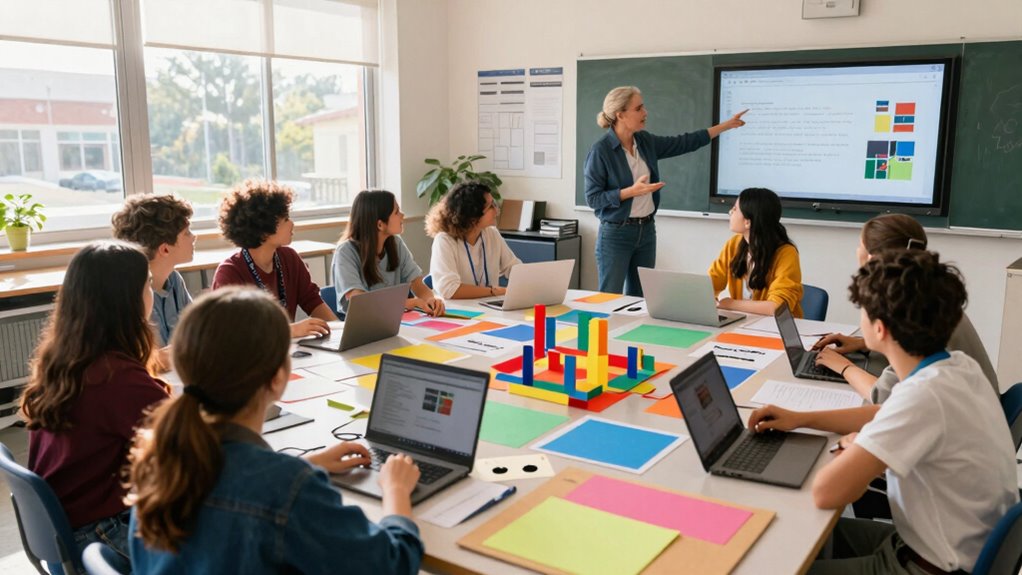

Project-Based Learning still gains momentum because it makes education hands-on and relevant by involving you in real-world problem solving. It actively keeps students engaged, promotes critical thinking, teamwork, and communication, and connects multiple subjects through interdisciplinary projects. Plus, its focus on ecological and environmental issues inspires responsibility and sustainable actions. Research shows that PBL enhances understanding and prepares you for future challenges. If you continue exploring, you’ll discover why this approach remains a powerful educational tool today.

Get audio and creator gear delivered free — and shop member deals
- Fast, free delivery on millions of items
- Access to Prime Big Deal Days deals on October 6–7
- Prime Video, Amazon Music and more included
Key Takeaways
- PBL actively engages students through hands-on, real-world problem solving, making learning more memorable and relevant.
- Its interdisciplinary approach reflects real-life scenarios, deepening understanding across multiple subjects.
- PBL emphasizes critical thinking, collaboration, and communication skills essential for future workplaces.
- Growing research supports PBL’s effectiveness in enhancing ecological literacy and fostering environmental responsibility.
- The adaptable, inclusive nature of PBL aligns with diverse learning styles and promotes responsible citizenship.
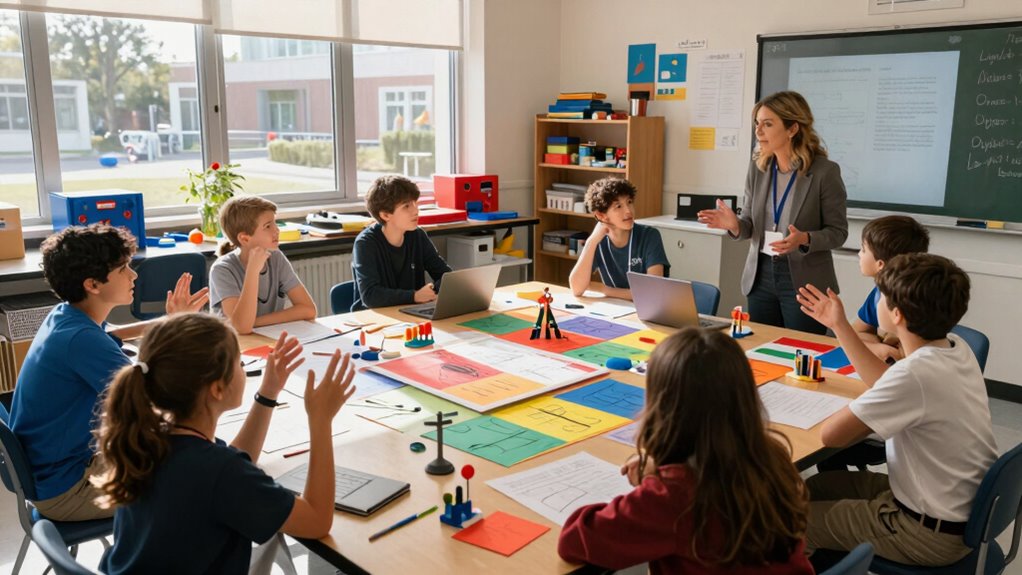
Project-Based Learning (PBL) is gaining significant momentum as an innovative approach to education. You’re likely familiar with how it shifts the focus from traditional memorization to hands-on, real-world problem solving. This method keeps students actively involved, boosting student engagement in ways that conventional teaching often can’t match. When students work on meaningful projects, they see the relevance of what they’re learning, which naturally sparks curiosity and motivation. The active participation required in PBL turns learners into creators rather than passive recipients, making lessons more memorable and impactful.
PBL engages students through real-world projects, making learning relevant, memorable, and actively participatory.
One of the reasons PBL continues to thrive is its seamless integration into the curriculum. You can incorporate subjects like math, science, language arts, and social studies within a single project, fostering a more interdisciplinary approach. This curriculum integration means students don’t just learn facts in isolation; they apply knowledge across multiple domains, mirroring real-world scenarios. For example, a project on designing a sustainable community can involve math calculations, environmental science, social studies, and communication skills, providing an essential learning experience. This interconnectedness helps students see how different subjects relate, deepening their understanding and retention. Additionally, PBL encourages biodiversity awareness, highlighting how ecological diversity plays a vital role in sustainable living, which can be incorporated into many projects to enhance ecological literacy. Incorporating ecological concepts into projects can also help students develop a sense of environmental responsibility, which is increasingly important in today’s world. Engaging students in such projects can also help develop a holistic understanding of complex systems, emphasizing the importance of ecological balance. A growing body of research supports the idea that ecological literacy improves critical thinking about environmental issues and fosters responsible citizenship. Moreover, understanding the real-world implications of ecological diversity can inspire students to pursue sustainable practices in their personal and community lives.
Furthermore, PBL aligns well with current educational goals that emphasize critical thinking, collaboration, and communication. You encourage these skills naturally as students work together to brainstorm ideas, solve problems, and present their findings. This collaborative environment not only enhances student engagement but also prepares them for future workplaces that value teamwork and adaptability. The flexibility of PBL allows you to tailor projects to diverse student interests and learning styles, making lessons more inclusive and engaging for everyone involved.
project-based learning kits for students
As an affiliate, we earn on qualifying purchases.
As an affiliate, we earn on qualifying purchases.
Frequently Asked Questions
How Does Project-Based Learning Compare to Traditional Teaching Methods?
You find that project-based learning promotes higher student engagement compared to traditional methods, as it involves hands-on, real-world tasks. It allows for greater curriculum flexibility, letting you tailor projects to students’ interests and needs. Unlike traditional teaching, which often emphasizes rote memorization, PBL encourages critical thinking and collaboration. This active approach keeps students motivated and helps them develop practical skills, making learning more meaningful and effective.
What Challenges Do Teachers Face When Implementing Project-Based Learning?
You face challenges like maintaining student motivation and managing the classroom effectively. Keeping students engaged in projects requires creativity and ongoing encouragement, especially when they lose interest. Classroom management can be tricky, as projects demand collaboration and independence, which might lead to disruptions. You need to balance guiding students while allowing autonomy, ensuring a productive environment where motivation stays high and chaos stays low.
How Do Assessments Work in Project-Based Learning Environments?
Assessments in project-based learning act like a compass guiding your students. You use formative assessments throughout the project, checking understanding and providing feedback. Student reflection becomes your secret weapon, helping learners analyze their progress and deepen their knowledge. This ongoing process guarantees you’re not just grading at the end but continuously nurturing growth, making learning more meaningful and aligned with real-world skills.
What Resources Are Needed to Effectively Adopt Project-Based Learning?
To effectively adopt project-based learning, you need resources like hands-on activities and digital tools. Hands-on activities engage students actively, making learning meaningful. Digital tools facilitate collaboration, research, and presentation, enhancing the project experience. You should also invest in adaptable space and access to technology, along with training for educators. These resources empower students to explore, create, and problem-solve, fostering deeper understanding and skills essential for real-world success.
How Can Project-Based Learning Be Adapted for Different Age Groups?
Think of adapting project-based learning like customizing a suit—tailored to fit each age group perfectly. You’ll need age-appropriate strategies and engagement techniques that resonate with their developmental stage. For younger students, make projects playful and hands-on, like a colorful mosaic. For older students, introduce real-world challenges that spark their curiosity. By adjusting these elements, you guarantee each age group stays engaged and learns effectively, like a symphony in harmony.
interdisciplinary science and math project kits
As an affiliate, we earn on qualifying purchases.
As an affiliate, we earn on qualifying purchases.
Conclusion
You can’t ignore the unstoppable wave of Project-Based Learning sweeping through education — it’s like a wildfire igniting passion, creativity, and real-world skills in every student it touches. This approach isn’t just a trend; it’s a revolution that’s transforming classrooms into vibrant hubs of innovation. If you want to prepare students for a future that’s constantly changing, hop on this train now — because missing out would be like trying to catch sunlight with a butterfly net!
eco-friendly classroom project supplies
As an affiliate, we earn on qualifying purchases.
As an affiliate, we earn on qualifying purchases.
collaborative learning tools for students
As an affiliate, we earn on qualifying purchases.
As an affiliate, we earn on qualifying purchases.
Halloween Picks
halloween
As an affiliate, we earn on qualifying purchases.