
For music production, the Yamaha HS5 pair stands out as the best overall pick thanks to its famously honest midrange and reliable translation — if your mix sounds good on HS5s, it tends to sound good everywhere. Two other standouts: the Yamaha HS8 for producers with treated rooms who need deeper low-end reach, and the PreSonus Eris 3.5 for anyone building a first home studio on a tight budget. The main tradeoff in this category is between accuracy and convenience: larger drivers reveal more bass but demand more space and acoustic treatment, while compact monitors are forgiving of small rooms but can hide low-end problems. Price doesn’t map cleanly to quality here — several budget options outperform pricier rivals for mixing duties. Keep reading for the full breakdown of all 13 models.
Complete the kit


Key Takeaways
- The Yamaha HS5 appears in four different bundles/configurations in this lineup, and it earns the top spot because its brutally honest midrange translates better to cars, earbuds, and club systems than any rival here.
- Size is the biggest decision driver: 8-inch monitors like the HS8 only make sense in larger, treated rooms, while 3.5-inch models like the Eris 3.5 and BX3 trade bass extension for small-room practicality.
- The KRK Rokit 5 G5 flatters bass-heavy genres, which makes it great for hip-hop and EDM production but riskier for mixing decisions — a deliberate character choice, not a flaw.
- Budget picks clustered under $200 (Mackie CR3.5, Edifier MR4) proved surprisingly capable for arrangement and production work, but their softer bass response means you’ll need headphones to verify low-end balance.
- The newest entries — the Yamaha HS3 and KRK Kreate 3 — target the same compact-desk niche as the Eris 3.5, and the choice between them comes down to DSP room correction versus pure transparency.
| YAMAHA HS5 W 5-Inch Powered Studio Monitor (White, 2-Pack) Bundle |  | Best Overall | Number of Items: 2 monitors | Color: White | Speaker Size: 5 inches | VIEW LATEST PRICE | See Our Full Breakdown |
| M-AUDIO BX3 3.5-inch Wired Studio Monitors Pair |  | Best Value Desktop Pair | Driver Size: 3.5 inches | Woofer Material: Kevlar | Tweeter Type: Silk dome | VIEW LATEST PRICE | See Our Full Breakdown |
| Yamaha HS5 Powered Studio Monitor (Pair) |  | Best for Small Mixing Rooms | Number of Monitors: 2 | Woofer Size: 5 inches | Tweeter Size: 1 inch dome | VIEW LATEST PRICE | See Our Full Breakdown |
| Yamaha HS8 8-Inch Powered Studio Monitor Pair – Black |  | Best Premium Full-Range Pick | Woofer Size: 8 inches | Tweeter Size: 1 inch dome | Frequency Response: 38Hz – 30kHz | VIEW LATEST PRICE | See Our Full Breakdown |
| Mackie CR3.5 3.5-inch Creative Reference Powered Studio Monitors | 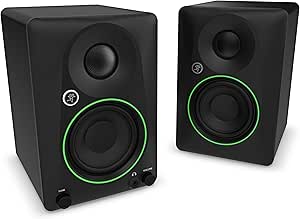 | Best for Beginners and Multitaskers | Driver Size: 3.5 inches | Type: Powered studio monitors | Tweeter: Silk dome | VIEW LATEST PRICE | See Our Full Breakdown |
| Yamaha HS5 Pair 2-Way Bass-Reflex Bi-Amplified Nearfield Studio Monitors | | Best Overall for Small Studios | Number of Monitors: 2 | Type: 2-Way Bass-Reflex | Power: 70W bi-amplified | VIEW LATEST PRICE | See Our Full Breakdown |
| Yamaha HS7 7-Inch Powered Studio Monitor Pair |  | Best for Larger Rooms and Bass-Heavy Mixing | Number of Monitors: 2 | Woofer Size: 7 inches | Frequency Response: 43Hz – 30kHz | VIEW LATEST PRICE | See Our Full Breakdown |
| KRK Kreate 3 Powered Studio Monitors Pair |  | Best for Hybrid Studio and Casual Listening | Number of Monitors: 2 | Tweeter: 1″ textile dome | Woofer: 3.5″ glass aramid composite | VIEW LATEST PRICE | See Our Full Breakdown |
| PreSonus Eris 3.5 Powered Studio Monitors, Pair |  | Best Value for Beginners | Number of Monitors: 2 (stereo pair) | Woofer Size: 3.5 inches | Power: 50 watts | VIEW LATEST PRICE | See Our Full Breakdown |
| Yamaha HS3 Powered Studio Monitor (Pair) |  | Best Compact Yamaha Reference | Number of Monitors: 2 | Type: 2-way bass-reflex powered | Woofer Size: 3.5 inches | VIEW LATEST PRICE | See Our Full Breakdown |
| Edifier MR4 Studio Monitor Speakers, 4 inch Active Near-Field |  | Best Budget Entry Point | Woofer: 4-inch composite | Tweeter: 1-inch silk dome | Inputs: 1/4-inch TRS, RCA, AUX | VIEW LATEST PRICE | See Our Full Breakdown |
| Edifier MR4.5 Bi-Amped Studio Monitor, 80W RMS Bookshelf Speakers – Black |  | Best Feature-Packed Value | Power: 80W RMS, bi-amped | Drivers: 4.5-inch mid-bass, 1-inch silk dome tweeter | Frequency Response: 50Hz–40kHz | VIEW LATEST PRICE | See Our Full Breakdown |
| KRK RP5G5 Rokit 5 Generation 5″ Powered Studio Monitor |  | Best for Mixing Confidence | Driver Size: 5 inches | Tweeter: 1-inch silk dome | Amplifier: Custom Class D | VIEW LATEST PRICE | See Our Full Breakdown |
| studio monitors for music production | Type | Inputs | Number of Monitors |
|---|---|---|---|
| YAMAHA HS5 W 5-Inch Powered St | Powered studio monitor | — | — |
| M-AUDIO BX3 3.5-inch Wired Stu | — | 1/4-inch, 1/8-inch, RCA | — |
| Yamaha HS5 Powered Studio Moni | — | XLR and TRS phone jack | 2 |
| Yamaha HS8 8-Inch Powered Stud | — | — | 2 |
| Mackie CR3.5 3.5-inch Creative | Powered studio monitors | — | — |
| Yamaha HS5 Pair 2-Way Bass-Ref | 2-Way Bass-Reflex | — | 2 |
| Yamaha HS7 7-Inch Powered Stud | Powered 2-way nearfield | XLR and TRS (balanced) | 2 |
| KRK Kreate 3 Powered Studio Mo | Powered 2-way nearfield | — | 2 |
| PreSonus Eris 3.5 Powered Stud | — | TRS, RCA, aux | 2 (stereo pair) |
| Yamaha HS3 Powered Studio Moni | 2-way bass-reflex powered | XLR/TRS combo, RCA, stereo mini | 2 |
| Edifier MR4 Studio Monitor Spe | Active near-field, powered | 1/4-inch TRS, RCA, AUX | — |
| Edifier MR4.5 Bi-Amped Studio | — | — | — |
| KRK RP5G5 Rokit 5 Generation 5 | Powered studio monitor, sold individually | XLR, 1/4-inch TRS | — |
More Details on Our Top Picks
YAMAHA HS5 W 5-Inch Powered Studio Monitor (White, 2-Pack) Bundle
The HS5 in white takes the top spot because it nails the balance most producers actually need: honest, flat response that translates across car stereos, earbuds, and club systems. Compared with the Yamaha HS8, the smaller 5-inch woofer gives up low-end reach, which means you’ll want to check bass-heavy mixes on headphones — but in exchange you get tighter imaging and a monitor that works in untreated bedrooms where an 8-inch would overwhelm the room. This bundle includes both monitors, so it’s a complete stereo setup rather than a single-speaker purchase. The tradeoff is price: a beginner paying out of pocket may find the Mackie CR3.5 covers the basics for a fraction of the cost, just with far less mix-translating accuracy.
Pros:- Industry-standard flat response that translates well to other playback systems
- Complete two-monitor bundle for a full stereo setup
- Reliable build quality and consistent performance
- Compact enough for typical home-studio desks
Cons:- Price sits above entry-level monitor pairs
- 5-inch woofers lack the deep low-end of larger monitors like the HS8
Best for: Home producers who want a trusted, mix-ready stereo pair that will last through years of skill growth
Not ideal for: Absolute beginners on tight budgets — the accuracy premium is wasted if you’re still learning to hear mixes
- Number of Items:2 monitors
- Color:White
- Speaker Size:5 inches
- Type:Powered studio monitor
- Frequency Response:54Hz – 30kHz
- Power:70W total
Our verdict“If you want one pair you won’t outgrow, this is the safest long-term buy in the lineup.”
M-AUDIO BX3 3.5-inch Wired Studio Monitors Pair
The BX3 earns the value slot by delivering genuinely studio-flavored detail — Kevlar woofers and silk dome tweeters — at a price that undercuts the Yamaha HS5 by a wide margin. That Kevlar cone isn’t marketing fluff: it keeps midrange distortion low enough that you can hear problems like harsh vocal sibilance instead of guessing at them. Connectivity is the other strength here, with 1/4-inch, 1/8-inch, and RCA inputs plus bundled cables, so it plugs into an interface, a laptop, or a game console without adapters. The honest tradeoff is scale: 3.5-inch drivers simply can’t move enough air to represent sub-bass, so if you produce hip-hop or EDM, the HS8 or a subwoofer-equipped setup is the better path.
Pros:- Kevlar woofers keep midrange detail clean for the price
- Three input types plus included cables for instant setup
- Acoustically inert MDF cabinets reduce cabinet resonance
- Includes useful bundled software
Cons:- Limited low-end extension unsuitable for bass-heavy mixing
- Not loud enough to fill medium or large rooms
Best for: Producers and streamers on a budget who want honest small-desk monitoring for under the price of one premium monitor
Not ideal for: Bass-driven genres — 3.5-inch woofers leave everything below roughly 70Hz to guesswork
- Driver Size:3.5 inches
- Woofer Material:Kevlar
- Tweeter Type:Silk dome
- Cabinet Material:Acoustically-inert MDF
- Inputs:1/4-inch, 1/8-inch, RCA
- Configuration:One active, one passive speaker
- Included Accessories:Interconnect cable, AUX cable, RCA cable, foam feet, software
Our verdict“The cheapest credible entry into real mixing monitors — buy it for detail, not for bass.”
Yamaha HS5 Powered Studio Monitor (Pair)
This black HS5 pair is the same monitor as the white bundle, and that’s the point: it’s the right-sized tool for small rooms. An 8-inch monitor like the Yamaha HS8 in a 10×10 bedroom exaggerates bass through room modes, making mixes sound boomy when they aren’t — the HS5’s 54Hz low limit sidesteps most of that problem while still resolving mids and highs with surgical neutrality. The 70W bi-amplified design means separate amps for woofer and tweeter, which reduces intermodulation distortion and is one reason these reveal mix flaws that the Mackie CR3.5 smooths over. The drawback is honest: below 54Hz you’re flying blind, so bass checking on headphones is part of the workflow, not optional.
Pros:- Neutral, bi-amplified sound that exposes mix problems accurately
- 5-inch woofer suits small rooms better than 7- or 8-inch options
- XLR and TRS inputs fit any professional interface
- Proven HS-series reliability
Cons:- Rolls off at 54Hz, hiding sub-bass content
- Priced above entry-level pairs for casual home listening
Best for: Producers mixing in spare bedrooms or small treated spaces where larger woofers would cause bass buildup
Not ideal for: Anyone wanting a single pair to handle full-range genres without headphone cross-checking
- Number of Monitors:2
- Woofer Size:5 inches
- Tweeter Size:1 inch dome
- Frequency Response:54Hz – 30kHz
- Power:70W total
- Amplification:Bi-amplified
- Inputs:XLR and TRS phone jack
Our verdict“The small-room mixing standard — accurate where it counts, with the low-end caveat you manage elsewhere.”
Yamaha HS8 8-Inch Powered Studio Monitor Pair – Black
The HS8 is the upgrade pick for one reason: it reaches down to 38Hz, deep enough to hear kick drums and 808s the way listeners will, without adding a subwoofer. Its 120W bi-amp system (75W low, 45W high) also keeps dynamics composed at louder volumes where the HS5 starts to compress — a real difference when mastering or mixing orchestral and rock material. But this power demands respect: in an untreated small room, 8-inch woofers excite standing waves and your mixes will lie to you, which is precisely why the HS5 exists as the alternative. Space is the other cost — these are substantial cabinets that need proper stands and breathing room from walls. Buy them when your room is ready, not before.
Pros:- 38Hz low extension captures sub-bass without a separate subwoofer
- 120W bi-amping maintains clarity at high listening levels
- Full HS-series accuracy across the entire frequency range
- Handles demanding genres from orchestral to hip-hop
Cons:- Largest and most expensive monitors in this lineup
- Overkill — even problematic — in small or untreated rooms
Best for: Producers with treated medium-to-large rooms who mix bass-heavy or dynamic full-range material
Not ideal for: Small untreated bedrooms — the extended low end will bounce around the room and skew every mix decision
- Woofer Size:8 inches
- Tweeter Size:1 inch dome
- Frequency Response:38Hz – 30kHz
- Total Power:120W
- Bi-amp System:75W LF + 45W HF
- Color:Black
- Number of Monitors:2
Our verdict“The full-range endgame for a serious room — but only if your space can actually handle 8-inch woofers.”
Mackie CR3.5 3.5-inch Creative Reference Powered Studio Monitors
The CR3.5 makes the list as the friendliest entry point, because it treats music production, gaming, and casual listening as equally valid uses. Its standout feature is a tone knob — a honest admission that these aren’t strictly flat tools, and compared with the Yamaha HS5, the Mackie sounds more pleasant and less revealing, which is exactly right for someone whose first mixes need encouragement rather than brutal truth. The location switch that compensates for desktop versus bookshelf placement is a smart touch the Yamahas don’t offer, and the front headphone output makes late-night sessions painless. The real limit is bass: without the separately sold CR8SBT subwoofer, low-end mixing is guesswork, and even then you’re spending toward HS5 money.
Pros:- Tone control lets you tune sound to taste or task
- Location switch optimizes output for desk or bookshelf placement
- Front headphone jack for private monitoring
- TRS, RCA, and 3.5mm inputs connect to nearly anything
Cons:- Subwoofer needed for meaningful low-end costs extra
- Not flat enough for confident final mixing decisions
Best for: Beginners, streamers, and bedroom creators who want one pair for producing, gaming, and everyday listening
Not ideal for: Mixing engineers who need flat reference accuracy — the tone control and flattering sound work against critical listening
- Driver Size:3.5 inches
- Type:Powered studio monitors
- Tweeter:Silk dome
- Woofer:Woven 3.5-inch
- Connectivity:TRS, RCA, 3.5mm input
- Features:Tone knob, location switch, headphone output
- Subwoofer Compatibility:Mackie CR8SBT (sold separately)
Our verdict“The best first pair if your desk does double duty — just plan to graduate to flatter monitors as your ears develop.”
Yamaha HS5 Pair 2-Way Bass-Reflex Bi-Amplified Nearfield Studio Monitors
The HS5 remains the benchmark against which every other monitor in this roundup gets measured, and it earns that status through brutal honesty rather than flattery. Its bi-amplified design keeps the 5-inch woofer and tweeter from fighting over the same power, which translates into mixes that hold up on car stereos and earbuds. Compared with the Yamaha HS7, the smaller driver gives up low-end reach but images more precisely in untreated rooms — a fair trade for most home producers. The rear-panel response controls let you tame bass buildup against a wall, something the KRK Kreate 3 doesn’t offer at all.
The tradeoff is real, though: the HS5 sounds flat and unforgiving, so beginners often find their mixes sound worse before they sound better.
Pros:- Highly accurate, unflattering sound that translates well to other systems
- Bi-amp design keeps mids and highs clean at volume
- Room control and high trim switches for imperfect placements
- Legendary durability and resale value
Cons:- Low-end extension is limited without a subwoofer
- Pricier than similar 5-inch competitors
- Rear-ported design is sensitive to wall proximity
Best for: Home producers in small-to-medium rooms who want a neutral reference they can trust for years
Not ideal for: Producers who mainly make bass-heavy electronic music — the 5-inch woofer won’t reveal sub-70Hz problems
- Number of Monitors:2
- Type:2-Way Bass-Reflex
- Power:70W bi-amplified
- Woofer Size:5 inches
- Features:Response controls, noise reduction technology
- Design:Nearfield, rear ported
Our verdict“If you can only buy one pair of monitors for serious mixing work, this is the safest long-term investment in the lineup.”
Yamaha HS7 7-Inch Powered Studio Monitor Pair
Where the HS5 asks you to add a subwoofer eventually, the HS7 solves the problem in one purchase: its 43Hz low end reaches deep enough to judge kick and bass relationships without a second box on the floor. That makes it the better call for medium-to-large rooms where a 5-inch monitor simply runs out of physical authority. The balanced XLR and TRS inputs are professional-grade connectivity that cheaper options like the PreSonus Eris 3.5 only partially match with unbalanced RCA.
The flip side: more low end in an untreated room means more boominess to fight, and these demand careful placement and some acoustic treatment to sound their best. They’re also heavier, pricier, and overkill for a desk-based bedroom setup.
Pros:- 43Hz–30kHz frequency response covers nearly the full audible range
- 95W bi-amp system fills larger rooms without strain
- Balanced XLR and TRS inputs for pro interfaces
- Accurate low-end judgment without needing a subwoofer
Cons:- Demanding of room treatment and placement to avoid bass buildup
- Higher price point than most picks here
- Physically larger and heavier than 5-inch alternatives
Best for: Producers with treated medium-to-large rooms who mix bass-forward genres like hip-hop, EDM, or rock
Not ideal for: Beginners in small untreated bedrooms, where the extended low end will muddy everything they hear
- Number of Monitors:2
- Woofer Size:7 inches
- Frequency Response:43Hz – 30kHz
- Power:95W bi-amplified
- Inputs:XLR and TRS (balanced)
- Type:Powered 2-way nearfield
Our verdict“This is the step-up choice once your room and budget outgrow what the HS5 can do.”
KRK Kreate 3 Powered Studio Monitors Pair
The Kreate 3 occupies a different niche than the Yamaha pairs: it’s built for producers who also want to stream Bluetooth audio from a phone between sessions. That single feature separates it from everything else here, including the similarly sized PreSonus Eris 3.5, which is wired-only. Sonically, the textile dome tweeter delivers genuinely crisp highs and the glass aramid woofer keeps the midrange tight, giving it a slightly more flattering character than the HS5‘s clinical honesty.
That flattery is the tradeoff — mixes made on these can sound thinner elsewhere. And with a 3.5-inch woofer and no published power rating, deep bass simply isn’t part of the deal; this is a desktop monitoring solution, not a room-filling system.
Pros:- Bluetooth streaming for quick phone playback and reference checks
- Clean, detailed high frequencies from the 1-inch textile dome tweeter
- Multiple input options for flexible routing
- Compact footprint suits tight desktop setups
Cons:- 3.5-inch woofer limits low-end accuracy for mixing
- Slightly hyped character compared to neutral references like the HS5
- No published power output makes comparisons difficult
Best for: Desktop producers and content creators who want one pair of speakers for both referencing and everyday Bluetooth listening
Not ideal for: Anyone mixing bass-critical genres — the small woofer and unpublished specs leave the low end a guess
- Number of Monitors:2
- Tweeter:1″ textile dome
- Woofer:3.5″ glass aramid composite
- Connectivity:Bluetooth plus multiple wired inputs
- Type:Powered 2-way nearfield
- Best Placement:Desktop, small rooms
Our verdict“Pick these if versatility and convenience matter more to you than a strictly neutral mixing reference.”
PreSonus Eris 3.5 Powered Studio Monitors, Pair
The Eris 3.5 proves you don’t need Yamaha money to get a legitimate starting reference. At a price well below the HS5, it delivers balanced, honest-enough sound with tuning controls that let you adjust for a corner desk or a bookshelf — a feature the cheaper Mackie CR3.5 skimps on. The 50W output fills a bedroom easily, and the front-facing aux input makes it trivial to A/B your mix against a phone playback, which is exactly how beginners learn translation.
The compromises are predictable: an 80Hz low-frequency limit means bass below that is invisible to you while mixing, and there’s no Bluetooth, unlike the KRK Kreate 3. Treat these as a first rung, not a final destination.
Pros:- Outstanding price-to-performance for a true studio-tuned pair
- Customizable EQ tuning for desk and room quirks
- TRS, RCA, and aux inputs cover every consumer and pro source
- Plenty of volume for small rooms without distortion
Cons:- Frequency range stops at 80Hz, hiding sub-bass content
- No Bluetooth or wireless connectivity
- 3.5-inch woofers can’t fill large rooms
Best for: First-time producers and budget-conscious creators who need honest sound and flexible inputs under $150
Not ideal for: Producers mixing tracks with heavy sub-bass content — the 80Hz floor hides too much
- Number of Monitors:2 (stereo pair)
- Woofer Size:3.5 inches
- Power:50 watts
- Frequency Range:80 Hz – 20 kHz
- Tweeter:Silk dome
- Inputs:TRS, RCA, aux
- Tuning:Customizable acoustic settings
Our verdict“The smartest first purchase in the roundup for anyone learning to mix without a big budget.”
Yamaha HS3 Powered Studio Monitor (Pair)
The HS3 brings Yamaha’s house sound — that disciplined, mix-translating neutrality — down to a desktop-friendly size and price. Think of it as the HS5’s smaller sibling: same design philosophy, same trusted tuning, roughly two-thirds the cabinet and much less low-end authority, with a 70Hz floor that undercuts even the Eris 3.5‘s extension. What you get in exchange is room control and high trim adjustments that are rare at this size, plus an input selection (XLR/TRS combo, RCA, and stereo mini) that outclasses most compact rivals.
At 26W total, headroom is modest, so loud monitoring or medium rooms will expose its limits. It’s a superb desktop reference for editing and arranging, but serious low-end mixing still demands a bigger driver.
Pros:- Yamaha’s trusted neutral tuning in a compact, affordable package
- Room control and high trim switches rarely found at this size
- XLR/TRS combo, RCA, and stereo mini inputs cover all sources
- Space-efficient for cramped desktop setups
Cons:- 70Hz frequency floor limits bass judgment
- 26W output restricts volume and headroom
- Small woofer makes a subwoofer almost mandatory later
Best for: Producers and podcasters who want Yamaha reference quality on a compact desktop or in a small treated space
Not ideal for: Anyone monitoring loudly or mixing bass-driven music — 26W and a 70Hz floor are hard limits
- Number of Monitors:2
- Type:2-way bass-reflex powered
- Woofer Size:3.5 inches
- Tweeter Size:0.75 inches
- Frequency Response:70 Hz – 22 kHz
- Power Output:26W
- Inputs:XLR/TRS combo, RCA, stereo mini
- Tuning:Room control and high trim adjustment
Our verdict“The pick for buyers who want the Yamaha mixing reputation without the HS5’s size or price, as long as deep bass isn’t a priority.”
Edifier MR4 Studio Monitor Speakers, 4 inch Active Near-Field
For producers building a first home setup on a tight budget, the Edifier MR4 makes a lot of sense. It delivers a surprisingly balanced frequency response for the price, and its dual-mode design lets you switch between a flatter studio voicing and a more relaxed listening curve — something the Mackie CR3.5 doesn’t offer at a comparable cost. Inputs are limited to TRS, RCA, and AUX, which is fine for a bedroom rig but means no XLR from pro interfaces without adapters. Compared with the step-up Edifier MR4.5, you give up Bluetooth, room calibration, and some low-end extension. The tradeoff is real: bass below ~60Hz is thin, so EDM and hip-hop producers will want a subwoofer eventually. Still, for the money, this pick makes the most sense for anyone who needs honest sound before honest sound gets expensive.
Pros:- Balanced, professional-leaning sound at a very low price
- Dual mode switching between studio and casual listening voicing
- Multiple input options (TRS, RCA, AUX) for interfaces and consumer gear
- Simple high/low frequency trim controls for basic room correction
Cons:- Limited low-end extension from the 4-inch woofer
- No XLR input, which complicates hookup to professional interfaces
- Near-field only — sound falls apart quickly at listening distances beyond a meter
Best for: Beginner producers and content creators outfitting a small bedroom studio on a sub-$150 budget
Not ideal for: Bass-heavy genre producers — the 4-inch woofer simply can’t reproduce sub-60Hz content without a subwoofer
- Woofer:4-inch composite
- Tweeter:1-inch silk dome
- Inputs:1/4-inch TRS, RCA, AUX
- Controls:High and low-frequency adjustment, volume, sound mode
- Type:Active near-field, powered
- Listening Mode:Dual mode (studio / casual)
Our verdict“A smart first pair for budget-limited producers who want honest sound now and can add a subwoofer later.”
Edifier MR4.5 Bi-Amped Studio Monitor, 80W RMS Bookshelf Speakers – Black
The MR4.5 sits in an interesting middle ground: it costs less than a Yamaha HS5 pair while packing features Yamaha doesn’t offer at any price — Bluetooth streaming, XLR inputs, a 9-band EQ, and built-in room calibration. For producers working in untreated bedrooms, that calibration alone can matter more than raw driver quality, because it tames the bass buildup that small rooms create. The 50Hz–40kHz response is genuinely wide for a 4.5-inch bookshelf design. The catch is that getting the most from the EQ and calibration requires some willingness to experiment — this model is better suited to tweakers than plug-and-play buyers. Compared with its sibling, the base Edifier MR4, the .5 adds meaningful headroom and connectivity, justifying the price jump for anyone who plans to keep the pair long-term. Deep-bass fanatics should still budget for a sub.
Pros:- 80W RMS bi-amped power with wide 50Hz–40kHz frequency response
- Exceptional connectivity: Bluetooth 6.0 plus XLR, TRS, RCA, and AUX
- Room calibration and 9-band EQ rival features on monitors costing far more
- Compact footprint fits desks and small rooms easily
Cons:- Calibration and EQ setup has a real learning curve
- Low-frequency adjustment range is limited for listeners who want truly deep bass
- Brand lacks the studio-standard reputation of Yamaha or KRK for client-facing rooms
Best for: Intermediate producers in untreated rooms who want room calibration and streaming convenience without Yamaha pricing
Not ideal for: Buyers who want zero setup effort — the calibration and EQ require technical patience to use well
- Power:80W RMS, bi-amped
- Drivers:4.5-inch mid-bass, 1-inch silk dome tweeter
- Frequency Response:50Hz–40kHz
- Connectivity:Bluetooth 6.0, XLR, TRS, RCA, AUX
- Calibration:Professional room calibration
- EQ:9-band EQ, adjustable low cutoff
- Form Factor:Compact bookshelf, near-field
Our verdict“The most feature-dense value in this roundup — ideal for producers who will actually use its calibration tools rather than leave them at defaults.”
KRK RP5G5 Rokit 5 Generation 5″ Powered Studio Monitor
The Rokit 5 G5 earns its place as the pick for producers whose priority is trusting what they hear. Its low-diffraction baffle and new silk dome tweeter produce tighter stereo imaging than the Yamaha HS5, which helps you pinpoint where elements sit in the mix — a genuine advantage when dialing in reverb and panning. KRK even includes foam isolation pads, an accessory Yamaha makes you buy separately, and pads directly improve translation by decoupling the cabinet from your desk. The tradeoffs: it’s pricier than everything else in this batch, and KRK’s slightly forward character means mixes can lean bright if you don’t check against reference tracks. The 5-inch driver also limits sub-bass reach compared with a Yamaha HS8, so bass-critical work still benefits from a sub. This option stands out for committed mixers who want imaging precision over budget friendliness.
Pros:- Improved silk dome tweeter delivers detailed, articulate high frequencies
- Low-diffraction baffle tightens stereo imaging for confident mixing decisions
- Includes acoustic foam isolation pads that reduce desk resonance
- Professional XLR and 1/4-inch TRS inputs for studio interfaces
Cons:- Higher price point than most 5-inch competitors in this roundup
- 5-inch driver limits sub-bass reach for bass-heavy genres without a subwoofer
- Placement-sensitive — needs careful positioning and distance to sound its best
Best for: Serious home studio mixers who prioritize stereo imaging and detail over budget
Not ideal for: Absolute beginners on starter budgets — the price is steep when cheaper options like the Edifier MR4 teach the same fundamentals
- Driver Size:5 inches
- Tweeter:1-inch silk dome
- Amplifier:Custom Class D
- Inputs:XLR, 1/4-inch TRS
- Design:Low-diffraction baffle
- Included Accessories:Acoustic foam wedge isolation pads
- Type:Powered studio monitor, sold individually
Our verdict“The choice for producers ready to invest in imaging accuracy — skip it if budget or sub-bass reach matters more than mix detail.”
How We Picked
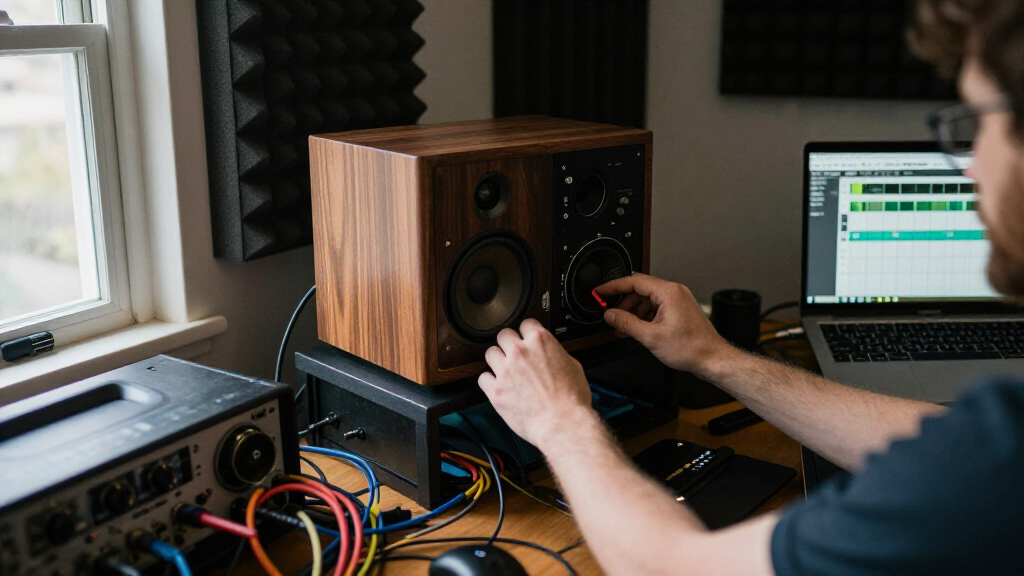
I ranked these monitors on four factors that actually affect music production outcomes: frequency accuracy (does the monitor tell the truth or flatter the mix?), low-end extension relative to driver size (can you make bass decisions without headphones?), room flexibility (how forgiving is the monitor in an untreated bedroom?), and value at street price per pair. I also weighed connectivity and matching options — a monitor with EQ tailoring like the HS series adapts to more rooms than a fixed-response design.
The ranking logic favors translation over enjoyment. A monitor that sounds exciting but hides problems ranks below one that sounds plain but reveals them, because this roundup is for music production, not casual listening. That’s why the neutral Yamaha HS family dominates the top half while character-forward options like the Rokit sit mid-pack with clear caveats about who they suit.
Factors to Consider When Choosing Studio Monitors For Music Production
Before pulling out a credit card, it helps to understand what actually separates a useful production monitor from a nice-sounding speaker. These are the factors that shaped the ranking above.Driver Size and Your Room’s Reality
The most common mistake new producers make is buying the biggest driver they can afford. An 8-inch monitor like the HS8 moves serious air, but in an untreated 10×10 bedroom that low energy bounces around and creates standing waves that make some bass notes boom and others vanish entirely. A 5-inch monitor gives up the bottom octave but produces a cleaner, more predictable response in the exact rooms most home producers work in. My rule of thumb: match the woofer to the room first, then use headphones to double-check the sub-60Hz range. You can always add a subwoofer later; you can’t easily shrink an oversized monitor’s problems.
Flat Response Versus Flattering Response
Consumer speakers are designed to sound good; studio monitors are designed to reveal flaws. That distinction explains why a monitor with a hyped low end — like the KRK Rokit series — can be both a joy and a trap. A boosted bass makes your track feel finished before it is, so you end up under-mixing low-end that disappears on other systems. Flat-response designs like the Yamaha HS line feel less exciting at first, but they build a habit of trusting your ears across playback systems. Decide whether you want a monitor that inspires you during production or one that keeps you honest during mixing — some producers own one of each.
Room Correction and EQ Controls
Nearly every monitor here includes some form of rear-panel EQ or DSP, and it matters more than most spec sheets suggest. Even simple high-pass and boundary switches can tame the bass boost you get from placing monitors against a wall — the default position in most bedrooms. Newer models like the KRK Kreate 3 push further with app-guided room tuning. If your space has bare parallel walls and no acoustic panels, spending a little more on a monitor with usable correction often beats spending that money on a bigger woofer. But don’t expect miracles: DSP fixes frequency imbalance, not the smearing caused by untreated reflections.
Inputs, Connectivity, and Setup Friction
Check the back panel before buying, because input selection determines how a pair fits your workflow. Balanced XLR/TRS inputs reject the electrical noise common in home studios with computers, interfaces, and lights sharing power strips — RCA-only monitors can pick up audible hiss in that environment. Compact models like the Edifier MR4 often add Bluetooth or AUX inputs, which is convenient but irrelevant if you only ever run an audio interface. Also confirm whether one monitor houses both amps and daisy-chain connectivity or whether you need a stereo pair from day one, since some budget listings ship single units.
When It’s Worth Paying More
Under $150, monitors are production tools with asterisks — fine for writing and arranging, weaker for final mix decisions. The $300–500 range is where this roundup gets genuinely competitive, because that’s where consistent unit-to-unit quality and honest mids appear. Paying beyond that buys deeper bass, higher SPL before distortion, and better off-axis response, but only pays off once your room and ears can detect those differences. A practical upgrade path: start with an HS5-class pair, learn its quirks for a year, then invest in treatment before upgrading speakers. Money spent on bass traps and first-reflection panels improves a $300 pair more than swapping to a $600 pair ever will.
Matching the Monitor to Your Genre
Bass-driven genres punish small monitors more than acoustic or vocal-centric work. If you produce hip-hop, EDM, or reggaeton, a 7- or 8-inch woofer isn’t a luxury — it’s the difference between hearing your 808s and guessing at them. Singer-songwriters and podcast-adjacent producers get far more value prioritizing midrange clarity, where the HS5 and Eris lines excel at a lower price. Hybrid producers should consider a two-checking setup: honest nearfields for balance checks plus headphones with strong sub-bass for low-end verification. Genre also shapes whether a colored monitor helps or hurts — a slight low-end lift keeps energy up during long writing sessions on bass-heavy material.
Frequently Asked Questions
Should I buy a 5-inch or 8-inch monitor pair for a small bedroom studio?
For a typical untreated bedroom under about 12×12 feet, a 5-inch pair is almost always the safer choice. Larger 8-inch woofers like the HS8 produce low frequencies that small rooms can’t absorb, creating exaggerated or cancelled bass notes at your listening position — the exact problem monitors are supposed to prevent. You’ll make better mix decisions on an HS5 pair you can trust than on an HS8 pair fighting your room. Add a calibrated pair of headphones for sub-bass verification, and consider a subwoofer only after you’ve added basic acoustic treatment. The 8-inch route makes sense once you have a larger, treated space where that low-end energy can develop properly.
Why do the Yamaha HS5 and other HS models appear multiple times in this lineup?
Yamaha sells the HS series in several configurations — single units, standard pairs, white finishes, and bundles with cables or isolation pads — and retailers list each as a separate product. Acoustically, the black HS5 pair and white HS5 pair are identical, so your choice comes down to bundle contents and price per listing. This matters for comparison shopping: check what a bundle includes, because isolation pads and quality cables can add $60–100 of real value if you’d buy them anyway. If two HS5 listings differ only in color, pick the cheaper one unless aesthetics at your desk genuinely matter to you. The repeated listings are a sign of the line’s popularity, not a ranking error.
Are cheap monitors like the Mackie CR3.5 or Edifier MR4 good enough to actually mix on?
They’re good enough to learn on and finish demos, with clear limits on final low-end decisions. Compact budget monitors reproduce mids and highs respectably, which covers vocals, guitars, synths, and most arrangement work. Where they fall short is below roughly 60Hz — kick fundamentals and sub-bass either roll off or blur, so balances built solely on them can translate poorly to cars and club systems. The practical workaround is a hybrid workflow: mix on the monitors, then verify low-end on headphones you know well. Plenty of producers release solid work this way; just recognize the ceiling and don’t blame the mix when a $130 pair hides your 808 level.
Is the KRK Rokit 5 G5 a bad choice if I mainly mix hip-hop or EDM?
Not at all — it may be the right choice, as long as you understand its character. The Rokit’s slightly lifted low end and forward presentation keep energy high during long sessions on bass-heavy material, which is why it’s a genre staple. The tradeoff is calibration: your ears need to learn how its bass emphasis maps to flat systems, otherwise mixes tend to come out bass-light on earbuds and phones. The Generation 5 adds EQ options that let you tame that character if it’s not working in your room. If you mostly produce rather than mix for outside clients, the Rokit’s inspiration factor can outweigh its honesty deficit.
Do I need an audio interface, or can I plug monitors straight into my computer?
An audio interface is strongly recommended for any serious production setup, even though some monitors accept consumer inputs. Interfaces provide balanced outputs over TRS or XLR, which rejects the hum and hiss that plague unbalanced connections near computers, monitors, and USB hubs. They also give you a physical volume knob — mixing on keyboard-volume controls encourages bad gain-staging habits and makes precise level matching impossible. Some desktop models like the Edifier MR4 and Eris 3.5 include AUX or Bluetooth for convenience, and that’s fine for casual listening between sessions. But for tracking and mixing, the interface’s converters and clean output path will improve what you hear from any monitor on this list.
Conclusion
Matching the right pair to your situation closes the decision loop. For best overall, the Yamaha HS5 pair wins on translation, build, and room-friendliness — it’s the safest serious investment here. The PreSonus Eris 3.5 takes best value, delivering honest mids at a price that leaves budget for acoustic treatment. As the premium pick, the Yamaha HS8 rewards producers with larger treated rooms and bass-heavy workloads with genuinely deeper low-end reach. Beginners should start with the Mackie CR3.5 or Edifier MR4: cheap enough to learn on without guilt, capable enough to outlast the beginner phase. For specific needs, hip-hop and EDM producers get real mileage from the KRK Rokit 5 G5, while space-constrained desktop producers should compare the Yamaha HS3 and KRK Kreate 3 for their compact footprints and room-tuning features. Whatever you choose, treat the room before upgrading the speakers — that’s where the biggest jump in mix quality actually lives.