

Wireless studio headphones have to solve a problem regular Bluetooth headphones ignore: latency and tonal accuracy. If you’re mixing, DJing, or tracking, a delayed or hyped signal ruins your work, which is why the field splits between true studio monitors with wireless modes and consumer headphones wearing a studio label. The Audio-Technica ATH-M50XBT2 stands out as the best overall pick because it carries the wired M50X’s trusted tuning into a wireless package without compromise. For tighter budgets, the OneOdio Studio Max 2 impresses with a genuinely low 9ms latency claim, while the AIAIAI TMA-2 Studio Wireless makes the most sense for producers who want modular, purpose-built studio hardware. The main tradeoff you’ll face is battery life and convenience versus flat, reliable monitoring. Read on for the full breakdown of all 14 models.

Get audio and creator gear delivered free — and shop member deals
- Fast, free delivery on millions of items
- Access to Prime Big Deal Days deals on October 6–7
- Prime Video, Amazon Music and more included
Complete the kit


Key Takeaways
- The ATH-M50XBT2 wins overall because it is the only model here that pairs a genuinely respected studio tuning with a mature wireless implementation — most rivals get one side of that equation right.
- Latency claims separated the real studio tools from the pretenders: the OneOdio Studio Max 2 (9ms) and PUPGSIS 2.4GHz models use gaming-style wireless, while standard Bluetooth models like the Sony WH-CH720N lag badly enough to rule out tracking.
- Three wired-only models made the list (ATH-M50X, ATH-M20x, beyerdynamic DT 990 Pro) because buying a wired studio monitor plus a cheap wireless pair often beats a compromised all-in-one.
- The Beats Studio Pro appears twice in this lineup, and both units share the same weakness for studio work: a consumer-tuned, bass-forward signature that flatters music but misleads mixes.
- Budget wireless models under $80 — the OneOdio A70 and generic DJ multipoint sets — are fine for casual listening and cueing, but none delivered the neutral midrange needed for mixing decisions.
| Audio-Technica ATH-M20xBT Wireless Over-Ear Headphones, Black |  | Best Budget Wireless Entry | Driver Size: 40mm | Design: Circumaural, over-ear | Connectivity: Wireless Bluetooth | VIEW LATEST PRICE | See Our Full Breakdown |
| OneOdio A70 Bluetooth Over-Ear Headphones, Hi-Res Wired DJ Studio – Black | 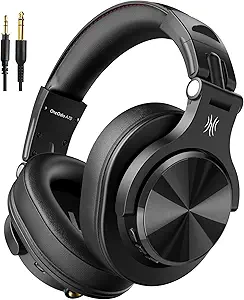 | Best Battery Life | Battery Life: Up to 72 hours | Connectivity: Bluetooth plus wired 3.5mm and 6.35mm | Drivers: 40mm neodymium | VIEW LATEST PRICE | See Our Full Breakdown |
| PUPGSIS 2.4GHz Wireless DJ Headphones with Low Latency and Multiple Connectivity Options |  | Best Low-Latency Pick | Connectivity: 2.4GHz, Bluetooth 5.3, AUX | Latency: 20ms (2.4GHz mode) | Battery Life: Up to 60 hours (Bluetooth), 30 hours (2.4G) | VIEW LATEST PRICE | See Our Full Breakdown |
| Audio-Technica ATH-M20x Professional Studio Monitor Headphones, Black |  | Best Wired Value for Tracking | Driver Size: 40mm | Design: Circumaural, over-ear | Cable Exit: Single side | VIEW LATEST PRICE | See Our Full Breakdown |
| Audio-Technica ATH-M50X Professional Studio Monitor Headphones, Black | 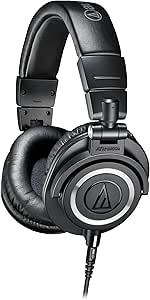 | Best Critical Listening Reference | Model: ATH-M50X | Driver Size: 45mm | Magnet Type: Rare earth | VIEW LATEST PRICE | See Our Full Breakdown |
| Beats Studio Pro Wireless Over-Ear Headphones | 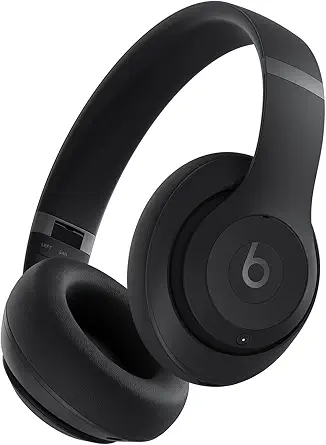 | Best for Cross-Platform Producers | Battery Life: Up to 40 hours | Active Noise Cancelling: Yes | Connectivity: Bluetooth, USB-C, 3.5 mm audio cable | VIEW LATEST PRICE | See Our Full Breakdown |
| OneOdio Studio Max 2 Wireless DJ Headphones, 9ms Latency, Studio LDAC |  | Best for DJs and Live Monitoring | Latency: 9ms | Audio Codec: LDAC | Driver Size: 45mm | VIEW LATEST PRICE | See Our Full Breakdown |
| AIAIAI TMA-2 Studio Wireless Over-Ear Headphones, Black |  | Best Modular Studio Pick | Connectivity: W+ Link, Bluetooth | Battery Life: 20+ hours | Material: Memory foam cushions, PU leather | VIEW LATEST PRICE | See Our Full Breakdown |
| Wireless Over Ear Headphones with 3.5mm and 6.35mm Jack for DJ, Mixing, Recording |  | Best Budget Workhorse | Driver Size: 50mm | Frequency Response: 20Hz–20kHz | Bluetooth Version: 5.4 | VIEW LATEST PRICE | See Our Full Breakdown |
| Audio-Technica ATH-M50XBT2 Wireless Headphones, Black |  | Best Overall Sound Reference | Battery Life: Up to 50 hours | Rapid Charge: 3 hours of use on a 10-minute charge | Drivers: 45 mm proprietary drivers | VIEW LATEST PRICE | See Our Full Breakdown |
| OneOdio Studio Max 1 Wireless DJ & Wired Studio Headphones, 20ms Latency |  | Best Battery Life for Long Sessions | Connectivity: Bluetooth 5.3, 3.5mm/6.35mm wired | Latency: 20ms | Battery Life: 120 hours Bluetooth / 50 hours dongle | VIEW LATEST PRICE | See Our Full Breakdown |
| beyerdynamic DT 990 Pro (250 Ohm), Open-Back Studio Headphones, Black |  | Best Soundstage — But Not Actually Wireless | Impedance: 250 Ohm | Frequency Response: 5 – 35,000 Hz | Design: Open-back | VIEW LATEST PRICE | See Our Full Breakdown |
| Beats Studio Pro Wireless Over-Ear Headphones – Up to 40-Hour Battery, Active Noise Cancelling, Sand Gray |  | Best for Producer-Adjacent Everyday Use | Battery Life: Up to 40 hours | Noise Cancelling: Active, with transparency mode | Connectivity: Bluetooth, USB-C, 3.5mm | VIEW LATEST PRICE | See Our Full Breakdown |
| Sony WH-CH720N Wireless Noise Cancelling Over-Ear Headphones, Black |  | Best Lightweight Value | Weight: 192g | Battery Life: Up to 35 hours | Quick Charge: 3 minutes = 1 hour playback | VIEW LATEST PRICE | See Our Full Breakdown |
| wireless studio headphone | Connectivity | Battery Life | Design |
|---|---|---|---|
| Audio-Technica ATH-M20xBT Wire | Wireless Bluetooth | — | Circumaural, over-ear |
| OneOdio A70 Bluetooth Over-Ear | Bluetooth plus wired 3.5mm and 6.35mm | Up to 72 hours | Over-ear, foldable, rotatable earcups |
| PUPGSIS 2.4GHz Wireless DJ Hea | 2.4GHz, Bluetooth 5.3, AUX | Up to 60 hours (Bluetooth), 30 hours (2.4G) | Over-ear, foldable |
| Audio-Technica ATH-M20x Profes | Wired only | — | Circumaural, over-ear |
| Audio-Technica ATH-M50X Profes | Wired only | — | Circumaural with swiveling earcups |
| Beats Studio Pro Wireless Over | Bluetooth, USB-C, 3.5 mm audio cable | Up to 40 hours | — |
| OneOdio Studio Max 2 Wireless | Wireless, Bluetooth 6.0, 3.5mm jack, 6.35mm jack | 120 hours | — |
| AIAIAI TMA-2 Studio Wireless O | W+ Link, Bluetooth | 20+ hours | — |
| Wireless Over Ear Headphones w | — | Up to 100 hours | — |
| Audio-Technica ATH-M50XBT2 Wir | Bluetooth, multipoint pairing | Up to 50 hours | — |
| OneOdio Studio Max 1 Wireless | Bluetooth 5.3, 3.5mm/6.35mm wired | 120 hours Bluetooth / 50 hours dongle | Foldable, metal headband, 180° rotating ear cups |
| beyerdynamic DT 990 Pro | — | — | Open-back |
| Beats Studio Pro Wireless Over | Bluetooth, USB-C, 3.5mm | Up to 40 hours | — |
| Sony WH-CH720N Wireless Noise | Bluetooth multipoint | Up to 35 hours | — |
More Details on Our Top Picks
Audio-Technica ATH-M20xBT Wireless Over-Ear Headphones, Black
Audio-Technica’s M20xBT brings the familiar M-series tuning to a wireless format at a price that undercuts nearly everything in this roundup. The 40mm drivers deliver clear mid-range detail, which matters for vocal tracking and rough mixes where you need to hear what’s actually happening in the core of a recording. Compared with the OneOdio A70, the M20xBT offers a more neutral, studio-leaning signature, though the A70 easily wins on battery life and wired flexibility. The circumaural cups provide decent passive isolation for loud rooms.
The tradeoff is uncertainty: Audio-Technica doesn’t publish battery life figures prominently, and there’s no active noise cancellation. If wireless monitoring is your priority, the PUPGSIS model with its 20ms latency makes more sense.
Pros:- Neutral M-series studio tuning at a low price
- Clear, detailed mid-range for tracking vocals and instruments
- Circumaural design provides useful passive isolation
- Collapsible and easy to transport between sessions
Cons:- No active noise cancellation
- Battery life specs are vague compared to rivals like the OneOdio A70
Best for: Budget-conscious home recorders who want trustworthy studio tuning without paying M50XBT2 money
Not ideal for: Buyers who need all-day battery or active noise cancellation for commuting alongside studio work
- Driver Size:40mm
- Design:Circumaural, over-ear
- Connectivity:Wireless Bluetooth
- Sound Character:Detailed with clear mid-range
- Isolation:Passive circumaural
- Portability:Collapsible
- Color:Black
Our verdict“This pick makes the most sense for anyone wanting Audio-Technica’s studio sound wirelessly on a tight budget.”
OneOdio A70 Bluetooth Over-Ear Headphones, Hi-Res Wired DJ Studio – Black
The headline here is 72 hours of wireless playback — a figure nothing else in this roundup approaches, and one that translates to weeks of sessions between charges. The A70 doubles as a wired studio headphone with both 3.5mm and 6.35mm cables included, so it slips straight into an interface or DJ mixer when Bluetooth won’t cut it. That dual-mode flexibility is its real selling point over the ATH-M20xBT, which is wireless-first with less wired support.
Sonically, the A70 leans bass-forward and hi-res oriented rather than strictly neutral, so critical mix decisions are riskier here than on the ATH-M50X. The audio sharing function is a genuinely useful touch for collaborative tracking, letting two people monitor from one source. The ergonomic memory-cotton padding keeps long sessions comfortable.
Pros:- Exceptional 72-hour battery life
- Includes both 3.5mm and 6.35mm cables for wired studio use
- Comfortable memory-cotton padding for long sessions
- Audio sharing lets two listeners monitor simultaneously
Cons:- Bass-forward tuning isn’t ideal for final mix decisions
- Sound quality over Bluetooth depends on connection stability
- Somewhat bulky build
Best for: Producers and DJs who marathon between outlets and want one pair that works wirelessly and wired
Not ideal for: Mixing engineers who need a flat reference — the bass emphasis colors judgment compared to studio monitors like the M50X
- Battery Life:Up to 72 hours
- Connectivity:Bluetooth plus wired 3.5mm and 6.35mm
- Drivers:40mm neodymium
- Design:Over-ear, foldable, rotatable earcups
- Materials:Memory cotton, protein leather
- Microphone:Built-in with noise reduction
- Extra Features:Audio sharing, Hi-Res sound
Our verdict“This model is better suited to battery-obsessed creators and DJs than to engineers chasing a neutral reference.”
PUPGSIS 2.4GHz Wireless DJ Headphones with Low Latency and Multiple Connectivity Options
20ms latency over 2.4GHz is the feature that earns this model a spot, because Bluetooth’s inherent delay makes real-time wireless monitoring miserable for vocalists and drummers. Switch to 2.4G mode and the timing lag effectively disappears, putting it closer to wired behavior than anything Bluetooth-only here — the OneOdio A70 beats it on battery, but can’t match this responsiveness. The 50mm drivers and 20Hz–40kHz response cover a wider treble range than the 40mm-driver Audio-Technicas, which helps when checking cymbal detail and high-frequency artifacts.
The catch is complexity: juggling three connection modes (2.4G, Bluetooth 5.3, AUX) adds setup friction, and as a newer listing there’s no track record or user ratings to lean on, unlike the established ATH-M20xBT.
Pros:- Ultra-low 20ms latency for true real-time monitoring
- Three connection modes (2.4G, Bluetooth 5.3, AUX) for any setup
- Wide 20Hz–40kHz frequency response with 50mm drivers
- Strong battery life at up to 60 hours in Bluetooth mode
Cons:- No published weight, making comfort hard to judge before buying
- Multi-mode setup adds complexity compared to simple Bluetooth pairs
- Unproven brand with no user ratings yet
Best for: Vocalists, podcasters, and gamers who need real-time wireless monitoring without lip-sync delay
Not ideal for: Buyers who prioritize brand reliability — this is an unproven product with no ratings history
- Connectivity:2.4GHz, Bluetooth 5.3, AUX
- Latency:20ms (2.4GHz mode)
- Battery Life:Up to 60 hours (Bluetooth), 30 hours (2.4G)
- Frequency Response:20Hz–40kHz
- Driver Size:50mm
- Ports:1/4 to 3.5mm jack, 3.5mm, 6.35mm
- Design:Over-ear, foldable
Our verdict“This option stands out for latency-sensitive monitoring work, provided you accept a newer, less established brand.”
Audio-Technica ATH-M20x Professional Studio Monitor Headphones, Black
A quick reality check: this is the roundup’s wired workhorse, not a wireless option — it’s here because plenty of studio tasks simply don’t need Bluetooth, and paying for it is wasted money. The M20x delivers reliable passive isolation in a durable frame, which is exactly what you want on a headphone jack during loud tracking sessions. Compared with the ATH-M50X, the M20x gives up refinement, driver size, and the detachable cable, but costs a fraction as much — ideal as a spare pair for musicians in the live room.
The single-sided cable exit reduces tangles, though the fixed cable means damage means replacement, not a quick swap. Comfort over marathon sessions also falls short of the pricier models in the lineup.
Pros:- Very affordable entry into real studio monitoring
- Strong passive isolation for loud tracking environments
- Durable build that survives studio handling
- Single-sided cable exit keeps things tidy
Cons:- Not wireless — this is a wired-only design
- Fixed cable can’t be replaced if damaged, unlike the M50X
- Comfort falls off during extended sessions
Best for: Studio owners outfitting multiple musicians on a budget who need durable, isolating tracking headphones
Not ideal for: Anyone who actually needs wireless freedom — this model has no Bluetooth at all
- Driver Size:40mm
- Design:Circumaural, over-ear
- Cable Exit:Single side
- Connectivity:Wired only
- Intended Use:Tracking and mixing
- Color:Black
Our verdict“This pick makes the most sense as cheap, reliable wired spares for the live room rather than your main pair.”
Audio-Technica ATH-M50X Professional Studio Monitor Headphones, Black
The M50X remains the benchmark many engineers learned on, and its 45mm drivers with rare-earth magnets deliver a clarity-and-bass balance that holds up against headphones costing far more. The detachable cable is the practical feature that separates it from the M20x — a damaged cable becomes a ten-dollar fix instead of a dead headphone. Swiveling earcups and the isolating circumaural fit make it genuinely usable for long critical sessions. Compared with the Beats Studio Pro elsewhere in this roundup, the M50X is far more honest in its tuning — Beats flatter, the M50X tells the truth.
The obvious gap: it’s wired only. If you need the same sound without the cable, the ATH-M50XBT2 exists for more money. Isolation also depends heavily on getting a proper seal, and the build is bulky for everyday portable use.
Pros:- Accurate, widely-trusted frequency balance for mixing decisions
- Detachable cable system saves the headphones from cable damage
- Swiveling earcups and durable build for professional daily use
- Effective passive isolation from the circumaural design
Cons:- Wired only — no Bluetooth connectivity
- Pricier than consumer alternatives and the M20x
- Bulky for casual portable listening
Best for: Mixing engineers and producers who want an honest, widely-trusted reference for critical listening
Not ideal for: Anyone wanting wireless freedom here — the BT2 version or the M20xBT covers that instead
- Model:ATH-M50X
- Driver Size:45mm
- Magnet Type:Rare earth
- Voice Coil:Copper-clad aluminum wire
- Design:Circumaural with swiveling earcups
- Cable:Detachable
- Connectivity:Wired only
- Warranty:2 years
Our verdict“This model is the safest choice in the lineup for engineers who care more about accuracy than wireless convenience.”
Beats Studio Pro Wireless Over-Ear Headphones
The Beats Studio Pro earns its place here as the most consumer-polished option in a lineup full of utilitarian studio cans. Unlike the AIAIAI TMA-2 Studio Wireless, which leans on an app for tuning, these ship with a tuned, balanced profile out of the box plus spatial audio and genuinely effective ANC — rare in this category where noise isolation usually means thick earpads. The 40-hour battery trails the OneOdio Studio Max 2’s absurd 120 hours, but the seamless Apple-and-Android switching makes it the practical pick for producers bouncing between a MacBook, an iPad, and a phone all day.
The tradeoff is precision. This model is tuned for enjoyment more than flat reference monitoring, so critical mixing decisions are better made on the Audio-Technica ATH-M50XBT2.
Pros:- Strong 40-hour battery life with fast charging
- Effective active noise cancelling and transparency mode
- Seamless device switching across Apple and Android
- Multiple wired options including USB-C and 3.5mm
Cons:- Tuning is more consumer-flavored than reference-flat
- No published weight, and over-ear Beats designs tend to run warm and heavy
- No water or sweat resistance rating
Best for: Producers and creators who work across Apple and Android devices and want ANC for tracking in noisy environments
Not ideal for: Engineers needing a flat, neutral reference mix — the consumer-leaning tuning colors low-end decisions
- Battery Life:Up to 40 hours
- Active Noise Cancelling:Yes
- Connectivity:Bluetooth, USB-C, 3.5 mm audio cable
- Compatibility:Apple & Android
- Included Accessories:Carrying case, 3.5 mm cable, USB-C charging cable
Our verdict“Buy these if you split your creative time between mobile devices and want ANC; skip them if mixing accuracy is your top priority.”
OneOdio Studio Max 2 Wireless DJ Headphones, 9ms Latency, Studio LDAC
Nine milliseconds of latency is the headline here, and it’s the number that separates this model from nearly everything else in this roundup. Wireless headphones live or die on sync — the generic DJ/mixing over-ear elsewhere in this list relies on standard Bluetooth, where lag can wreck a beatmatch. At 9ms, the Studio Max 2 behaves like a wired pair, which matters enormously for DJs cueing tracks or producers monitoring a live take. The LDAC codec and 45mm drivers push hi-res detail, while 180° swiveling earcups and a 6.35mm jack option cover the booth-to-studio workflow.
The compromise is size: this is a big, purposeful headset compared with the sleeker Beats Studio Pro, and 120 hours of battery comes with hardware bulk. Casual listeners will find it overkill.
Pros:- Ultra-low 9ms latency suitable for beatmatching and live monitoring
- LDAC hi-res codec with 45mm drivers
- Massive 120-hour battery with 5-minute fast charge
- Full connectivity suite: Bluetooth 6.0, 3.5mm, and 6.35mm wired modes
Cons:- Bulky DJ-oriented build is awkward for everyday portable use
- Premium feature set likely pushes the price past budget buyers
Best for: Working DJs and producers who need near-zero latency for cueing and live monitoring without a cable
Not ideal for: Commuters or casual listeners — the size, swiveling cups, and DJ-first design feel cumbersome off the decks
- Latency:9ms
- Audio Codec:LDAC
- Driver Size:45mm
- Battery Life:120 hours
- Charging Time:5 minutes for 9 hours playback
- Connectivity:Wireless, Bluetooth 6.0, 3.5mm jack, 6.35mm jack
- Earcup Material:Memory foam
- Swivel Earcups:180°
Our verdict“If beat-accurate wireless cueing is the job, this is the tool; everyone else can save money and size with a standard Bluetooth pair.”
AIAIAI TMA-2 Studio Wireless Over-Ear Headphones, Black
The AIAIAI TMA-2 Studio Wireless takes a different philosophy from the rest of this lineup: modularity. AIAIAI’s ecosystem of swappable pads, headbands, and drivers means this pair can evolve with your rig — something neither the Audio-Technica ATH-M50XBT2 nor the OneOdio Studio Max 2 can claim. The proprietary W+ Link connection delivers lower latency than standard Bluetooth, sitting in a sweet spot between convenience and monitoring reliability, and app-based customizable EQ lets you shape the response to your room and habits.
The catch is dependency: without the app you’re stuck with the stock profile, and at 20+ hours, battery life is the shortest on this page — less than a sixth of the Studio Max 2’s. The premium price also stings next to value-focused options like the OneOdio A70.
Pros:- Modular design with replaceable pads and parts
- W+ Link low-latency wireless for monitoring work
- Customizable EQ profiles via companion app
- Comfortable memory foam and PU leather cushions for long sessions
Cons:- App required to unlock full sound customization
- 20+ hour battery is the weakest in this lineup
- Premium price point for the feature set
Best for: Studio producers who want a maintainable, upgradeable headphone platform with low-latency wireless and custom tuning
Not ideal for: Budget buyers or long-session commuters — the price is high and 20 hours of battery means frequent charging
- Connectivity:W+ Link, Bluetooth
- Battery Life:20+ hours
- Material:Memory foam cushions, PU leather
- Included Cables:Detachable cable
Our verdict“This is the pick for producers who treat headphones as a long-term platform rather than a replaceable gadget — provided they can live with the short battery.”
Wireless Over Ear Headphones with 3.5mm and 6.35mm Jack for DJ, Mixing, Recording
For buyers who need maximum capability per dollar, this unbranded workhorse punches above its price class. The 50mm drivers are the largest in this batch — bigger than the 45mm units in both the OneOdio Studio Max 2 and the ATH-M50XBT2 — delivering the deep bass punch that mixing and DJ work demands. A 100-hour battery, Bluetooth 5.4, and both 3.5mm and 6.35mm wired jacks give it genuine studio-versatility, and the 9.8-foot cable means you can sit at a console without extension cords.
Where it falls short of the Studio Max 2 is latency: there’s no low-latency figure quoted, so it’s a risk for tight live cueing. Build and tuning consistency are also unknowns compared with established names like Audio-Technica, and the 260g weight is noticeable over a long session.
Pros:- 50mm drivers — the largest in this lineup — with strong bass response
- Up to 100 hours of playback per charge
- Wired 3.5mm and 6.35mm jacks with a long 9.8 ft cable
- 90° rotating cups support single-ear monitoring
Cons:- No published latency figure, a real risk for live DJ cueing
- No seamless switching between wired and wireless modes
- Unbranded tuning and build quality are less predictable than name-brand rivals
Best for: Home studio owners and hobbyist DJs who want big-driver sound, dual wired jacks, and marathon battery without a premium price
Not ideal for: Professionals who need guaranteed low latency or consistent tuning — the unbranded hardware is a gamble for critical work
- Driver Size:50mm
- Frequency Response:20Hz–20kHz
- Bluetooth Version:5.4
- Battery Life:Up to 100 hours
- Wired Compatibility:6.35mm and 3.5mm jacks
- Cable Length:9.8 ft
- Weight:260g
- Ear Cup Rotation:90°
Our verdict“A sensible value buy for wired-fallback studio flexibility and battery endurance, as long as latency-critical monitoring isn’t the mission.”
Audio-Technica ATH-M50XBT2 Wireless Headphones, Black
The ATH-M50XBT2 is the safest and most trusted choice in this roundup because it’s a proven studio reference — the wired M50x — with the cable cut. That lineage matters: while the Beats Studio Pro tunes for excitement, Audio-Technica tunes for accuracy and deep, honest bass, which is what you want when making mix decisions you’ll trust later. Multipoint pairing to two devices simultaneously is a daily-quality-of-life feature the generic DJ workhorse can’t match, and 50 hours of battery plus a 10-minute charge yielding 3 hours of playback covers even brutal session days.
It’s not flawless. There’s no advertised wired passthrough here, a step back from the M50x heritage, and like the rest of this over-ear class it’s bulky for a bag. ANC is absent too — the Beats has it, this doesn’t.
Pros:- Proven M50x-series studio tuning with deep, accurate bass
- Up to 50 hours battery with 10-minute rapid charge
- Multipoint pairing connects two devices at once
- 45mm proprietary drivers tuned for reference listening
Cons:- No advertised wired listening option, unlike its wired M50x sibling
- No active noise cancelling despite the premium price
- Bulky over-ear form factor for commuting
Best for: Producers and engineers who want the trusted M50x reference sound with the convenience of multipoint wireless
Not ideal for: Travelers and open-office workers who want active noise cancelling, or anyone who insists on a wired fallback
- Battery Life:Up to 50 hours
- Rapid Charge:3 hours of use on a 10-minute charge
- Drivers:45 mm proprietary drivers
- Connectivity:Bluetooth, multipoint pairing
- Color:Black
Our verdict“If trustworthy mix translation is the goal and wireless is the requirement, this is the pick — just don’t expect ANC or a cable jack.”
OneOdio Studio Max 1 Wireless DJ & Wired Studio Headphones, 20ms Latency
When a mixing session runs past midnight, 120 hours of Bluetooth battery stops being a spec sheet brag and becomes the reason to buy. The Studio Max 1 pairs that endurance with 20ms wireless latency, which keeps it usable for tracking and DJ work where lip-sync lag would kill the workflow. Compared with the PUPGSIS 2.4GHz DJ headphones, this model trades a bit of latency tightness for far more connectivity — Bluetooth 5.3, LDAC, plus both 3.5mm and 6.35mm wired cables. Compared to the OneOdio A70, the Studio Max 1 is the clear upgrade: newer codec support, dongle mode, and quick charging at 5 minutes for 5 hours of playback. The tradeoff is bulk — this is a full-size metal-frame design that gets heavy during marathon wear, and getting every feature working means juggling cables and modes.
Pros:- Exceptional 120-hour Bluetooth battery with 5-minute quick charge
- 20ms latency keeps wireless usable for DJing and tracking
- Versatile connectivity: Bluetooth 5.3, dongle mode, 3.5mm and 6.35mm cables
- 50mm drivers with Hi-Res and LDAC support for detailed playback
Cons:- Heavy and bulky during extended wear
- Wired use requires carrying multiple cables
- Feature setup can feel complicated for casual users
Best for: DJs and producers who work multi-day stretches away from a charger and need wired fallback
Not ideal for: Listeners who want a lightweight commuter pair — the sturdy metal build is heavy for casual daily use
- Connectivity:Bluetooth 5.3, 3.5mm/6.35mm wired
- Latency:20ms
- Battery Life:120 hours Bluetooth / 50 hours dongle
- Quick Charge:5 minutes = 5 hours
- Drivers:50mm high-resolution
- Codecs:LDAC, LC3, Hi-Res Audio
- Design:Foldable, metal headband, 180° rotating ear cups
- Extras:Dual-mic ENC, travel case
Our verdict“Buy this if untethered endurance matters more than featherweight comfort — it’s the longest-running studio-capable wireless option in this lineup.”
beyerdynamic DT 990 Pro (250 Ohm), Open-Back Studio Headphones, Black
Full transparency: the DT 990 Pro has no Bluetooth, and I include it here because serious buyers should know what they give up for open-back clarity. Its 5Hz–35kHz frequency response and open-back design produce a stereo image that nothing else in this roundup matches — the Audio-Technica ATH-M50X sounds closed-in and compressed by comparison. That spacious imaging is exactly why mixing engineers trust it for judging reverb tails and panning. The 250-ohm impedance means a headphone amp is mandatory; plugged straight into a phone or laptop it will sound thin and quiet, where the wireless options here work anywhere. Unlike the OneOdio Studio Max 1, there’s no battery, no latency, and no connectivity flexibility — just a fixed 3m coiled cable and velour pads built for ten-hour sessions. Sound leaks badly in both directions, so forget shared rooms or recording vocals while wearing them.
Pros:- Open-back design delivers a wide, natural stereo image
- Extended 5Hz–35kHz frequency response reveals fine detail
- Velour ear pads stay comfortable through long sessions
- German build quality from a trusted professional brand
Cons:- Requires a headphone amp for adequate volume
- Open-back design leaks sound in and out — no isolation
- No wireless option and a fixed 3m coiled cable limits mobility
Best for: Mixing and mastering engineers with an audio interface or amp who prioritize imaging accuracy
Not ideal for: Anyone wanting actual wireless freedom or mobile use — it’s wired-only and amp-dependent
- Impedance:250 Ohm
- Frequency Response:5 – 35,000 Hz
- Design:Open-back
- Cable:Fixed 3m coiled
- Connector:1/4-inch adapter
- Ear Pads:Velour
- Origin:Made in Germany
Our verdict“The reference-grade pick for treated rooms and proper amps — skip it if the word ‘wireless’ in this roundup applies to you.”
Beats Studio Pro Wireless Over-Ear Headphones – Up to 40-Hour Battery, Active Noise Cancelling, Sand Gray
The Beats Studio Pro earns its slot as the pair that survives life outside the studio. Where the Sony WH-CH720N focuses on lightweight comfort, Beats counters with stronger active noise cancelling, spatial audio, and unusually flexible connectivity — Bluetooth, USB-C audio, and a 3.5mm fallback, so it can still serve as a wired monitor in a pinch. Compared with true studio picks like the AIAIAI TMA-2 Studio Wireless, the sound is tuned more for enjoyment than flat reference, which is the honest tradeoff: producers checking rough mixes will enjoy these, but final translation checks belong elsewhere. The 40-hour battery with fast charging beats most of this roundup, and seamless switching between Apple and Android devices makes it practical for people who bounce between phone, laptop, and tablet all day. Build feels light, and that lightness reads as fragility next to the OneOdio Studio Max 1’s metal frame.
Pros:- Up to 40-hour battery with fast charging
- Effective ANC plus transparency mode for real-world environments
- Bluetooth, USB-C, and 3.5mm connectivity covers every scenario
- Seamless device switching across Apple and Android
Cons:- Tuning is consumer-leaning, not reference-flat
- Lightweight build feels less durable than studio peers
- Premium price for the feature set
Best for: Producers and creators who split time between the desk, commute, and travel and want ANC with wired backup
Not ideal for: Engineers needing a flat reference tuning or a rugged daily-driver build — it’s neither neutral nor tank-like
- Battery Life:Up to 40 hours
- Noise Cancelling:Active, with transparency mode
- Connectivity:Bluetooth, USB-C, 3.5mm
- Compatibility:Apple & Android
- Audio Features:Spatial audio support
- Color:Sand Gray
Our verdict“The best all-around lifestyle companion here — pick it for comfort and ANC on the move, not for critical mixing decisions.”
Sony WH-CH720N Wireless Noise Cancelling Over-Ear Headphones, Black
At 192 grams, the WH-CH720N is the featherweight of this roundup — noticeably lighter than the OneOdio Studio Max 1, which can feel like a brick over a long day. That weight advantage, plus Sony’s V1 processor and DSEE upscaling, makes it the comfortable choice for laptop-based production and reference listening where you forget you’re wearing headphones at all. Against the Beats Studio Pro, it undercuts the price while adding multipoint connection, so audio and calls can stay linked to two devices simultaneously — genuinely useful for anyone toggling between a computer and phone. The ANC is serviceable rather than class-leading, and Sony’s own V1 tuning leans warm rather than the analytical flatness of a dedicated monitor like the Audio-Technica ATH-M20x. Battery lands at a solid 35 hours with a 3-minute quick charge rescue feature. It’s also the least ‘studio’ pick here — more a comfort-first all-rounder with studio-adjacent sound.
Pros:- Featherlight 192g build comfortable for all-day wear
- 35-hour battery with 3-minute quick charge
- Multipoint connection handles two devices at once
- DSEE audio upscaling improves compressed streaming files
Cons:- Noise cancelling is adequate but not comparable to premium ANC
- Warm consumer tuning falls short of flat studio reference
- Limited colorway availability
Best for: Budget-conscious home producers and students who want all-day comfort and multipoint convenience under $100
Not ideal for: Critical mixing engineers — the warm consumer tuning and modest ANC won’t replace dedicated monitors
- Weight:192g
- Battery Life:Up to 35 hours
- Quick Charge:3 minutes = 1 hour playback
- Connectivity:Bluetooth multipoint
- Processor:Integrated Processor V1
- Sound Tech:DSEE upscaling, dual-sensor noise cancelling
- Color:Black
Our verdict“The value comfort pick — grab it for long laptop sessions on a budget, and look elsewhere for neutral mixing accuracy.”

How We Picked
I evaluated each pair of headphones against what actually matters in a studio context: latency, tonal neutrality, connectivity options, and comfort over long sessions. Latency came first, because headphones that delay audio by 150ms or more are unusable for tracking or DJ cueing no matter how good they sound. Tonality came second — I favored models with a flat, predictable response over bass-boosted consumer signatures, since mixes translated from hyped headphones tend to fail on other systems. Connectivity was scored on flexibility: models offering both Bluetooth and a passive wired fallback (ideally with a 3.5mm or 6.35mm jack) ranked higher than wireless-only designs, because studios are unpredictable environments.
Ranking also factored in build repairability, battery endurance, and value per dollar. A model like the AIAIAI TMA-2 earns its premium slot through modular replaceable parts, while the OneOdio entries punch above their price with low-latency wireless at budget cost. The list intentionally mixes wired studio monitors with wireless models, because for many buyers the honest recommendation is a wired monitor for critical work and wireless for everything else. Products were ordered by how completely each one solves the wireless-studio problem for its target buyer, not by price alone.
| wireless studio headphone | Design |
|---|---|
| Audio-Technica ATH-M20xBT Wire | Circumaural, over-ear |
| OneOdio A70 Bluetooth Over-Ear | Over-ear, foldable, rotatable earcups |
| PUPGSIS 2.4GHz Wireless DJ Hea | Over-ear, foldable |
| Audio-Technica ATH-M20x Profes | Circumaural, over-ear |
| Audio-Technica ATH-M50X Profes | Circumaural with swiveling earcups |
| Beats Studio Pro Wireless Over | — |
| OneOdio Studio Max 2 Wireless | — |
| AIAIAI TMA-2 Studio Wireless O | — |
| Wireless Over Ear Headphones w | — |
| Audio-Technica ATH-M50XBT2 Wir | — |
| OneOdio Studio Max 1 Wireless | Foldable, metal headband, 180° rotating ear cups |
| beyerdynamic DT 990 Pro | Open-back |
| Beats Studio Pro Wireless Over | — |
| Sony WH-CH720N Wireless Noise | — |
Factors to Consider When Choosing Wireless Studio Headphones
Before choosing a pair, it helps to understand where wireless studio headphones tend to fail buyers — and where spending more genuinely changes the outcome.Latency: The Dealbreaker Most Buyers Miss
Standard Bluetooth adds anywhere from 100 to 300 milliseconds of delay, which is fine for music listening and catastrophic for studio work. If you sing or play an instrument while monitoring through delayed headphones, the echo effect throws off your timing within seconds. The workaround is either a 2.4GHz wireless connection (like the PUPGSIS and OneOdio Studio Max 2 use) that drops latency to under 20ms, or a wired connection for tracking. A common mistake is assuming that an expensive Bluetooth codec like LDAC solves this — LDAC improves sound quality, not speed. My advice: decide upfront whether you’ll actually record while wireless, and if the answer is yes, narrow your search to low-latency wireless or plan to use the included cable for tracking sessions.
Flat Response Versus Fun Sound
There is a reason studio engineers distrust bass-heavy headphones, and it comes down to translation. When your headphones exaggerate low frequencies, you compensate by pulling bass out of the mix, and the result sounds thin on car stereos and phone speakers. Consumer models like the Beats Studio Pro and Sony WH-CH720N are tuned to sound exciting, which is pleasant for listening but misleading for mixing. Studio monitors such as the beyerdynamic DT 990 Pro or ATH-M50X are tuned for honesty instead. A useful rule: if a headphone is heavily advertised for its sound quality rather than its accuracy, it is probably not a studio tool. Buyers who split their time between production and casual listening may prefer a mild compromise tuning rather than a brutally flat one.
Open-Back Versus Closed-Back Design
The beyerdynamic DT 990 Pro is the only open-back model in this roundup, and that design choice carries real consequences. Open-back headphones offer a wider, more natural soundstage that makes mixing decisions easier and long sessions less fatiguing — but they leak sound badly, so they can never be used for recording vocals or acoustic instruments alongside a live microphone. Closed-back designs isolate instead, which makes them the safe default for tracking and DJ booths, at the cost of a slightly boxier, more in-your-head sound. Wireless adds another wrinkle: open-back models with batteries and electronics are rare, which is partly why the wireless picks here are nearly all closed-back. Choose based on your primary task — mixing in a quiet room favors open-back, everything else favors closed.
Battery Life and Session Reality
Manufacturer battery figures are measured at moderate volume with Bluetooth only, and studio monitoring tends to run louder and harder than that. A model rated for 40 hours might realistically deliver 25 to 30 in a working week, and models with active noise cancelling drain faster still when ANC is engaged. More annoying than total runtime is what happens when the battery dies: some headphones keep working passively with a cable, while others become paperweights until recharged. That fallback behavior matters more than the headline number, and it’s a key reason the ATH-M50XBT2 ranks so highly — it works as a full wired studio headphone with the power off. Check this before buying, not after your first dead-battery session.
The Wired-Plus-Wireless Strategy
One pattern from this comparison deserves emphasis: pairing a budget wireless headphone with a dedicated wired monitor frequently outperforms a single expensive wireless model. A wired ATH-M20x or DT 990 Pro plus a cheap Bluetooth set for reference listening and mobile work often costs less than a mid-tier wireless flagship and delivers better results at both tasks. This approach also hedges against obsolescence — batteries and Bluetooth codecs age, while a good passive headphone lasts a decade or more. The all-in-one wireless studio headphone is improving every year, but it still involves compromise on at least one front. Buyers on a budget should seriously consider splitting their spend rather than stretching for a single do-everything pair.
Impedance and Amplification Requirements
The beyerdynamic DT 990 Pro comes in a 250-ohm version, and that number is not marketing fluff — it determines whether your interface can actually drive the headphone to proper volume. High-impedance models plugged into a phone or a budget audio interface often sound thin and quiet, leading buyers to wrongly blame the headphone. Low-impedance designs (most wireless models and the Audio-Technica lineup) work happily with anything, which is part of their convenience appeal. If you own or plan to buy a dedicated headphone amp, high-impedance models reward you with tighter bass and lower distortion. If your studio is a laptop and an interface, stay at 80 ohms or below and skip the amplifier debate entirely.
Frequently Asked Questions
Can I seriously mix on wireless headphones, or is that still a compromise?
You can, but only if the model you choose has a proven flat tuning, and even then the safest workflow mixes wirelessly for convenience and checks the final balance over a wired connection. Bluetooth codecs like aptX HD and LDAC transmit plenty of detail for mixing decisions, so sound quality is rarely the problem anymore — tuning is. The ATH-M50XBT2 and AIAIAI TMA-2 Studio Wireless are the two models here I’d trust for mix work because both derive from wired designs engineers already use. The bigger risk is habit: mixing on a colored wireless headphone teaches your ears a reference that won’t translate to other systems. If you check your mixes on at least two other playback sources, wireless mixing is a workable reality in 2026.
Is 9ms or 20ms latency actually low enough for recording vocals or guitar?
As a rule of thumb, anything under about 15ms feels instantaneous to most performers, 15 to 30ms is noticeable but workable, and beyond 40ms most people start pulling their timing off. The OneOdio Studio Max 2’s 9ms spec sits comfortably in the imperceptible zone, while the Studio Max 1’s 20ms is borderline but usable for tracking. This is exactly why these budget models rank highly despite modest build quality — they solve a problem the premium Bluetooth brands largely ignore. One caution: those latency figures apply to the included 2.4GHz dongle or transmitter, not to standard Bluetooth mode, which will be much slower. If low-latency tracking is your priority, verify the transmitter is included and compatible with your interface or device before purchasing.
Should I buy the ATH-M50X wired or the ATH-M50XBT2 wireless version?
These two models appear side by side in this roundup because they share drivers and tuning, so the decision comes down to workflow and about $80. The wired M50X never needs charging, works with any jack, and is the industry-standard workhorse — if you sit at a desk with an interface, it’s the smarter buy. The M50XBT2 adds Bluetooth, a microphone for calls, and the ability to keep working wired when the battery dies, which makes it the better pick if you move between studio, commute, and couch. Sonically the two are near-identical in wired mode, so you’re paying for portability rather than sound. Producers who already own any decent wired monitor should add the BT2 as a wireless complement rather than replacing their wired pair.
Are the Beats Studio Pro good for studio work since they have ‘Studio’ in the name?
The name is heritage branding rather than a functional claim. The Beats Studio Pro is a well-built consumer headphone with strong ANC, long battery life, and excellent device switching, but its sound signature is tuned for enjoyment — boosted bass, sculpted highs — rather than accuracy. Mixing on them consistently produces mixes that lack low-end weight everywhere else, because your ears compensate for what the headphones add. They’re also Bluetooth-only with no passive wired monitoring path of studio quality, which limits their usefulness at a desk. If you already own them, they’re fine for checking how a mix sounds on a popular consumer headphone — which is itself valuable reference information. Buying them specifically for studio work would be a mistake when the ATH-M50XBT2 exists at a similar price.
What’s the minimum I should spend to get usable wireless studio headphones?
Roughly $60 to $100 buys a legitimately useful tool, and the OneOdio lineup defines that floor. Below that, generic wireless DJ headphones — like the unbranded multipoint models in this comparison — cut corners on driver matching and midrange accuracy, and the savings show up in your mixes. The practical sweet spot is around $100 to $200, where the ATH-M50XBT2 and AIAIAI TMA-2 sit, because that range buys proven studio tuning plus mature wireless electronics. Above $300 you’re paying for refinements — modularity, better ANC, premium materials — that help professionals but won’t transform hobbyist results. The bigger waste of money isn’t buying cheap; it’s buying a consumer noise-cancelling headphone at any price and expecting studio behavior from it.
Conclusion
The right pick depends entirely on how you work. For the best overall choice, the Audio-Technica ATH-M50XBT2 is the clear winner — it combines a genuinely respected studio tuning with dependable wireless and full wired fallback, which no rival here matches on both fronts. The best value goes to the OneOdio Studio Max 2, whose 9ms latency and LDAC support deliver studio functionality at a fraction of the flagship price. Beginners should start with the Audio-Technica ATH-M20x or OneOdio A70: cheap, honest enough to learn on, and forgiving of the rough handling new gear inevitably gets. At the premium end, the AIAIAI TMA-2 Studio Wireless justifies its price through modular replaceable parts and producer-focused design that outlasts cheaper alternatives. For specific needs: the DT 990 Pro for critical mixing in quiet rooms, the PUPGSIS 2.4GHz for vocal tracking without cables, and the Sony WH-CH720N for producers who mostly want a great everyday headphone that can handle occasional studio checks. Whatever you choose, remember the tradeoff at the heart of this category — convenience versus accuracy — and pick the model that bends that tradeoff in the direction your work actually demands.
Fall Picks
fall essentials
As an affiliate, we earn on qualifying purchases.