
For a broad mix of hands-on chemistry activities, I’d put the National Geographic Amazing Chemistry Set first overall; Snap Circuits Jr. is a stronger fit for kids drawn to electronics, while Doctor Jupiter’s My First Science Experiments kit suits younger beginners. Science kits for kids range from guided experiments and science tricks to circuits, microscopes, and earth science, so the best choice depends on a child’s age, interests, and patience for setup. Larger experiment counts can offer variety, but they may also mean more adult help, consumables, or activities that feel repetitive. I compare the 15 options by subject, age fit, usability, and how much room they give kids to explore. Continue reading for the full breakdown and a guide to choosing the right kind of kit.

Get audio and creator gear delivered free with Prime
- Fast, free delivery on millions of items
- Prime Video, Amazon Music and more included
- Member-only deals all year
Complete the kit


Key Takeaways
- The subject matters more than the experiment count: Snap Circuits Jr. stands apart for electronics, while the National Geographic chemistry sets focus on reactions and lab-style activities.
- Age fit changes the adult workload: Doctor Jupiter’s My First Science Experiments kit is aimed at children ages four and up, unlike most of the chemistry and circuit picks aimed at older children.
- One broad kit is not the same as one focused kit: Earth science, gross science, magic chemistry, and robotics each offer a clearer theme than a general experiment set.
- Two entries are the same Doctor Jupiter product: The duplicate listing does not add a distinct option, so buyers should compare the lineup by unique kit rather than assume it offers extra variety.
- More activities do not automatically mean more lasting play: A set’s fit with a child’s interests and the ease of repeating activities can matter more than its advertised experiment total.
| National Geographic Amazing Chemistry Set with 100+ Experiments Ages 8-12 |  | Best Overall Chemistry Kit | Brand: Blue Marble | Age range: 8 years and up | Theme: Chemistry | VIEW ON AMAZON | See Our Full Breakdown |
| National Geographic Science Magic Kit with 100+ Experiments for Kids 8-12 |  | Best for Variety-Seeking Kids | Brand: National Geographic | Age range: 8 to 12 years | Theme: Science magic | VIEW ON AMAZON | See Our Full Breakdown |
| Science Kit for Kids – 80 Lab Experiments and Scientist Role Play |  | Best for Lab-Style Play | Age range: Listed as 36 months to 12 years; description says over 6 years | Experiments: 80 | Included components: Goggles, chemical materials, petri dishes, measuring cups, test tubes, gloves, droppers, balloons, and more | VIEW ON AMAZON | See Our Full Breakdown |
| GiftAmaz STEM Robot Building Kit for Kids, Science Experiments Set Age 8-12 |  | Best for Hands-On Engineering | Recommended age: 8 years and up | Set name: GiftAmaz STEM Robot Building Kit | Robot designs: 4 | VIEW ON AMAZON | See Our Full Breakdown |
| National Geographic Magic Chemistry Set with 10 Tricks for Kids Ages 8-12 |  | Best for Short, Showy Activities | Age range: 8 to 12 years | Number of tricks: 10 | Theme: Magic chemistry | VIEW ON AMAZON | See Our Full Breakdown |
| Snap Circuits Jr. SC-100 STEM Electronics Kit, 100+ Projects, Ages 8+ |  | Best for Hands-On Electronics | Recommended age: 8+ | Projects: 100+ | Components: 29 electrical components | VIEW ON AMAZON | See Our Full Breakdown |
| Innovakids Circuit Science Kit STEM Toy for Ages 8-13 |  | Best for 3D Circuit Challenges | Age range: 8+ years | Total pieces: 37 | Functional modules: 9 | VIEW ON AMAZON | See Our Full Breakdown |
| National Geographic Gross Science Kit with 45 Experiments for Kids 8-12 |  | Best for Gross-Out Science Fans | Brand: Blue Marble | Recommended age: 8 years and up | Experiments: 45 gross science experiments | VIEW ON AMAZON | See Our Full Breakdown |
| Doctor Jupiter My First Science Experiments Kit for Kids Ages 4+ |  | Best for Preschool Science Starters | Recommended age: 4+ | Experiments: 50+ | Safety standard: ASTM F963-17 | VIEW ON AMAZON | See Our Full Breakdown |
| Melican 60+ Science Experiment Kit for Kids Ages 4 and Up |  | Best for a Larger Activity Count for Young Kids | Brand: melican | Age range: 4 years and up | Experiments: 60+ | VIEW ON AMAZON | See Our Full Breakdown |
| National Geographic Junior Chemistry Set with 50 Experiments for Kids |  | Best for First-Time Lab Play | Recommended age: 4 years and up | Experiments: 50 | Lab tools: 20+ | VIEW ON AMAZON | See Our Full Breakdown |
| Doctor Jupiter My First Science Experiments Kit for Kids Ages 4+ |  | Best for Experiment Variety at Preschool Age | Recommended age: 4 years and up | Experiments: Over 100 | Included vessels: 2 beakers, 1 conical flask, 2 cups | VIEW ON AMAZON | See Our Full Breakdown |
| National Geographic Earth Science Kit with 100+ Activities for Kids 8-12 | 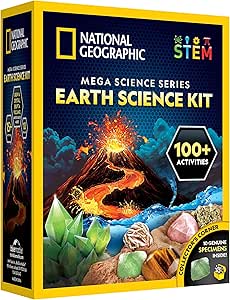 | Best for Earth Science Explorers | Recommended age: 8–12 years | Activities: 100+ | Experiments: More than 15 | VIEW ON AMAZON | See Our Full Breakdown |
| 1000X Handheld Digital Microscope for Kids with 2.0″ IPS Screen |  | Best for Looking Closer | Magnification: 1000X | Camera resolution: 2MP | Display: 2.0-inch IPS screen | VIEW ON AMAZON | See Our Full Breakdown |
| UNGLINGA 150-Experiment Science Kit for Kids – Chemistry Lab STEM Toys |  | Best for Broad Science Coverage | Recommended age: 8 years and up | Experiments: 150 | Subjects: Chemistry, physics, Earth science, and more | VIEW ON AMAZON | See Our Full Breakdown |
| science kits for kid | Experiments | Brand | Recommended age |
|---|---|---|---|
| National Geographic Amazing Ch | More than 100, plus 85 bonus household-item projects | Blue Marble | — |
| National Geographic Science Ma | More than 100 | National Geographic | — |
| Science Kit for Kids | 80 | — | — |
| GiftAmaz STEM Robot Building K | — | — | 8 years and up |
| National Geographic Magic Chem | — | — | — |
| Snap Circuits Jr. SC-100 STEM | — | — | 8+ |
| Innovakids Circuit Science Kit | — | — | — |
| National Geographic Gross Scie | 45 gross science experiments | Blue Marble | 8 years and up |
| Doctor Jupiter My First Scienc | 50+ | — | 4+ |
| Melican 60+ Science Experiment | 60+ | melican | — |
| National Geographic Junior Che | 50 | Blue Marble | 4 years and up |
| Doctor Jupiter My First Scienc | Over 100 | Doctor Jupiter | 4 years and up |
| National Geographic Earth Scie | More than 15 | National Geographic | 8–12 years |
| 1000X Handheld Digital Microsc | — | — | — |
| UNGLINGA 150-Experiment Scienc | 150 | UNGLINGA | 8 years and up |
More Details on Our Top Picks
National Geographic Amazing Chemistry Set with 100+ Experiments Ages 8-12
For kids who want a broad introduction to chemistry, this kit offers more variety than the focused magic sets in this roundup. Its 100+ experiments include crystal growing, color-changing solutions, glowing test tubes, and a bouncy ball, while test tubes, beakers, and pipettes give activities a hands-on lab feel. A bonus guide adds 85 projects using household items, which can extend the kit’s usefulness beyond its supplied experiments. Compared with the National Geographic Magic Chemistry Set, this is the better choice for ongoing exploration rather than a short performance-style activity. The tradeoff is the workload: detailed instructions and a large menu can mean more setup and adult help, especially for younger children. I’d skip it for buyers seeking quick, largely self-guided activities.
Pros:- More than 100 experiments cover a range of chemistry activities.
- Includes test tubes, beakers, and pipettes for hands-on experimentation.
- Bonus guide provides 85 additional projects using household items.
- Designed for ages 8 and up.
Cons:- The volume of experiments and detailed instructions may call for adult help.
- Setup and reading time may make activities less suited to short play sessions.
Best for: Families with children aged 8 and up who want a varied chemistry kit that can support repeated activities, including projects with household materials.
Not ideal for: Younger children or families seeking quick, low-preparation experiments that require little adult guidance.
- Brand:Blue Marble
- Age range:8 years and up
- Theme:Chemistry
- Experiments:More than 100, plus 85 bonus household-item projects
- Material type:Crystal
- Included tools:Test tubes, beakers, and pipettes
- Dimensions:8.78 x 3.19 x 11.93 inches
- Weight:1.8 pounds
Our verdict“Choose this kit for an older child who wants a deep supply of chemistry activities and has an adult available to help with setup.”
National Geographic Science Magic Kit with 100+ Experiments for Kids 8-12
This kit’s clearest appeal is its 100+ experiments paired with a science-magic theme, making it a candidate for children who are drawn to surprising demonstrations more than conventional lab work. Compared with the National Geographic Amazing Chemistry Set, which names activities such as crystal growing and supplies familiar lab tools, this listing gives less detail about what kids will actually do. That makes it harder to judge whether its experiments match a child’s interests or how much adult preparation they need. The stated age range is 8 to 12, but the available product information doesn’t describe safety guidance or age-specific instructions. I’d choose it when the magic framing is a strong draw, but favor a better-documented kit if activity details and equipment matter to your decision.
Pros:- Offers more than 100 experiments.
- Science-magic theme may appeal to children who enjoy surprising demonstrations.
- Promotes creativity and STEM learning.
- Has a stated age range of 8 to 12.
Cons:- Available product information does not identify specific experiments.
- The description provides no details about safety guidance or age-specific instructions.
- Included tools and materials are not specified.
Best for: Families shopping for a child aged 8 to 12 who is especially interested in science-themed magic and values a large stated experiment count.
Not ideal for: Buyers who want to review specific experiments, included equipment, or safety and instruction details before choosing.
- Brand:National Geographic
- Age range:8 to 12 years
- Theme:Science magic
- Experiments:More than 100
- Learning focus:STEM learning, imagination, and creativity
- Included components:Not specified in the supplied product information
Our verdict“Pick this for a magic-minded child if the broad experiment count is more important than knowing the exact activities and contents in advance.”
Science Kit for Kids – 80 Lab Experiments and Scientist Role Play
This kit leans into the feeling of being a young scientist, pairing 80 experiments with goggles, gloves, petri dishes, measuring cups, test tubes, and droppers. That equipment makes it a more role-play-oriented choice than the National Geographic Amazing Chemistry Set, whose listed tools focus on test tubes, beakers, and pipettes. Guidance cards are also included, though the product details don’t explain chemical storage or safety practices, so adult oversight still matters. Its listed age range is unusually broad, while the description says it is intended for children over 6; I’d use the latter as a cue to check fit and provide supervision. Compared with the smaller National Geographic Magic Chemistry Set, this offers more activities, but it may feel basic to older children seeking advanced experiments.
Pros:- Includes 80 experiments for repeat activity sessions.
- Provides goggles, gloves, petri dishes, measuring cups, test tubes, and droppers.
- Guidance cards support activity instructions.
- Lab accessories encourage scientist role-play.
Cons:- Some experiments may need adult supervision.
- Chemical safety and storage details are limited.
- Activities may be too basic for older or more advanced science enthusiasts.
Best for: Caregivers of children over 6 who enjoy scientist role-play and want a kit with visible lab accessories and a substantial activity count.
Not ideal for: Older or advanced young science fans seeking more challenging projects, or families who need detailed chemical storage information.
- Age range:Listed as 36 months to 12 years; description says over 6 years
- Experiments:80
- Included components:Goggles, chemical materials, petri dishes, measuring cups, test tubes, gloves, droppers, balloons, and more
- Material:Plastic
- Dimensions:1 x 1 x 1 inches
- Weight:0.75 kg
- Instruction format:Guidance cards
Our verdict“Choose this for a child over 6 who enjoys dressing up as a scientist and benefits from a broad set of lab-style accessories.”
GiftAmaz STEM Robot Building Kit for Kids, Science Experiments Set Age 8-12
Unlike the chemistry-focused kits here, this set turns science into a build-and-move project: kids assemble four robots from snap-together parts and explore circuits and motion. That makes it a stronger match for children who want to see a mechanism take shape than the National Geographic Amazing Chemistry Set, which centers on experiments with solutions and materials. Step-by-step instructions suit beginners, and the set includes four assembly kits plus pre-cut origami sheets. The tradeoff is a narrower activity range: once the four designs are built, there may be less variety than in kits offering dozens of experiments. It also requires four AA batteries, not included, so families need to supply them before building can begin. Choose it for engineering interest, not broad science coverage.
Pros:- Supports hands-on learning about circuits and motion.
- Includes four robot assembly kits with step-by-step instructions.
- Snap-together parts make the builds beginner-friendly.
- Pre-cut origami sheets add another construction element.
Cons:- Requires four AA batteries, which are not included.
- Activity variety is limited to four robot designs.
- Small parts may be unsuitable for younger children.
Best for: Children aged 8 and up who are more excited by assembling moving robots and exploring circuits than by chemistry experiments.
Not ideal for: Families seeking a wide range of science topics or a kit ready to use without sourcing additional batteries.
- Recommended age:8 years and up
- Set name:GiftAmaz STEM Robot Building Kit
- Robot designs:4
- Included components:Four robot assembly kits, tape, and seven pre-cut origami sheets
- Instruction format:Step-by-step instructions
- Highlighted features:TT motor, circuits, and robot craft projects
- Battery requirement:Four AA batteries, not included
- Manufacturer part number:E-041Y
Our verdict“Pick this for an 8-and-up builder who prefers assembling a working robot to completing a broad set of chemistry activities.”
National Geographic Magic Chemistry Set with 10 Tricks for Kids Ages 8-12
With 10 tricks, a magic wand, gloves, and an illustrated guide, this kit is built around presentation rather than a long sequence of lab projects. It is a more focused pick than the National Geographic Science Magic Kit, which lists more than 100 experiments but gives little detail about their contents; here, the smaller scope makes the magic-show format clear. The included tools and kid-friendly instructions can help children connect a demonstration with a science concept, while the wand and gloves add to the performance feel. The tradeoff is limited replay variety compared with the National Geographic Amazing Chemistry Set and its 100-plus experiments plus bonus projects. Some activities may also need adult supervision. I’d choose this for a child who values a compact, themed set over a long-running chemistry collection.
Pros:- Combines science concepts with a magic-trick format.
- Includes tools, a magic wand, gloves, and an experiment guide.
- Illustrated instructions are designed for children.
- Focused activity set may suit short demonstration sessions.
Cons:- Includes only 10 tricks, fewer activities than the larger chemistry kits.
- Some experiments may require adult supervision.
- Designed for a narrower age range of 8 to 12.
Best for: Children aged 8 to 12 who enjoy performing science demonstrations and want illustrated instructions with themed accessories.
Not ideal for: Families looking for a large collection of experiments or a kit designed for extended chemistry exploration.
- Age range:8 to 12 years
- Number of tricks:10
- Theme:Magic chemistry
- Included components:Tools, magic wand, gloves, and experiment guide
- Instruction format:Illustrated instructions
- Learning focus:Science concepts, imagination, and creativity
Our verdict“Choose this for an 8-to-12-year-old who wants to perform a small set of science-themed tricks rather than work through a large experiment collection.”
Snap Circuits Jr. SC-100 STEM Electronics Kit, 100+ Projects, Ages 8+
For kids who want to see how a circuit works by building one, Snap Circuits Jr. SC-100 is a more focused pick than the chemistry and general-experiment kits in this roundup. Its 29 snap-together components connect on a plastic grid, so children can assemble projects without tools or soldering and follow the included instructions through more than 100 builds. That makes it a practical introduction to electrical concepts, rather than a broad tour of science topics. Compared with the Innovakids Circuit Science Kit, Snap Circuits Jr. offers more listed projects, while Innovakids emphasizes 3D structures and progressive challenges. The tradeoff is that Snap Circuits Jr. needs batteries, and its fixed component set may limit experimentation unless you add compatible parts. I’d choose it for a child keen on circuits, not for families seeking varied chemistry activities.
Pros:- More than 100 project ideas provide repeated practice with basic circuits.
- Snap-together parts avoid soldering and tools, making assembly approachable for beginners.
- Numbered, colorful components make it easier to follow the project instructions.
- Hands-on builds connect electrical concepts to visible results.
Cons:- Batteries are required and are not included.
- The included component selection limits the kinds of circuits children can build without expansion parts.
- Its electronics focus offers less subject variety than general science kits.
Best for: Families with children 8 and older who want a structured, reusable introduction to basic electronics.
Not ideal for: Buyers seeking chemistry, biology, or mixed-topic experiments, or anyone who wants a kit that works without batteries.
- Recommended age:8+
- Projects:100+
- Components:29 electrical components
- Included:Plastic snap-grid, 29 electrical components, instruction manual
- Batteries:Required; not included
- Assembly:Snap-together; no tools or soldering needed
Our verdict“Choose Snap Circuits Jr. for an 8+ beginner who wants many guided electronics builds and is comfortable supplying batteries.”
Innovakids Circuit Science Kit STEM Toy for Ages 8-13
Innovakids Circuit Science Kit stands apart from Snap Circuits Jr. by turning circuit building into a three-layer spatial puzzle. Its 9 functional modules and 29 building pieces let children arrange structures as they work through 60 progressive challenges, with effects such as lighting LEDs and running fans. Because it requires no batteries or soldering and uses flip-switch operation, young builders can focus on connections and outcomes rather than power setup. Snap Circuits Jr. lists more than 100 projects, so it may suit children who want a larger catalogue of builds; Innovakids makes a stronger case for guided progression and 3D construction. Its stated age range begins at 8, and the small pieces call for care around younger siblings. I’d pick it for a child who enjoys spatial design, but not for someone wanting broad experiments beyond electronics.
Pros:- Three-layer building design adds spatial reasoning to circuit lessons.
- 60 progressive challenges offer a guided path from simpler to more advanced builds.
- No batteries or soldering are needed, reducing setup and equipment demands.
- Nine functional modules support visible outcomes such as lit LEDs and powered fans.
Cons:- Small parts can pose a choking hazard around younger children.
- Its electronics-only focus provides less subject variety than general experiment kits.
- The 60 challenges are fewer listed activities than Snap Circuits Jr.’s 100+ projects.
Best for: Children aged 8–13 who like construction challenges and want guided practice arranging circuits in three dimensions.
Not ideal for: Families with children under 8 or buyers looking for chemistry, earth science, or other non-circuit activities.
- Age range:8+ years
- Total pieces:37
- Functional modules:9
- Building pieces:29
- Challenges:60 progressive challenges
- Material:Non-toxic ABS
- Power and assembly:No batteries or soldering required; flip-switch operation
Our verdict“Choose Innovakids for an 8–13-year-old who prefers structured, three-dimensional circuit puzzles over a broad mix of science topics.”
National Geographic Gross Science Kit with 45 Experiments for Kids 8-12
When a child is more excited by a weird reaction than a conventional lab activity, the National Geographic Gross Science Kit gives science a deliberately silly hook. Its 45 experiments include activities themed around boiling boogers, glowing worms, and test-tube vomit, with illustrated instructions aimed at ages 8–12. That focused theme makes it a more playful choice than the Snap Circuits Jr. SC-100, which teaches through repeated electronics builds rather than messy demonstrations. Some activities use household items, so the kit can prompt resourceful experimentation, but it also means not every project is fully self-contained. The gross-out angle will not appeal to every child, and hands-on mess can call for adult oversight and cleanup. I’d rank it for kids who love comic, sensory science; readers seeking circuits or a more serious chemistry progression should choose another kit.
Pros:- A distinctive gross-out theme can motivate reluctant young scientists to try experiments.
- Includes 45 activities rather than a small set of demonstrations.
- Illustrated instructions support independent reading and following steps.
- Some household-item experiments encourage improvisation beyond the kit contents.
Cons:- Messy activities may require adult supervision and cleanup.
- The gross themes may put off children who prefer conventional science activities.
- Some experiments rely on household items, so the kit is not fully self-contained.
Best for: Children aged 8–12 who enjoy silly, gross-themed demonstrations and caregivers comfortable supervising hands-on activities.
Not ideal for: Kids who dislike gross-out humor, families seeking a tidy electronics kit, or buyers wanting every experiment to use only included materials.
- Brand:Blue Marble
- Recommended age:8 years and up
- Experiments:45 gross science experiments
- Educational objective:STEM
- Included components:Gross Science Kit with 45 Gross Science Experiments
- Model number:NGMEGAGRS
- Manufacturer:JMW Sales, Inc.
Our verdict“Pick this kit for an 8–12-year-old who enjoys gross humor and hands-on demonstrations, provided an adult can help manage the mess.”
Doctor Jupiter My First Science Experiments Kit for Kids Ages 4+
Doctor Jupiter My First Science Experiments Kit is the youngest-child entry in this group, with a stated age starting at 4 and more than 50 activities intended to make early STEM exploration hands-on. Its easy-to-follow, illustrated instructions are a useful fit for children who are not ready for the more electronics-focused Snap Circuits Jr. SC-100, which is recommended for ages 8 and up. That age distinction matters more than the project count: younger children may enjoy trying simple activities, but an adult may need to guide steps and supply some household items. The kit’s listed ASTM F963-17 safety standard adds a specific reference point, though it does not remove the need for supervision. Compared with Melican’s 60+ experiments, Doctor Jupiter lists fewer activities and less detail about included materials. I’d choose it as an approachable first science set, not a fully specified independent lab.
Pros:- Age guidance begins at 4, younger than the circuit kits in this roundup.
- More than 50 experiments offer a range of starting activities.
- Illustrated instructions are designed to make steps easier for young learners to follow.
- The product data lists ASTM F963-17 safety standards.
Cons:- Younger children may need adult supervision during activities.
- Some experiments may require additional household items.
- The available product details do not specify a full component list, making it harder to judge how self-contained the kit is.
Best for: Caregivers introducing science activities to children aged 4 and older who can participate with adult guidance.
Not ideal for: Older children seeking challenging electronics or highly detailed kit contents, and families who need every experiment to be self-contained.
- Recommended age:4+
- Experiments:50+
- Safety standard:ASTM F963-17
- Instruction format:Illustrated, easy-to-follow instructions
- Activity style:Hands-on STEM experiments
- Household items:Some experiments may require additional household items
Our verdict“Choose Doctor Jupiter as a guided first science kit for a child 4 or older, but expect to help with activities and gather some household supplies.”
Melican 60+ Science Experiment Kit for Kids Ages 4 and Up
For families choosing between beginner kits by activity count, Melican’s 60+ Science Experiment Kit lists more activities than Doctor Jupiter’s 50+, and its examples—volcano eruptions, dinosaur egg digging, and chemical reactions—signal a mix of hands-on themes. The stated age begins at 4, so it targets a much younger audience than the 8+ circuit kits, though adult supervision may still be needed. Melican says it includes materials, tools, and safety goggles, which suggests a more equipped starting point than a kit whose contents are less fully described. The tradeoff is that the supplied spec data names only a manual under included components, leaving the exact contents and durability unclear. I’d favor it over Doctor Jupiter when a larger listed activity count and goggles appeal, but not when precise component information is a priority.
Pros:- More than 60 experiments provide a substantial activity count for a young-child kit.
- Listed examples span volcanoes, dinosaur egg digging, and chemical reactions.
- The product description says materials, tools, and safety goggles are included.
- Age guidance starts at 4, making it more age-appropriate for young beginners than the 8+ circuit options.
Cons:- The specs list only a manual as an included component, so the contents are not clearly itemized.
- Adult supervision may be needed for experiments.
- The wide age range may leave some activities too simple or too challenging for a particular child.
- Durability details for included materials are not provided.
Best for: Caregivers of children aged 4 and up who want a broad set of guided activities with safety goggles listed among the included equipment.
Not ideal for: Buyers who need a detailed inventory of experiment materials or children seeking advanced, age-specific challenges.
- Brand:melican
- Age range:4 years and up
- Experiments:60+
- Included components listed in specs:Manual
- Model number:SYTZ2
- UPC:850060965210
- Example activities:Volcano eruptions, dinosaur egg digging, and chemical reactions
Our verdict“Choose Melican for a young beginner drawn to varied activities and included goggles, but skip it if you need a clearly itemized kit inventory.”
National Geographic Junior Chemistry Set with 50 Experiments for Kids
For a child just starting to explore science, this set puts 50 simple experiments and more than 20 lab tools within reach. Test tubes, goggles, and illustrated instructions give activities a recognizable lab feel while keeping the focus on early STEM curiosity. Compared with Doctor Jupiter My First Science Experiments Kit, it offers fewer listed experiments but names a substantial tool selection, which may suit kids who enjoy handling equipment as much as following activities. The tradeoff is age range: its activities are aimed at ages 4 and up, so older children may outgrow the level sooner than they would the broader UNGLINGA 150-Experiment Science Kit. Some experiments also rely on household items, so the kit may not supply everything for every activity.
Pros:- Offers 50 hands-on experiments for repeated introductory science play.
- Includes more than 20 lab tools, including test tubes and goggles.
- Illustrated instructions support young children as they follow activities.
- Designed for early STEM learning and curiosity.
Cons:- The introductory level may not hold the interest of older or advanced young scientists.
- Some activities require common household items beyond the included components.
Best for: Families introducing preschool and early-elementary children to simple, hands-on chemistry with child-friendly tools and illustrated directions.
Not ideal for: Older children seeking more advanced chemistry, or families who want every experiment to use only materials supplied in the box.
- Recommended age:4 years and up
- Experiments:50
- Lab tools:20+
- Included components:Test tubes, goggles, and lab tools
- Brand:Blue Marble
- Model number:NGJRCHEMT
- Dimensions:11 x 4.22 x 9.64 inches
- Weight:0.72 kg
Our verdict“Choose this set for a young beginner who wants approachable chemistry activities and a generous selection of lab tools.”
Doctor Jupiter My First Science Experiments Kit for Kids Ages 4+
The standout here is the promise of over 100 experiments for children ages 4 and up, giving families a large activity pool at an early learning level. Its listed kit contents include beakers, a conical flask, spray bottles, a funnel, goggles, a tray, and food-based materials, so activities can feel more varied than a small set of basic demonstrations. Compared with the National Geographic Junior Chemistry Set, Doctor Jupiter lists more experiments and a broad range of vessels, while the National Geographic kit specifically calls out 20-plus lab tools. The illustrated, step-by-step manual helps adults guide young children, but adult supervision is still needed for some activities. Like the National Geographic junior set, its age range makes it a less suitable choice for older kids looking for more challenging science.
Pros:- Includes over 100 experiments for a wide range of early science activities.
- Provides beakers, a flask, spray bottles, a funnel, goggles, and a tray.
- Illustrated step-by-step instructions can help adults guide young experimenters.
- Food essences, additives, and colours support hands-on activities.
Cons:- Some experiments require adult supervision, limiting independent use.
- The age-focused activities may feel too basic for older children.
- The listed contents do not specify that every activity has all required materials included.
Best for: Parents of preschool and early-elementary children who want a large selection of guided experiments and are ready to participate in some activities.
Not ideal for: Older children seeking advanced projects, or caregivers looking for a kit a young child can use independently throughout.
- Recommended age:4 years and up
- Experiments:Over 100
- Included vessels:2 beakers, 1 conical flask, 2 cups
- Other tools:Spatula, 2 stirring sticks, 2 spray bottles, funnel, safety goggles, and tray
- Activity materials:Food essences, food additives, and food colours
- Instructions:Instruction manual and bonus experiment booklet
- Brand:Doctor Jupiter
- Model number:DJ Junior Science
Our verdict“Pick Doctor Jupiter for a young child who wants many guided activities and has an adult available to help.”
National Geographic Earth Science Kit with 100+ Activities for Kids 8-12
Unlike the chemistry-focused junior sets, this kit gives ages 8–12 a clear subject to explore: Earth science. The listed projects include building a volcano, growing crystals, geologic digs, and making water tornadoes, pairing visible results with a full-color learning guide. The product describes both 100-plus activities and more than 15 experiments, so I would read those figures as a broad activity collection rather than assuming every item is a distinct experiment. Compared with UNGLINGA’s 150-experiment kit, this one is narrower in topic but more specifically centered on geology and earth processes. That focus is a strength for a child fascinated by rocks or volcanoes, but a limitation for families after a mix of chemistry, physics, and other fields. Some projects may need adult supervision.
Pros:- Centers activities on Earth science rather than general lab demonstrations.
- Includes volcano building, crystal growing, geologic digs, and water tornadoes.
- Full-color learning guide provides context beyond the experiment steps.
- Instructions are described as easy to follow.
Cons:- The subject range is limited compared with UNGLINGA’s kit covering multiple science areas.
- Some experiments may require adult supervision.
- The description gives both 100-plus activities and more than 15 experiments, which may make the activity count difficult to interpret.
Best for: Families with children ages 8–12 who are especially interested in rocks, crystals, volcanoes, and other Earth science topics.
Not ideal for: Children who want a broad survey of science subjects, or families seeking a kit with a clearly itemized supply list for every activity.
- Recommended age:8–12 years
- Activities:100+
- Experiments:More than 15
- Included experiment themes:Dueling water tornadoes, erupting volcano, crystal growing, and geologic dig kits
- Guide:Full-color learning guide
- Brand:National Geographic
Our verdict“Choose this kit when a child’s main interest is geology and Earth processes rather than a mix of science subjects.”
1000X Handheld Digital Microscope for Kids with 2.0″ IPS Screen
This is the lineup’s tool-led option: rather than a box of separate experiments, it gives kids a way to inspect and record small specimens with a 2MP camera, an onboard screen, and adjustable LED lighting. That makes it a different kind of science kit from the National Geographic Earth Science Kit, whose activities focus on guided projects such as crystal growing and geologic digs. The microscope’s photo and video storage can help a curious child revisit discoveries, while its 200 g weight supports portable exploration. The tradeoffs are practical: battery life is listed at up to two hours, and charging and data transfer use USB-C. Its controls may also be challenging for very young users to manage without help, so it suits independent observation better than preschool experiment play.
Pros:- Combines magnification with a built-in 2.0-inch IPS screen.
- A 2MP camera supports photo and video recording of observations.
- Eight adjustable LEDs help illuminate specimens.
- Lightweight 200 g build and included lanyard suit portable use.
Cons:- Battery life is listed at up to two hours per charge.
- USB-C is required for charging and data transfer.
- Controls may be complex for very young children to operate independently.
Best for: Older children who enjoy examining plants, insects, and other small objects and want to save images or video of what they find.
Not ideal for: Preschoolers needing simple guided activities, or families who want a kit with multiple experiments and consumable materials.
- Magnification:1000X
- Camera resolution:2MP
- Display:2.0-inch IPS screen
- Lighting:8 adjustable LEDs
- Battery:600mAh; up to 2 hours
- Material:ABS plastic
- Weight:200 g
- Included accessories:Instruction manual, lanyard, and USB-C data cable
- Safety certifications:CE, FCC, CPC
Our verdict“Choose this microscope for a child who wants to observe and document specimens, not for a family seeking a multi-experiment chemistry box.”
UNGLINGA 150-Experiment Science Kit for Kids – Chemistry Lab STEM Toys
For a child ready to move beyond a single science theme, UNGLINGA offers 150 experiments spanning chemistry, physics, Earth science, and more. That breadth is its clearest distinction from the National Geographic Earth Science Kit, which concentrates on geology and related topics. A step-by-step illustrated manual gives activities structure, and the kit is described as including tools and kid-friendly materials for getting started. The broad subject mix can keep a curious child engaged across different interests, though the activity count alone does not tell buyers how challenging each project is. Some experiments may still need household items, and the activities can be messy enough to call for adult oversight and cleanup. Compared with the 4-and-up Doctor Jupiter kit, UNGLINGA is aimed at older children and a wider range of science topics.
Pros:- Lists 150 experiments across chemistry, physics, Earth science, and more.
- Illustrated step-by-step manual helps children follow project instructions.
- Includes lab tools and kid-friendly materials for hands-on activities.
- Broad subject coverage offers more variety than a single-topic Earth science kit.
Cons:- Some projects may require additional household items.
- Messy activities can call for adult supervision and cleanup.
- The description does not specify the difficulty level of individual experiments.
Best for: Families with children ages 8 and up who want a varied collection covering several science subjects for weekend projects.
Not ideal for: Younger beginners, families seeking a consistently tidy activity, or buyers who expect every project to use only supplies in the box.
- Recommended age:8 years and up
- Experiments:150
- Subjects:Chemistry, physics, Earth science, and more
- Materials:Plastic
- Dimensions:11.42 x 8.67 x 3.94 inches
- Brand:UNGLINGA
- Instructions:Illustrated step-by-step manual
Our verdict“Pick UNGLINGA for an older child who wants a wide-ranging project collection and has space for occasional messy experiments.”

How We Picked
I compared the kits on the things that affect whether a child can get started and stay interested: intended age, clarity of the subject, activity variety, likely adult involvement, and the usefulness of the format beyond a single session. I also looked at whether a kit offers a distinct kind of learning—such as circuit building, observation with a microscope, or chemistry demonstrations—rather than treating every activity count as equal. Product titles and stated features inform this comparison; I do not treat them as proof that every activity is equally easy, reusable, or self-guided.
The ranking gives priority to kits with a clear audience and a distinctive, usable activity format. The National Geographic Amazing Chemistry Set leads as a broad chemistry pick; Snap Circuits Jr. ranks strongly for hands-on electronics, and the younger-child Doctor Jupiter kit fills a different age need. More narrowly themed or less clearly differentiated sets sit lower, not because a focused kit is inherently worse, but because it serves a smaller set of interests. The duplicate Doctor Jupiter listing is not counted as a separate advantage.
| science kits for kid | Brand |
|---|---|
| National Geographic Amazing Ch | Blue Marble |
| National Geographic Science Ma | National Geographic |
| Science Kit for Kids | — |
| GiftAmaz STEM Robot Building K | — |
| National Geographic Magic Chem | — |
| Snap Circuits Jr. SC-100 STEM | — |
| Innovakids Circuit Science Kit | — |
| National Geographic Gross Scie | Blue Marble |
| Doctor Jupiter My First Scienc | — |
| Melican 60+ Science Experiment | melican |
| National Geographic Junior Che | Blue Marble |
| Doctor Jupiter My First Scienc | Doctor Jupiter |
| National Geographic Earth Scie | National Geographic |
| 1000X Handheld Digital Microsc | — |
| UNGLINGA 150-Experiment Scienc | UNGLINGA |
Factors to Consider When Choosing Science Kits For Kids
Before choosing, I’d start with the child’s interests and the kind of help an adult can provide, then use age guidance and kit format to narrow the field. The questions below address common mismatches that an experiment count alone will not reveal.
Match the subject to the child, not the gift-giver
A child who likes building may return to circuits or a robot kit more readily than to a chemistry set, while one who enjoys collecting objects may prefer earth science or microscope activities. Think about what the child already chooses during unstructured play: mixing, making, observing, or assembling. A themed kit can feel more engaging, but it may have less variety outside its central topic. A general experiment set offers more kinds of activities, though that variety can come with uneven interest from one activity to the next. If you are unsure, choose a kit with a recognizable activity style rather than relying on the largest advertised count.
Treat age guidance as a starting point for supervision
The age on a box is not a guarantee that a child can follow every step alone. Reading ability, fine-motor skills, patience, and comfort with instructions all affect how independently a child can work. For a younger child, plan to participate and check the activity directions before setting up. Older children may still need help with measuring, organizing parts, or cleaning up. A common mistake is buying for the age the child will reach soon instead of the skills they have now. Choose a kit that makes shared activity enjoyable rather than one that turns every session into troubleshooting.
Ask what happens after the first session
Some activities consume ingredients or rely on a one-time demonstration; others can be repeated, adapted, or revisited with different materials. Before buying, check whether the kit depends on included supplies, household materials, batteries, or pieces that might be easy to lose. A large activity list is less useful if many projects share the same setup or cannot be repeated without replenishing materials. Reusable building components can suit children who like to experiment with different configurations, while consumable activities may be a better fit for a planned weekend project. Think about whether the child wants a series of guided outcomes or room to invent variations.
Choose guided steps or open-ended building
Guided experiments can help a child who wants a clear result and a manageable sequence of steps. Building kits and electronics projects may ask for more trial and error, which can be rewarding for a persistent child but frustrating for someone who expects quick answers. Neither style is inherently better; the tradeoff is structure versus freedom to modify. If a child gives up when a result differs from the instructions, start with a clearly guided format and join in. If they enjoy tinkering, a kit with configurable parts may offer more repeat play than a series of fixed demonstrations.
Plan for the space, cleanup, and adult time
Science activities can need a clear table, room to sort components, and a nearby place for cleanup. Chemistry-style projects may create more setup and cleanup than a compact observation activity, while small circuit pieces call for a tidy work area and careful storage. Check whether instructions call for protective equipment or materials from home before the child opens the box. A kit that sounds suitable for independent play may still need an adult to prepare materials or supervise steps. If time is limited, favor activities that can be started and put away in one sitting over a project that requires several rounds of setup.
Spend more for fit, not for a bigger number
A higher activity count does not tell you how varied, repeatable, or age-appropriate those activities are. Paying more can make sense when a kit provides a subject the child is genuinely curious about, useful reusable components, or a format that supports many rounds of exploration. It is less compelling when the extra activities are unlikely to be used or require supplies you do not have. For a first science kit, a smaller, well-matched set can be a better introduction than a large box with a broad promise. Compare the kit’s actual learning mode and likely adult workload before treating quantity as value.
Frequently Asked Questions
Which kind of science kit is easiest for a young child to start with?
Start with a kit whose age guidance matches the child and whose activities can be done with an adult nearby. In this lineup, Doctor Jupiter’s My First Science Experiments kit is the clearest fit for younger children because it is listed for ages four and up. That does not mean every child that age will be ready to follow steps independently; reading, measuring, and handling small pieces can still call for help. A parent should review the directions and prepare the work area before handing over materials. For a child who is not ready for multi-step activities, doing one experiment together is a sensible first use.
Should I choose a chemistry kit or a circuit kit?
Choose based on the kind of problem-solving the child enjoys. Chemistry kits center on mixing, observing reactions, or following a sequence to reach a result, while a circuit kit focuses on connecting parts and seeing how those connections affect a working system. Snap Circuits Jr. is the clearest electronics choice in this roundup; the National Geographic chemistry sets serve a different interest. Consider whether the child is more excited by visible changes in materials or by building something that works. If possible, ask what they want to make or discover before choosing by subject label alone.
Does a kit with more experiments offer better value?
Not by itself. A high activity count may look appealing, but the activities could vary in complexity, repeatability, or how much adult preparation they need. A smaller subject-focused kit can be a better match if the child will return to its core activity, while a larger set may suit a child who likes sampling different topics. Check whether activities use included supplies, common household materials, or consumables that run out. I would judge value by likely use and interest, not the number printed in the product name.
How can I tell whether a child can use a science kit without constant adult help?
Look beyond the age range and think about the skills the activities require: reading instructions, measuring, handling small parts, and cleaning up safely. Product descriptions may not make the adult workload clear, so review the activity directions when they are available and plan to supervise the first session. Kits for younger children are often best treated as shared activities, even when their instructions are simple. For an older child, a clear sequence and organized components can support more independent work, but some projects may still need assistance. If independent play is a priority, avoid assuming that an experiment count means a child can complete every project alone.
What should I check before buying a science kit as a gift?
Check the child’s age, interests, and what supplies or space the kit may require before choosing. A kit that needs household ingredients, a large work surface, or frequent adult help can be awkward if the family is not prepared for it. Also check whether the child already owns the same product; this roundup lists Doctor Jupiter’s My First Science Experiments kit twice, so those entries are not two distinct gift options. For a surprise gift, a clear subject such as circuits, earth science, or chemistry can help you choose around a known interest. Keep the receipt and packaging until the family can confirm that the kit fits their needs.
Conclusion
For the best overall broad chemistry option, I’d choose the National Geographic Amazing Chemistry Set; for best value in repeatable building-style play, Snap Circuits Jr. is the strongest alternative if electronics appeal to the child. The best beginner choice for younger children is Doctor Jupiter’s My First Science Experiments kit, with an adult ready to join in. For a premium-style choice by scope, consider UNGLINGA’s 150-experiment set only if the child wants many chemistry activities and the family can manage the setup. For specific interests, choose the National Geographic Earth Science Kit for nature and geology themes, the Gross Science Kit for messy-body-science curiosity, or the handheld digital microscope for close observation. Match the kit to the child’s preferred way of exploring, and the activity format will matter more than the biggest number on the box.
Halloween Picks
halloween
As an affiliate, we earn on qualifying purchases.