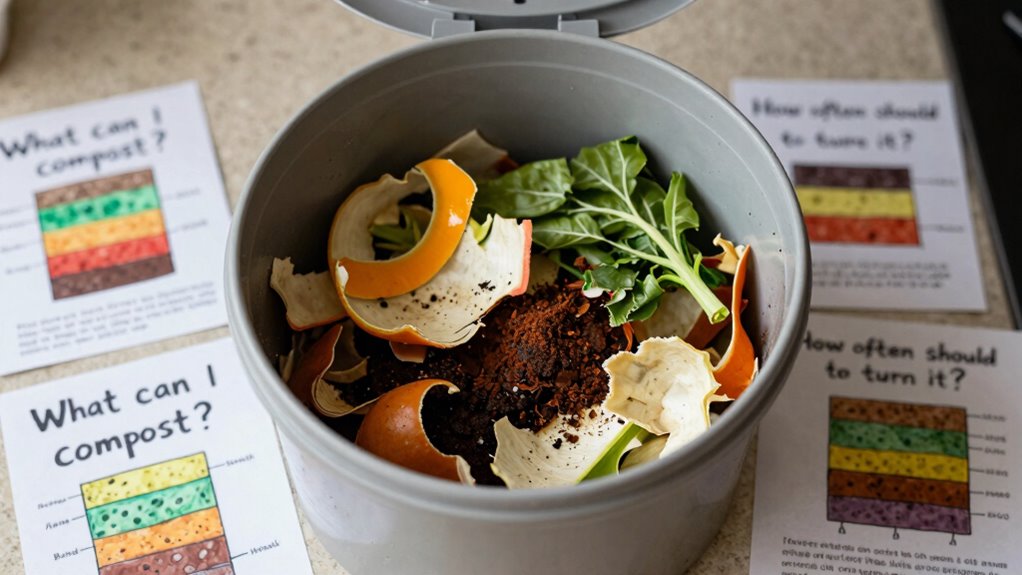

Many beginners ask how to start composting and guarantee it works well. You should balance green (nitrogen-rich) materials like fruit peels with brown (carbon-rich) items like dry leaves. Keep your compost moist but not soggy, and turn it regularly to add oxygen. If you notice bad smells, it’s usually a moisture or balancing issue. Addressing these basics helps create healthy compost—and there’s plenty more to discover about making it even better.

Get audio and creator gear delivered free with Prime
- Fast, free delivery on millions of items
- Prime Video, Amazon Music and more included
- Member-only deals all year
Key Takeaways
- How do I balance green and brown materials for effective composting?
- What conditions promote microbial activity and speed up decomposition?
- How often should I turn or aerate my compost pile?
- How do I manage moisture levels to prevent odors and improve compost quality?
- What are common troubleshooting signs and solutions for composting problems?
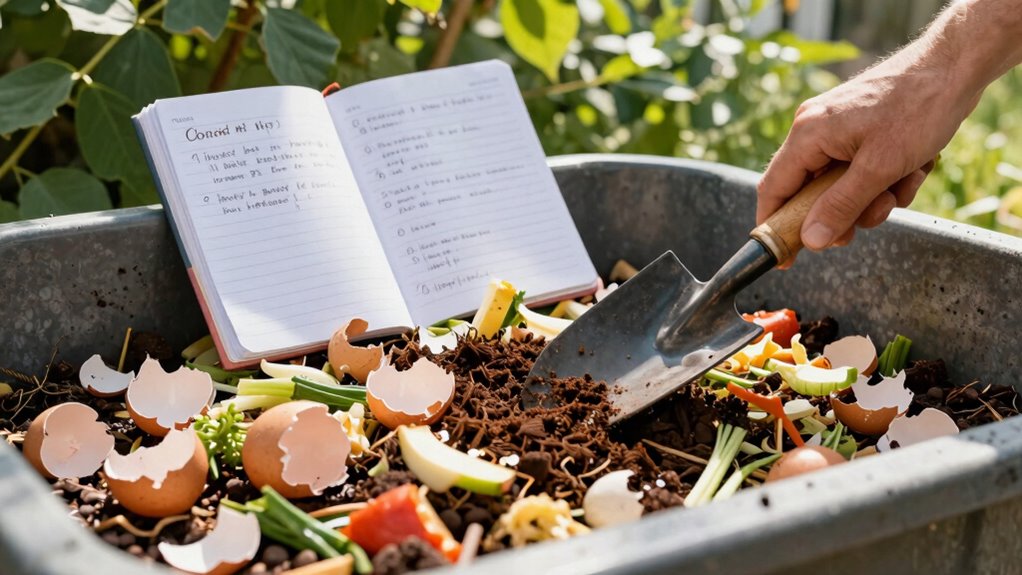
Getting started with composting can seem overwhelming at first, but asking the right questions makes the process much easier. One of the most common concerns is what materials you should add to your compost pile. You’ll want to focus on balancing green and brown materials—kitchen scraps like fruit and vegetable peels, coffee grounds, and grass clippings provide nitrogen, while dry leaves, straw, and shredded paper supply carbon. This balance is essential for effective decomposition, which ultimately boosts soil enrichment when finished compost is used in your garden. It also plays a key role in waste reduction by diverting food scraps and yard waste from landfills, reducing methane emissions. Proper composting techniques can help you achieve these goals more efficiently and sustainably. Additionally, understanding composting microbiology helps you create an environment where beneficial microbes thrive, speeding up the composting process. Recognizing the importance of microbial activity can further optimize your composting efforts by encouraging the right conditions for these microbes to flourish.
Balancing green and brown materials is key to successful composting and enriching your garden soil.
Another frequent question revolves around how to maintain the right conditions in your compost bin. You may wonder how often to turn the pile or how to tell if it’s too dry or too wet. Regular turning oxygenates the compost, speeding up the breakdown process, while maintaining proper moisture—like a damp sponge—ensures microbes stay active. If your compost smells bad or feels overly wet, you’ll need to add dry materials or turn it more frequently. Understanding composting conditions can help you troubleshoot common issues and keep your compost healthy. Keeping the right environment helps produce nutrient-rich compost that can greatly enrich your soil, making your plants healthier and reducing the need for chemical fertilizers.
As an affiliate, we earn on qualifying purchases.
Frequently Asked Questions
How Long Does It Take for Compost to Be Ready?
Compost typically takes about 3 to 6 months to be ready, depending on factors like soil nutrients and compost temperature. You’ll know it’s ready when it looks dark, crumbly, and earthy, with a rich smell. Regularly turning your pile helps maintain the right compost temperature, speeding up the process. Keep an eye on moisture levels and guarantee proper aeration to produce nutrient-rich soil perfect for your garden.
Can I Compost Dairy and Meat Products?
You can compost dairy and meat products, but it’s generally not recommended because dairy disposal and meat decomposition can attract pests and create odors. If you choose to include them, use a well-maintained, hot compost pile with carbon-rich materials to balance the decomposition process. Keep in mind that composting dairy and meat takes longer and requires careful management to prevent issues, making it best suited for advanced composters.
What Is the Ideal Compost Bin Size for a Small Garden?
For a small garden, a compost bin around 3 to 4 feet in diameter is ideal. Studies show that proper garden aeration can reduce composting time by up to 50%. You want a bin size that maintains ideal compost temperature and allows airflow, ensuring efficient decomposition. Too small, and it’ll get smelly; too large, and it’ll be hard to manage. Choose a size that balances space, aeration, and temperature for best results.
How Do I Prevent Pests From Accessing My Compost?
To prevent pests from accessing your compost, use pest deterrent techniques like securing your composting container with a tight-fitting lid or heavy-duty hardware cloth. Guarantee your composting container security by burying food scraps deep within the pile and avoiding adding meat or dairy, which attract pests. Regularly turning your compost also helps keep pests away by aerating it and disrupting their access points. These steps will help keep pests at bay effectively.
Is Composting Suitable for Indoor Apartments?
Yes, composting is suitable for indoor apartments, especially with indoor gardening setups. You can use small, odor-controlled compost bins designed for indoor use, which help manage waste and keep smells at bay. Don’t fall for composting myths that it’s messy or attracts pests indoors—proper bin selection and maintenance make it easy. This way, you turn kitchen scraps into nutrient-rich compost without disrupting your apartment’s cleanliness or air quality.
kitchen compost pail with charcoal filter
As an affiliate, we earn on qualifying purchases.
As an affiliate, we earn on qualifying purchases.
Conclusion
Don’t let confusion hold you back from composting. Imagine your backyard transforming into a lush, vibrant space, full of life and growth—all thanks to your efforts. Yes, there’s a learning curve, but every question you ask brings you closer to success. Remember, even small steps make a big difference. Keep going, stay curious, and soon you’ll enjoy the satisfaction of turning waste into wonderful, nutrient-rich compost for your garden.
As an affiliate, we earn on qualifying purchases.
As an affiliate, we earn on qualifying purchases.
Halloween Picks
halloween
As an affiliate, we earn on qualifying purchases.