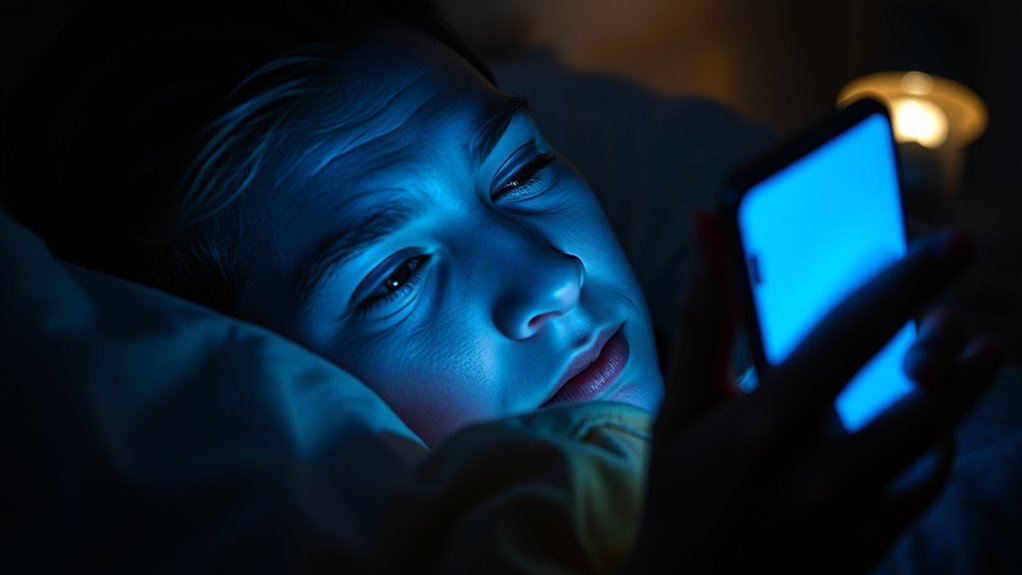

Blue light exposure in the evening inhibits your melatonin production, making it harder for you to fall asleep and causing lighter, fragmented sleep. It also disrupts your body’s internal clock, confusing your brain about when it’s day or night. Over time, this can lead to poorer sleep quality and health issues. If you want to learn more about how blue light impacts your sleep and what you can do, keep going.

Get audio and creator gear delivered free with Prime
- Fast, free delivery on millions of items
- Prime Video, Amazon Music and more included
- Member-only deals all year
Key Takeaways
- Blue light exposure inhibits melatonin production, delaying sleep onset and reducing sleep quality.
- It disrupts the circadian rhythm, confusing the body about day and night signals.
- Suppressed melatonin and circadian disruption lead to fragmented, less restorative sleep.
- Chronic blue light exposure can impair immune function, memory, and overall health.
- Using filters, limiting screen time before bed, and blue light glasses mitigate sleep disruption.
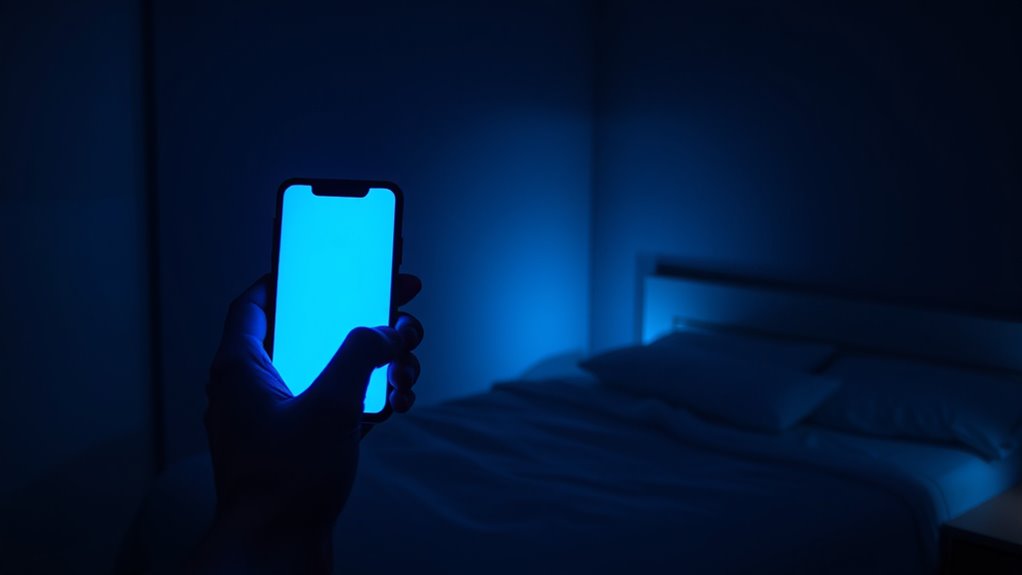
Many people underestimate how much blue light from screens can disrupt their sleep. When you spend hours on your phone, tablet, or computer in the evening, you’re exposing yourself to a high level of blue light, which can interfere with your body’s natural processes. One of the key ways blue light affects sleep is through melatonin suppression. Melatonin is the hormone responsible for signaling to your body that it’s time to wind down and prepare for sleep. Normally, melatonin levels rise in the evening, helping you feel sleepy, and fall in the morning, promoting wakefulness. However, blue light exposure, especially during the evening hours, can inhibit melatonin production, making you feel alert when you should be winding down. This suppression delays your sleep onset, reduces sleep quality, and can leave you feeling groggy in the morning.
Your circadian rhythm, often called your internal clock, governs your sleep-wake cycle, syncing it with the natural light-dark pattern outside. Blue light has a powerful influence on this rhythm because it signals to your brain that it’s daytime, even if it’s late at night. When your circadian rhythm is disturbed by blue light, it throws off your sleep timing and overall sleep quality. Instead of feeling sleepy at your usual bedtime, you might stay awake longer, tossing and turning as your body remains confused about whether it’s day or night. Over time, this disruption can lead to irregular sleep patterns, decreased REM sleep, and daytime fatigue. Blue light exposure can also impact other biological processes regulated by your internal clock, further affecting your health.
Many people don’t realize the extent to which blue light can affect their circadian rhythm. It’s not just about feeling alert; it’s about the fundamental biological processes that regulate your sleep cycle. The suppression of melatonin caused by blue light doesn’t only delay sleep; it also impacts the quality of sleep you do get. Reduced melatonin levels can make your sleep lighter and more fragmented, preventing you from reaching the restorative stages of sleep that you need. This can have longer-term effects on your health, including weakened immune function, impaired memory, and increased risk of chronic conditions.
Understanding this connection is vital for protecting your sleep health. If you want to minimize blue light’s impact, consider limiting screen time in the hours before bed, using blue light filters, or wearing glasses that block blue light. Recognizing how blue light influences your circadian rhythm and melatonin production empowers you to take steps that help you sleep better, feel more rested, and maintain your overall well-being.
Frequently Asked Questions
Does Blue Light Affect Sleep Differently in Children Than Adults?
You might wonder if blue light affects children’s sleep differently than adults. Due to developmental differences, children often have heightened visual sensitivity, making their eyes more receptive to blue light. This increased sensitivity can disrupt their circadian rhythms more easily than in adults. As a result, limiting screen time before bed is especially important for children to help promote better sleep and support healthy development.
Can Blue Light Exposure Improve Alertness During Daytime?
Imagine blue light as your daytime fuel, sharpening your focus like a spotlight on a stage. During the day, exposure to blue light helps regulate your circadian rhythm and boosts cognitive enhancement, making you more alert and productive. Scientific studies show that strategic blue light exposure can improve alertness, so you stay energized and focused. Just be mindful to limit it at night to protect your sleep cycle.
Are There Any Long-Term Health Effects From Blue Light Exposure?
You might wonder if blue light has long-term health effects. It can impact your eye health by causing digital eye strain and possibly contributing to age-related macular degeneration. Additionally, blue light exposure may lead to circadian disruption, affecting your sleep patterns and overall health. While more research is needed, limiting screen time before bed and using blue light filters can help protect your eyes and maintain healthy circadian rhythms.
How Does Blue Light Impact Melatonin Production at Different Ages?
Blue light affects your melatonin production differently at various ages because your circadian rhythm and light sensitivity change over time. When you’re younger, your eyes are more sensitive, so blue light can suppress melatonin more, disrupting sleep. As you age, your sensitivity decreases, but exposure still impacts your circadian rhythm. Understanding these changes helps you manage blue light exposure to protect your sleep health across all ages.
Can Blue Light Filters Completely Eliminate Sleep Disruption Risks?
Blue light filters can reduce exposure, but they can’t completely eliminate sleep disruption risks. Their filter effectiveness varies, so while they help mitigate some impact on melatonin production, they don’t offer full protection. You should combine filters with good sleep habits for better risk mitigation. Relying solely on filters isn’t enough; maintaining a consistent sleep schedule and limiting screen time before bed are also vital.
Conclusion
Remember, a little knowledge goes a long way. Limiting your exposure to blue light before bed can markedly improve your sleep quality. As the saying goes, “An ounce of prevention is worth a pound of cure.” So, try dimming screens an hour before bedtime, or use blue light filters. Prioritizing your sleep isn’t just about comfort—it’s about caring for your health. Small steps today can lead to better rest and brighter days tomorrow.
Fall Picks
fall essentials
As an affiliate, we earn on qualifying purchases.