The story of the future of work keeps changing shape as technology advances and workplace expectations evolve. You’ll see AI automate routine tasks, freeing you to focus on creative and strategic work. Remote collaboration tools and digital platforms are making physical proximity less important, emphasizing new skills like digital literacy and self-management. As roles adapt and workplace culture shifts toward flexibility and wellbeing, staying tuned to these changes will reveal even more about where work is headed.

Get audio and creator gear delivered free with Prime
- Fast, free delivery on millions of items
- Prime Video, Amazon Music and more included
- Member-only deals all year
Key Takeaways
- Rapid technological advances, especially AI, continuously redefine roles, workflows, and productivity in the workplace.
- Remote collaboration tools and digital literacy are transforming team dynamics and communication strategies.
- Evolving workplace culture emphasizes flexibility, autonomy, mental health, and work-life balance.
- Workers’ active engagement and adaptability shape the ongoing transformation of job roles and organizational practices.
- The future of work remains dynamic, driven by innovation, changing expectations, and the integration of new technologies.
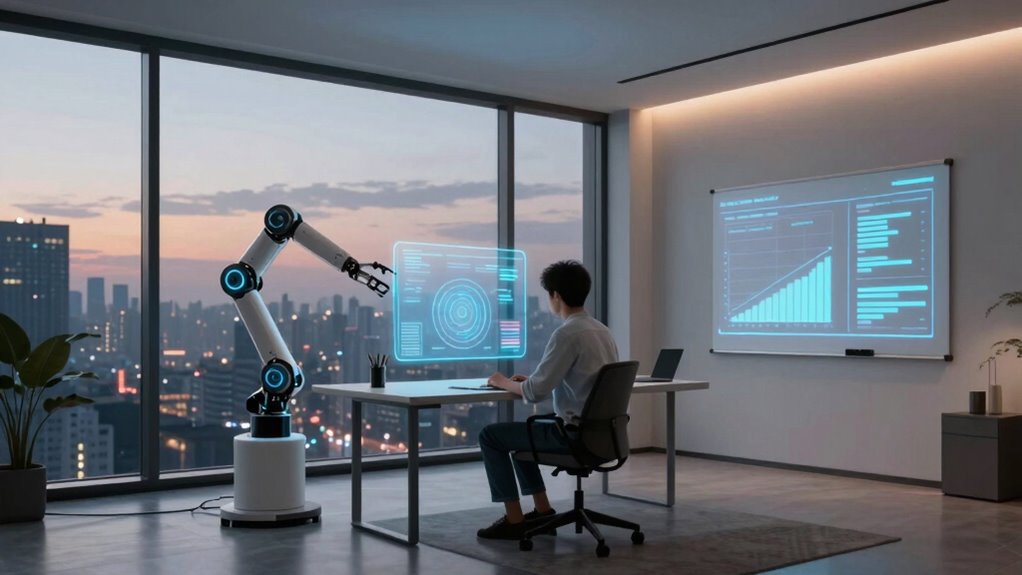
The story of the future of work is constantly evolving, shaped by technological advances, shifting employee expectations, and economic changes. You’re living through a time when AI integration is transforming how tasks are completed, making processes smarter and more efficient. Instead of manual data entry or repetitive tasks, you now benefit from AI-powered tools that analyze, predict, and optimize workflows in real-time. This shift means you can focus more on strategic, creative, or interpersonal aspects of your job, knowing that technology handles the routine. It’s not about replacing you but empowering you to be more productive and innovative. As automation technology advances, it further reshapes the boundaries of traditional roles and workflows.
AI is transforming work by automating routine tasks, enabling greater focus on creativity and strategic thinking.
Remote collaboration is another key element in this evolving story. You might have started working remotely out of necessity, but now it’s becoming a standard part of organizational culture. With advanced communication platforms and cloud-based tools, you can connect with colleagues across different time zones effortlessly. This flexibility allows you to balance work and personal life better, driving job satisfaction and engagement. However, it also demands new skills, like managing virtual meetings effectively and maintaining clear communication. You learn to navigate digital spaces that require different etiquette and attentiveness compared to face-to-face interactions. Additionally, developing digital literacy is increasingly essential as technology becomes more embedded in your daily work routine. Staying current with emerging tools and platforms is crucial to maintaining productivity and collaboration in this environment.
As AI and remote collaboration become more integrated into your work environment, you notice a shift in team dynamics. Collaboration no longer relies solely on physical proximity; instead, it’s about leveraging technology to create seamless workflows. You might find yourself participating in virtual brainstorming sessions, where AI tools provide insights or generate ideas, making meetings more productive. The emphasis on transparency and open communication grows, as remote teams need to stay aligned despite physical distance. You adapt to using project management software that keeps everyone updated in real-time, reducing misunderstandings and delays. This transformation underscores how essential digital collaboration tools are for maintaining effective teamwork and project execution.
This evolving landscape also influences your expectations of workplace culture. You seek more autonomy, valuing flexible hours and the ability to work from anywhere. Employers, in turn, recognize that attracting top talent involves providing tools and environments that support remote collaboration and AI-driven workflows. You’re encouraged to develop new skills, such as digital literacy and self-management, to thrive in this shifting environment. The rise of remote work has also led to a greater emphasis on mental health and well-being, prompting organizations to adopt policies that support work-life balance. The future of work isn’t just about new technology; it’s about how you embrace change, continuously learn, and adapt to new ways of working.
In this ongoing story, your role becomes more dynamic, shaped by the integration of AI and the increasing importance of remote collaboration. You’re not just a passive participant but an active contributor to shaping how work evolves, balancing technology’s potential with your own adaptability and creativity.
Popular right now

Vitamix 5200 Professional-Grade Blender, 64 oz. Container, Black

Bose QuietComfort Wireless Bluetooth Headphones with Active Noise Cancellation, Mic, USB‑C Charging, Deep Bass, 24‑Hour Battery – White Smok

Apple AirPods Pro 3 Wireless Earbuds with Active Noise Cancellation
As an affiliate, we earn on qualifying purchases.
Frequently Asked Questions
How Will Remote Work Impact Global Economic Inequality?
Remote work could widen economic disparities if you’re on the wrong side of the digital divide. Those with reliable internet and tech access benefit more, boosting their earning power. Conversely, individuals lacking digital resources may fall behind, deepening global economic inequality. To prevent this, you need widespread digital inclusivity and affordable connectivity, ensuring everyone has a fair shot at remote opportunities and economic growth.
What Skills Will Be Most Valuable in the Future Workplace?
In the future workplace, you’ll find that future skills like digital literacy, critical thinking, and emotional intelligence are most valuable. To stay ahead, focus on adaptability training, which helps you adjust quickly to new technologies and evolving roles. By continuously developing these skills, you’ll remain competitive and capable of tackling unforeseen challenges, making you an essential asset in an ever-changing work environment.
How Can Companies Prepare for Rapid Technological Changes?
You should prioritize fostering workforce adaptability to navigate automation challenges effectively. Embrace continuous learning and invest in reskilling programs, even as technology evolves rapidly. Keep communication transparent, encouraging employees to develop versatile skills. By staying agile and proactive, your company can turn technological disruptions into opportunities. This approach guarantees your team remains resilient, adaptable, and prepared for the unpredictable shifts that define the future of work.
Will AI Replace Most Human Jobs in the Future?
AI automation might displace some jobs, but it’s unlikely to replace most human roles entirely. You should focus on how AI can complement your work, enhancing productivity and creating new opportunities. While job displacement may occur in certain sectors, adaptability and continuous learning will help you stay relevant. Embracing AI technology now can position you for success, turning potential challenges into avenues for growth rather than fearing full automation replacing humans.
How Will Workplace Culture Evolve With Changing Work Dynamics?
You’ll see workplace culture evolve as you prioritize employee engagement and leadership development. With remote work and flexible schedules, you’ll foster inclusivity and trust, encouraging open communication. Leaders will focus more on coaching rather than directing, creating a supportive environment. As work dynamics change, your organization will emphasize continuous learning and adaptation, helping everyone stay motivated and connected, ultimately shaping a resilient, innovative culture that thrives amidst uncertainty.
Conclusion
As you navigate the evolving landscape of work, remember that change is the only constant. The story of the future of work keeps shifting, demanding your adaptability and resilience. Embrace new technologies, skills, and ways of collaborating, because the more flexible you are, the better you’ll thrive. As the saying goes, “The only thing we have to fear is fear itself.” Stay curious and open-minded, and you’ll shape your own success in this ever-changing world.