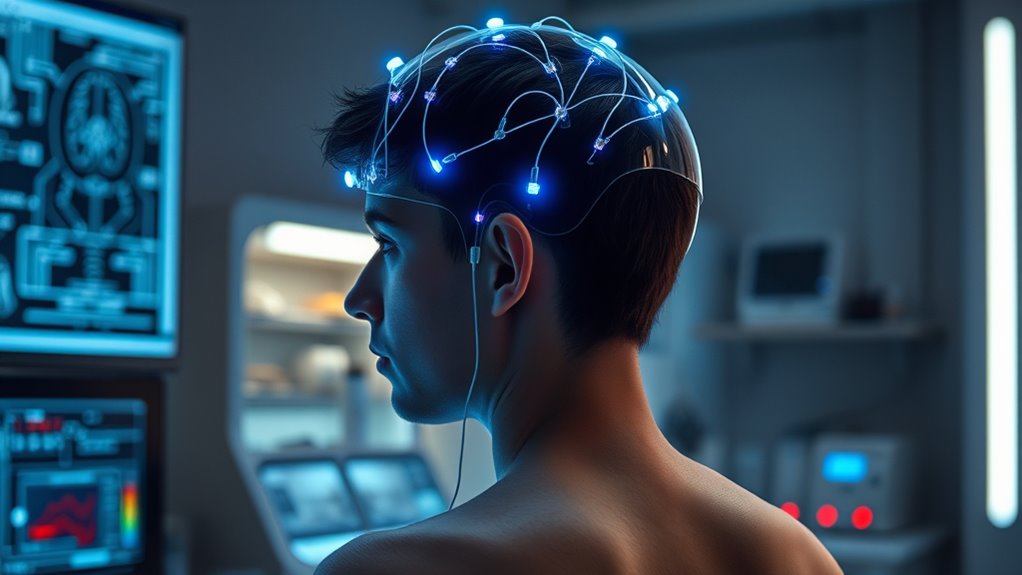

Brain-computer interfaces (BCIs) connect your brain signals directly to computers, allowing seamless communication and control between your mind and machines. They work by capturing electrical activity from neurons and translating it into commands, which can operate devices, restore functions, or enhance abilities. With sensory feedback, BCIs create more intuitive interactions. If you explore further, you’ll uncover how these innovations are transforming personal, medical, and technological landscapes, paving the way for a future of closer human-machine integration.

Get audio and creator gear delivered free with Prime
- Fast, free delivery on millions of items
- Prime Video, Amazon Music and more included
- Member-only deals all year
Key Takeaways
- BCIs connect brain signals directly to devices, enabling seamless communication between the mind and machines.
- Neural decoding transforms raw electrical activity into meaningful commands for device control.
- Sensory feedback provides real-time sensations, enhancing natural interaction and precision in BCI-controlled tasks.
- Applications include restoring movement for paralyzed individuals and improving virtual reality experiences.
- Future BCIs aim for intuitive, responsive interfaces that blend human cognition with advanced machine capabilities.
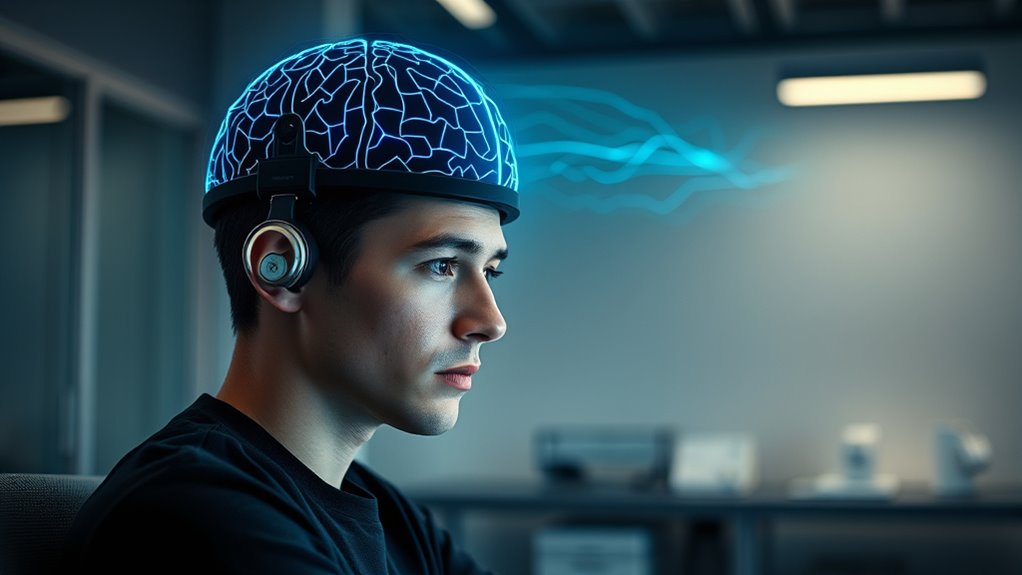
Have you ever wondered how technology can directly connect your brain to a computer? This fascinating possibility is becoming more real thanks to advances in brain-computer interfaces (BCIs). At its core, BCI technology reads signals from your brain, interprets them through neural decoding, and then translates those signals into commands that a computer can understand. The process involves capturing the electrical activity of neurons, often with electrodes placed on or inside your brain, and decoding the patterns to determine your intentions or thoughts. The key is neural decoding — transforming raw brain signals into meaningful information that can control devices, restore lost functions, or enhance human capabilities. But it’s not just about reading your brain; sensory feedback plays a crucial role in making these interactions feel more natural and intuitive. Sensory feedback provides you with real-time sensations, such as touch or movement, allowing you to feel as though you’re directly interacting with the environment through your brain’s signals.
When neural decoding is combined with sensory feedback, the experience becomes remarkably seamless. For example, imagine controlling a robotic arm with your mind. As you think about moving your hand, neural decoding translates those thoughts into commands that guide the robotic limb. Meanwhile, sensory feedback can send signals back to your brain, simulating the sensation of touch or pressure from the robotic hand. This loop creates a more natural experience, where your brain perceives the robotic device as an extension of your body. The integration of sensory feedback also helps improve control accuracy and speed, making the interface more effective for tasks like prosthetic limb operation or restoring mobility after injury. Advances in neural decoding algorithms, combined with sophisticated sensory feedback systems, are rapidly pushing BCIs from experimental setups to real-world applications. Incorporating neural decoding and sensory feedback systems can also enhance the precision and responsiveness of these interfaces, making them more adaptable to individual needs.
You’re probably wondering how this impacts you personally. As BCI technology evolves, it could revolutionize how you communicate, work, and interact with your surroundings. For individuals with paralysis or neurological conditions, BCIs offer hope for regaining movement or communication abilities. For healthy users, it could enhance gaming, virtual reality experiences, or even augment cognitive functions. The seamless integration of neural decoding and sensory feedback brings us closer to a future where the boundary between mind and machine dissolves. As research progresses, expect these interfaces to become more intuitive, responsive, and capable of supporting complex tasks. Ultimately, BCIs are transforming the way we understand and harness the brain’s potential, opening up a world of possibilities where human and machine work together more closely than ever before.
Frequently Asked Questions
How Secure Are Brain-Computer Interfaces Against Hacking?
Brain-computer interfaces face significant hacking vulnerabilities, but neural encryption helps improve security. While encryption protects your neural data, hackers could still exploit weaknesses in the system’s hardware or software. You should stay aware of potential risks and support improvements in security protocols. Overall, BCI security is evolving, but it’s not entirely foolproof yet, so ongoing advancements are vital to keep your neural information safe from hacking threats.
Can BCIS Be Used for Enhancing Cognitive Abilities?
Did you know that some BCIs have shown potential for neuroplasticity enhancement? You can use them to boost your cognitive abilities, like memory augmentation and learning skills. By directly stimulating specific brain regions, BCIs may help improve focus, problem-solving, and mental agility. While still in early stages, these interfaces could soon enable you to enhance your brain’s capacity, making learning faster and memory sharper than ever before.
What Are the Ethical Implications of Mind-Reading Technology?
You should consider that mind-reading technology raises serious ethical concerns, especially around privacy concerns and consent challenges. As you develop or use such technology, you might inadvertently access thoughts without permission, risking privacy violations. Ensuring clear, informed consent becomes essential to prevent misuse. You need strict regulations to protect individual rights and prevent potential misuse or abuse of sensitive mental data, maintaining trust and ethical integrity.
How Long Does It Take to Develop a Reliable BCI?
Developing a reliable BCI takes at least 5 to 10 years, much like training for a marathon. Neural adaptation and hardware durability are key hurdles you face, requiring consistent refinement. For example, early prototypes often failed after months due to hardware wear, but ongoing advancements now improve longevity. Patience and rigorous testing are essential, as achieving a seamless interface demands continuous innovation and understanding of brain signals.
Are There Health Risks Associated With Long-Term BCI Use?
Long-term BCI use can pose health risks, especially concerning neural tissue damage and device durability. You might experience inflammation or neural scarring where electrodes contact your brain, potentially leading to cognitive or sensory issues. Additionally, device durability is essential; if implants degrade or malfunction, it could cause tissue irritation or infections. Regular monitoring and advances in biocompatible materials help mitigate these risks, but long-term safety remains a key focus of ongoing research.
Conclusion
As you explore brain-computer interfaces, remember they’re like bridges connecting your mind to machines, turning the once-impossible into reality. These innovations are the keys that open new worlds of possibility, transforming how we communicate, heal, and enhance ourselves. Just as a bridge carries us across rivers, BCIs carry your thoughts into the digital domain, blending human potential with technological power. Embrace this journey, for it’s the dawn of a new era where minds and machines unite.
Halloween Picks
halloween
As an affiliate, we earn on qualifying purchases.