
Choosing the right professional studio microphone is essential for achieving high-quality recordings, whether you’re a musician, podcaster, or streamer. The Bluebird SL stands out as the best overall due to its versatility and clarity, making it suitable for a wide range of studio applications. Meanwhile, the Neumann TLM 102 offers premium sound quality for those who prioritize studio-level performance, though at a higher price point. The main tradeoffs in this category typically involve balancing price, build quality, and sound fidelity. Continue reading for a detailed breakdown of these options and how to choose the right mic for your needs.

Get audio and creator gear delivered free with Prime
- Fast, free delivery on millions of items
- Prime Video, Amazon Music and more included
- Member-only deals all year
Complete the kit

Key Takeaways
- Top-tier microphones like the Neumann TLM 102 deliver exceptional sound but come with a premium price, making them ideal for professional studios.
- The Bluebird SL offers a versatile and balanced sound profile, making it the best overall choice for a wide range of recording tasks.
- Budget-friendly options such as the Audio-Technica AT2020 provide solid performance for beginners or those on a tight budget, but may lack some studio finesse.
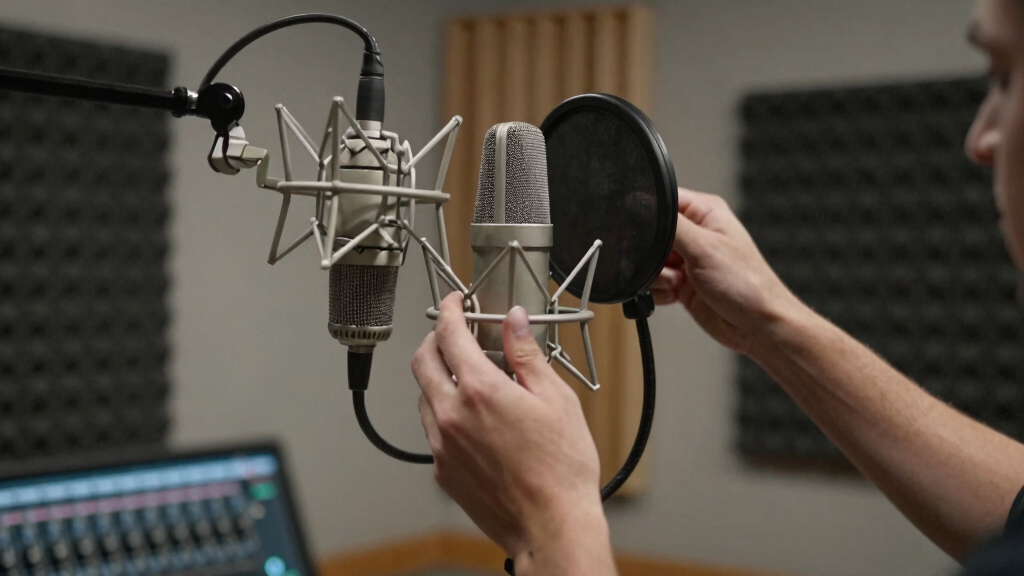
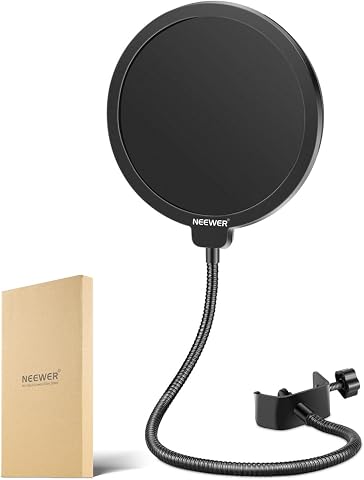
- Many professional mics include accessories like shock mounts and pop filters, which can significantly improve sound quality and ease of use.
- Choosing between XLR and USB options depends on your setup; XLR microphones generally offer higher sound quality but require additional equipment.
| Bluebird SL XLR Cardioid Condenser Microphone for Recording, Streaming, Podcasting, Gaming |  | Best Overall — Versatile, professional-grade condenser with extensive features | Type: Condenser Microphone | Pattern: Cardioid | Diaphragm: Large | VIEW LATEST PRICE | See Our Full Breakdown |
| Neumann TLM 102 Large-Diaphragm Condenser Microphone – Nickel |  | Best Premium — Compact, transparent sound with a professional-grade build | Type: Condenser Microphone | Polar Pattern: Cardioid | Diaphragm Size: Large | VIEW LATEST PRICE | See Our Full Breakdown |
| AKG Pro Audio P120 Condenser Microphone |  | Best Budget — Affordable condenser with versatile features for home and studio | Polar Pattern: Cardioid | Frequency Bandwidth: 20 – 20000 Hz | Equivalent Noise Level: 19 dB-A | VIEW LATEST PRICE | See Our Full Breakdown |
| RØDE NT1 Signature Series Large-Diaphragm Condenser Microphone with Shock Mount, Pop Filter, and XLR Cable |  | Best for Studio Quality — Low-noise, high-sensitivity mic with comprehensive accessories | Type: Large-diaphragm condenser | Polar Pattern: Cardioid | Capsule Size: 1 inch | VIEW LATEST PRICE | See Our Full Breakdown |
| Audio-Technica AT2020 Cardioid Condenser Studio XLR Microphone |  | Best Entry-Level — Versatile, reliable condenser for home and project studios | Output connector: 3 pin XLRM | Polar pattern: Cardioid | Application: Studio recording | VIEW LATEST PRICE | See Our Full Breakdown |
| Audio-Technica AT2035 Cardioid Condenser Microphone |  | Best Overall for Versatile Studio and Streaming Use | Polar Pattern: Cardioid | Diaphragm: Large | High Pass Filter: Switchable 80Hz | VIEW LATEST PRICE | See Our Full Breakdown |
| AKG C104 Professional Large Diaphragm Cardioid Condenser Microphone | 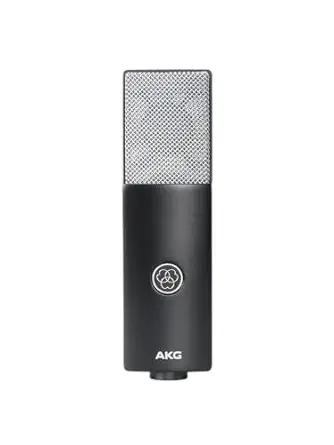 | Best Value for Eco-Friendly High SPL Recording | Type: Condenser Microphone | Polar Pattern: Cardioid | Maximum SPL: 143 dB | VIEW LATEST PRICE | See Our Full Breakdown |
| AKG Pro Audio C414 XLII Large Diaphragm Studio Condenser Microphone |  | Best for Versatile Studio Recording with Multiple Polar Patterns | Polar Patterns: Nine (including Cardioid, Figure-8, Hypercardioid, Omnidirectional, Wide Cardioid) | Frequency Bandwidth: 20 – 20000 Hz | Equivalent Noise Level: 6 dB-A | VIEW LATEST PRICE | See Our Full Breakdown |
| Audio-Technica AT2020 Cardioid Condenser Microphone Bundle with Accessories |  | Best for Home and Project Studios with Complete Setup | Type: Condenser microphone | Polar Pattern: Cardioid | Output Connector: 3-pin XLRM | VIEW LATEST PRICE | See Our Full Breakdown |
| MAONO XLR/USB Condenser Microphone with Studio-Quality Sound and Accessories |  | Best Versatile Microphone with Dual Connectivity and Professional Features | Sampling Rate: 192kHz/24bit | Frequency Response: 30Hz-16kHz | Polar Pattern: Cardioid | VIEW LATEST PRICE | See Our Full Breakdown |
| AKG P220 Perception 220 Professional Studio Microphone |  | Best Rugged Build for Daily Studio Use | Body Material: All-metal | Design: Robust and roadworthy | Origin: Designed and engineered in Vienna, Austria | VIEW LATEST PRICE | See Our Full Breakdown |
| professional studio microphone | Polar Pattern |
|---|---|
| Bluebird SL XLR Cardioid Conde | — |
| Neumann TLM 102 Large-Diaphrag | Cardioid |
| AKG Pro Audio P120 Condenser M | Cardioid |
| RØDE NT1 Signature Series Larg | Cardioid |
| Audio-Technica AT2020 Cardioid | Cardioid |
| Audio-Technica AT2035 Cardioid | Cardioid |
| AKG C104 Professional Large Di | Cardioid |
| AKG Pro Audio C414 XLII Large | — |
| Audio-Technica AT2020 Cardioid | Cardioid |
| MAONO XLR/USB Condenser Microp | Cardioid |
| AKG P220 Perception 220 Profes | — |
More Details on Our Top Picks
Bluebird SL XLR Cardioid Condenser Microphone for Recording, Streaming, Podcasting, Gaming
The Bluebird SL stands out for its ability to deliver broadcast-quality sound with crystal clarity and depth, making it ideal for high-end recording and streaming setups. Compared with the RØDE NT1, it offers more advanced features like a high-pass filter and -20dB pad, providing greater flexibility for diverse recording scenarios. Its large diaphragm captures nuanced tones, but the need for an external XLR interface can add complexity and cost, making it less suitable for beginners or those seeking a simple plug-and-play solution. The included shockmount and case enhance durability and convenience, but the overall price may be a barrier for entry-level users.
Pros:- Delivers professional broadcast-quality sound with clarity and depth
- Versatile features including high-pass filter and -20dB pad
- Includes shockmount and protective case for durability
Cons:- Requires an XLR audio interface or mixer, adding complexity and cost
- Higher price point compared to entry-level microphones
Best for: Professional content creators and streamers seeking a flexible, high-quality microphone with advanced features
Not ideal for: Beginners or those on a tight budget who prefer USB microphones for simplicity
- Type:Condenser Microphone
- Pattern:Cardioid
- Diaphragm:Large
- Connection:XLR
- Features:High-Pass Filter, -20dB Pad, Shockmount, Protective Case
- Diaphragm Material:Gold-Sputtered Mylar
Our verdict“This mic is a strong choice for experienced users who need high-quality, flexible recording capabilities.”
Neumann TLM 102 Large-Diaphragm Condenser Microphone – Nickel
The Neumann TLM 102 excels in delivering pristine, transparent sound with a compact design, making it suitable for professional studios where space is limited. Its transformerless circuitry reduces coloration, offering a very neutral, accurate tone. Compared to the RØDE NT1, it provides a more refined, detailed output, but comes at a significantly higher price point, which may not be justifiable for hobbyists. Its rugged construction and ability to handle high SPLs make it versatile for vocals and instruments alike, but it requires phantom power and careful handling due to its premium build. This microphone is well-suited for professionals seeking clarity and durability in a smaller footprint.
Pros:- High-quality, transparent sound reproduction
- Compact and durable build
- Suitable for high SPL sources without distortion
Cons:- Premium price may be prohibitive for some users
- Requires phantom power to operate
Best for: Professional studio engineers and vocalists demanding high fidelity and compactness
Not ideal for: Home users or beginners who cannot justify the premium price or need USB connectivity
- Type:Condenser Microphone
- Polar Pattern:Cardioid
- Diaphragm Size:Large
- Design:Transformerless
- Color:Nickel
Our verdict“Ideal for professionals who prioritize clarity and space efficiency over budget constraints.”
AKG Pro Audio P120 Condenser Microphone
The AKG P120 offers a compelling balance of affordability and functionality, making it a practical choice for those starting out or with limited budgets. While it doesn’t match the nuanced detail of the Neumann TLM 102, it handles loud sources up to 150 dB SPL and boasts a durable build, suitable for both studio and live environments. Its cardioid pattern and included accessories add to its versatility, though it lacks a shock mount and has limited polar pattern options, which could affect sound isolation in certain settings. Its straightforward design and price make it a sensible entry point for semi-professional use, but more advanced users may find it lacks some refinement.
Pros:- Affordable price for professional-quality sound
- High SPL handling for loud instruments or vocals
- Durable construction suitable for various environments
Cons:- Limited to cardioid pattern only
- No included shock mount or pop filter
Best for: Home studio owners and semi-professionals seeking an affordable, reliable condenser microphone
Not ideal for: Audio engineers needing multi-pattern capabilities or critical studio recording with fine detail
- Polar Pattern:Cardioid
- Frequency Bandwidth:20 – 20000 Hz
- Equivalent Noise Level:19 dB-A
- Sensitivity:24 mV/Pa
- Included:Microphone, Stand Adapter
Our verdict“A solid choice for budget-conscious users who need dependable performance in a variety of recording scenarios.”
RØDE NT1 Signature Series Large-Diaphragm Condenser Microphone with Shock Mount, Pop Filter, and XLR Cable
Best for Studio Quality — Low-noise, high-sensitivity mic with comprehensive accessories
View Latest PriceThe RØDE NT1 is renowned for its ultra-low noise floor of just 4dBA, making it ideal for pristine vocal recordings, detailed instruments, and streaming. It surpasses many competitors like the AKG P120 in noise performance and includes essential accessories such as a shock mount and pop filter, which are often missing from similarly priced mics. Its high sensitivity and high SPL handling make it versatile, but it requires an XLR connection and an audio interface, which could be a barrier for beginners. The 10-year warranty underscores its durability and quality, but the price may be a deterrent for entry-level users seeking simplicity.
Pros:- Exceptional low noise level for studio recordings
- Includes shock mount, pop filter, and XLR cable
- High sensitivity and SPL handling
Cons:- Requires external audio interface and XLR connection
- Higher cost compared to entry-level microphones
Best for: Professional musicians and voice-over artists needing ultra-clean, detailed recordings with minimal background noise
Not ideal for: Beginners or casual users who prefer USB microphones or do not want to invest in additional equipment
- Type:Large-diaphragm condenser
- Polar Pattern:Cardioid
- Capsule Size:1 inch
- Noise Level:4dBA
- Included Accessories:Shock mount, pop filter, XLR cable
Our verdict“Perfect for professionals who prioritize ultra-low noise and detailed sound in a dedicated studio setup.”
Audio-Technica AT2020 Cardioid Condenser Studio XLR Microphone
The Audio-Technica AT2020 offers a dependable entry into professional studio recording with its wide dynamic range and extended frequency response. While it doesn’t match the ultra-low noise levels of the RØDE NT1, it provides solid sound quality at a more accessible price point. Its cardioid pattern helps reduce background noise, making it suitable for home environments, but it lacks built-in monitoring features and can be sensitive to handling noise. Its straightforward XLR connection means it requires an interface, but its simplicity and affordability make it a favorite among beginners stepping into serious recording.
Pros:- High SPL handling and wide dynamic range
- Extended frequency response for detailed recordings
- Affordable and easy to set up
Cons:- Requires XLR interface, adding to overall cost
- No built-in monitoring or advanced features
Best for: Enthusiasts and students building their first home studio who need reliable performance without a hefty investment
Not ideal for: Pro recording engineers needing multi-pattern options or ultra-low noise floors
- Output connector:3 pin XLRM
- Polar pattern:Cardioid
- Application:Studio recording
- Color:Black
Our verdict“A dependable starter microphone that balances performance and price for new studio builders.”
Audio-Technica AT2035 Cardioid Condenser Microphone
The Audio-Technica AT2035 stands out for its large diaphragm that delivers natural, detailed sound, making it a top choice for both recording and streaming. Compared with the AKG C414 XLII, it offers excellent sound quality at a more accessible price point, though it doesn’t provide the same polar pattern versatility. Its switchable high-pass filter and included shock mount help reduce background noise and vibrations, making it ideal for environments where sound clarity matters. The main tradeoff is its reliance on XLR connections, which may be less convenient for casual or mobile users. This mic makes the most sense for professionals or serious hobbyists who want high-quality sound and are willing to invest in a dedicated studio setup.
Pros:- Excellent sound reproduction with a large diaphragm
- Reduces background noise with cardioid pattern
- Includes custom shock mount for better isolation
- Handles high SPL and offers wide dynamic range
Cons:- Requires XLR connection, not USB, limiting portability
- Overkill for basic or casual recording needs
Best for: Producers, podcasters, and streamers seeking a reliable, high-quality condenser with excellent noise rejection
Not ideal for: Casual users or mobile content creators who prefer USB microphones for simplicity and portability
- Polar Pattern:Cardioid
- Diaphragm:Large
- High Pass Filter:Switchable 80Hz
- Pad:10 dB
- Output:XLR
Our verdict“This microphone is ideal for professionals or semi-professionals who prioritize sound quality and have a dedicated studio setup.”
AKG C104 Professional Large Diaphragm Cardioid Condenser Microphone
The AKG C104 offers a compelling combination of high SPL handling—up to 143 dB—and ultra-low noise, making it suitable for capturing loud sources like drums or guitar amps. Compared with the Audio-Technica AT2035, it provides comparable sound quality but with a focus on high SPL environments, making it better suited for versatile recording scenarios. Its eco-friendly recycled metal design and recyclable packaging appeal to environmentally conscious users. However, unlike the AKG C414 XLII, it lacks multiple polar pattern options and accessories, limiting its flexibility. This mic is best for home studios or small professional setups where high SPL and low noise are priorities, but not for those needing extensive polar pattern selection or portability.
Pros:- High SPL handling up to 143 dB for loud sources
- Ultra-low noise and wide dynamic range for clarity
- Eco-friendly recycled materials and packaging
Cons:- Requires external XLR interface or mixer
- Lacks multiple polar pattern options
- No included accessories or stand
Best for: Home studio owners or live sound engineers needing a robust, eco-friendly microphone for loud sound sources
Not ideal for: Users who require multiple polar patterns or a complete recording package, as it offers limited versatility
- Type:Condenser Microphone
- Polar Pattern:Cardioid
- Maximum SPL:143 dB
- Noise Level:Ultra-low noise
- Design:Recycled PIR metal
Our verdict“This microphone excels in high SPL environments and eco-conscious setups but isn’t ideal for complex recording needs requiring multiple polar patterns.”
AKG Pro Audio C414 XLII Large Diaphragm Studio Condenser Microphone
The AKG C414 XLII is a staple in professional studios, offering nine selectable polar patterns for maximum flexibility across vocals, instruments, and broadcast work. Its wide frequency response from 20 Hz to 20 kHz ensures detailed capture, surpassing many single-pattern microphones like the Audio-Technica AT2035. While its complexity and higher price can be barriers for hobbyists, it’s an excellent choice for those who need a versatile, durable microphone that can adapt to various recording scenarios. The requirement for phantom power is standard for studio mics but adds an extra layer of setup. This model is best suited for professionals or serious hobbyists with a dedicated studio environment where versatility and sound quality are paramount.
Pros:- Nine selectable polar patterns for maximum flexibility
- High sound quality suitable for vocals and instruments
- Rugged build with included durable aluminum case
- Peak hold LED for overload indication
Cons:- Complex setup due to multiple polar patterns
- Higher price point may be prohibitive for hobbyists
- Requires phantom power
Best for: Recording engineers and producers needing a multi-pattern microphone for diverse studio applications
Not ideal for: Beginners or mobile users seeking simplicity, as setup and operation are more involved
- Polar Patterns:Nine (including Cardioid, Figure-8, Hypercardioid, Omnidirectional, Wide Cardioid)
- Frequency Bandwidth:20 – 20000 Hz
- Equivalent Noise Level:6 dB-A
- Sensitivity:23 mV/Pa
- Bass Cut Filter:160, 80, 40 Hz
- Recommended Load Impedance:2200 Ohms
Our verdict“This microphone is perfect for professionals or advanced hobbyists who need a versatile, high-quality multi-pattern mic for studio use.”
Audio-Technica AT2020 Cardioid Condenser Microphone Bundle with Accessories
The Audio-Technica AT2020 bundle offers a solid entry into professional-sounding recordings, with a cardioid condenser mic that captures clear, detailed sound. Its low-mass diaphragm provides excellent transient response, comparable to more expensive models like the Neumann TLM 102, but at a fraction of the cost. The included accessories—pop filter, XLR cable, microphone arm, and cleaning cloth—make it ready for immediate use. Compared to standalone mics, this bundle offers a great value, though it does require phantom power and the added bulk of accessories might be inconvenient for some users. It’s an ideal choice for home studios or content creators starting out who want quality without complex setup.
Pros:- High-quality sound with wide frequency response
- Includes essential accessories for immediate setup
- Great value for a professional-grade microphone
- Suitable for vocals, podcasts, and streaming
Cons:- Requires phantom power, adding setup complexity
- Bulkier setup due to accessories
Best for: Home studio owners or aspiring professionals needing a complete, ready-to-use recording package
Not ideal for: Users seeking a compact, minimal setup or advanced features like multiple polar patterns
- Type:Condenser microphone
- Polar Pattern:Cardioid
- Output Connector:3-pin XLRM
- Noise Level:20 dB SPL
- Included Accessories:Pop filter, XLR cable, microphone arm, cleaning cloth
Our verdict“This bundle is perfect for beginners or home studio owners wanting a comprehensive package that delivers professional sound quality.”
MAONO XLR/USB Condenser Microphone with Studio-Quality Sound and Accessories
The MAONO A04 Gen2 stands out for its dual XLR and USB connectivity, offering flexibility for both studio and mobile recording. Its 192kHz/24bit sampling rate ensures high-resolution sound comparable to higher-end models like the AKG C414 XLII, but at a more accessible price. The included accessories—boom arm, pop filter, shock mount, and windscreen—make it easy to set up in various environments. Its adjustable sound controls via software allow for tailored recordings, yet some features are only available in USB mode, which may limit professional workflows. This mic suits content creators or musicians seeking a versatile, all-in-one solution for multiple recording scenarios, though it’s less ideal for those wanting a dedicated XLR-only setup without USB features.
Pros:- Dual XLR and USB connectivity for maximum flexibility
- High-resolution 192kHz/24bit recording quality
- Includes comprehensive accessories like boom arm and pop filter
- Adjustable software controls for sound tuning
Cons:- Some features only work in USB mode, limiting professional XLR workflows
- Requires phantom power for XLR use
- Not compatible with Xbox consoles
Best for: Podcasters, streamers, and musicians needing a dual-connection mic for flexible recording environments
Not ideal for: Hobbyists or professionals who require only XLR or only USB connections and do not need versatile compatibility
- Sampling Rate:192kHz/24bit
- Frequency Response:30Hz-16kHz
- Polar Pattern:Cardioid
- Diaphragm Size:16mm
- Connectivity:XLR and USB
Our verdict“This microphone is well-suited for versatile recording tasks and content creators who value flexibility and high-quality sound in one package.”
AKG P220 Perception 220 Professional Studio Microphone
The AKG P220 Perception 220 stands out for its durable all-metal construction, making it an excellent choice for environments where microphones are handled frequently or transported. Compared with the AKG Pro Audio C414 XLII, which offers more advanced features and a wider frequency response, the P220 focuses on reliability and straightforward noise control with its switchable bass-cut filter. However, it does lack the extensive accessory package that some higher-end models provide, and its price might be a hurdle for entry-level users seeking affordability. Its rugged design makes it better suited for professional studios that require durable equipment rather than casual or home setups.
Pros:- Durable all-metal construction for longevity
- Switchable bass-cut filter to reduce rumble and footfall noise
- Designed specifically for professional studio environments
Cons:- Lacks included accessories, which could increase overall setup cost
- Higher price point may deter budget-conscious buyers
Best for: Professionals needing a tough, reliable microphone for daily studio use or mobile recording setups.
Not ideal for: Beginners or home users who prioritize extensive feature sets and included accessories over durability.
- Body Material:All-metal
- Design:Robust and roadworthy
- Origin:Designed and engineered in Vienna, Austria
- Features:Switchable bass-cut filter
Our verdict“This microphone is ideal for professionals who require ruggedness and straightforward noise reduction in demanding studio settings.”
How We Picked
To determine the best professional studio microphones, I evaluated each model based on performance, build quality, usability, and value. Sound fidelity was the primary focus, with emphasis on clarity, noise floor, and frequency response. Ease of setup and durability also played key roles, alongside included accessories and compatibility. The ranking reflects a balance between professional-grade features and accessibility, ensuring each option serves a specific user need—from beginners to seasoned engineers. Products were compared directly on these criteria to identify standout performers and notable tradeoffs.Factors to Consider When Choosing Professional Studio Microphones
When selecting a professional studio microphone, it’s important to consider several factors beyond just price. Your intended use—whether vocal recording, instruments, streaming, or podcasting—will influence the best choice. Understanding key features and common pitfalls can help you avoid costly mistakes and ensure you get a microphone that truly meets your needs.Type of Microphone
Condenser microphones are the most common in professional studios because of their sensitivity and accuracy, making them ideal for capturing vocals and detailed sources. Dynamic microphones, however, are more robust and less sensitive, suited for louder sources or environments with background noise. Selecting the right type depends on your recording environment and the sound you aim to capture.
Polar Pattern
The most common polar pattern in studio microphones is cardioid, which captures sound primarily from the front and rejects noise from the sides and rear. This helps focus on your source and reduce room reflections. Some high-end mics feature multi-pattern options, offering versatility for different recording scenarios, but these tend to come at a higher cost.
Frequency Response
A wider and flatter frequency response ensures your microphone captures a more accurate and natural sound. Pay attention to the frequency range, especially if you record vocals or instruments that require detailed reproduction. Be cautious with overly exaggerated responses, as they can color your sound in undesirable ways.
Accessories and Compatibility
Many professional mics come with essential accessories like shock mounts, pop filters, and XLR cables, which help improve sound quality and ease of use. Consider whether your chosen mic is compatible with your existing audio interface or mixer. Investing in quality accessories can extend the life of your microphone and enhance your recordings.
Budget and Future Needs
While high-end microphones deliver superior sound, they often come with a significant price tag. Assess your current needs and future plans—if you’re building a professional studio or streaming setup, it might be worth investing in a more capable model now. Conversely, if you’re just starting out, a budget-friendly mic can provide excellent results without breaking the bank.
Frequently Asked Questions
Should I choose an XLR or USB microphone for my studio setup?
XLR microphones generally provide higher sound quality and greater flexibility, as they connect to professional audio interfaces and mixers. However, they require additional equipment and setup knowledge. USB microphones are more straightforward and suitable for beginners or those with limited space, but they often lack the same level of fidelity and upgradeability. Your choice depends on your technical comfort level and quality expectations.
What is the most important feature to consider for vocal recording?
The frequency response and polar pattern are key for vocal clarity. A mic with a flat or slightly tailored frequency response ensures natural vocals, while a cardioid polar pattern helps isolate the voice from room noise. Additionally, a high-quality shock mount and pop filter can significantly improve vocal recordings by reducing unwanted noise and plosive sounds.
Can I use a condenser microphone in a noisy environment?
Condensers are sensitive and can pick up background noise, making them less ideal for noisy settings unless you have proper acoustic treatment. In such environments, dynamic microphones are a better choice as they inherently reject ambient noise. Alternatively, using a portable acoustic shield or recording in a treated space can improve condenser mic results.
How much should I expect to spend for a professional-grade studio microphone?
Professional-grade microphones typically range from around $200 for entry-level models to over $2,000 for high-end options. Your budget should reflect your intended use—if you need studio-quality sound for professional projects, investing more often results in better fidelity and durability. For casual or semi-professional use, mid-tier models can still deliver excellent results at a lower cost.
Is it worth investing in a microphone with multiple polar patterns?
Microphones with multi-pattern capabilities offer versatility, allowing you to adapt to different recording scenarios—such as vocals, instruments, or room recordings. However, they tend to be more expensive and complex to operate. If your work involves varied recording environments or you want maximum flexibility, a multi-pattern mic can be a valuable investment. Otherwise, a high-quality cardioid mic may suffice for most needs.
Conclusion
For those building a professional studio or seeking the highest fidelity, the Neumann TLM 102 remains the best premium choice. Beginners or hobbyists aiming for strong performance on a budget should consider the Audio-Technica AT2020. For versatile all-rounders, the Bluebird SL offers excellent value and adaptability. If your focus is on podcasting or streaming, compact or USB options like the MAONO XLR/USB provide straightforward solutions. Ultimately, your ideal microphone depends on your recording environment, experience level, and specific needs—use this guide to align your choice with your goals.Halloween Picks
halloween
As an affiliate, we earn on qualifying purchases.