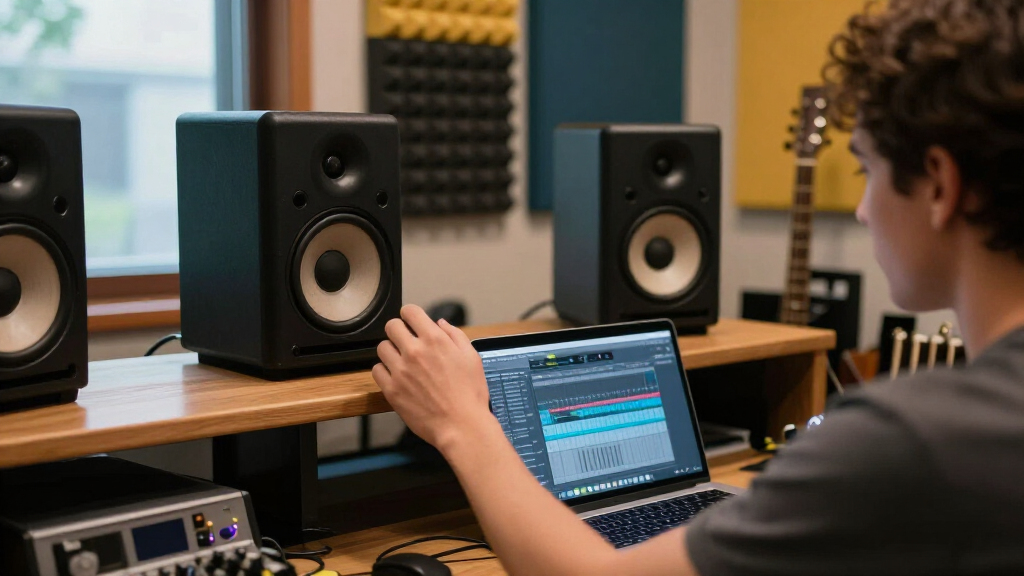

Choosing the right studio monitor speakers is essential for accurate sound reproduction in any recording or mixing setup. The best options balance clarity, power, and affordability, but tradeoffs often involve size, connectivity, or sound signature. The Yamaha HS4 stands out as the overall top pick thanks to its balanced performance, while the JBL 305P MkII offers excellent value with professional-grade sound at a more accessible price. Conversely, some models excel in compact design or aesthetic appeal but may compromise on sound fidelity. Keep reading for a detailed breakdown to find the ideal monitors for your needs.

Get audio and creator gear delivered free with Prime
- Fast, free delivery on millions of items
- Prime Video, Amazon Music and more included
- Member-only deals all year
Complete the kit



Key Takeaways
- Top monitors like Yamaha HS4 deliver balanced sound ideal for mixing, but may be pricier for beginners.
- Value options such as JBL 305P MkII provide professional sound at a lower cost, though they might lack premium features.
- Size and form factor matter—smaller monitors are easier for tight spaces but may sacrifice low-end response.
- Connectivity versatility varies, with some monitors offering multiple input options suitable for different setups.
- Sound signature differences influence the choice; flat response monitors favor accurate mixing, while enhanced bass models suit multimedia use.
| Yamaha HS3 Powered Studio Monitor (Pair) |  | Best Compact Entry-Level Studio Monitor | Type: 2-way bass-reflex powered speaker | Woofer: 3.5-inch cone | Tweeter: 0.75-inch dome | VIEW LATEST PRICE | See Our Full Breakdown |
| Yamaha HS4 Powered Studio Monitor in White, Pair |  | Best for Small to Mid-Sized Studios | Woofer: 4.5 inches | Tweeter: 1 inch | Frequency Response: 60 Hz – 22 kHz | VIEW LATEST PRICE | See Our Full Breakdown |
| PreSonus Eris 3.5 Powered Studio Monitors, Pair |  | Best for Versatile Desktop Use | Power: 50W | Woofer: 3.5″ woven-composite | Tweeter: 1″ silk-dome | VIEW LATEST PRICE | See Our Full Breakdown |
| Edifier MR4.5 Bi-Amped Studio Monitor, 80W RMS Bookshelf Speakers – White |  | Best High-Resolution, Fully Featured Monitor | Power: 80W RMS | Drivers: 4.5″ mid-bass, 1″ silk dome | Frequency Response: 50Hz–40kHz | VIEW LATEST PRICE | See Our Full Breakdown |
| Mackie CR3.5 Creative Reference Powered Studio Monitors with Tone Control and Location Switch | 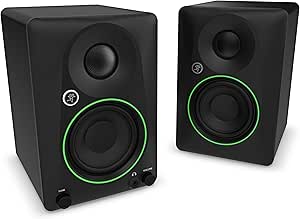 | Best for Versatile, Budget-Friendly Monitoring | Speaker Size: 3.5 inches | Tweeter: Silk dome | Woofer: Woven | VIEW LATEST PRICE | See Our Full Breakdown |
| PreSonus Eris 3.5 Powered Studio Monitors, Pair |  | Best Compact for Versatile Desk Setup | Woofer Size: 3.5 inches | Power: 50W | Frequency Response: 80 Hz–20 kHz | VIEW LATEST PRICE | See Our Full Breakdown |
| PreSonus Eris E5 Pair 2-Way 5.25” Near Field Studio Monitors |  | Best for Balanced Sound and Professional Use | Woofer Size: 5.25 inches | Tweeter Size: 1 inch | Amplification: 80 watt, Class AB bi-amplification | VIEW LATEST PRICE | See Our Full Breakdown |
| PreSonus Eris E4.5 2-Way 4.5-Inch Near Field Studio Monitor (Pair) |  | Best for Accurate Multimedia and Small Studio Setups | Woofer Size: 4.5 inches | Amplification: 50 Watts (25W per side) | Inputs: ¼-inch TRS, RCA, ⅛-inch TRS | VIEW LATEST PRICE | See Our Full Breakdown |
| Edifier R1280T Powered Bookshelf Speakers – 2.0 Active Near Field Studio Monitor with Wooden Enclosure |  | Best for Stylish Home Use and Casual Listening | Power: 42 Watts RMS | Inputs: 2 x AUX (3.5mm and RCA) | Tweeter: 13mm silk dome | VIEW LATEST PRICE | See Our Full Breakdown |
| JBL 305P MkII 5″ 2-Way Active Studio Monitors (Pair) |  | Best for Precise Imaging and Professional Production | Number of Speakers: 2 | Driver Size: 5 inches | Power: 2 x 41 Watts | VIEW LATEST PRICE | See Our Full Breakdown |
| Edifier MR4.5 Bi-Amped Studio Monitor, 80W RMS Bookshelf Speakers – Black |  | Best for Versatile High-Resolution Audio with Customization | Power: 80W RMS | Woofer Size: 4.5 inches | Tweeter Size: 1 inch | VIEW LATEST PRICE | See Our Full Breakdown |
| Yamaha HS4 Powered Studio Monitor (Pair) |  | Best for Accurate Sound in Small to Medium Spaces | Type: 2-way bass-reflex powered speaker | Woofer Size: 4.5 inches | Tweeter Size: 1 inch | VIEW LATEST PRICE | See Our Full Breakdown |
| studio monitor speaker | Inputs | Frequency Response | Power |
|---|---|---|---|
| Yamaha HS3 Powered Studio Moni | XLR/TRS combo, RCA, Stereo Mini | 70 Hz – 22 kHz | — |
| Yamaha HS4 Powered Studio Moni | XLR/TRS Combo, RCA, Stereo Mini | 60 Hz – 22 kHz | — |
| PreSonus Eris 3.5 Powered Stud | TRS, RCA, aux | 80 Hz–20 kHz | 50W |
| Edifier MR4.5 Bi-Amped Studio | — | 50Hz–40kHz | 80W RMS |
| Mackie CR3.5 Creative Referenc | TRS, RCA, 3.5 mm | — | — |
| PreSonus Eris 3.5 Powered Stud | TRS, RCA, Aux | 80 Hz–20 kHz | 50W |
| PreSonus Eris E5 Pair 2-Way 5. | XLR, 1/4-inch, RCA | — | — |
| PreSonus Eris E4.5 2-Way 4.5-I | ¼-inch TRS, RCA, ⅛-inch TRS | — | — |
| Edifier R1280T Powered Bookshe | 2 x AUX (3.5mm and RCA) | — | 42 Watts RMS |
| JBL 305P MkII 5" 2-Way Active | XLR/TRS | — | 2 x 41 Watts |
| Edifier MR4.5 Bi-Amped Studio | — | 50Hz–40kHz | 80W RMS |
| Yamaha HS4 Powered Studio Moni | XLR/TRS Combo, RCA, Stereo Mini | 60 Hz – 22 kHz (-10 dB) | — |
More Details on Our Top Picks
Yamaha HS3 Powered Studio Monitor (Pair)
The Yamaha HS3 stands out as an excellent starting point for budget-conscious creators who need reliable, accurate sound in smaller spaces. Its 3.5-inch woofer and 0.75-inch tweeter produce a balanced frequency response that’s well-suited for detailed mixing, especially when paired with the room control and high trim adjustments. Compared with the larger HS4, the HS3’s smaller size and lower power output (26 W) limit its effectiveness in larger rooms or for louder monitoring. However, its compact design makes it ideal for desktop setups or tight studios. The tradeoff is that it may struggle with deep bass or high volume levels, so it’s better suited for small-scale applications rather than full-band mixing. If you prioritize affordability and space efficiency, this model makes a compelling choice.
Pros:- Accurate frequency response for detailed mixing
- Multiple input options for versatile connectivity
- Includes room control and high trim adjustments
Cons:- Limited to 26 W output power, not suitable for large rooms
- Small size may require careful placement for optimal sound
Best for: Beginners or home studio owners with limited space and budget who need accurate, reliable monitoring.
Not ideal for: Large professional studios or users requiring high volume and deep bass for larger rooms.
- Type:2-way bass-reflex powered speaker
- Woofer:3.5-inch cone
- Tweeter:0.75-inch dome
- Frequency Response:70 Hz – 22 kHz
- Output Power:26 W
- Inputs:XLR/TRS combo, RCA, Stereo Mini
Our verdict“Ideal for newcomers with compact spaces seeking dependable, precise audio monitoring on a budget.”
Yamaha HS4 Powered Studio Monitor in White, Pair
The Yamaha HS4 offers a noticeable upgrade over the HS3 with its larger 4.5-inch woofer and 1-inch dome tweeter, providing a broader and more detailed sound profile suitable for more serious creators. Its 60 Hz to 22 kHz frequency response makes it a good choice for producers needing clarity across a wider range, though it still falls short for full bass extension compared to larger monitors like the JBL 305P MkII. The dual 26 W amplifiers ensure ample volume without distortion, but the relatively limited bass depth means it might require additional subwoofers for full-range mixing. Its compact size and versatile controls make it well-suited for small studios or professional setups where space is at a premium. Compared to the HS3, the HS4 balances size and performance, making it better suited for slightly more demanding applications.
Pros:- Broader frequency response for more detailed sound
- Dual amplifiers deliver ample power with minimal distortion
- Compact design fits well in small spaces
- Versatile input options and controls
Cons:- Limited bass extension, may require subwoofers for full-range needs
- Requires external audio interface or amplifier for optimal operation
Best for: Small to mid-sized studio owners who need accurate monitoring with a bit more bass and detail.
Not ideal for: Large studios or users needing deep bass for full-range music production or mastering.
- Woofer:4.5 inches
- Tweeter:1 inch
- Frequency Response:60 Hz – 22 kHz
- Power Output:26 W + 26 W
- Inputs:XLR/TRS Combo, RCA, Stereo Mini
- Type:2-way bass-reflex powered speaker
Our verdict“A solid upgrade over smaller monitors, suited for those needing more clarity without sacrificing compactness.”
PreSonus Eris 3.5 Powered Studio Monitors, Pair
The PreSonus Eris 3.5 excels as a versatile, budget-friendly option for creators who need reliable sound for music, gaming, or streaming. Its 50W output and woven-composite 3.5-inch woofer with silk-dome tweeter ensure clear, detailed audio, though the small woofer limits deep bass, making it less ideal for full-range music production. The adjustable acoustic tuning and multiple connection options (TRS, RCA, aux) provide customization, but its limited bass response requires users to supplement with subwoofers if bass is critical. This monitor is ideal for desktop setups, especially in multi-purpose environments, but isn’t suited for large or demanding professional studios. Compared to the Yamaha HS3, the Eris 3.5 offers more power and greater versatility at a similar price point, with tradeoffs in bass depth.
Pros:- Powerful enough for desktop and casual use
- Adjustable acoustic tuning for tailored sound
- Multiple input options for flexible connectivity
- Compact and space-efficient design
Cons:- Limited bass depth due to small woofer
- No wireless connectivity options
Best for: Home studio owners, gamers, and streamers who need a compact, adaptable monitor for various media.
Not ideal for: Professional mixing engineers or users requiring deep bass and large soundstage.
- Power:50W
- Woofer:3.5″ woven-composite
- Tweeter:1″ silk-dome
- Frequency Response:80 Hz–20 kHz
- Inputs:TRS, RCA, aux
- Type:Powered studio monitor
Our verdict“A practical choice for multi-purpose desktop environments where space and versatility matter most.”
Edifier MR4.5 Bi-Amped Studio Monitor, 80W RMS Bookshelf Speakers – White
The Edifier MR4.5 delivers a significant step up in features and power, with 80W RMS and 4.5-inch mid-bass drivers paired with silk dome tweeters for high-resolution sound. Its broad frequency response of 50Hz to 40kHz ensures detailed audio reproduction, surpassing many small monitors like the PreSonus Eris 3.5 in depth and clarity. The inclusion of Bluetooth 6.0 with LDAC, along with XLR, TRS, RCA, and AUX inputs, offers unmatched connectivity versatility. The customizable room calibration and 9-band EQ allow precise tuning, ideal for both professional and home use. The main tradeoff is its higher price and larger size, making it less suitable for tight desktops. Compared to the smaller Yamaha models, the Edifier provides more power and features, but at a higher cost and footprint.
Pros:- High RMS power for loud, clear sound
- Exceptional frequency response for detailed audio
- Flexible, comprehensive connectivity including Bluetooth LDAC
- Customizable tuning with room calibration and EQ
Cons:- Higher price point than smaller monitors
- Larger size may not suit compact desktops
Best for: Music producers, home listeners, and professionals wanting high-resolution sound with flexible connectivity.
Not ideal for: Users with limited space or on a strict budget who don’t need extensive features.
- Power:80W RMS
- Drivers:4.5″ mid-bass, 1″ silk dome
- Frequency Response:50Hz–40kHz
- Connectivity:Bluetooth 6.0 (LDAC), XLR, TRS, RCA, AUX
- Controls:Room calibration, 9-band EQ
- Size:Compact
Our verdict“Ideal for those seeking professional-grade, feature-rich monitoring with wireless streaming capabilities.”
Mackie CR3.5 Creative Reference Powered Studio Monitors with Tone Control and Location Switch
The Mackie CR3.5 stands out as a flexible, budget-friendly option perfect for creators who want quick adjustments and easy setup. Its 3.5-inch driver and silk dome tweeter deliver clear sound, while the tone knob allows users to shape the sound to their liking—especially useful in multi-purpose spaces or for gaming. The switch to optimize placement as desktop or bookshelf speakers helps users get the best sound regardless of positioning, though bass enhancement is limited without a subwoofer. Its multiple inputs and headphone jack make it highly adaptable, but the small driver size limits deep bass and full-range accuracy. Compared with the Yamaha HS3, the Mackie offers more customization and versatility at a similar price, but with less bass depth and overall sound fidelity.
Pros:- Versatile placement options with mode switch
- Adjustable tone control for personalized sound
- Multiple input options and headphone out
- Affordable and easy to set up
Cons:- Limited bass depth without subwoofer
- Small driver size restricts full-range sound
Best for: Casual users, gamers, and small studio owners who value flexibility and affordability.
Not ideal for: Professional audio engineers or those needing deep bass and flat response for mixing.
- Speaker Size:3.5 inches
- Tweeter:Silk dome
- Woofer:Woven
- Inputs:TRS, RCA, 3.5 mm
- Features:Tone knob, location switch, headphone output
Our verdict“A flexible, budget-friendly monitor that adapts well to varied setups and casual listening.”
PreSonus Eris 3.5 Powered Studio Monitors, Pair
This pair of PreSonus Eris 3.5 monitors stands out for their impressive clarity and adjustable tuning, making them a strong choice for those who need professional sound in a small space. Compared to larger monitors like the JBL 305P MkII, they deliver a surprisingly full sound but naturally fall short on bass depth due to their size. Their 50W amplification ensures clear output without distortion at moderate levels, ideal for desktop use and multimedia. The multiple input options and room tuning controls make them adaptable to various setups, but their compact form factor limits bass response and may require careful placement for optimal sound. This makes them perfect for users prioritizing space and sound quality over deep bass or high-volume applications.
Pros:- Clear, studio-grade sound quality in a small form factor
- Adjustable tuning for different room acoustics
- Multiple connectivity options for versatile setup
Cons:- Limited bass response due to small size
- Requires careful placement for best sound
Best for: Home producers or content creators needing compact, accurate monitors for desktop use
Not ideal for: Users requiring deep bass or high-volume sound for larger rooms or club-like environments
- Woofer Size:3.5 inches
- Power:50W
- Frequency Response:80 Hz–20 kHz
- Inputs:TRS, RCA, Aux
- Color:Black
Our verdict“This model suits those who need high-quality, space-saving monitors for detailed work on a desktop or small studio.”
PreSonus Eris E5 Pair 2-Way 5.25” Near Field Studio Monitors
The PreSonus Eris E5 monitors offer a balanced, accurate sound profile with robust bass and crisp highs, making them ideal for serious nearfield monitoring. Their larger 5.25-inch woofers outperform the Eris 3.5 in bass response, but they require more space and proper placement to avoid muddiness. With 80-watt bi-amplification and multiple input options, they suit both professional studios and dedicated home setups. The acoustic tuning controls allow customization, yet they demand some familiarity with room acoustics for best results. Compared with smaller monitors, the E5s excel in accuracy and volume, but their size makes them less suitable for tight spaces or casual listening.
Pros:- Excellent stereo imaging and balanced sound
- Powerful 80W bi-amp design for high volume with clarity
- Multiple input options and tuning controls for customization
Cons:- Requires proper placement to avoid bass muddiness
- Size may be bulky for small desks
Best for: Professional or semi-professional producers needing accurate nearfield monitors in a dedicated studio
Not ideal for: Casual hobbyists or those with very limited space who prefer smaller or more portable options
- Woofer Size:5.25 inches
- Tweeter Size:1 inch
- Amplification:80 watt, Class AB bi-amplification
- Maximum SPL:102 dB
- Inputs:XLR, 1/4-inch, RCA
Our verdict“This pick is ideal for users who prioritize accuracy and volume, and have space to accommodate larger monitors.”
PreSonus Eris E4.5 2-Way 4.5-Inch Near Field Studio Monitor (Pair)
The PreSonus Eris E4.5 provides reliable, studio-quality sound with a wider listening sweet spot, making it an excellent choice for multimedia creators and small studios. Its 4.5-inch woven-composite woofer offers more bass than the 3.5-inch models but still falls short for large room coverage unless supplemented by a subwoofer like the Eris Sub 8BT. Multiple input options and room tuning controls give users flexibility, but the lower power output (50W total) may limit volume in bigger spaces. Compared to the E5s, it’s more compact and better suited to desktop or small room environments, though it requires external bass support for full-range sound.
Pros:- Accurate, studio-quality sound with wide stereo imaging
- Multiple inputs and room tuning controls
- Can connect to external subwoofer for enhanced bass
Cons:- Needs a subwoofer for deep bass response
- Limited power output for large or loud environments
Best for: Multimedia producers or small studio owners needing accurate sound with flexible room tuning
Not ideal for: Users wanting full-range bass without additional equipment or those in very large rooms
- Woofer Size:4.5 inches
- Amplification:50 Watts (25W per side)
- Inputs:¼-inch TRS, RCA, ⅛-inch TRS
- Power Saver Mode:Yes
- Additional:Connects to Eris Sub 8BT
Our verdict“This monitor is well-suited for those who want precise sound and flexibility in a small or medium-sized room, with room for expansion.”
Edifier R1280T Powered Bookshelf Speakers – 2.0 Active Near Field Studio Monitor with Wooden Enclosure
The Edifier R1280T brings a warm, natural sound signature in a stylish wooden enclosure, making them ideal for casual studio work or multimedia listening at home. Their 4-inch full-range driver paired with a 13mm silk dome tweeter provides a balanced sound, but at only 42 Watts RMS power, they’re less suited for large or loud environments. The remote control and adjustable bass and treble offer convenience, yet the controls located on the side can be less intuitive for quick adjustments. Compared to active studio monitors like the Yamaha HS3, they emphasize style and ease of use over raw accuracy, making them less suitable for critical mixing.
Pros:- Stylish wooden finish complements home decor
- Remote control for easy adjustments
- Multiple input options for versatile connectivity
Cons:- Limited power output for larger or loud spaces
- Controls on side panel may be less accessible
Best for: Home users who want good sound quality with a stylish look for everyday listening
Not ideal for: Professional studio work or loud mixing environments due to limited power
- Power:42 Watts RMS
- Inputs:2 x AUX (3.5mm and RCA)
- Tweeter:13mm silk dome
- Woofer:4 inch full-range
- Finish:Wooden enclosure with vinyl wrap
Our verdict“These are best for casual listeners or home users seeking attractive, reliable speakers for everyday multimedia use.”
JBL 305P MkII 5″ 2-Way Active Studio Monitors (Pair)
The JBL 305P MkII monitors excel in delivering precise imaging and powerful, detailed audio, making them top contenders for professional producers and sound engineers. Their dual 41-watt amplifiers and tailored EQ settings provide room tuning flexibility, surpassing the PreSonus Eris E5 in clarity and overall sound fidelity. The MDF enclosure enhances durability and reduces unwanted resonances. While their price might be prohibitive for casual users, they justify it with excellent sound accuracy and reliable performance. Proper placement is critical to maximize imaging and avoid sound anomalies, but once set up, they deliver studio-quality sound for mixing and mastering.
Pros:- Exceptional imaging and sound clarity
- Powerful dual amplifiers for dynamic range
- Adjustable EQ for precise room tuning
Cons:- Higher cost, less accessible for casual users
- Requires careful placement for best results
Best for: Professional musicians, producers, or sound engineers needing high precision and clarity
Not ideal for: Budget-conscious hobbyists or those with very limited room setup options
- Number of Speakers:2
- Driver Size:5 inches
- Power:2 x 41 Watts
- Inputs:XLR/TRS
- Enclosure Material:MDF
Our verdict“This model suits professionals demanding accurate, detailed sound and reliable performance for critical audio work.”
Edifier MR4.5 Bi-Amped Studio Monitor, 80W RMS Bookshelf Speakers – Black
The Edifier MR4.5 stands out for its ability to deliver professional-grade sound with a flexible array of input options, making it a strong contender against the Yamaha HS4, especially for users who want high-resolution audio and room calibration features. Unlike the Yamaha HS4, which offers straightforward sound with less customization, the MR4.5 provides a 9-band EQ, adjustable low cutoff, and Bluetooth 6.0 with LDAC, supporting wireless convenience and detailed sound tuning. However, this added complexity can be a drawback for those seeking a simple plug-and-play setup and might involve a steeper learning curve. Its 80W RMS power ensures ample volume for many studio environments, but the premium features come at a potentially higher price, which may deter casual users. This model makes the most sense for experienced producers or audiophiles who want adaptable, high-resolution sound in a compact package.
Pros:- High-resolution audio with detailed sound reproduction
- Multiple input options including Bluetooth with LDAC codec
- Customizable room calibration and 9-band EQ
- Compact size suitable for various room setups
Cons:- Complex setup may require technical knowledge
- Premium features might be unnecessary for casual listening
- Price range not specified, potentially expensive
Best for: Professional musicians, mixing engineers, or audiophiles needing customizable sound options and high-resolution playback.
Not ideal for: Beginners or casual listeners who prefer simple, straightforward monitors without complex setup or advanced features.
- Power:80W RMS
- Woofer Size:4.5 inches
- Tweeter Size:1 inch
- Frequency Response:50Hz–40kHz
- Connectivity:XLR, TRS, RCA, AUX, Bluetooth 6.0 with LDAC
- Input Options:Balanced XLR, TRS, RCA, AUX, Headphone jack
- Features:Room calibration, 9-band EQ, adjustable low cutoff
Our verdict“This monitor is ideal for experienced users seeking flexible, high-fidelity sound with extensive customization options.”
Yamaha HS4 Powered Studio Monitor (Pair)
The Yamaha HS4 offers a straightforward, reliable sound profile with a focus on accuracy, making it a solid alternative to the Edifier MR4.5 for those who prioritize simplicity and clear frequency response. Its 4.5-inch cone woofer and 1-inch dome tweeter deliver a balanced sound from 60 Hz to 22 kHz, suitable for critical listening and mixing in smaller rooms. Compared to the Edifier MR4.5, which boasts more advanced connectivity and customization, the HS4 emphasizes a clean, natural sound without additional features like Bluetooth or EQ controls, which can be a benefit for minimalists. However, its 26 W power output limits volume and bass response in larger spaces, and it requires extra equipment like a mixer or audio interface for optimal operation. This pick makes the most sense for entry-level professionals or hobbyists who want accurate monitoring without complex features.
Pros:- Accurate, natural frequency response for mixing and editing
- Multiple input options including XLR/TRS combo and RCA
- Room control and high trim response adjustments
- Simple, proven design with minimal fuss
Cons:- Limited to 26 W power, less suitable for large rooms
- Requires additional equipment for full setup
- Less feature-rich than more advanced monitors like Edifier MR4.5
Best for: Beginners or home studio owners needing reliable, accurate sound with minimal setup complexity.
Not ideal for: Experienced producers or those working in larger spaces who require higher power and more customization.
- Type:2-way bass-reflex powered speaker
- Woofer Size:4.5 inches
- Tweeter Size:1 inch
- Frequency Response:60 Hz – 22 kHz (-10 dB)
- Power Output:26 W
- Inputs:XLR/TRS Combo, RCA, Stereo Mini
Our verdict“Ideal for beginners or small studio setups seeking dependable, accurate sound with straightforward features.”
How We Picked
Our evaluation process centered on core criteria that matter most to audio professionals and enthusiasts: sound accuracy, build quality, usability, and value. We prioritized monitors that deliver a flat, transparent frequency response to ensure reliable mixing and recording outcomes. Durability and ease of setup also played a role, as did features like multiple input options and aesthetic fit. Products were ranked based on how well they balanced these factors, with extra consideration given to versatility and price-to-performance ratio, ensuring each pick serves a distinct user profile.Factors to Consider When Choosing Studio Monitor Speakers
When selecting studio monitor speakers, understanding key factors can help you avoid pitfalls and choose models that truly match your needs. Budget is important, but so is matching the monitor’s size and sound profile to your space and use case. Connectivity options impact how easily the monitors integrate with your existing gear. Size and placement influence sound accuracy, especially in small rooms. Pay attention to frequency response to ensure the monitors reveal details without coloring the sound. Lastly, consider your future needs—upgrading might mean spending more now for monitors that scale with your setup.Sound Accuracy and Frequency Response
Flat, wide frequency response is key for mixing, as it reveals true audio details without added coloration. Monitors with narrow or boosted bass responses can mislead your mixing decisions, so prioritize models known for transparency. It’s also worth considering the monitor’s ability to reproduce high frequencies clearly, especially if you work with detailed audio or mixing high-frequency instruments. Remember, a monitor that sounds good in a store might not be accurate; look for reviews that emphasize transparency and neutrality.
Size and Room Compatibility
Choosing the right size monitor depends on your space. Larger speakers like 6.5 or 8 inches can produce deeper bass but may overwhelm small rooms, causing bass muddiness or reflection issues. Smaller monitors, such as 3.5 or 4 inches, are easier to place and better suited for nearfield listening, but they might lack low-end extension. Consider your room dimensions and how close you’ll sit to the speakers. Proper placement and acoustic treatment are equally important for optimal sound regardless of size.
Connectivity and Features
Most studio monitors offer balanced XLR or TRS inputs, but some also include RCA or USB options for versatile setup. Think about your existing gear—if you have a mixer, audio interface, or computer, ensure the monitors support compatible connections. Features like volume control, room tuning, or multiple input channels can simplify setup and calibration. Be cautious of monitors that require additional hardware or complex adjustments, which can complicate setup for beginners.
Build Quality and Durability
Investing in well-built monitors pays off over time. Look for models with sturdy enclosures, quality drivers, and reliable internal components. Cheap materials can lead to vibrations, rattles, or driver failures, especially at higher volumes. While premium monitors often feature better craftsmanship, they may also come with a higher price tag. Consider your usage environment—if your studio is mobile or shares space with other equipment, durability becomes even more critical.
Budget and Future-proofing
Set a realistic budget based on your current needs and future plans. Entry-level monitors are suitable for beginners or casual producers but may lack depth or detailed accuracy for professional work. Mid-range options often strike a balance, offering better sound and features without a hefty price. High-end monitors provide exceptional fidelity and build quality but are best for dedicated professionals or those planning to upgrade their entire setup. Think about whether investing more now will save you from needing an upgrade soon.
Frequently Asked Questions
How do I know if a monitor is suitable for mixing?
To determine if a monitor is suitable for mixing, look for a flat, transparent frequency response that doesn’t emphasize any particular range. Monitors designed for professional use typically aim for accuracy, revealing details in your audio rather than coloring the sound. Check reviews and specifications for mentions of neutrality and fidelity. Remember, a monitor that sounds overly bassy or bright might lead you to make poor mixing decisions, so neutrality is key for critical listening.
Can I use bookshelf speakers as studio monitors?
While some bookshelf speakers can serve as studio monitors, not all are ideal. True studio monitors are engineered for flat response and minimal coloration, whereas many bookshelf speakers prioritize style or bass enhancement. If you plan to use bookshelf speakers like the Edifier MR4.5 or R1280T, ensure they specify studio or nearfield use and have features like balanced input options. For critical mixing, dedicated studio monitors generally offer more reliable accuracy.
How important is size when choosing studio monitors?
Size significantly impacts sound reproduction, especially low-frequency response. Larger monitors (6.5 inches and above) typically produce richer bass and are better suited for larger rooms or professional mixing. Smaller monitors (3-4 inches) are more portable and easier to place in tight spaces, making them ideal for nearfield listening. However, smaller models may require a subwoofer if you need deep bass for your mixes. Choosing the right size depends on your room dimensions and the type of work you do.
Should I prioritize power output or clarity?
Clarity and accuracy should take precedence over raw power output for studio work. Powerful monitors can fill larger spaces, but if they lack transparency, your mixes will suffer. High-quality drivers and well-designed enclosures ensure clarity at various volume levels. If your environment is small or you prefer nearfield listening, a less powerful but more accurate monitor will serve you better. Reserve high wattage for large studios and spaces where volume and punch are critical.
Is it worth paying more for premium studio monitors?
Investing in premium monitors can provide more detailed, transparent sound and better build quality, which is valuable for professional mixing and mastering. However, for beginners or casual users, mid-range options often deliver sufficient accuracy at a lower cost. Consider your current needs and future ambitions—if you plan to work professionally or need the highest fidelity, spending more upfront can be worthwhile. Otherwise, well-chosen mid-range monitors offer excellent performance without overextending your budget.
Conclusion
For casual producers or beginners, models like the PreSonus Eris 3.5 or Edifier R1280T provide reliable sound without breaking the bank. Serious audiophiles or professionals should consider the Yamaha HS4 or JBL 305P MkII for their flat response and detailed reproduction. If your priority is premium quality and durability, the Yamaha HS4 stands out as the best overall choice. Budget-conscious buyers will find great value in the JBL 305P MkII, while those setting up a compact space might prefer smaller monitors like the Mackie CR3. Select based on your space, experience level, and sound fidelity needs to get the best results from your studio setup.
Halloween Picks
halloween
As an affiliate, we earn on qualifying purchases.