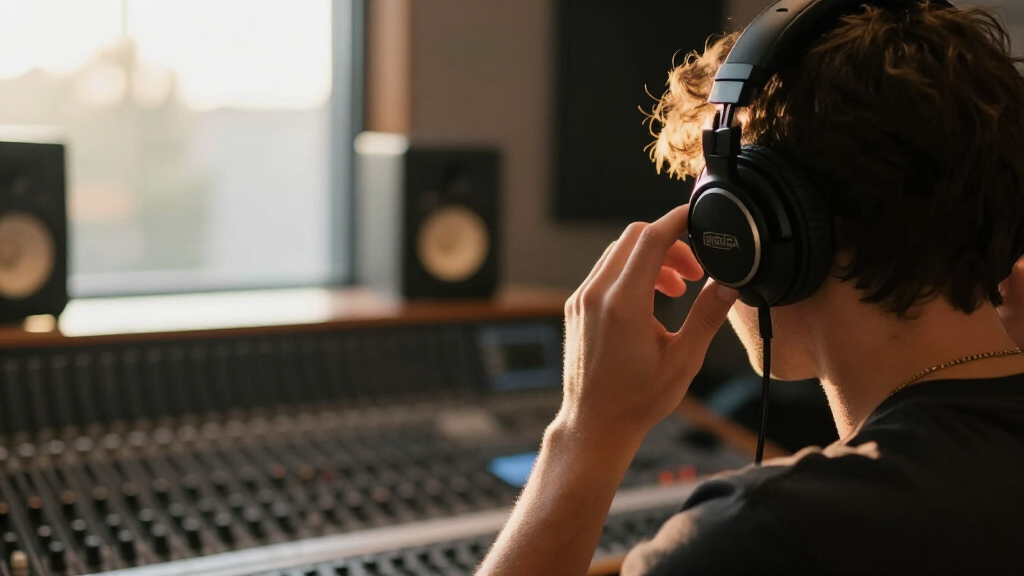

The best studio headphones for creators in 2026 balance accurate, unflattering sound with enough isolation to record in the same room where you mix. After comparing 13 leading options, the Audio-Technica ATH-M50X is my best overall pick because its controlled low end, folding build, and replaceable cables cover tracking, editing, and rough mixing without demanding extra gear. If budget is no concern, the Sony MDR-M1 delivers a wider, more reference-grade closed-back presentation, while the Audio-Technica ATH-M20x gives beginners honest monitoring for under $60. The real tradeoff in this category is closed-back isolation versus open-back accuracy — and whether one pair has to do both jobs. Keep reading for the full ranked breakdown, who each pair is actually for, and who should skip it.

Get audio and creator gear delivered free with Prime
- Fast, free delivery on millions of items
- Prime Video, Amazon Music and more included
- Member-only deals all year
Complete the kit


Key Takeaways
- The Audio-Technica ATH-M50X earned the top spot not by sounding the most exciting, but by being the only sub-$200 closed-back here that handles tracking, editing, and rough mixes with equal competence — versatility beat specialization.
- Price and accuracy stopped correlating fast: the $99 ATH-M40x runs flatter than the pricier ATH-M50X, while the $50 Samson SR850’s semi-open tuning outclasses closed-backs costing twice as much for mixing duty.
- Open-back designs like the Beyerdynamic DT 990 PRO 250 Ohm won on soundstage and mix translation but lost on practicality — they leak audio into microphones and need an interface or amp to reach proper level.
- Tracking veterans (Sony MDR7506, Sennheiser HD 280 Pro) landed mid-pack overall because their aggressive isolation and bright top end are assets behind a microphone but fatiguing during long editing sessions.
- Budget DJ-styled options (OneOdio, Maono MH601) share a pattern: big bass, low price, and generous included adapters — fine for podcast monitoring, misleading for anyone balancing a mix.
| Sennheiser HD 280 Pro Headphones |  | Best for Tracking and Isolation | Color: Black | Design: Over-ear, closed-back, collapsible | Noise Attenuation: Up to 32 dB | VIEW LATEST PRICE | See Our Full Breakdown |
| Maono MH601 Wired Studio Headphones for Podcast Recording and DJ Mixing |  | Best Value for Podcasters | Driver Size: 50mm | Connectivity: Wired, 3.5mm and 6.35mm jacks | Cable Length: 9.8 ft | VIEW LATEST PRICE | See Our Full Breakdown |
| Samson SR850 Professional Studio Reference Headphones |  | Best Budget Pick for Mixing | Design: Semi-open, over-ear | Driver Size: 50mm | Frequency Response: 10Hz–30kHz | VIEW LATEST PRICE | See Our Full Breakdown |
| beyerdynamic DT 770 Pro Studio Headphones (80 Ohm, Black) |  | Best Overall | Impedance: 80 Ohm | Design: Closed-back, over-ear | Cable: 3m (9.8 ft), single-sided | VIEW LATEST PRICE | See Our Full Breakdown |
| Audio-Technica ATH-M20x Professional Studio Monitor Headphones, Black |  | Best for Beginners | Driver Size: 40mm | Magnet: Rare-earth | Voice Coil: Copper-clad aluminum wire | VIEW LATEST PRICE | See Our Full Breakdown |
| Audio-Technica ATH-M50X Professional Studio Monitor Headphones, Black |  | Best Overall | Driver Size: 45mm | Impedance: 38Ω | Design: Circumaural, closed-back | VIEW LATEST PRICE | See Our Full Breakdown |
| Audio-Technica ATH-M30x Professional Studio Monitor Headphones, Black |  | Best Mid-Range Pick | Driver Size: 40mm | Magnet Type: Rare earth | Voice Coil: Copper-clad aluminum wire | VIEW LATEST PRICE | See Our Full Breakdown |
| OneOdio Wired DJ Hi-Res Over-Ear Headphones for PC, Keyboard, Guitar – Black |  | Best Budget Pick | Driver Size: 50mm | Connectivity: Dual 3.5mm and 6.35mm jacks | Design: Over-ear with swivel ear cups | VIEW LATEST PRICE | See Our Full Breakdown |
| Sony MDR7506 Professional Large Diaphragm Headphones |  | Best for Voice and Podcasting | Driver Size: 40mm | Magnets: Neodymium | Frequency Response: 10 Hz – 20 kHz | VIEW LATEST PRICE | See Our Full Breakdown |
| Beyerdynamic DT 990 PRO 250 Ohm Open-Back Over-Ear Wired Headphones |  | Best Open-Back for Mixing | Impedance: 250 Ohm | Design: Open-back, over-ear, wired | Cable: 3m coiled cable | VIEW LATEST PRICE | See Our Full Breakdown |
| Sony MDR-M1 Professional Reference Closed Monitor Headphones |  | Best Premium Reference | Frequency Response: 5 Hz–80 kHz | Design: Closed-back, over-ear | Weight: 216 g | VIEW LATEST PRICE | See Our Full Breakdown |
| AKG K240 Studio Semi-Open Studio Headphones |  | Best Semi-Open Value | Design: Semi-open, over-ear | Transducers: 30 mm XXL | Cable: 3 m fixed cable | VIEW LATEST PRICE | See Our Full Breakdown |
| Audio-Technica ATH-M40x Professional Studio Monitor Headphones, Black |  | Best Mid-Range Monitor | Driver Size: 40 mm | Frequency Response: 15 Hz–24 kHz | Design: Closed-back, circumaural | VIEW LATEST PRICE | See Our Full Breakdown |
| studio headphones for creator | Design | Driver Size |
|---|---|---|
| Sennheiser HD 280 Pro Headphon | Over-ear, closed-back, collapsible | — |
| Maono MH601 Wired Studio Headp | — | 50mm |
| Samson SR850 Professional Stud | Semi-open, over-ear | 50mm |
| beyerdynamic DT 770 Pro Studio | Closed-back, over-ear | — |
| Audio-Technica ATH-M20x Profes | Circumaural, closed-back | 40mm |
| Audio-Technica ATH-M50X Profes | Circumaural, closed-back | 45mm |
| Audio-Technica ATH-M30x Profes | Circumaural | 40mm |
| OneOdio Wired DJ Hi-Res Over-E | Over-ear with swivel ear cups | 50mm |
| Sony MDR7506 Professional Larg | Closed-ear, foldable | 40mm |
| Beyerdynamic DT 990 PRO 250 Oh | Open-back, over-ear, wired | — |
| Sony MDR-M1 Professional Refer | Closed-back, over-ear | — |
| AKG K240 Studio Semi-Open Stud | Semi-open, over-ear | — |
| Audio-Technica ATH-M40x Profes | Closed-back, circumaural | 40 mm |
More Details on Our Top Picks
Sennheiser HD 280 Pro Headphones
The Sennheiser HD 280 Pro earns its spot as the isolation specialist of this roundup. With up to 32 dB of noise attenuation, it blocks more outside sound than the Audio-Technica ATH-M20x or the beyerdynamic DT 770 Pro, which matters when you’re recording vocals in the same room as a loud computer fan or tracking next to a drummer. The collapsible frame and replaceable ear pads and cables mean it survives years of session abuse. The tradeoff is sonic: compared with the DT 770 Pro, the HD 280 Pro sounds a touch mid-forward and less spacious, so I’d treat it as a tracking tool rather than a mixing reference. The coiled cable adds noticeable weight, and the clamp force runs firm during the first weeks of wear.
Pros:- Up to 32 dB of noise attenuation — the strongest isolation in this lineup
- Replaceable ear pads, headband padding, and cable extend its working life
- Collapsible frame travels easily between home and studio
- Warm, natural sound that works for monitoring and casual listening alike
Cons:- Firm clamping force can pinch during the first weeks, especially over glasses
- Mid-forward tuning is less revealing for mix decisions than the DT 770 Pro
- Heavy coiled cable pulls on one side during long sessions
Best for: Creators tracking vocals or instruments in noisy, untreated rooms who need maximum isolation without spending DT 770 Pro money
Not ideal for: Producers focused mainly on mixing — the mid-forward voicing hides detail the beyerdynamic DT 770 Pro reveals, and glasses wearers may find the clamp fatiguing
- Color:Black
- Design:Over-ear, closed-back, collapsible
- Noise Attenuation:Up to 32 dB
- Connectivity:Wired
- Cable Length:3.3–9.8 ft (coiled)
- Earpads:Replaceable
- Headband:Replaceable padding
Our verdict“Buy the HD 280 Pro if isolation for tracking is your top priority; choose the DT 770 Pro instead if mixing matters more.”
Maono MH601 Wired Studio Headphones for Podcast Recording and DJ Mixing
The Maono MH601 undercuts nearly everything else here on price while still offering 50mm drivers and both 3.5mm and 6.35mm connections in the box. For podcasters and streamers who need loud, clear playback of their own voice, that’s the whole job. Compared with the Samson SR850, the MH601’s closed, 90° swiveling earcups isolate better and suit one-ear monitoring while recording.
The tradeoffs show up in refinement. Bass runs thicker and less controlled than on the Audio-Technica ATH-M20x, so I wouldn’t finish a mix on these. There’s also no built-in microphone, which surprises some buyers at this price — you’ll need a separate mic for calls or voice work. The three-year warranty does soften concerns about the budget plastics.
Pros:- Lowest price in the lineup by a wide margin
- 50mm drivers deliver loud, full playback for voice monitoring
- Both 3.5mm and 6.35mm connections included — no adapter hunting
- Three-year warranty, unusually long at this price
Cons:- Thick, loosely controlled bass obscures mix detail
- No built-in microphone for calls or voice chat
- Mostly plastic build feels less sturdy than the Audio-Technica ATH-M20x
Best for: Podcasters, streamers, and beginner DJs who want loud, full monitoring with both jack sizes included at the lowest price in the roundup
Not ideal for: Anyone mixing music — the thick bass masks problems the DT 770 Pro would expose — or buyers who need a built-in mic for calls
- Driver Size:50mm
- Connectivity:Wired, 3.5mm and 6.35mm jacks
- Cable Length:9.8 ft
- Earcups:90° swiveling
- Noise Isolation:85% (passive)
- Weight:14.08 oz
- Warranty:3 years
Our verdict“The MH601 is the budget pick for podcasters who need capable monitoring and flexible connections, not mix-critical accuracy.”
Samson SR850 Professional Studio Reference Headphones
The Samson SR850 takes a different approach from the closed-back options in this roundup: its semi-open design leaks sound on purpose, and in exchange you get a wider, more natural stereo image than the Sennheiser HD 280 Pro or Maono MH601 can deliver anywhere near this price. The 10Hz–30kHz frequency response and 50mm drivers render reverb tails and panning decisions with genuine clarity, which is why I’d point budget mixers here first. The tradeoffs are hard to ignore: everyone nearby hears what you’re working on, microphones can pick up bleed during tracking, and bass hits softer than on closed rivals like the ATH-M20x. Build quality also feels light and plasticky next to the beyerdynamic DT 770 Pro, so keep these at the desk and treat them gently.
Pros:- Semi-open design produces a wide, natural soundstage for the price
- 10Hz–30kHz response reveals reverb and panning detail
- Self-adjusting headband fits without fuss during long mixes
- Cheapest path to an open-backed mixing sound in this roundup
Cons:- Leaks sound in both directions — a poor choice for tracking with a live mic
- Soft, lightweight bass next to closed rivals like the ATH-M20x
- Lightweight plastic build needs careful handling
Best for: Bedroom producers mixing on a tight budget in a quiet, private space who want an open, spacious stereo image
Not ideal for: Anyone tracking with a live microphone or sharing a room — the semi-open cups leak sound in both directions
- Design:Semi-open, over-ear
- Driver Size:50mm
- Frequency Response:10Hz–30kHz
- Impedance:32 ohms
- Headband:Self-adjusting
- Included:1/8-inch to 1/4-inch gold-plated adapter
Our verdict“The SR850 gives budget mixers an open, detailed soundstage — as long as nobody else is in the room.”
beyerdynamic DT 770 Pro Studio Headphones (80 Ohm, Black)
The beyerdynamic DT 770 Pro (80 Ohm) takes Best Overall because it handles the two jobs creators care about most — tracking and mixing — better than anything else here at the price, and it’s the pair I’d hand a creator who can only buy one. The closed back isolates well enough for recording, while the detailed treble and controlled low end reveal mix problems the Maono MH601 and Audio-Technica ATH-M20x gloss over.
Comfort and longevity back that up: the velour ear pads stay pleasant through four-hour sessions, and the German-made build with replaceable parts outlasts cheaper rivals like the Samson SR850. Tradeoffs exist — the non-removable 3m cable is a pain if it fails out of warranty, and the slightly bright, scooped voicing flatters some genres more than others. The 80 Ohm version runs fine from most audio interfaces, though phones can leave it quieter than you’d like.
Pros:- Accurate, detailed sound that holds up for both tracking and mixing
- Velour ear pads stay comfortable over multi-hour sessions
- Handcrafted in Germany with replaceable parts for a long service life
- Closed-back isolation keeps click tracks out of the microphone
Cons:- Non-detachable 3m cable — a failure means repair, not a quick swap
- Slightly bright, scooped voicing won’t flatter every genre
- 80 Ohm load sounds quiet from phones and weak laptop outputs
Best for: Serious creators who need one closed-back pair that covers both tracking and mixing duties and will last for years
Not ideal for: Casual listeners and frequent travelers — it’s bulky, leans bright, and the fixed 3m cable is clumsy away from a desk
- Impedance:80 Ohm
- Design:Closed-back, over-ear
- Cable:3m (9.8 ft), single-sided
- Connector:3.5mm with gold-plated 1/4-inch adapter
- Ear Pads:Velour, replaceable
- Origin:Made in Germany
- Color:Black
Our verdict“The DT 770 Pro is the one pair most creators should buy — accurate enough to mix, sealed enough to track, and built to last.”
Audio-Technica ATH-M20x Professional Studio Monitor Headphones, Black
The Audio-Technica ATH-M20x is the entry rung of the M-series ladder, and it’s the first pair I’d hand a new creator. Compared with its bigger siblings the ATH-M40x and ATH-M50x, it gives up swiveling cups, a detachable cable, and some high-frequency air — but it keeps the honest, mid-focused tuning that teaches you what a mix actually sounds like. Against the similarly priced Samson SR850, the M20x’s closed back isolates far better, making it more useful for recording. The 40mm drivers with rare-earth magnets favor accuracy over excitement, so casual listeners may find the sound flat and the bass light. The fixed 9.8-foot cable is practical in a studio but tangles in a bag, and the mostly plastic build won’t survive the abuse a DT 770 Pro shrugs off.
Pros:- Honest M-series tuning at the line’s lowest price
- Strong closed-back isolation for recording
- 9.8-foot cable gives freedom to move around a desk or kit
- Lightweight and comfortable enough for long practice sessions
Cons:- Fixed cable and no swiveling cups — features the ATH-M40x adds
- Restrained low end leaves bass-heavy genres sounding thin
- Plastic-heavy build won’t take the abuse a DT 770 Pro shrugs off
Best for: Beginners buying their first studio headphones who want honest M-series tuning without paying ATH-M50x prices
Not ideal for: Bass-focused producers and casual listeners — the restrained low end can sound thin, and upgrading to the ATH-M50x makes more sense
- Driver Size:40mm
- Magnet:Rare-earth
- Voice Coil:Copper-clad aluminum wire
- Design:Circumaural, closed-back
- Cable Length:9.8 ft (fixed)
- Warranty:2 years
Our verdict“The M20x is the right first studio headphone: honest sound and solid isolation at the lowest price in the M-series line.”
Audio-Technica ATH-M50X Professional Studio Monitor Headphones, Black
The ATH-M50x earns the top slot in my roundup because it balances accuracy, bass depth, and durability better than anything else here. Compared with the ATH-M30x, its 45mm drivers resolve more low-end detail, which matters when mix decisions happen on headphones alone. The detachable cables and swiveling earcups also give it practical longevity the Sony MDR7506’s fixed cord can’t match — one snag won’t retire the unit. The tradeoffs: it costs clearly more than the M30x, and despite a modest 38Ω rating it still performs best from a proper interface rather than a laptop jack. Its closed-back isolation suits tracking, yet for pure mixing I rate the open-back DT 990 PRO’s soundstage higher. For creators who record and mix on a single pair, this remains the safest recommendation.
Pros:- 45mm drivers deliver clear, accurate sound with genuinely deep bass
- Detachable cable system with three cables included
- Swiveling, foldable earcups for one-ear monitoring and travel
- Durable pro-grade build that survives daily studio use
Cons:- Costs clearly more than the ATH-M30x and ATH-M40x siblings
- Sounds its best only from a decent interface rather than a phone jack
- Bulky to carry compared with smaller folding models
Best for: Solo creators who need one closed-back pair for tracking, editing, and mixing across a home studio setup
Not ideal for: Dedicated mixers in quiet rooms — the open-back DT 990 PRO gives a wider, more honest soundstage for less money
- Driver Size:45mm
- Impedance:38Ω
- Design:Circumaural, closed-back
- Cables:3 detachable cables included
- Adapter:6.3mm (1/4-inch)
- Portability:Foldable with swiveling earcups
Our verdict“If you’re a creator who tracks and mixes on one pair of headphones, buy the ATH-M50x and stop shopping.”
Audio-Technica ATH-M30x Professional Studio Monitor Headphones, Black
Sitting between the entry-level ATH-M20x and the flagship ATH-M50x, the M30x is where I tell home-studio buyers to start spending real money. Its 40mm drivers put mid-range clarity first, so vocals, guitars, and podcast dialogue sit forward and read clearly while editing — a trait it shares with the Sony MDR7506, though the Sony pushes brighter. The collapsible frame and single-side cable make it friendlier for field recording than the bulkier OneOdio. The tradeoff is bandwidth: bass reach and treble air both fall short of the M50x, and producers working bass-heavy genres may outgrow it. There’s also no detachable cable at this price, a convenience the M50x includes. For tracking and everyday monitoring on a budget, it outperforms its cost.
Pros:- Detailed mid-range makes vocals and dialogue easy to edit
- Collapsible frame travels well for field recording
- Comfortable enough for long tracking sessions
- Strong isolation for the price
Cons:- Cable is fixed, not detachable
- Bass extension and treble air trail the ATH-M50x
- Neutral tuning feels flat for casual music listening
Best for: Home studio owners and podcasters who want honest mid-range monitoring for tracking vocals and instruments without flagship pricing
Not ideal for: Electronic and hip-hop producers who need deep sub-bass extension — the ATH-M50x’s 45mm drivers dig meaningfully lower
- Driver Size:40mm
- Magnet Type:Rare earth
- Voice Coil:Copper-clad aluminum wire
- Design:Circumaural
- Cable:Single-side exit
- Foldable:Yes
- Warranty:2 years
Our verdict“Home-studio buyers who want honest mids for tracking without flagship pricing should start here.”
OneOdio Wired DJ Hi-Res Over-Ear Headphones for PC, Keyboard, Guitar – Black
At a fraction of the ATH-M30x’s price, the OneOdio makes a case I can’t ignore for creators on a tight budget. Its 50mm drivers deliver a bass-forward, energetic sound rather than a flat reference curve, so writing sessions and playback feel lively — though that tuning means mixes can translate bass-light elsewhere. What I find genuinely rare at this price is the dual 3.5mm and 6.35mm connectivity plus a share port, letting a co-host daisy-chain off your headphones during podcast recording. Swiveling cups also enable single-ear, DJ-style monitoring like the pricier ATH-M50x. The tradeoffs are refinement and longevity: the mostly plastic build feels disposable next to the Sony MDR7506, and detail retrieval trails every Audio-Technica here. As a starter pair or guest set, the value is hard to beat.
Pros:- Dual 3.5mm and 6.35mm jacks fit nearly any device
- Share port lets a guest plug straight into your pair
- Big 50mm drivers with energetic, bass-heavy playback
- Comfortable padded fit for long sessions
Cons:- Bass-boosted tuning isn’t trustworthy for mix decisions
- Mostly plastic build feels less durable than studio standards
- Bulky fold makes it awkward for portable rigs
Best for: New podcasters, bedroom producers, and DJs who need a cheap, flexible pair with dual jacks and a share port for guests
Not ideal for: Anyone mixing for release — its bass-boosted tuning will mislead your low-end decisions, so pick the ATH-M30x instead
- Driver Size:50mm
- Connectivity:Dual 3.5mm and 6.35mm jacks
- Design:Over-ear with swivel ear cups
- Share Port:Yes — daisy-chain a second pair
- Headband:Adjustable
- Compatibility:Smartphones, laptops, tablets, audio interfaces, DJ mixers
- Cable:Wired only
Our verdict“Buy it as a first pair or guest set; skip it as your only mixing reference.”
Sony MDR7506 Professional Large Diaphragm Headphones
The MDR7506 has been a broadcast standard for decades, and I include it for one reason: an upper-midrange presence that makes voices, sibilance, and sloppy edit points impossible to miss. For podcasters and video creators cutting dialogue, that forensic quality beats the smoother, more flattering balance of the ATH-M50x. The foldable frame and long coiled cord suit location work far better than the open-back DT 990 PRO, which leaks sound in every direction. The tradeoffs are real: shallow ear pads press during marathon sessions, the cord is permanently attached, and the bright top end grows fatiguing over long music mixes — the ATH-M30x is gentler there. Materials also feel dated beside newer rivals. For spoken-word editing, though, nothing in this roundup reveals problems faster.
Pros:- Forensic upper-midrange detail exposes vocal flaws and bad edits
- Closed-ear design cuts outside noise on location
- Folds flat for storage and transport
- Rugged build with a long 9.8-foot OFC cord
Cons:- Non-detachable cord — one break can end the pair
- Shallow pads get uncomfortable over multi-hour sessions
- Bright top end fatigues during long music mixes
Best for: Podcasters, videographers, and dialogue editors who need to hear every mouth click, sibilant peak, and bad cut
Not ideal for: Bass-focused producers and all-day music mixers — the bright treble fatigues and the low end is leaner than the ATH-M50x
- Driver Size:40mm
- Magnets:Neodymium
- Frequency Response:10 Hz – 20 kHz
- Design:Closed-ear, foldable
- Cord Length:9.8 feet
- Cord Material:Oxygen-free copper (OFC)
- Connectors:Gold-plated 1/4-inch and 1/8-inch adapters included
Our verdict“If your work is spoken word, this hears flaws faster than anything else in the roundup.”
Beyerdynamic DT 990 PRO 250 Ohm Open-Back Over-Ear Wired Headphones
Every other pick in my top five is closed-back; the DT 990 PRO is my deliberate exception for creators whose main job is mixing rather than tracking. Its open-back design creates a wide, speaker-like soundstage the ATH-M50x can’t approach — panning, reverb tails, and vocal air become easier to judge, so mixes translate to real rooms with fewer surprises. The velour pads are the most comfortable here for eight-hour sessions, and the German handcrafted build uses replaceable parts. Two genuine catches: at 250 Ohm it needs a proper headphone amp or interface, and sound leaks both ways, making it useless for tracking over live mics or shared spaces — the closed-back DT 770 PRO is its sibling for that work. Mix in a quiet room, and this is the upgrade to make.
Pros:- Wide, natural soundstage rivals nearfield monitors for mixing
- Velour pads stay comfortable through marathon sessions
- Handcrafted in Germany with replaceable parts
- Precise treble reveals reverb tails and mix air
Cons:- 250 Ohm impedance demands a dedicated headphone amp
- Open backs leak sound both ways — useless for tracking
- Bright treble can exaggerate harshness in poorly treated rooms
Best for: Mixers and editors working solo in quiet rooms who want speaker-like stereo imaging for critical mixing decisions
Not ideal for: Anyone tracking vocals or working near others — open backs leak sound in both directions, and 250 Ohm demands serious amplification
- Impedance:250 Ohm
- Design:Open-back, over-ear, wired
- Cable:3m coiled cable
- Connectors:3.5mm plug with 1/4-inch adapter
- Ear Pads:Grey velour, replaceable
- Build:Handcrafted
- Origin:Made in Germany
Our verdict“For quiet-room mixing with a proper amp, it’s the clearest window into your mix in this roundup.”
Sony MDR-M1 Professional Reference Closed Monitor Headphones
The Sony MDR-M1 is what I’d call the modern successor to the long-running MDR7506: it keeps the closed-back isolation that made that model a studio staple, but the 5 Hz–80 kHz ultra-wideband response gives far more headroom for checking sub-bass and top-end detail in high-resolution sessions. Compared with the Audio-Technica ATH-M40x, the tuning here resolves more at the frequency extremes, and the replaceable earpads plus two detachable cables mean the pair should survive years of daily use. The tradeoff is cost — it sits well above the ATH-M40x and MDR7506 — and the screw-in adapter is fiddlier than a standard push-fit plug. At 216 g it’s also not the lightest option for all-day wear. For creators who track and mix in the same room, this is the most complete package in the lineup.
Pros:- Ultra-wide 5 Hz–80 kHz response exposes sub-bass and treble detail cheaper pairs miss
- Strong closed-back isolation works for both tracking and mixing
- Two detachable cables and replaceable earpads extend the working life
- Soft, thick padding stays comfortable over long sessions
Cons:- Costs far more than capable mid-range rivals like the ATH-M40x
- Screw-in connectors need careful handling to avoid cross-threading
- At 216 g it’s heavier than some long-session favorites
Best for: Creators who track and mix in one space and want a single closed-back reference pair with hi-res headroom and serviceable parts
Not ideal for: Budget-conscious beginners — the ATH-M40x delivers most of the monitoring accuracy for far less money
- Frequency Response:5 Hz–80 kHz
- Design:Closed-back, over-ear
- Weight:216 g
- Connectivity:3.5 mm jack with screw-in 6.3 mm adapter
- Cables:Two detachable cables included
- Earpads:Replaceable, soft thick padding
Our verdict“The pick for serious creators who want one closed-back pair to handle tracking, mixing, and hi-res checking for years.”
AKG K240 Studio Semi-Open Studio Headphones
If your mixing space is quiet and you can’t stretch to the beyerdynamic DT 990 PRO, the AKG K240 Studio is the semi-open route I’d recommend first. The airy presentation helps mixes translate better than closed designs at this price — stereo width and reverb tails are easier to judge than on the ATH-M40x, which seals you inside a closed cup. The self-adjusting headband disappears on your head during long sessions, and the 3 m cable gives you room to move around a desk setup. The compromises are real: sound leaks in both directions, so it’s the wrong tool for tracking with a live mic, and the fixed cable means a broken lead is a repair job rather than a swap. The Samson SR850 offers a similar presentation for less, but the K240’s build feels made to last.
Pros:- Semi-open design delivers a spacious, mix-friendly presentation rare at this price
- Self-adjusting headband stays comfortable over long sessions
- Long 3 m cable suits desk and rack setups
- Durable build with a decades-long studio track record
Cons:- Leaks sound both ways — unusable for tracking with live microphones
- Fixed cable can’t be swapped if damaged
- Wired-only design limits mobility around a home setup
Best for: Bedroom producers mixing in quiet rooms who want an open, spacious sound without spending beyerdynamic DT 990 PRO money
Not ideal for: Anyone who records vocals or voiceovers — the semi-open cups bleed into microphones and let room noise straight in
- Design:Semi-open, over-ear
- Transducers:30 mm XXL
- Cable:3 m fixed cable
- Connectivity:1/8″ (3.5 mm) plug with screw-on 1/4″ adapter
- Headband:Self-adjusting
- Intended Use:Mixing, mastering, critical listening
Our verdict“The budget pick for mixing in quiet spaces, as long as you never need isolation.”
Audio-Technica ATH-M40x Professional Studio Monitor Headphones, Black
I’d place the Audio-Technica ATH-M40x at the sweet spot of the M-series line. The cheaper M20x and M30x cut corners on driver quality and cabling, while the pricier ATH-M50x adds a low-end emphasis that flatters casual listening but can trick you into under-cooking your bass. The M40x’s flatter tuning tells you what’s actually in the recording, which is exactly what a mix pair should do. The 90-degree swiveling earcups make one-ear cueing easy for podcast editing or DJ-style monitoring, and detachable coiled and straight cables cover desk and mobile setups without adapters. Where it loses ground to the Sony MDR-M1 is refinement — the Sony resolves more detail at the frequency extremes — and the M40x’s clamp can feel tight over multi-hour sessions. For the price, nothing else here balances accuracy and practicality this well.
Pros:- Flat, honest tuning helps mixes translate to other playback systems
- 90-degree swiveling earcups for one-ear monitoring
- Both coiled (1.2–3.0 m) and straight (3.0 m) detachable cables included
- Tough, pro-grade build that handles daily studio use
Cons:- Firm clamping force can cause fatigue over multi-hour sessions
- Resolves less fine detail than pricier references like the Sony MDR-M1
- No wireless or Bluetooth option for mobile work
Best for: Producers and podcasters who want honest, unhyped monitoring for mixing and editing without paying flagship prices
Not ideal for: Listeners after a fun, bass-boosted sound — the flat tuning can feel plain next to the more exciting ATH-M50x
- Driver Size:40 mm
- Frequency Response:15 Hz–24 kHz
- Design:Closed-back, circumaural
- Earcups:90-degree swiveling
- Cables:Detachable coiled (1.2–3.0 m) and straight (3.0 m)
- Materials:Pro-grade earpads and headband
Our verdict“The mid-range benchmark for creators who want truthful monitoring and practical design without the M50x’s price or bass hype.”
How We Picked
I ranked these 13 headphones the way a creator actually uses them: one pair that might track vocals in the morning, edit a podcast at noon, and balance a mix at night. That meant weighting tuning accuracy (does the frequency response tell the truth, or flatter the source?), isolation and bleed (closed, semi-open, and open designs score very differently here), comfort over multi-hour sessions, build and repairability (replaceable cables and pads matter more than flashy finishes), and drive requirements — a 250-ohm headphone that needs an amp you don’t own is a hidden cost, so impedance fed directly into the value scoring.
The ranking logic follows from that use case. Closed-back models with honest tuning rose to the top because most creators record and mix in a single untreated room; open-backs were graded on mixing merit but penalized for versatility. Price entered only as value relative to performance — the ATH-M40x outranks several costlier models because it gets roughly 90% of the reference job done for around $99, while the Sony MDR-M1 earns its premium slot by delivering near-open-back width in a closed design, something no budget model in this lineup manages.
Factors to Consider When Choosing Studio Headphones For Creators
Spec sheets won’t tell you which of these 13 pairs fits your workflow. These are the decisions that separate a smart purchase from an expensive mistake — the same fault lines that shaped the rankings above.
Match the Back Design to Your Workflow, Not Your Taste
Every headphone in this roundup falls into one of three physical designs, and that choice shapes your results more than driver size or brand reputation. Closed-back models like the Sennheiser HD 280 Pro and Sony MDR7506 seal sound in and out, which keeps your click track from bleeding into a vocal mic — bleed like that can ruin an otherwise great take. Open-back models like the Beyerdynamic DT 990 PRO vent the earcups, producing a wider, more speaker-like soundstage that helps you judge reverb tails and stereo placement, but they leak audibly and let room noise in. Semi-open designs such as the AKG K240 and Samson SR850 split the difference, which sounds convenient but means they do neither job perfectly. The most common mistake new creators make is buying an open-back pair as their only headphone, then discovering mid-session that they can’t record with it. If you can own just one pair, closed is the safer default; add an open-back later, when mixing becomes your bottleneck.
Flat Tuning Sounds Boring — That’s the Point
Studio headphones are supposed to sound flat and slightly unflattering, because their job is to reveal problems, not entertain you. Consumer and DJ-tuned models — the OneOdio and Maono MH601 in this lineup lean this way — boost bass and treble to feel exciting, and that excitement actively lies to you: mix with a hyped low end and your tracks come out thin everywhere else. Flatter options like the Audio-Technica ATH-M40x and Sony MDR-M1 present mids and bass closer to what’s actually in the file, so EQ and level decisions translate to car stereos, phone speakers, and earbuds. A useful habit regardless of which pair you buy: check finished work on two or three ordinary playback devices before publishing. If a headphone makes every source sound great, distrust it for production work. If it makes mediocre recordings sound mediocre, it’s doing its job.
Impedance Is a Hidden Line Item in Your Budget
Impedance, measured in ohms, tells you how much power a headphone needs to reach a usable listening level, and ignoring it is the easiest way to waste money. The Beyerdynamic DT 990 PRO at 250 ohms sounds thin and quiet plugged straight into a laptop or phone dongle; it genuinely needs an audio interface with a strong headphone amp or a dedicated amplifier. Mid-impedance designs around 80 ohms, like the DT 770 Pro 80 Ohm, work from most interfaces but can still sag on weak outputs. Low-impedance models in the 32-to-63-ohm range — the ATH-M50X, MDR7506, and most budget picks here — play loudly from nearly anything. Match impedance to your actual signal chain before shopping, not after. And don’t confuse loudness with quality: a well-driven 250-ohm pair doesn’t sound better because of the number, it sounds better because the amp lets the driver behave as designed.
Comfort and Repairability Decide What You Actually Use
Creators wear headphones for three, four, sometimes eight hours at a stretch, so comfort and upkeep matter as much as sound. Clamping force is the silent dealbreaker: the DT 770 Pro and HD 280 Pro grip firmly for isolation, which some people love and others feel as a headache by hour two. Velour pads — Beyerdynamic’s signature — breathe better than pleather, which gets hot and flakes within a couple of years, though pleather isolates slightly better. Cables are the part that dies first, so detachable or replaceable cables, as on the ATH-M50X and ATH-M40x, turn a fatal failure into a $20 fix; the MDR7506’s coiled cable is famously durable but fixed, so damage means a repair job. Fold-flat frames and included pouches matter if your studio is a backpack. Budget for pad replacements every year or two, and any of these pairs can outlast several laptops.
When Paying More Actually Buys You Something
Price in this category buys refinement, not revelation, and the returns flatten faster than marketing suggests. Under $60, you get competent monitoring with visible compromises — the Samson SR850’s sound outclasses its creaky plastics, and the ATH-M20x trades accessories and cable flexibility for a trustworthy tuning. The $99-to-$180 band is the sweet spot for most creators: the ATH-M40x, DT 770 Pro, and MDR7506 all live here, and each is a genuine professional tool rather than a toy. Spending $250 or more, as with the Sony MDR-M1, buys lower distortion, tighter channel matching, and a presentation that rivals open-back width in a closed shell — meaningful if you mix for paying clients, invisible if you’re editing dialogue. A blunt rule: if you can’t yet hear the problem a pricier headphone solves, put the money toward your room, microphone, or interface first. Upgrade when your current pair becomes the weakest link you can actually identify.
Frequently Asked Questions
Should my first studio headphones be closed-back or open-back?
For a first and only pair, closed-back is the safer buy. A closed design like the Audio-Technica ATH-M50X or Sennheiser HD 280 Pro lets you record vocals, voiceovers, and instruments without the headphone mix leaking into the microphone, and it still works reasonably well for editing and rough mixing. Open-back models like the Beyerdynamic DT 990 PRO sound more spacious and can make final mix decisions easier, but they become useless the moment a microphone is live in the room. Many working creators end up with one of each: closed for tracking, open for mixing. If the budget allows only one, buy closed now and treat an open-back as your second purchase, not your first.
Do I need a headphone amplifier for 250-ohm headphones like the DT 990 PRO?
In most home-studio setups, yes — or at least a strong interface output. A 250-ohm headphone plugged into a laptop jack or phone dongle usually reaches listening volume only near maximum, with soft dynamics and loose bass because the source can’t deliver clean current. Many mid-range audio interfaces drive 250 ohms acceptably, but budget interfaces vary wildly, so check the output power specs of what you already own. If you’d rather skip the extra hardware, the 80-ohm Beyerdynamic DT 770 Pro or the 38-ohm ATH-M50X deliver comparable studio credibility from almost any output. Buying a high-impedance headphone without the amp to feed it is the single most common way creators end up disappointed by a genuinely good product.
Is the ATH-M50X worth nearly double the ATH-M40x’s price?
It depends on whether you value versatility or neutrality more. The ATH-M50X adds swiveling earcups, a folding frame, three detachable cables, and a slightly warmer low end — a friendlier listen that doubles nicely for everyday use. The ATH-M40x is actually the flatter, more honest of the two, which makes it the better pure mixing tool for many buyers at roughly $99. If your one pair must cover tracking, travel, and client sessions, the M50X’s flexibility earns its premium. If the headphones never leave your desk and mixing accuracy is the priority, the M40x keeps the difference in your pocket with little real sacrifice. Both ship with detachable cables, so longevity is a wash.
Can I just use Bluetooth headphones for studio work?
For recording and mixing, Bluetooth is the wrong tool, even with premium consumer models. Wireless codecs add latency — often 150 milliseconds or more — which makes monitoring yourself while tracking vocals or instruments disorienting, like singing into a delay pedal. Codecs also compress the signal, so you’d be making EQ decisions based on an approximation of your audio rather than the audio itself. Wired listening remains the studio standard for good reason: zero latency, full bandwidth, and no batteries dying mid-session. Bluetooth still has a legitimate role as a reference check, since most of your audience will hear your work wirelessly — auditioning a final mix on everyday earbuds is smart. Just don’t create with them.
Are budget headphones like the Samson SR850 or ATH-M20x good enough for podcasting and YouTube?
For spoken-word content, yes — comfortably. Dialogue editing is about hearing plosives, sibilance, room echo, and mouth noise, and both of these budget pairs resolve the midrange clearly enough to catch all of it. The Samson SR850’s semi-open design even helps you judge natural voice tone, though its leakiness rules it out for monitoring while you record into a mic. Where budget models show their price is build longevity, pad comfort over marathon edits, and bass accuracy — which matters more for music than for talk. Start here without guilt, then move up to something like the ATH-M40x or Sony MDR7506 when your channel’s revenue justifies it. The skill in your ears will always out-earn the hardware on your head.
Conclusion
Choosing among these 13 comes down to your dominant task. Best overall: the Audio-Technica ATH-M50X — the rare closed-back that tracks, edits, and rough-mixes without fuss, and the pair I’d hand to a creator who wants one answer. Best value: the ATH-M40x, which delivers flatter, more mix-ready sound than its big sibling for around $99. Best premium: the Sony MDR-M1, the pick for full-time producers who want near-open-back width without giving up isolation. Best for beginners: the ATH-M20x — honest monitoring, no fragile extras, nothing to regret. Best for dedicated mixing: the Beyerdynamic DT 990 PRO, provided you own an interface that can drive it and never record with a live mic. Best for vocal tracking: the Sennheiser HD 280 Pro, whose isolation still puts most newcomers to shame — and for the tightest budgets, the Samson SR850 gets you real reference sound for the price of a nice dinner. Buy for the work you do this month, not the studio you imagine next year; every pair on this list is good enough to grow with until your ears tell you exactly what to upgrade to next.
Halloween Picks
halloween
As an affiliate, we earn on qualifying purchases.