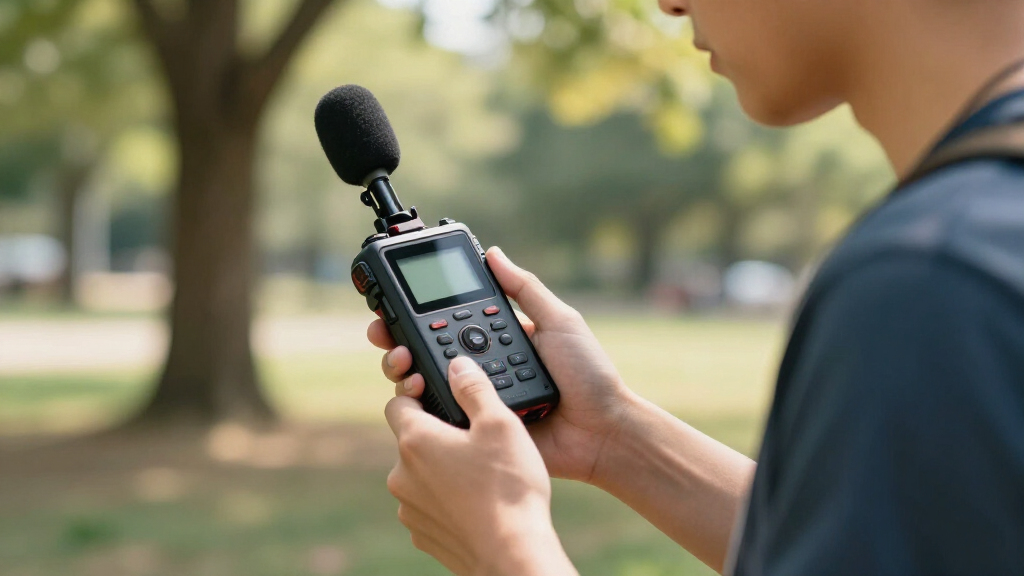

Choosing a portable audio recorder as a creator means balancing sound quality, usability, and portability. The Zoom H4 stands out as the best overall for its versatile features and professional-grade sound, while the Xvive XV1-R offers excellent value with high-quality 32-bit float recording in a compact package. For those who prioritize ease of use, the Zoom H1 Essential makes capturing high-quality audio simple and affordable. Readers often face tradeoffs between advanced features and user-friendliness, or between affordability and professional-grade performance. Keep reading for a detailed breakdown of these options to find the best fit for your needs.

Get audio and creator gear delivered free with Prime
- Fast, free delivery on millions of items
- Prime Video, Amazon Music and more included
- Member-only deals all year
Complete the kit


Key Takeaways
- The top picks balance sound quality, ease of use, and portability, with the Zoom H4 emerging as the most versatile overall.
- 32-bit float recording is a game-changer for creators who need reliable audio without complex gain adjustments.
- Bundled accessories and extended storage options add significant value for creators on the go.
- Compact models like the Xvive XV1-R excel for quick, high-quality recordings, but may lack some advanced features.
- Pricing varies widely, with the best value often found in mid-tier models that offer professional features without premium costs.


More Details on Our Top Picks
Digital Voice Recorder 16GB with Playback and Voice Activation
This compact recorder excels for creators who prioritize ease of use and long battery life, making it ideal for quick interviews or note-taking without fuss. Its one-button operation simplifies recording and playback, while noise reduction ensures clear audio in noisy environments. Compared with the Zoom H1 series, this device offers less advanced audio features but is more straightforward for beginners. The major tradeoff is the limited playback functionality and lack of external mic support, which could restrict versatility for more demanding projects. Its 16GB storage supports over 30 hours of recording, making it sufficient for most short sessions, though it doesn’t offer expandable memory.
Pros:- Simple one-button operation for quick recording and playback
- High-quality noise reduction for clearer audio
- Long battery life with over 30 hours of recording
Cons:- Limited playback features and no advanced editing options
- No support for external microphones or external audio inputs
Best for: Content creators needing a simple, portable recorder for quick captures and basic playback.
Not ideal for: Professionals requiring multi-track recording or external microphone options, as this device is primarily for basic use.
- Storage Capacity:16GB
- Recording Time:Over 30 hours
- Playback Time:Up to 7 hours
- Microphone:Sensitive with noise reduction
- Connectivity:USB
- Recording Quality:1536kbps
Our verdict“This recorder fits creators seeking a reliable, straightforward device for basic recording tasks without complex features.”
Zoom H4 Essential Handheld Recorder for Musicians, Podcasters & Filmmakers | 4-Track Stereo Recorder with XLR/TRS Inputs and USB Interface
The Zoom H4 Essential stands out for creators who need flexible recording options in a portable form, especially those working with multiple sound sources. Its 4-track recording capability and XLR/TRS inputs make it a step above single-mic devices like the H1 series, offering more control and professional quality. The USB-C interface simplifies connection to computers for streaming or editing, but its handheld design could be a limitation for stationary studio setups. Unlike the larger Zoom F2, it doesn’t focus solely on lavalier use but offers broader versatility. The need for SD card storage and its handheld form factor mean it’s better suited for on-the-go use rather than fixed studio recording setups.
Pros:- High-quality 4-track recording with multiple input options
- Supports external XLR/TRS microphones for professional sound
- USB-C connection facilitates easy integration with computers
Cons:- Limited to handheld operation, not ideal for stationary use
- Requires SD card for storage, adding an extra step for file management
Best for: Musicians, podcasters, and filmmakers who require multiple input options and multi-track recording in a portable device.
Not ideal for: Studio-only creators or those needing a fixed setup, as its handheld form and dependence on SD cards limit stationary use.
- Number of Tracks:4
- Inputs:2 XLR/TRS
- Microphones:Stereo built-in
- Connectivity:USB-C
- Recording Media:SD card
Our verdict“This model is perfect for mobile creators who need multi-track recording and external mic support without sacrificing portability.”
72GB Digital Voice Recorder with AI Noise Reduction and Voice Activation
This compact recorder shines for creators who need extensive storage and long battery life, such as lecturers or journalists. Its 72GB capacity supports up to 4,800 hours of audio, far surpassing the 16GB option, and AI noise reduction ensures clarity amid background noise. However, it’s limited to 2-hour recording files, which could complicate longer sessions, and its interface may be complex for beginners. Unlike the Zoom H4, it lacks multi-track functionality but compensates with automatic file management and a lightweight design. The absence of external microphone support might be a drawback for those needing higher-quality audio inputs.
Pros:- Long battery life with up to 48 hours of continuous recording
- Massive 72GB storage capacity for extended sessions
- Effective AI noise reduction for clearer audio
Cons:- Limited to 2-hour recording sessions per file
- No external microphone support
Best for: Professors, journalists, or researchers who require long, uninterrupted recordings with minimal setup.
Not ideal for: Studio-based creators or those needing multi-track editing, as this device is geared toward straightforward recording and long sessions.
- Storage Capacity:72GB
- Battery Life:up to 48 hours
- Recording Time per Session:2 hours
- Noise Reduction:97% ambient noise reduction
- Weight:1 ounce
Our verdict“This recorder is ideal for creators needing long, high-quality recordings with minimal user intervention during extended sessions.”
Zoom H1 Essential Stereo Handy Recorder with 32-Bit Float and X/Y Microphone
The Zoom H1 Essential excels for creators who need high-fidelity stereo recordings and an easy-to-use interface. Its 32-bit float recording enables capturing sound at any level without gain adjustments, making it highly forgiving in unpredictable environments. The X/Y microphones deliver crisp stereo images, suitable for music, interviews, or environmental sound. Its USB-C connectivity doubles as a microphone for computers, adding versatility. While it requires an SD card for storage, its compact size and accessibility features make it ideal for field recording, especially for visually impaired users. Compared to the more feature-rich H4, it sacrifices multi-track recording but gains portability and simplicity.
Pros:- High-quality 32-bit float recording for professional sound levels
- Built-in X/Y microphones for precise stereo imaging
- Versatile USB microphone functionality
Cons:- Requires SD card for storage, adding an extra component
- Limited to stereo recording, not suitable for multi-source capture
Best for: Field recordists, journalists, and content creators seeking high-quality stereo audio in a small, portable device.
Not ideal for: Creators needing multi-track recording or extensive input options, as this device focuses on stereo capture and portability.
- Recording Format:32-bit float
- Microphone Type:X/Y stereo microphones
- Maximum SPL:120 dB SPL
- Sample Rate:96kHz
- Connectivity:USB-C
- Compatibility:PC, Mac, iOS, Android
Our verdict“This recorder offers high-fidelity stereo capture in a portable package, perfect for on-the-go creators focused on sound quality.”
Tonfarb 136GB Digital Voice Recorder with Playback and Noise Reduction
This recorder appeals to creators who need extensive storage and straightforward operation, such as conference organizers or interviewers. Its 136GB capacity, supplemented by an 8GB built-in storage and a 128GB TF card, caters to long, uninterrupted sessions. Noise reduction microphones enhance audio clarity, and its one-touch recording simplifies operation. However, reliance on external TF cards for maximum storage might be inconvenient for some, and it only supports MP3 and WAV formats. Unlike some Zoom models, it doesn’t emphasize ruggedness or waterproofing, so it’s better suited for controlled environments.
Pros:- Massive storage capacity for lengthy recordings
- Crystal-clear sound with noise reduction microphones
- Long-lasting rechargeable battery for all-day use
Cons:- Requires external TF card for full storage capacity
- Limited to MP3 and WAV formats
Best for: Professionals conducting long recordings of meetings, lectures, or interviews requiring large storage and easy operation.
Not ideal for: Rugged outdoor use or creators needing waterproof features, as this device lacks durability enhancements.
- Storage Capacity:136GB
- Built-in Storage:8GB
- Included Storage:128GB TF card
- Battery:1100mAh rechargeable lithium-ion
- Recording Time:up to 68 hours
- Connectivity:USB-C
Our verdict“This device is a strong choice for creators needing high capacity and easy, reliable recording for extended periods.”
64GB Digital Voice Recorder with Playback and Voice Activation
This compact recorder excels in capturing high-quality stereo sound with noise reduction, making it ideal for lengthy interviews, lectures, and meetings. Its large 64GB capacity allows for over 4,600 hours of storage, surpassing many competitors like the Zoom H1 variants in capacity. The straightforward two-button operation and versatile playback make it accessible for users who prioritize ease of use. However, its exclusive digital format and reliance on a Type-C cable for file transfer could be limiting for those preferring analog options or easier connectivity. The voice activation feature helps focus recordings, but battery life can fluctuate with intensive use. Overall, this makes the most sense for creators needing extensive, simple recordings without complex editing needs.
Pros:- High-quality stereo sound with noise reduction technology
- Massive 64GB capacity for extended recordings
- Simple two-button operation and versatile playback
Cons:- Limited to digital WAV/MP3 formats, no analog options
- Requires Type-C cable for file transfer, which may be inconvenient
Best for: Content creators and professionals who record lengthy sessions and value straightforward operation.
Not ideal for: Users seeking multi-channel recording or extensive editing features, as this model is limited to mono or stereo digital files.
- Storage Capacity:64GB
- Battery:500mAh
- Charging:Type-C USB
- Dimensions:3.86 x 1.2 x 0.47 inches
- Recording Format:WAV/MP3
- Recording Time:up to 32 hours
Our verdict“This recorder is best suited for creators needing long, straightforward recordings with minimal fuss.”
Zoom H1 Essential Recorder for Musicians, Podcasters & Content Creators
The Zoom H1 stands out for its 32-bit float recording, which simplifies capturing dynamic sounds like live music or environmental audio without worrying about input levels. Compared to the simpler 64GB recorder, it offers more advanced audio features, such as X/Y stereo microphones and the ability to function as a USB microphone. Its portable design and 10-hour battery life make it a reliable on-the-go tool. However, it is limited to stereo recording, unlike multi-channel options, and the interface can be slightly complex for beginners. This model is better suited for creators who need versatile, high-quality stereo recordings with some flexibility for streaming or multi-purpose use.
Pros:- High-quality 32-bit float stereo recording
- Versatile for music, podcasts, and environmental sounds
- Portable with long battery life and USB microphone functionality
Cons:- Limited to stereo recording, not suitable for multi-channel needs
- Interface may be challenging for less tech-savvy users
Best for: Musicians, podcasters, and content creators looking for a portable, versatile stereo recorder.
Not ideal for: Professionals needing multi-channel or multi-track recording, as it only captures stereo sound and has a slightly complex interface.
- Recording Format:32-bit float
- Microphone Type:X/Y stereo mics
- Battery Life:10 hours
- Connectivity:USB-C
- Features:Clip-free design, accessibility
Our verdict“This recorder is perfect for creators prioritizing high-quality stereo capture with flexible mobility.”
Zoom H1 Essential 2-Track 32-Bit Float Portable Audio Recorder with Accessory Pack, 64GB Micro SD, Batteries, and Case
Building on the core H1 design, this bundle includes accessories and a 64GB microSD, making it ideal for creators who want a ready-to-go setup. Its 32-bit float recording ensures consistent sound levels without adjustments, a significant advantage over standard recorders like the 64GB model. The inclusion of accessories like a windscreen and padded case enhances portability and immediate usability. Accessibility features cater to visually impaired users, broadening its appeal. The main tradeoff is that it only supports two tracks, which may limit more complex productions, and understanding the digital features can require some learning curve. This pick makes the most sense for creators who want a comprehensive starter kit with advanced audio fidelity.
Pros:- High-quality 32-bit float recording eliminates level adjustments
- Portable, with included accessories for immediate use
- Accessible features for visually impaired users
Cons:- Limited to 2-track recording, restricting complex projects
- Requires understanding of digital audio features for optimal use
Best for: Beginners and mobile creators who want an all-in-one, accessible recording solution.
Not ideal for: Professional multi-track recordists or users seeking advanced editing and multi-channel recording, as it’s limited to two channels.
- Recording Format:32-bit float
- Microphone:X/Y stereo
- Maximum SPL:120 dB
- Included Accessories:Windscreen, SD card, batteries, case
- Compatibility:USB-C
Our verdict“This bundle offers a versatile, beginner-friendly solution with high-quality digital audio for creators starting out or on the move.”
Zoom H1 Essential Handy Recorder Bundle with Microphone and Accessories
This bundle enhances the standard H1 with a Lavalier mic, SD card, and accessories, making it perfect for storytellers and podcasters who need discreet, portable audio. The 32-bit float recording offers consistent sound levels, much like the other H1 models, but the inclusion of a Lavalier mic allows for more flexible, hands-free recording in various environments. Its compact size and battery-powered operation make it ideal for field recording or interviews. The main limitation is that it lacks advanced editing features and the microphone quality can vary depending on environment and positioning. Compared to the other H1 options, this bundle is best for those who prioritize ease of use and mobility with minimal setup.
Pros:- High-quality 32-bit float recording for consistent levels
- Includes Lavalier mic for discreet, hands-free recording
- Portable with immediate-use accessories
Cons:- Limited to basic recording features, lacking advanced editing
- Microphone quality depends on environment and positioning
Best for: Podcasters, journalists, and storytellers needing a portable kit for quick, discreet recordings.
Not ideal for: Creators requiring multi-mic setups or detailed editing tools, as this is a straightforward, simplified package.
- Recording Format:32-bit float
- Microphone Type:Lavalier condenser
- Maximum SPL:120 dB
- Included Microphone:Lavalier
- Storage:32GB microSDHC
Our verdict“Ideal for creators who need a compact, ready-to-use kit for on-the-go storytelling and interviews.”
Zoom F2 Lavalier Recorder for Weddings, Filmmaking & Content Creators | 32-Bit Float Body-Pack Recorder, SD Card Recording, Battery Powered, Includes Lavalier Mic
The Zoom F2 offers a highly portable, body-pack design with 32-bit float technology that ensures professional-grade audio capture in challenging environments, such as weddings or on-location filmmaking. Its ability to support large microSD cards up to 512GB allows for extended sessions, making it stand out from smaller recorders like the 64GB models. The included omnidirectional lavalier microphone provides discreet, quality sound, and the long battery life of up to 15 hours supports all-day shoots. The main tradeoff involves a learning curve for users unfamiliar with advanced digital audio controls and the need to purchase microSD cards separately. This makes it ideal for professionals or serious creators who value portability and high fidelity in demanding settings.
Pros:- 32-bit float technology delivers professional quality without level adjustments
- Long battery life and support for large microSD cards
- Includes professional lavalier microphone for discreet recording
Cons:- Requires separate microSD cards up to 512GB, adding cost
- Limited to single-channel recording, not multi-channel
Best for: Filmmakers, journalists, and professional content creators needing discreet, high-quality audio in dynamic environments.
Not ideal for: Entry-level users or those seeking multi-track recording, as the F2 is limited to a single channel and requires some familiarity with digital audio settings.
- Technology:32-bit float
- Sample Rate:44.1kHz or 48kHz
- Power:2 AAA batteries
- Storage Support:up to 512GB microSD
- Included Microphone:Omnidirectional lavalier
- Additional Features:REC Hold, internal clock
Our verdict“This recorder is perfect for professionals and serious creators needing reliable, discreet, high-fidelity audio in the field.”
Zoom H2 Essential Handheld Recorder for Musicians, Podcasters & Filmmakers
The Zoom H2 Essential stands out for its high-quality 32-bit float recording and multiple microphone patterns, making it ideal for creators who need a compact, all-in-one device. Compared to the Zoom H1, which offers similar 32-bit float capability but with fewer features, the H2 Essential provides more flexibility with nine recording patterns and wireless Bluetooth sync, enhancing multi-unit setups. Its handheld design suits on-the-go recording but limits stationary use. The complex menu system might challenge beginners, and its portability means it’s less suited for studio-style setups. Overall, this model makes the most sense for mobile creators who prioritize versatility and ease of multi-device synchronization, accepting a learning curve.
Pros:- High-quality 32-bit float recording with nine selectable microphone patterns
- Can record simultaneously to SD card and as a USB microphone
- Wireless Bluetooth sync enables multi-unit recording setups
- Accessible menu navigation in seven languages
Cons:- Limited to handheld operation, not ideal for stationary recording
- Complex features may require a learning curve for beginners
Best for: Filmmakers and podcasters who need a portable, all-in-one handheld recorder capable of high-quality, multi-pattern recording.
Not ideal for: Studio-focused users seeking stationary, fixed-position recording solutions, as its handheld design limits stationary use and audio fidelity in controlled environments.
- Microphones:3 built-in microphones
- Recording patterns:9 selectable patterns
- Maximum sample rate:96kHz
- Bit depth:32-bit float
- Connectivity:USB, Bluetooth
- Languages:7
Our verdict“This recorder is perfect for mobile creators who need flexible, high-quality, all-in-one audio capture, despite its learning curve.”
Zoom H1 XLR 2-Channel Recorder for Filmmakers, Musicians & Podcasters | Clip-Free Audio with 32-Bit Float, Stereo Recorder, 2 Locking XLR/TRS Inputs, 3.5mm Stereo Mic/Line In
The Zoom H1 XLR excels in scenarios requiring dual professional inputs, offering XLR/TRS combo jacks alongside 32-bit/96kHz recording for high-fidelity sound. Compared with the Xvive XV1-R, which is more portable and offers longer battery life, the H1 provides more versatile input options suited for capturing multiple sources simultaneously. Its OLED waveform display makes level monitoring straightforward, which is crucial for live or field recordings. However, the device’s complexity may be overwhelming for beginners, and it’s limited to just two channels, which could restrict multi-source recording. This makes it ideal for creators who need reliable, multi-input recording in a portable form, accepting the tradeoff of a steeper learning curve.
Pros:- High-quality 32-bit/96kHz recording for professional sound
- Dual XLR/TRS inputs for microphones and instruments
- OLED waveform display for easy level monitoring
- Supports SDXC cards up to 1TB for extended sessions
Cons:- Limited to 2 channels, restricting multi-source recordings
- Requires SDXC cards for storage, adding to cost and setup complexity
Best for: Musicians, filmmakers, or podcasters who need professional-quality, dual-input recording in a portable device with real-time level monitoring.
Not ideal for: Beginners or solo creators who prefer simple, single-input recorders, as the XLR inputs and menu complexity might be daunting.
- Recording Quality:32-bit / 96kHz
- Inputs:2 XLR/TRS combo
- Display:OLED waveform
- Storage Support:SDXC up to 1TB
- Input/Output:3.5mm stereo mic/line in
- Max Recording Channels:2
Our verdict“This recorder fits professionals needing dual high-quality inputs in a portable form, with some complexity that may challenge newcomers.”
Xvive XV1-R Portable Stereo Audio Recorder with 32-Bit Float, X/Y Microphones, WAV/AAC Format, USB Microphone, Auto Record
The Xvive XV1-R is tailored for creators needing reliable, lossless stereo recording with high SPL handling. Its X/Y microphones capture clear, natural stereo images, making it ideal for capturing live music, outdoor scenes, or high-volume environments. Compared to the TASCAM DR-40XP, which offers four channels and more extensive connectivity options, the XV1-R emphasizes portability and simplicity, supporting long battery life and direct USB microphone use. Its 32-bit float recording ensures no gain adjustments are needed, simplifying post-production. However, it depends on SD cards for storage, with a 4GB file size limit that may require manual splitting for longer recordings. This pick suits mobile creators prioritizing quality and ease of use in dynamic environments.
Pros:- Lossless 32-bit float recording preserves audio quality without gain adjustments
- High SPL handling (130 dB) with professional X/Y microphones
- Supports long recording sessions with large SD cards
- Can function as a USB microphone for streaming or podcasting
Cons:- Requires SD card, which may need separate purchase
- Maximum file size of 4GB may require manual splitting for long recordings
Best for: Musicians and filmmakers recording high SPL sources outdoors or in loud environments who want lossless, portable stereo recording with minimal setup.
Not ideal for: Users needing multi-channel recording or extended continuous sessions without manual file management, as the 4GB file size limit could be a constraint.
- Recording Format:WAV, AAC
- Sample Rate:Up to 96 kHz
- Bit Depth:32-bit float, 24-bit PCM
- Microphone Type:X/Y directional
- Maximum SPL:130 dB
- Storage:MicroSDHC up to 32GB, MicroSDXC up to 128GB
- Battery Life:Up to 12 hours
Our verdict“Ideal for mobile creators focused on high SPL environments who need reliable, lossless stereo audio, accepting manual file management for longer sessions.”
TASCAM DR-40XP 4-Channel 32-Bit Float Portable Handheld Field Recorder and USB-C Audio Interface
The TASCAM DR-40XP offers four-channel recording with flexible microphone configurations, making it suitable for capturing complex audio scenes. Its 32-bit float recording ensures high dynamic range and clarity, comparable to the Zoom H2 Essential but with added channels and control over stereo mic arrangements. The USB-C interface simplifies connection to computers and mobile devices, supporting seamless multi-track workflows. Although it requires external power and batteries, making it less portable than simpler recorders, its multi-channel capabilities make it ideal for music production, interviews, or multi-mic environments. Its complexity and accessory needs might be a hurdle for beginners, but experienced users will appreciate the versatility in versatile scenarios.
Pros:- Four-channel recording with 32-bit float for professional clarity
- Adjustable stereo microphone configurations (A-B or X-Y)
- USB-C for easy connection to computers and mobile devices
- Supports WAV at 96 kHz and other formats for versatile use
Cons:- Batteries and microSD cards are not included, adding setup steps
- More complex operation may challenge beginners
Best for: Content creators needing multi-mic, multi-channel recording in mobile environments, especially for music and multi-person interviews, with professional-grade clarity.
Not ideal for: Beginners seeking simple, plug-and-play devices, as the TASCAM DR-40XP’s multiple controls and power requirements can be overwhelming.
- Channels:4
- Bit Depth:32-bit float
- Microphone Type:Adjustable A-B or X-Y
- Maximum SPL:125 dB
- Inputs:2 XLR/TRS
- Outputs:2-in/2-out USB-C
- Recording Formats:WAV 96kHz
Our verdict“This recorder is best for experienced creators requiring multi-channel, high-quality audio in a portable form, accepting some setup complexity.”
How We Picked
For this roundup, I evaluated each recorder based on several key factors: audio performance, usability, build quality, portability, and value. I prioritized devices that deliver clear, reliable sound suitable for various content creation needs, from podcasts to filmmaking. Ease of use and setup time played a big role, especially for creators who need quick, on-the-fly recording. I also considered the durability and expandability of each device, ensuring that they can withstand real-world use and offer enough storage or input options. The ranking reflects a balance between professional features and accessibility, helping creators of different levels find a suitable option.Factors to Consider When Choosing Portable Audio Recorders For Creators
When choosing a portable audio recorder for content creation, it’s essential to consider several factors that impact your workflow and output quality. Understanding these can help you avoid common mistakes like overpaying for unnecessary features or opting for models that are too basic for your needs. The right recorder should match your typical recording environment, skill level, and budget, ensuring you get the best value and performance without compromise.Sound Quality and Recording Format
High-quality sound is the core of any good recorder. Look for models that support formats like WAV or AAC, which preserve clarity. Features like 32-bit float recording can prevent clipping and make post-editing easier, especially in unpredictable environments. Choosing a device with quality built-in microphones or XLR inputs allows for better sound capture, which is crucial for professional content creation.
Ease of Use and Interface
A straightforward interface reduces setup time and frustration, particularly for creators who need quick results. Touchscreens, physical controls, and clear menus help streamline recording sessions. Beware of overly complex devices that require extensive training—simplicity often translates into better reliability and faster operation during critical moments.
Portability and Size
Since creators often record on the move, a compact, lightweight device is ideal. Consider whether a smaller recorder sacrifices features or battery life. Devices with durable, shock-resistant bodies and long battery life will serve better in field conditions, reducing the chances of missed recordings due to technical issues.
Connectivity and Expandability
Built-in USB interfaces, SD card slots, and multiple input options add flexibility. These features allow for easy transfer to editing software and compatibility with different microphones or external devices. Investing in a recorder with expandable storage or multiple inputs can future-proof your setup as your needs evolve.
Budget and Value
Pricing can vary significantly. While premium models offer advanced features, many mid-tier options deliver excellent quality at a more accessible price. Consider your specific needs and whether additional features justify the higher cost. Sometimes, investing a bit more upfront provides better longevity and sound quality, saving you money in the long run.
Frequently Asked Questions
Is 32-bit float recording worth it for a beginner?
Yes, 32-bit float recording is highly beneficial even for beginners because it simplifies gain staging and reduces the risk of clipping, which can ruin recordings. It allows you to record at a wide dynamic range without meticulous gain adjustments, making it easier to produce professional-sounding audio with less technical hassle. While initial costs may be higher, the ease of use and reliability can save time and frustration during editing.
Should I prioritize portability over sound quality?
It depends on your typical recording environment and specific needs. If you often record outdoors or on the move, portability becomes critical, and compact devices with good quality microphones are ideal. However, sacrificing too much sound quality for size can lead to subpar recordings. Aim for a balance where the device is easy to carry but still delivers clear, professional audio.
What input options should I look for?
Microphone inputs like XLR or 3.5mm mini-jack are essential depending on your mic setup. XLR inputs generally offer better professional-quality audio and are more durable, making them suitable for high-end microphones. If you plan to use lavalier mics or smartphones, a 3.5mm or USB input might suffice. Consider your current gear and future expansion plans when choosing inputs.
How important are bundled accessories?
Bundled accessories like microphones, SD cards, batteries, and carrying cases add significant convenience and value, especially for creators who need a ready-to-go setup. These extras can save money and reduce the hassle of sourcing compatible gear separately. However, ensure that the included accessories meet your quality standards and are compatible with your existing equipment.
Is it better to buy a dedicated recorder or a smartphone attachment?
Dedicated recorders often provide superior sound quality, more inputs, and better durability compared to smartphone attachments. They are designed for professional use and typically feature better preamps, microphones, and storage options. Smartphone attachments can work for casual recordings, but for serious content creation, investing in a dedicated device usually results in clearer, more reliable audio.
Conclusion
For casual creators or those just starting out, the Zoom H1 Essential offers excellent value and ease of use. Serious podcasters or filmmakers will appreciate the Zoom H4 for its versatility and professional features. Content creators needing a compact, high-quality solution should consider the Xvive XV1-R for its portability and 32-bit float recording. Finally, those with more demanding requirements or larger budgets should look at premium models like the TASCAM DR-40XP, ensuring durability and expandability for long-term projects. Your choice should match your typical recording environment, technical comfort, and budget constraints.
As an affiliate, we earn on qualifying purchases.Fall Picks
fall essentials