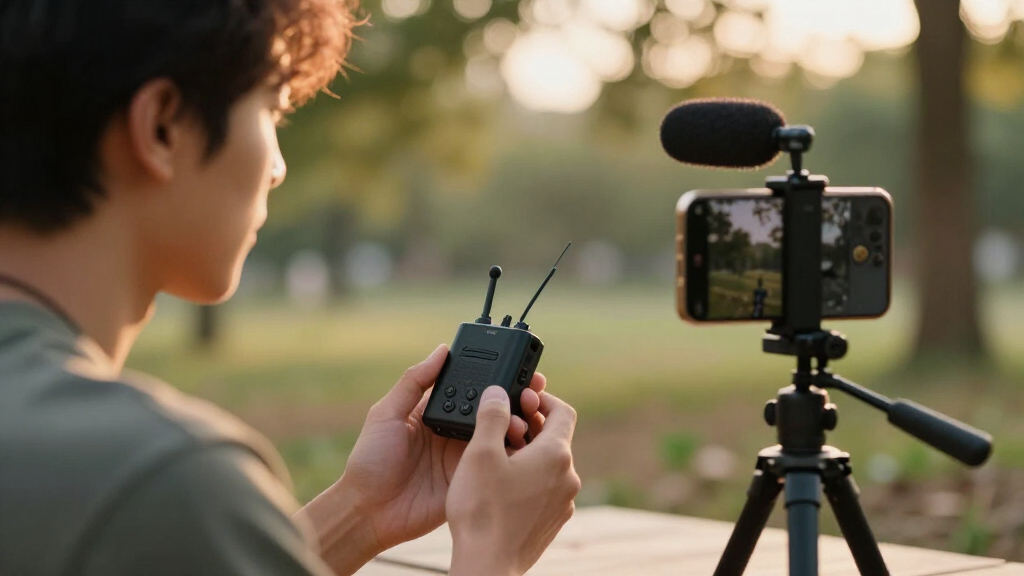

The best wireless microphone system for most creators in 2026 is the DJI Mic 3, which pairs excellent audio quality with a refined charging case and the most reliable wireless link in this lineup. If budget is the main constraint, the DJI Mic Mini (1 TX + 1 RX) delivers surprisingly clean dialogue capture at a fraction of the price, while the Hollyland Lark M2 (2TX + 3RX) is the strongest pick for creators who jump between phone, camera, and computer. The central tradeoff in this category is between range and battery life on one side and size, weight, and price on the other — the tiny clip-on mics are wonderfully discreet but sacrifice onboard recording and flexible outputs. Below, I break down all 14 systems, who each one is actually for, and where each falls short, so you can match the right kit to your workflow instead of overpaying for features you’ll never touch.

Get audio and creator gear delivered free with Prime
- Fast, free delivery on millions of items
- Prime Video, Amazon Music and more included
- Member-only deals all year
Complete the kit

Key Takeaways
- The DJI Mic 3 took the top spot because it is the only system here that combines internal safety-track recording, strong range, and a charging case without compromise — every cheaper option gave up at least one of those.
- The DJI Mic Mini family appears five times in this roundup because its single-transmitter version is the best value pick for solo creators, while its two-transmitter bundles only make sense if you regularly record two speakers.
- Hollyland‘s Lark M2 with three receivers is the most versatile kit for multi-device creators, but its tiny transmitters mean no screens and no onboard recording — a real risk for one-take interviews.
- Budget two-packs like the MAYBESTA and Mini Mic Pro can capture usable phone audio, but compression and weaker noise handling showed up most in noisy outdoor environments, not quiet indoor tests.
- Across the lineup, noise cancellation quality — not raw range — was the biggest separator between cheap and premium systems, since most creators record within 20 feet and rarely stress the advertised distances.
| DJI Mic Mini Wireless Microphone for Smartphone (1 Transmitter + 1 Mobile Receiver) |  | Best Ultralight Pick for Solo Mobile Creators | Weight: 10 g | Transmission Range: 400 meters | Sampling Rate: 48 kHz | VIEW LATEST PRICE | See Our Full Breakdown |
| Hollyland Lark A1 (2TX + USB-C RX) Wireless Microphone for iPhone & Android |  | Best Value Two-Person Kit | Connectivity: 2.4GHz wireless | Audio Quality: 48kHz/24-bit | Wireless Range: Up to 200 meters | VIEW LATEST PRICE | See Our Full Breakdown |
| DJI Mic 2 (2 TX + 1 RX) Wireless Microphone System |  | Best Overall | Transmitters: 2 | Receiver: 1 | Internal Storage: 8 GB per transmitter | VIEW LATEST PRICE | See Our Full Breakdown |
| Hollyland Lark A1 Wireless Magnetic Microphone (2 Transmitters + USB-C Receiver + Charging Case) |  | Best for Marathon Shoots | Connectivity: 2.4GHz wireless | Audio Quality: 48kHz/24-bit | Battery Life: Up to 54 hours with charging case | VIEW LATEST PRICE | See Our Full Breakdown |
| Mini Mic Pro – Wireless Lavalier Microphone for iPhone & Android | 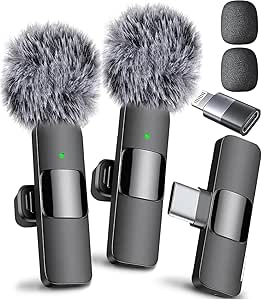 | Best Budget Starter Pick | Compatibility: iPhone, Android, tablets, laptops | Connectors: Lightning, USB-C | Polar Pattern: Omnidirectional | VIEW LATEST PRICE | See Our Full Breakdown |
| Hollyland Lark M2 Wireless Microphone for iPhone 15/16/17 & Android (USB-C) | 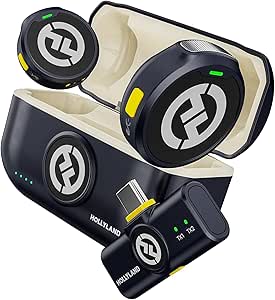 | Best Battery Life | Connectivity: 2.4GHz digital wireless | Connector: USB Type-C | Audio Quality: 48kHz / 24-bit, 70dB SNR | VIEW LATEST PRICE | See Our Full Breakdown |
| DJI Mic 3 Wireless Microphone (2 Transmitters + 1 Receiver + Charging Case) |  | Best Premium Pick | Configuration: 2 transmitters, 1 receiver | Battery Life: Up to 28 hours with charging case | Recording Format: 32-bit float dual-file internal recording | VIEW LATEST PRICE | See Our Full Breakdown |
| DJI Mic Mini (2 TX + 1 Mobile RX) |  | Best for Smartphone Creators | Configuration: 2 transmitters, 1 mobile receiver | Transmitter Weight: 10g each | Transmission Range: Up to 300 meters | VIEW LATEST PRICE | See Our Full Breakdown |
| MAYBESTA Wireless Mini Microphone for iPhone and Android – 2 Pack |  | Best Budget Pick | Connectivity: 2.4GHz wireless | Connector: Lightning or USB Type-C | Configuration: 2 transmitters, plug-in receivers | VIEW LATEST PRICE | See Our Full Breakdown |
| DJI Mic Mini (2 TX + 1 RX), Ultralight, Detail-Rich Audio |  | Best Lightweight Kit for Creators | Configuration: 2 transmitters, 1 receiver, charging case | Transmitter Weight: 10g each | Transmission Range: Up to 400 meters | VIEW LATEST PRICE | See Our Full Breakdown |
| DJI Mic Mini (2 TX + 1 RX + Charging Case) | 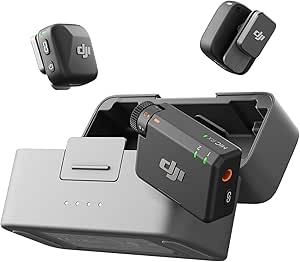 | Best Overall for Solo and Two-Person Shoots | Weight: 10 g per transmitter | Transmission Range: 400 m | Sampling Rate: 48 kHz | VIEW LATEST PRICE | See Our Full Breakdown |
| BOYA Mini 2 Wireless Lavalier Microphone |  | Best Budget Pick for Smartphone Creators | Weight: 5 g | Transmission Range: 328 ft (100 m) | Audio Quality: 48 kHz / 24-bit | VIEW LATEST PRICE | See Our Full Breakdown |
| Hollyland Lark M2 (2TX + 3RX) |  | Best Multi-Device Kit for Hybrid Creators | Transmission Range: 300 m | Audio Quality: 48 kHz / 24-bit | Battery Life: Up to 40 hours (with charging case) | VIEW LATEST PRICE | See Our Full Breakdown |
| DJI Mic Mini (1 TX + 1 RX) |  | Best Lightweight Solo Kit | Weight: 10 g | Transmission Range: 400 m | Sampling Rate: 48 kHz | VIEW LATEST PRICE | See Our Full Breakdown |
| wireless microphone systems for creator | Battery Life | Connectivity | Transmission Range |
|---|---|---|---|
| DJI Mic Mini Wireless Micropho | 48 hours | USB-C, DJI Osmo ecosystem | 400 meters |
| Hollyland Lark A1 | — | 2.4GHz wireless | — |
| DJI Mic 2 | Up to 18 hours | USB-C, Lightning, Bluetooth | — |
| Hollyland Lark A1 Wireless Mag | Up to 54 hours with charging case | 2.4GHz wireless | — |
| Mini Mic Pro | Up to 6 hours | — | — |
| Hollyland Lark M2 Wireless Mic | Up to 30 hours (with charging case) | 2.4GHz digital wireless | — |
| DJI Mic 3 Wireless Microphone | Up to 28 hours with charging case | USB-C mobile adapter, DJI ecosystem | — |
| DJI Mic Mini | 11.5 hours | — | Up to 300 meters |
| MAYBESTA Wireless Mini Microph | — | 2.4GHz wireless | — |
| DJI Mic Mini | Up to 10 hours | DJI Osmo ecosystem | Up to 400 meters |
| DJI Mic Mini | 48 hours (with charging case) | — | 400 m |
| BOYA Mini 2 Wireless Lavalier | Up to 30 hours | — | 328 ft (100 m) |
| Hollyland Lark M2 | Up to 40 hours (with charging case) | — | 300 m |
| DJI Mic Mini | 10 hours | — | 400 m |
More Details on Our Top Picks
DJI Mic Mini Wireless Microphone for Smartphone (1 Transmitter + 1 Mobile Receiver)
At just 10 grams per transmitter, this option stands out as the lightest way to get serious audio onto a phone. This pick makes the most sense for solo vloggers and run-and-gun shooters who clip one mic on and go — the 400-meter range beats both the Hollyland Lark A1 (200 m) and the DJI Mic 2 (250 m), which matters if the camera ever sits far from the subject. Compared with the Mini Mic Pro, the noise cancellation here is a clear step up for outdoor work. The tradeoff: a single transmitter means no two-person interviews, and some advanced features only unlock inside the DJI Osmo ecosystem. Creators outside that ecosystem give up functionality they paid for.
Pros:- Featherweight 10 g transmitter disappears on camera
- Class-leading 400 m transmission range
- 48-hour total battery life for all-day shoots
- Strong noise cancellation for outdoor recording
Cons:- Single transmitter can’t handle interviews or dialogue
- Best features locked to compatible DJI devices
Best for: Solo mobile vloggers and livestreamers who want near-invisible gear with maximum range
Not ideal for: Two-person interviewers or podcasters — one transmitter means one voice, period
- Weight:10 g
- Transmission Range:400 meters
- Sampling Rate:48 kHz
- Maximum SPL:120 dB
- Battery Life:48 hours
- Connectivity:USB-C, DJI Osmo ecosystem
Our verdict“If you film alone on a phone and hate bulky gear, this is the lightest and longest-reaching option in the lineup.”
Hollyland Lark A1 (2TX + USB-C RX) Wireless Microphone for iPhone & Android
Two transmitters and a USB-C receiver at this price make this the smartest value for interview-style content in this batch. The 48kHz/24-bit recording matches the pricier Hollyland A1 charging-case bundle, and the 3-level noise cancellation holds its own against the DJI Mic Mini outdoors. Compared with the DJI Mic 2, you give up internal recording storage and 50 meters of range, but you also skip a big chunk of the price — a fair trade for creators who monitor while recording. The 6-level gain adjustment and auto-limit clip protection mean fewer ruined takes from sudden loud moments. The compromise is build quality: the plastic enclosure feels less rugged than DJI’s offerings, and the 200-meter range is the shortest of the dedicated kits here.
Pros:- Two transmitters for interviews at an accessible price
- 48kHz/24-bit high-fidelity audio
- Effective 3-level noise cancellation for outdoor use
- 6-level gain control and clip protection save takes
Cons:- Plastic enclosure is less durable than rivals
- 200 m range trails the DJI options
- Smartphone-only — no camera support
Best for: Budget-conscious creators filming two-person interviews, livestreams, or podcast-style videos on smartphones
Not ideal for: Camera-based shooters or heavy travelers — smartphone-only compatibility and a plastic build limit flexibility
- Connectivity:2.4GHz wireless
- Audio Quality:48kHz/24-bit
- Wireless Range:Up to 200 meters
- Noise Cancellation:3-level
- Channels:2
- Signal-to-Noise Ratio:67 dB
- Weight:137 g
Our verdict“The most sensible entry point for two-person smartphone content without DJI pricing.”
DJI Mic 2 (2 TX + 1 RX) Wireless Microphone System
This model earns the top spot because it solves the problem the others punt on: safety recording. With 8 GB of internal storage per transmitter and up to 14 hours of onboard recording, a dropped wireless connection never means lost audio — a safeguard the Hollyland Lark A1 and Mini Mic Pro simply don’t offer. The versatile connectivity (USB-C, Lightning, Bluetooth) lets one kit serve a phone today and a camera tomorrow, which the smartphone-only Lark A1 can’t match. Intelligent noise canceling cleans up location audio convincingly. The tradeoffs are real, though: Bluetooth mode disables both noise canceling and internal recording, pushing serious users toward a cabled connection, and accessories like extra mounts cost extra. Compared with the lighter DJI Mic Mini, this is heavier gear — but it’s the one kit that covers nearly every shooting scenario.
Pros:- 8 GB internal storage per transmitter as a recording safety net
- 14 hours of onboard backup recording
- Connects to phones, cameras, and DJI devices
- Intelligent noise canceling for location work
Cons:- Bluetooth mode disables noise canceling and internal recording
- Key accessories sold separately
- Heavier and pricier than the Mic Mini line
Best for: Professional and semi-pro creators who need one system for phones, cameras, and multi-speaker shoots
Not ideal for: Casual phone-only vloggers — it costs and weighs more than the Mic Mini without adding value for solo use
- Transmitters:2
- Receiver:1
- Internal Storage:8 GB per transmitter
- Max Recording Time:14 hours per transmitter
- Wireless Range:250 meters (FCC)
- Battery Life:Up to 18 hours
- Connectivity:USB-C, Lightning, Bluetooth
Our verdict“The most complete and forgiving system here — buy it if your content spans devices and formats.”
Hollyland Lark A1 Wireless Magnetic Microphone (2 Transmitters + USB-C Receiver + Charging Case)
The headline here is endurance: up to 54 hours of battery with the included charging case, the longest runtime in this batch and well past the DJI Mic 2’s 18 hours. This option stands out for event videographers, conference recorders, and multi-day travelers who can’t reliably recharge between sessions. The magnetic mounting is faster than clip-on designs when talent is wearing fabrics that won’t hold a clamp — a small thing that matters on busy shoots. Audio quality matches the standard Lark A1 at 48kHz/24-bit, with the same EQ and reverb tuning options. What holds it back is the same smartphone-only limitation as its sibling, plus a setup process that’s less intuitive than DJI’s near-instant pairing. If your shoots are short and phone-free, the DJI Mic 2 remains the better-rounded buy.
Pros:- 54-hour total battery life with charging case
- Magnetic mounting attaches quickly to any clothing
- Two transmitters for dialogue and interviews
- EQ and reverb adjustment for tuned sound
Cons:- Smartphone-only compatibility
- Setup is more complex than plug-and-play rivals
Best for: Event and documentary creators who record for long stretches without reliable access to charging
Not ideal for: Camera shooters or anyone wanting dead-simple setup — smartphone-only and fussier to configure than DJI
- Connectivity:2.4GHz wireless
- Audio Quality:48kHz/24-bit
- Battery Life:Up to 54 hours with charging case
- Noise Cancellation:3-level
- Wireless Range:Up to 200 meters
- Transmitters:2 (magnetic mount)
- Channels:2
Our verdict“The endurance champion — pick it when battery anxiety, not features, drives your buying decision.”
Mini Mic Pro – Wireless Lavalier Microphone for iPhone & Android
This is the lowest-commitment way to upgrade from your phone’s built-in mic. One-touch, plug-and-play operation across iPhones, Androids, tablets, and laptops means zero learning curve — a genuine advantage over the Hollyland Lark A1 kits, which require more setup. For first-time YouTubers, students, and casual interviewers, the noise reduction delivers a noticeable jump in clarity over raw phone audio. That said, the omnidirectional pickup pattern is the honest weakness: in cafés or windy streets it grabs ambient sound that the directional, multi-level cancellation on the DJI Mic Mini would filter out. Battery life tops out around 6 hours, a fraction of the Hollyland A1’s 54. Think of this as the training-wheels option — great to learn on, and something you may outgrow once your content gets serious.
Pros:- True plug-and-play with no app or pairing hassle
- Works across phones, tablets, and laptops
- One-touch recording with battery indicator
- Very low price for a meaningful audio upgrade
Cons:- Omnidirectional mic picks up background noise
- Only ~6 hours of battery per charge
- No advanced gain or noise-canceling controls
Best for: Beginners and casual creators who want a cheap, instant audio upgrade without research or setup
Not ideal for: Noisy-environment shooters or professionals — omnidirectional pickup and short battery life cap its ceiling
- Compatibility:iPhone, Android, tablets, laptops
- Connectors:Lightning, USB-C
- Polar Pattern:Omnidirectional
- Battery Life:Up to 6 hours
- Special Features:1-Touch Recording, Noise Reduction, Battery Indicator
- Dimensions:3 x 0.5 x 0.25 inches
Our verdict“A sensible first mic for new creators — just plan to graduate to DJI or Hollyland gear as your demands grow.”
Hollyland Lark M2 Wireless Microphone for iPhone 15/16/17 & Android (USB-C)
For creators who record all day, the Hollyland Lark M2 stands out for its 30-hour total battery life and featherweight 9g transmitters — a combo that lets a single charge cover multi-day shoots without mid-session swaps. Compared with the DJI Mic Mini, the Lark M2 pushes transmission range to roughly 1000 feet and records in 48kHz/24-bit, which translates to cleaner dynamics when you edit loud and quiet moments side by side. The catch is the connector situation: this USB-C version locks you into modern iPhone and Android ports, and there is no on-unit display for monitoring levels, unlike the DJI Mic 3 with its touchscreen receiver. Some convenience features, including remote record control, depend entirely on the companion app working with your specific phone.
Pros:- Up to 30 hours of total battery life covers multi-day shoots
- 48kHz/24-bit lossless audio with 70dB signal-to-noise ratio
- 9g transmitters are barely visible on camera
- 1000ft transmission range far exceeds most phone-first rivals
Cons:- USB-C only — no Lightning or camera output in this configuration
- App-dependent features like remote recording may not work on every phone
- No screen on the receiver for monitoring levels or battery at a glance
Best for: Vloggers and run-and-gun filmmakers who shoot long days on USB-C phones and want studio-grade fidelity without recharging
Not ideal for: Camera-first shooters or anyone with older Lightning devices — this USB-C version offers no camera receiver or analog output
- Connectivity:2.4GHz digital wireless
- Connector:USB Type-C
- Audio Quality:48kHz / 24-bit, 70dB SNR
- Range:Up to 1000ft
- Battery Life:Up to 30 hours (with charging case)
- Transmitter Weight:9g each
- Channels:2
- Polar Pattern:Omnidirectional
Our verdict“Buy this if battery endurance and audio fidelity on a USB-C phone matter more than ecosystem integration and on-device controls.”
DJI Mic 3 Wireless Microphone (2 Transmitters + 1 Receiver + Charging Case)
The DJI Mic 3 earns the premium slot because it solves problems the budget options simply can’t: 32-bit float internal recording means clipped audio is recoverable in post — a genuine rescue when an interview subject suddenly shouts. Its adaptive gain control and dual-band anti-interference give it an edge over the Hollyland Lark M2 in chaotic RF environments like trade shows or city streets, though the Lark M2 wins on pure battery endurance. Setup is more involved than plug-and-play kits like the MAYBESTA; the touchscreen receiver and menu system reward creators willing to learn them. The price is the real tradeoff — this costs multiples of budget kits, and its deepest features shine only when paired with other DJI gear.
Pros:- 32-bit float dual-file recording rescues clipped takes in post
- Adaptive gain control handles unpredictable speakers automatically
- Dual-band anti-interference stays stable in crowded RF environments
- Charging case brings total runtime to 28 hours
Cons:- Highest price in this lineup by a wide margin
- Menu-driven touchscreen has a steeper learning curve than plug-and-play rivals
- Best feature set requires DJI ecosystem compatibility
Best for: Professional videographers and interview-focused creators who can’t afford clipped audio and want broadcast-grade redundancy
Not ideal for: Casual TikTok or Reels creators — paying for 32-bit float and multi-channel output is overkill when a phone-clip mic would do
- Configuration:2 transmitters, 1 receiver
- Battery Life:Up to 28 hours with charging case
- Recording Format:32-bit float dual-file internal recording
- Audio Features:Adaptive gain, noise cancelling, multi-channel output
- Connectivity:USB-C mobile adapter, DJI ecosystem
- Anti-Interference:Dual-band
Our verdict“If ruined audio costs you money, the Mic 3’s fail-safes justify the price; everyone else should look downstream in this list.”
DJI Mic Mini (2 TX + 1 Mobile RX)
This version of the DJI Mic Mini is the one phone-first creators should grab, because the mobile receiver is purpose-built to clip straight into an iPhone 15/16/17 or Android handset — no dongles, no cases coming off. At 10g per transmitter with two selectable noise cancellation levels, it balances the discretion of a budget mini mic with genuinely usable tuning. Compared with the MAYBESTA 2-pack, the Mic Mini trades a lower price for better transmission stability at distance and adjustable rather than fixed noise reduction. Its 11.5-hour battery beats plenty of rivals but falls short of the Hollyland Lark M2’s 30-hour claim, so all-day event shooters may still want the charging routine. The magnetic clips are convenient but demand caution around credit cards and pacemakers.
Pros:- Mobile receiver plugs directly into phones without adapters
- Two adjustable noise cancellation levels adapt to environment
- 11.5-hour battery outlasts most shooting days
- 10g transmitters stay invisible on camera
Cons:- No waterproofing — rain and humidity are genuine risks
- Magnets in the transmitters can interfere with cards and electronics
- Shorter effective range than the Hollyland Lark M2 in open spaces
Best for: Reels, TikTok, and mobile livestream creators who want two-person audio that plugs directly into their phone
Not ideal for: Outdoor documentary or wet-weather shooters — no waterproofing and limited operating temperature range make it fragile in the field
- Configuration:2 transmitters, 1 mobile receiver
- Transmitter Weight:10g each
- Transmission Range:Up to 300 meters
- Battery Life:11.5 hours
- Noise Cancellation:2 levels (Basic, Strong)
- Compatibility:iPhone 15–17 series, Android, PC, tablets
Our verdict“The most sensible pick for creators whose primary camera is their phone and who need two mics without fuss.”
MAYBESTA Wireless Mini Microphone for iPhone and Android – 2 Pack
The MAYBESTA 2-pack is the entry ticket for creators who need two mics without spending DJI money. Its strongest practical detail is the longer receiver body, which stays connected even with a bulky phone case on — a small design choice that trips up many cheaper clip-on receivers. Pairing is genuinely automatic: plug in, talk, done, which makes it far friendlier for beginners than the menu-driven DJI Mic 3. The tradeoffs are real, though. There is no charging case, no internal recording safety net, and single-channel audio means less flexibility in post compared with dual-channel kits from Hollyland. Noise reduction is fixed rather than adjustable, so it can sound heavy-handed in quiet rooms. For the price, the audio is serviceable — just don’t expect broadcast polish.
Pros:- True plug-and-play pairing with no apps or adapters
- Longer receiver fits phones without removing cases
- Works across phones, tablets, and laptops in both Lightning and USB-C variants
- Two-mic kit at a fraction of premium pricing
Cons:- Fixed, non-adjustable noise reduction can smear quiet dialogue
- Single-channel output limits post-production control
- No charging case or internal recording safety track
Best for: First-time YouTubers and students who need two working mics for interviews or podcasts on a tight budget
Not ideal for: Anyone producing client work — the fixed noise reduction and lack of internal recording backup leave no margin for error
- Connectivity:2.4GHz wireless
- Connector:Lightning or USB Type-C
- Configuration:2 transmitters, plug-in receivers
- Polar Pattern:Omnidirectional
- Signal-to-Noise Ratio:80dB
- Channels:1
- Special Features:Mute function, noise reduction, plug & play
Our verdict“The cheapest credible way to get two people mic’d — buy it for practice content, upgrade when audio quality starts costing you viewers.”
DJI Mic Mini (2 TX + 1 RX), Ultralight, Detail-Rich Audio
Distinct from the mobile-receiver version, this DJI Mic Mini (2 TX + 1 RX) pairs the ultralight transmitters with a standard receiver and charging case, making it the better fit for creators splitting time between cameras and Osmo devices rather than living entirely on a phone. Its 400-meter range quietly beats the 300 meters of the mobile variant, which matters for drone-adjacent or wide-shot B-roll work. Compared with the DJI Mic 3, you give up 32-bit float recording and the touchscreen — but you also cut the price dramatically while keeping the same 10g transmitter comfort. The 10-hour battery is the shortest among DJI’s kits here, so the charging case is not optional luggage. Like its siblings, it skips waterproofing entirely.
Pros:- 400m range exceeds the mobile-receiver Mic Mini variant
- Charging case included for storage and top-ups
- 10g transmitters are comfortable for hours of wear
- Two-level noise cancellation adapts indoors and out
Cons:- 10-hour battery is the shortest among comparable DJI kits
- No waterproofing despite the outdoor-focused range
- Deepest integration limited to DJI Osmo ecosystem devices
Best for: Hybrid creators shooting on DJI Osmo cameras and phones who want a featherweight two-person kit with a charging case
Not ideal for: All-day conference or event shooters — the 10-hour ceiling is the lowest in DJI’s lineup here and needs mid-day topping up
- Configuration:2 transmitters, 1 receiver, charging case
- Transmitter Weight:10g each
- Transmission Range:Up to 400 meters
- Battery Life:Up to 10 hours
- Noise Cancellation:2 levels
- Connectivity:DJI Osmo ecosystem
Our verdict“The sweet spot for Osmo-based creators who want the Mic Mini’s comfort with a longer-range receiver and a case to live in.”
DJI Mic Mini (2 TX + 1 RX + Charging Case)
This two-transmitter kit is the strongest all-rounder in the lineup because it solves the two problems creators complain about most: weight and battery anxiety. At 10 grams per transmitter, talent forgets it’s there, and the 48-hour total battery life from the charging case covers a multi-day shoot without recharging. Compared with the Hollyland Lark M2, the Mic Mini trades a slightly shorter claimed range (400 m vs 300 m is a wash in practice) for a cleaner ecosystem and more polished companion app experience. The noise cancellation holds up well outdoors, though windy conditions still demand a windscreen. The main tradeoff is ecosystem lock-in — DJI accessories are proprietary, and the magnets in the clips demand caution around cards and hard drives. It also costs more than the BOYA Mini 2 for a single-user workflow.
Pros:- Ultralight 10 g transmitters disappear on camera
- 48-hour total battery life with the charging case
- Strong noise cancellation for outdoor and noisy environments
- Stable 400 m transmission range for flexible framing
Cons:- Proprietary DJI accessories limit mixing with other gear
- Magnets can interfere with credit cards, drives, and pacemakers
- Not waterproof — rain and splashes require extra protection
Best for: Interviewers, vloggers, and two-person channels who need two transmitters with all-day battery in one kit
Not ideal for: Budget solo creators — if you only record yourself, the single-TX DJI Mic Mini or BOYA Mini 2 costs far less
- Weight:10 g per transmitter
- Transmission Range:400 m
- Sampling Rate:48 kHz
- Max SPL:120 dB
- Battery Life:48 hours (with charging case)
- Includes:2 transmitters, 1 receiver, charging case
Our verdict“If you record interviews or two-person content regularly, this is the kit that best balances weight, battery, and audio quality without stepping up to the pricier DJI Mic 2.”
BOYA Mini 2 Wireless Lavalier Microphone
The BOYA Mini 2 earns its spot on price alone, but it doesn’t feel cheap where it counts. You get 48 kHz/24-bit recording, AI noise cancellation, and app-based gain control with EQ presets — features the MAYBESTA two-pack simply doesn’t match at this price. The 5-gram transmitter is even lighter than the DJI Mic Mini’s 10 g, which matters for thin fabrics and extended wear. The tradeoff is range: 328 feet versus the DJI’s 400 meters, so this is a close-quarters mic, not a run-and-gun documentary tool. It’s also phone-and-computer only — no GoPro, no Insta360, no camera shoe — and unlocking the limiter and EQ presets means installing the app, which some users will find annoying. For a phone-first workflow on a tight budget, though, the compromises are easy to accept.
Pros:- Featherweight 5 g transmitter is barely visible on camera
- App control with gain, EQ presets, limiter, and mute
- Up to 30 hours of battery life
- 48 kHz/24-bit audio quality that punches above its price
Cons:- Short 328 ft range limits far-from-camera shooting
- No Bluetooth and no camera compatibility beyond phones and computers
- Full feature set requires the companion app
Best for: Phone-first creators and social media beginners who want app-controlled audio without spending DJI money
Not ideal for: Action camera and drone shooters — no GoPro or Insta360 compatibility means it’s a non-starter there
- Weight:5 g
- Transmission Range:328 ft (100 m)
- Audio Quality:48 kHz / 24-bit
- Battery Life:Up to 30 hours
- Connector:USB Type-C
- Polar Pattern:Omnidirectional
- Frequency Response:20 Hz – 20 kHz
Our verdict“The smart choice if you shoot entirely on a phone and want pro-style controls for a fraction of the DJI Mic Mini’s price.”
Hollyland Lark M2 (2TX + 3RX)
What sets this Lark M2 bundle apart from every other kit here is the three included receivers — Lightning, USB-C, and 3.5 mm — meaning you can jump between iPhone, Android, camera, and laptop without buying adapters. That flexibility is exactly what the DJI Mic Mini can’t offer with its single output, and it makes this the pick for creators who shoot across devices in one day. Audio quality is genuinely high-end: 48 kHz/24-bit capture with a 115 dB sensitivity ceiling handles loud environments without clipping. The 40-hour battery with the charging case sits between the DJI Mic Mini’s 48 hours and the BOYA’s 30. Be aware the listed C-battery power spec is confusing in practice (the units recharge via the case), and mode switching between phone and camera takes a few extra steps than plug-and-play rivals.
Pros:- Three receiver types (Lightning, USB-C, 3.5 mm) cover nearly every device
- High-fidelity 48 kHz/24-bit audio with 115 dB SPL handling
- 40 hours of total battery life with charging case
- 300 m transmission range with one-touch recording
Cons:- Switching between phone and camera modes is less intuitive than rivals
- Only 2 channels — insufficient for complex multi-person productions
- Confusing battery documentation in the listing
Best for: Hybrid shooters who record to phones, cameras, and computers and want one kit for everything
Not ideal for: Creators who want dead-simple setup — mode switching and multiple receivers add friction compared with a single-output system
- Transmission Range:300 m
- Audio Quality:48 kHz / 24-bit
- Battery Life:Up to 40 hours (with charging case)
- Receivers Included:Lightning, USB-C, 3.5 mm (3 RX)
- Polar Pattern:Omnidirectional
- Audio Sensitivity:115 dB
- Channels:2
- Frequency Response:20 Hz – 20 kHz
Our verdict“If your footage lives on both a phone and a camera, this is the only kit in the lineup that covers both without extra purchases.”
DJI Mic Mini (1 TX + 1 RX)
This single-transmitter configuration is the entry point into DJI’s audio ecosystem, and for solo creators it makes more sense than paying for a second mic you’ll never use. You keep everything good about the two-TX version — the 10 g transmitter, 400 m range, and the same noise cancellation — but battery life drops from 48 hours to 10 hours without the charging case, which is the real cost of the lower price. Compared with the BOYA Mini 2, the standard receiver here gives you camera connectivity out of the box, not just phones, which justifies the premium for hybrid shooters. Against the Hollyland Lark M2, you lose multi-device flexibility but gain a simpler, faster setup. It’s a focused tool: one voice, one device, minimal fuss, with room to add a second transmitter later if your channel grows.
Pros:- Same 10 g ultralight transmitter and audio quality as the two-TX kit
- Full 400 m transmission range despite the lower price
- Works with cameras and phones via the standard receiver
- Expandable — a second transmitter can be added later
Cons:- Only 10 hours of battery life without the charging case
- DJI proprietary accessories lock you into its ecosystem
- No charging case included at this price point
Best for: Solo vloggers and talking-head creators who want DJI quality without paying for a second transmitter
Not ideal for: Interviewers and podcast-style shooters — one transmitter means two-person audio requires an upgrade
- Weight:10 g
- Transmission Range:400 m
- Sampling Rate:48 kHz
- Max SPL:120 dB
- Battery Life:10 hours
- Includes:1 transmitter, 1 receiver
Our verdict“The right DJI purchase if you only ever record one voice — but step up to the two-TX kit if interviews are even occasionally on your calendar.”

How We Picked
My ranking logic starts with audio fidelity under real conditions — not lab specs. A 48kHz/24-bit badge means little if wind handling, background traffic, or a loud café turns dialogue into mush, so I weighted noise cancellation and compression behavior more heavily than any other factor. From there, I evaluated reliability and safety features: onboard recording, range stability in crowded RF environments, and how gracefully each system recovers from dropouts. A mic that fails silently during an interview is worse than no mic at all.
The second tier of criteria is workflow fit for creators specifically. That means transmitter size and weight for on-camera invisibility, charging case practicality, receiver options (USB-C, Lightning, camera-mount), and total battery life across a shooting day. Finally, I judged value relative to the nearest alternative — the five DJI Mic Mini variants in this roundup only earn separate entries where their bundles genuinely serve different buyers, and budget picks only rank well when they don’t ask you to gamble on audio quality. Where a product duplicates another at a worse price or with fewer features, it sits lower on purpose.
Factors to Consider When Choosing Wireless Microphone Systems For Creators
Before matching yourself to a specific pick, it helps to understand the forces that actually shape audio quality and day-to-day usability in this category. Most buying mistakes here come from paying for the wrong thing — extra range you’ll never use, or a second transmitter you don’t need — rather than from choosing a bad product.
One Transmitter or Two?
The single biggest price lever in this lineup is transmitter count, and many creators overbuy here. A solo talking-head creator, vlogger, or course builder needs exactly one transmitter, and the 1TX bundles cost 30–40% less than their two-transmitter siblings with identical audio quality. Two transmitters only earn their cost when you regularly record interviews, podcasts with a guest, or two-person dialog — and even then, you should confirm the system supports mixed or split-track recording, because mixing two voices into one track makes post-production cleanup much harder when one person coughs. A common mistake is buying a 2TX kit “for future flexibility” that never arrives; transmitters left in a case for a year are just dead weight. Match the count to your actual shooting pattern from the last three months, not your aspirational one.
Receiver Strategy: Where Does Your Audio Actually Land?
Cheap systems lock you into one output — usually USB-C to a phone — and that limitation bites when you upgrade devices or add a camera to your workflow. A USB-C receiver covers modern iPhones and Android phones, but camera shooters need a 3.5mm output, and streamers often want direct USB into a computer. This is why multi-receiver kits like the Hollyland Lark M2 2TX+3RX exist, and why they cost more than they first appear to justify. If you’re a phone-only creator today, a single-receiver kit is fine — but check whether the manufacturer sells receivers separately, because a closed ecosystem forces a full repurchase later. The most expensive mistake in this category isn’t buying a bad mic; it’s buying a good mic with the wrong output for your next device.
Onboard Recording: The Feature You Skip Until It Saves You
Mid-range and premium systems record audio internally on the transmitter itself, effectively creating a backup track that survives wireless dropouts, dead receiver batteries, and phone storage failures. Budget systems skip this entirely, which means a single interference event at a wedding, interview, or live event can destroy the only take. The difference matters most in unrepeatable recording situations — if you can simply re-record, a budget mic without onboard storage is a reasonable gamble. But creators who record events, documentary footage, or anything with a one-shot guest should treat internal recording as non-negotiable, not a luxury. It’s the feature gap that quietly separates a $60 mic from a $200 one more than any spec sheet suggests.
Range Specs Are Mostly Marketing
Nearly every system in this roundup advertises 300 to 1000 feet of range, and nearly all of them deliver that only in open air with zero interference and fresh batteries. In practice, creators record indoors through walls, in urban RF noise, near Wi-Fi routers, and at crowded events — conditions where real-world usable range drops to a fraction of the claim. Instead of comparing distance numbers, look at whether reviewers mention stable performance at 30–50 feet indoors, which is where almost all creator content actually happens. If you genuinely need long range — drone work, wide event coverage, sports — then range becomes a real differentiator and justifies premium systems. Otherwise, spend your budget on noise handling and build quality instead.
Noise Cancellation Quality Varies More Than Price Suggests
Almost every product here advertises noise cancellation, but the implementation differs enormously: some systems apply gentle high-pass filtering that preserves natural voice tone, while others aggressively gate and process audio until it sounds thin and robotic. The processing quality, not the presence of the feature, is what separates premium from budget. Look for systems that let you toggle noise cancellation on and off, because you’ll want it off in controlled indoor settings where it degrades fidelity, and on outdoors where it earns its keep. Also note whether cancellation happens on the transmitter or in an app — app-based processing can’t help live streams, only recorded footage. This is the single most common disappointment among budget buyers who expected studio-clean audio from a $40 kit.
Battery Ecosystem and Charging Cases
Advertised battery life usually totals transmitter plus case cycles, so a “30-hour” system may only run 6 hours before needing the case. What matters is whether the charging case fits your shooting rhythm: a full-day event shooter needs case top-ups between sessions, while a studio creator who records at a desk can ignore case capacity entirely. Also check whether the case charges from USB-C (standard now, but a few budget models still ship micro-USB) and whether transmitters can run while charging — a genuine advantage for live streamers. Cold weather drains these small cells faster than the specs admit, which matters for outdoor creators in winter. A great mic with a weak charging ecosystem becomes a friction point you feel every single shoot day.
Frequently Asked Questions
Do I need to buy the DJI Mic 3, or is the DJI Mic 2 still good enough in 2026?
The Mic 2 remains a genuinely capable system and often sells at a meaningful discount now that the Mic 3 has shipped, which makes it the smarter buy if price matters. The Mic 3’s advantages are iterative rather than transformative: better noise handling, refinements to the charging case, and small improvements to range stability in crowded environments. If you already own a Mic 2, there is no compelling reason to upgrade — your audio will not sound dated. But if you’re buying fresh and the price gap is under $50, the Mic 3’s improvements compound over years of use and it holds resale value better. The Mic 2 makes the most sense for creators who found a bundle deal and don’t record in challenging RF environments like conventions or urban rooftops.
Are the cheap two-pack lavalier mics under $50 actually usable for YouTube and TikTok?
Yes, with clear limits. In quiet rooms, budget two-packs like the MAYBESTA and Mini Mic Pro produce audio that most casual viewers will accept, especially for talking-head TikTok content where the platform compresses everything anyway. The problems appear at the edges: background noise handling is weak, wireless dropouts are more frequent near Wi-Fi-heavy locations, and there is no onboard recording, so a dropout means lost audio permanently. They’re a reasonable entry point if you’re still testing whether you’ll stick with creating content, but upgrading becomes logical the moment a client, brand deal, or podcast feed is involved. Think of them as a trial purchase, not a long-term tool.
Should I get a magnetic clip-on like the Hollyland Lark M2 or a traditional clip transmitter?
Magnetic mounts win for invisible placement on thin shirts, dresses, and fabrics where a clip would show or sag — that’s why the Lark M2 has become popular with fashion and sit-down interview creators. Traditional clip transmitters like the DJI units are faster to deploy, more secure during movement, and usually include small screens for monitoring levels and battery status, which matters when you can’t check your phone mid-shoot. Magnetic transmitters also tend to be smaller, which means smaller batteries and no room for onboard recording on some models. If you film yourself stationary with wardrobe considerations, magnetic is the better fit; if you shoot run-and-gun, hand off mics to subjects, or need to verify recording status at a glance, stick with a clip transmitter that has a screen.
Which of these systems work for live streaming, not just recorded video?
Live streaming changes the requirements because you can’t fix audio in post — dropouts and latency happen in real time with no safety net. The strongest options are systems with a receiver that plugs directly into your computer or capture card, like the Hollyland Lark M2 multi-receiver kit, which includes outputs for phone, camera, and PC. Phone-based live streams work well with any USB-C receiver system, but test latency before going live, since some budget systems introduce a noticeable delay that desyncs your lips from your voice. Avoid systems whose noise cancellation only works through a companion app, because that processing won’t apply to a live signal. If streaming is your primary use case, prioritize stable connectivity and real-time monitoring over onboard recording features.
Is it worth paying more for the charging case versions of the DJI Mic Mini?
It depends entirely on how you shoot, and this is where many buyers overspend. The case version adds roughly $30–50 and buys you extended total battery life plus a protective home for the transmitters and receiver — genuinely valuable for travel creators and anyone shooting away from power for a full day. But the bare 2TX + 1RX version has identical audio quality, identical range, and identical features; the case only affects convenience, never sound. Desk-based creators who charge gear nightly between sessions get almost nothing from the case. My rule: if you regularly finish a shoot day with under 30% battery anxiety, buy the case; if your gear lives on a charger at home, skip it and put the savings toward a windscreen or a second transmitter later.
Conclusion
After comparing all 14 systems, the right choice comes down to what you actually record — not which spec sheet is longest. For best overall, the DJI Mic 3 is the complete package: excellent audio, onboard safety recording, and a case that supports a full shooting day, which is why it leads this lineup despite its price. The best value pick is the DJI Mic Mini (1 TX + 1 RX), which delivers the majority of the premium experience for solo creators at an entry-level price, while the DJI Mic 2 is the smart value play specifically for two-person recordings if you find it discounted. For beginners, the budget two-packs like the MAYBESTA or Mini Mic Pro let you test the waters cheaply — just understand you’re accepting weaker noise handling and no backup recording. The best premium, most versatile option is the Hollyland Lark M2 (2TX + 3RX) for creators working across phone, camera, and computer, and the Lark M2 USB-C version is the top pick for iPhone-first creators who want a truly invisible mic. Whatever you choose, match the transmitter count and receiver type to your real workflow — that decision will affect your satisfaction far more than any range number on the box.
Fall Picks
fall essentials
As an affiliate, we earn on qualifying purchases.