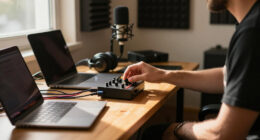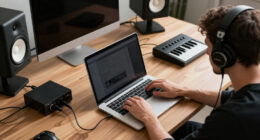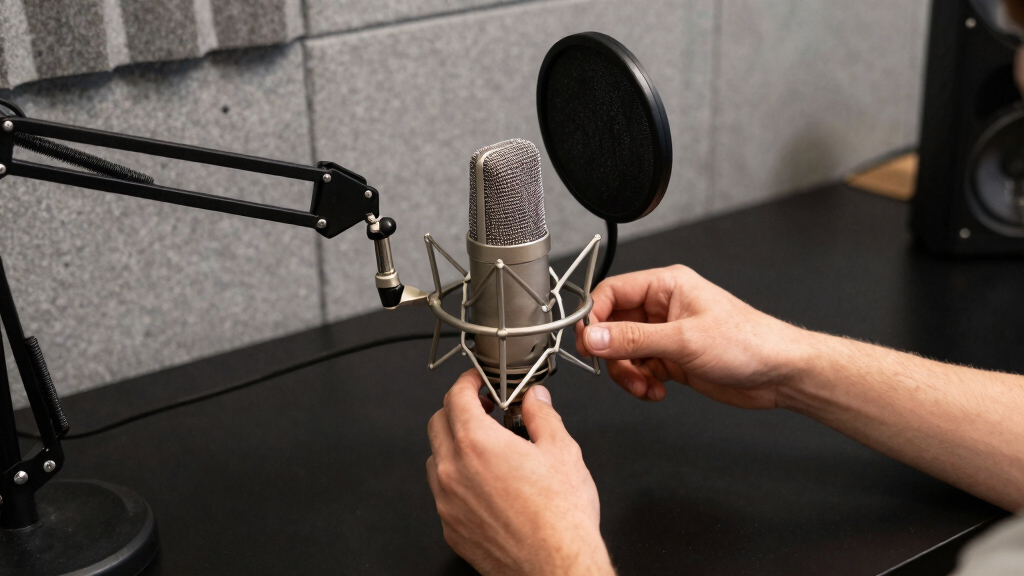

Searching for high-quality studio microphones? The right mic can elevate your recordings, whether you’re a vocalist, podcaster, or content creator. The Shure SM7B stands out as the overall best, offering warm, professional sound for a variety of applications. For those on a budget, the Audio-Technica AT2020 provides excellent clarity without breaking the bank, while the RØDE NT1 excels in capturing detailed vocals with minimal noise. In this crowded field, tradeoffs like price, versatility, and build quality matter. Keep reading for a detailed breakdown of each option and how to choose the right mic for your needs.
Key Takeaways
- Top picks are distinguished by their sound clarity, build quality, and noise handling capabilities.
- Dynamic microphones like the Shure SM7B excel in reducing ambient noise, ideal for untreated rooms.
- Condenser mics such as the RØDE NT1 and Audio-Technica AT2035 offer detailed sound but can pick up more background noise.
- Price often correlates with features and sound quality, but there are excellent budget options for beginners.
- Versatility varies; some mics are better suited for vocals, others for streaming or podcasting, influencing buyer choice.


More Details on Our Top Picks
MAONO PD200W Hybrid Wireless Podcast Microphone for PC, XLR USB Dynamic Mic Kit with Boom Arm, Software, Noise Cancellation, for Vocal Recording, Streaming, Content Creation, Home Studio, Voiceover
This microphone stands out for its multi-mode connectivity, allowing seamless switching between wireless, USB, and XLR, making it ideal for creators who need flexibility. Compared with the Shure MV7X, it offers more versatile connection options but sacrifices some of the built-in broadcast quality. Its 30mm dynamic capsule delivers clear vocal reproduction, while the advanced noise cancellation ensures broadcast-ready sound even in less-than-ideal environments. The ability to connect two wireless mics to a single receiver is a major plus for duo podcasts or interviews. However, the complexity of setup and reliance on separate accessories (like the camera/lighting) might be a hurdle for beginners. Best for streamers, podcasters, and home studio users needing flexible, all-in-one solutions.
Pros:- Multi-mode connectivity (wireless, USB, XLR) offers unmatched versatility
- Supports dual microphones for duo podcasts with individual tracks
- Long battery life up to 60 hours and 60m wireless range
Cons:- Setup can be complex for users unfamiliar with multi-connection systems
- Relies on separate camera/lighting accessories sold separately
Best for: Content creators who require a flexible, all-in-one microphone setup for streaming, podcasting, and mobile recording.
Not ideal for: Users seeking solely high-end studio-quality sound, as its noise cancellation and multi-mode features may not match dedicated studio microphones like the Shure SM4.
- Connectivity Technology:USB, Wireless, XLR
- Polar Pattern:Cardioid
- Signal-to-Noise Ratio:82 dB
- Power Source:Battery Powered
- Range:60 meters
- Battery Life:Up to 60 hours
Bottom line: Ideal for creators who need a flexible, portable microphone system with multiple connection options.
Audio-Technica AT2035 Cardioid Condenser Microphone with Custom Shock Mount
This large-diaphragm condenser excels in studio environments, offering warm, natural vocals with minimal ambient noise pickup. Its cardioid polar pattern effectively isolates vocals from background sounds, making it comparable to the Shure SM4 in professional settings. The included custom shock mount reduces vibrations, enhancing clarity, though it adds to the overall cost. The switchable 80Hz high-pass filter and 10dB pad make it adaptable for loud sources or nuanced recordings. Compared with the AT2020, it provides a richer sound profile suited for more critical studio work but comes at a higher price point. It’s less ideal for beginners or those with limited space needing portable options. Best for home studios, voice-over artists, and musicians seeking professional-grade sound.
Pros:- Large diaphragm for smooth, natural tone reproduction
- Effective noise reduction with cardioid pattern
- Includes a premium shock mount for vibration isolation
Cons:- Higher price compared to entry-level mics like the AT2020
- May require additional accessories for optimal vocal recording (pop filter, etc.)
Best for: Home studio owners, voice-over artists, and musicians requiring a high-quality, versatile condenser microphone.
Not ideal for: On-the-go content creators or beginners who need an easy plug-and-play setup, due to its higher price and need for an audio interface.
- Polar Pattern:Cardioid
- Diaphragm Type:Large
- Output Type:XLR
- Included Accessories:Custom Shock Mount
- Features:Switchable 80Hz High Pass Filter, 10 dB Pad
- Item Weight:1.2 kg
Bottom line: A strong choice for those prioritizing studio-quality vocal recordings with noise isolation features.
Shure SM4 Studio Recording Microphone Kit (SM4-K-KIT)
The Shure SM4 leads with its robust all-metal construction and professional-grade sound, rivaling other high-end options like the Shure MV7X in durability and RF noise reduction. Its brass dual-diaphragm capsule ensures natural, detailed audio suitable for vocal, instrument, and broadcast applications. The kit’s included detachable pop filter and shock mount help produce clean recordings, especially in home or project studios. The interference shielding is a notable advantage over lesser models, preventing RF interference common in wireless environments. The primary tradeoff is its reliance on phantom power from an audio interface and a higher cost, which might be a barrier for entry-level users. Best for serious home studio setups requiring durability and RF immunity.
Pros:- All-metal construction for high durability
- Interference shielding minimizes RF noise
- Includes pop filter, shock mount, and case for portability
Cons:- Requires phantom power, adding complexity and cost
- Higher price may be prohibitive for casual users
Best for: Vocalists, podcasters, and producers who need a durable, interference-resistant condenser microphone for studio use.
Not ideal for: Beginners or those with budget constraints, as it requires an audio interface with phantom power and is comparatively costly.
- Microphone Type:Condenser
- Capsule Size:1-inch Brass Dual-Diaphragm
- SPL Handling:Up to 140dB
- Included Accessories:Pop Filter, Shock Mount
- Features:Interference Shielding
- Weight:1.2 kg
Bottom line: Perfect for professionals seeking a rugged, interference-free condenser microphone for studio recording.
Shure MV7X XLR Dynamic Microphone for Podcasting, Streaming & Vocal Recording – Voice-Isolating Cardioid Mic with Broadcast-Style Design & All-Metal Construction, Black
This Shure MV7X excels in delivering focused, professional vocal recordings, especially for podcasters and streamers. Its voice-isolating cardioid capsule effectively reduces room noise and background distractions, making it comparable to the Audio-Technica AT2035 in isolating clarity but with a more rugged, broadcast-inspired aesthetic. The integrated shock mount further enhances vocal isolation, while the all-metal construction ensures durability. Its XLR-only output provides flexible connection options but requires a quality audio interface. Although it lacks advanced onboard features like EQ or reverb, its straightforward design favors reliability over complexity. The higher price reflects its broadcast heritage, which may be a consideration for hobbyists. Best for content creators seeking a durable, broadcast-style mic with excellent voice isolation.
Pros:- Excellent voice isolation reduces background noise
- All-metal rugged construction for longevity
- Includes adjustable mic stand compatibility
Cons:- XLR-only connection limits portability without an interface
- Higher cost compared to entry-level dynamic mics
Best for: Podcasters and streamers who want a professional, durable, voice-focused microphone for studio or on-camera use.
Not ideal for: Entry-level users or those wanting a simple USB plug-and-play setup, since it lacks USB connectivity.
- Polar Pattern:Cardioid
- Frequency Range:50-16,000 Hz
- Output Connector:XLR
- Construction:All-metal
- Weight:0.5 kg
- Included Accessories:Mic Stand Adapter
Bottom line: Great for broadcasters and serious content creators needing a rugged, voice-focused microphone with excellent noise rejection.
Audio-Technica AT2020 Cardioid Condenser Studio XLR Microphone, Black
This AT2020 remains a staple for home studios, offering reliable, natural sound reproduction at an accessible price. Its cardioid polar pattern effectively isolates vocals from ambient noise, making it a practical choice for beginners or budget-conscious creators. The wide dynamic range and high SPL handling allow it to capture loud sources without distortion, comparable to more expensive studio mics like the Audio-Technica AT2035, but with fewer advanced features. Its simple design means it lacks onboard filters or pads, requiring additional accessories like a pop filter or shock mount for best results. For users seeking basic, high-quality studio sound without the bells and whistles, it remains a dependable choice. Best for hobbyists, beginners, and small home studios.
Pros:- Affordable price point for high-quality sound
- Wide dynamic range and high SPL handling
- Effective cardioid pattern for sound isolation
Cons:- Lacks built-in pop filter and onboard controls
- Requires additional accessories for optimal recording quality
Best for: Beginners and budget-conscious content creators aiming for decent studio quality without complex features.
Not ideal for: Professional studios or users needing advanced features like switchable filters, as it offers a more basic feature set.
- Model:AT2020
- Polar Pattern:Cardioid
- Output Connector:3-pin XLRM
- Diaphragm Type:Low mass condenser
- Frequency Range:Not specified
- Handling:High SPL
Bottom line: A reliable, budget-friendly condenser microphone suited for entry-level home studios and hobbyists.
AKG P220 Perception Professional Studio Microphone
The AKG P220 excels in ruggedness, thanks to its all-metal construction, making it a standout for live stage use and project studios that demand durability. Its ability to handle sound pressure levels up to 155dB SPL makes it ideal for capturing loud instruments or vocals without distortion, a significant advantage over more sensitive condenser mics like the LEWITT LCT440PURE. However, it requires phantom power and is less suited for casual or home setups where portability and ease of use matter. Compared to the Shure SM7B, the P220’s build quality and SPL capacity are superior, but it lacks the broadcast-friendly features like integrated pop filters. This pick makes the most sense for engineers seeking a tough, high-level mic for demanding environments, not for users needing a versatile, all-purpose studio mic.
Pros:- Durable all-metal construction with roadworthy design
- Handles very high sound pressure levels (155dB SPL) without distortion
- Includes shock mount and aluminum carrying case for protection
Cons:- Requires phantom power or external supply, adding setup complexity
- Limited to professional studio and performance environments, less portable
Best for: professionals in live stage environments or project studios needing rugged hardware that can handle high SPLs
Not ideal for: home hobbyists or podcasters seeking portable, easy-to-use mics without requiring high SPL handling
- Connectivity Technology:XLR
- Polar Pattern:Unidirectional
- Sensitivity:155 Decibels
- Impedance:200 Ohms
- Form Factor:Large Diaphragm
- Power Source:Phantom power (XLR) or External supply
Bottom line: This mic is best suited for those needing a rugged, high SPL-capable condenser for demanding live or studio use, not for casual or home recording.
RØDE NT1 Signature Series Large-Diaphragm Condenser Microphone with Shock Mount, Pop Filter and XLR Cable for Music Production, Vocal Recording, Streaming and Podcasting (Black)
The RØDE NT1 stands out for its exceptionally low self-noise of just 4dBA, making it an excellent choice for capturing subtle nuances in vocals, acoustic instruments, and delicate sound sources. It offers a smoother frequency response than the LEWITT LCT440PURE, making it preferred for detailed studio work. Its included accessories—shock mount, pop filter, and XLR cable—add value and convenience for users starting out or upgrading from entry-level mics. However, its high sensitivity means it can pick up background noise if not used in treated environments, unlike the Shure SM7B, which is less sensitive but better at rejecting room noise. The NT1’s quiet operation makes it ideal for controlled studio settings, but it’s less suited for live or noisier environments.
Pros:- Exceptionally low noise level (4dBA), ideal for studio precision
- Includes comprehensive accessory kit: shock mount, pop filter, XLR cable
- Smooth frequency response enhances vocal clarity
Cons:- High sensitivity can lead to picking up background noise in untreated spaces
- Less durable for portable or live use, compared to rugged dynamic mics
Best for: home studio owners and professional vocalists seeking ultra-quiet, detailed recordings with included starter accessories
Not ideal for: streamers or podcasters who record in non-treated rooms and need rejection of room noise
- Frequency Response:20 KHz
- Signal-to-Noise Ratio:78 dB
- Special Feature:Studio-Grade Low Noise
- Included Accessories:Shock mount, pop filter, XLR cable
Bottom line: This mic is perfect for those prioritizing ultra-quiet, detailed vocal and instrument recordings within a controlled environment, not for live or mobile use.
LEWITT LCT440PURE Large Diaphragm Condenser Mic
The LEWITT LCT440PURE offers a balanced combination of depth and clarity, thanks to its 1-inch true condenser capsule. Its cardioid polar pattern provides effective rear rejection, making it suitable for vocals, acoustic instruments, drums, and amplifiers in both studio and stage settings. Compared with the AKG P220, the LCT440PURE emphasizes clarity across a broad frequency response, making it a versatile choice for various recording applications. Its included shock mount and magnetic pop filter are solid additions, but it may not match the SPL handling of the AKG P220, which is better suited for loud sources. The LCT440PURE is a flexible, all-purpose condenser that performs well in most recording scenarios but isn’t specialized for high SPL environments or broadcast applications.
Pros:- Captures nuanced performances with outstanding depth and clarity
- Effective rear rejection with cardioid polar pattern
- Includes shock mount and magnetic pop filter
Cons:- Limited SPL handling compared to high-pressure sources
- Not specifically designed for live or high-volume applications
Best for: multi-purpose home and project studio users who want a versatile condenser for vocals and instruments
Not ideal for: professionals working with extremely loud sources or needing broadcast-grade features
- Microphone Form Factor:Large Diaphragm
- Polar Pattern:Unidirectional
- Frequency Response:20 KHz
- Additional Details:Includes shock mount and pop filter
Bottom line: This mic suits versatile recording needs for vocalists and instrumentalists in controlled environments, but less so for very loud sources or broadcast use.
Shure SM7B Dynamic Studio Microphone – XLR Mic for Podcasting, Streaming, Vocal Recording & Broadcasting, Wide Frequency Range, Smooth Warm Audio, Detachable Windscreen, Black
The Shure SM7B is renowned for its warm, smooth tone and broad frequency response, making it a staple for voice recording, broadcasting, and streaming. Its dynamic cartridge and cardioid pattern effectively reject room noise and background interference, a key advantage over condenser mics like the RØDE NT1 when used in less controlled environments. Its rugged, all-metal construction ensures reliable performance over years of use, and the built-in pop filter and detachable windscreen help reduce plosives and breath noise. While it doesn’t require phantom power, it does need a preamp with about 60dB of gain, which could be a consideration for some setups. Compared with the AKG P220, the SM7B is less sensitive but excels at isolating vocals in noisy settings, making it ideal for broadcast and podcasting.
Pros:- Warm, smooth frequency response that flatters vocals and speech
- Excellent room noise rejection with cardioid pattern
- Rugged all-metal construction for durability
Cons:- Requires a high-gain preamp (~60dB) for optimal sound, which can add cost
- Less sensitive to subtle nuances than condenser microphones
Best for: content creators, podcasters, and broadcasters who need a reliable, warm-sounding mic with excellent room noise rejection
Not ideal for: users in untreated rooms or those seeking a condenser for capturing subtle details and high-frequency response
- Frequency Response:50 Hz – 20 kHz
- Impedance:150 Ohms
- Power Source:None (dynamic mic)
- Warranty:2-Year Limited
Bottom line: This mic is ideal for users needing a broadcast-quality vocal microphone with outstanding noise rejection and durability, not for capturing delicate sounds in controlled environments.
How We Picked
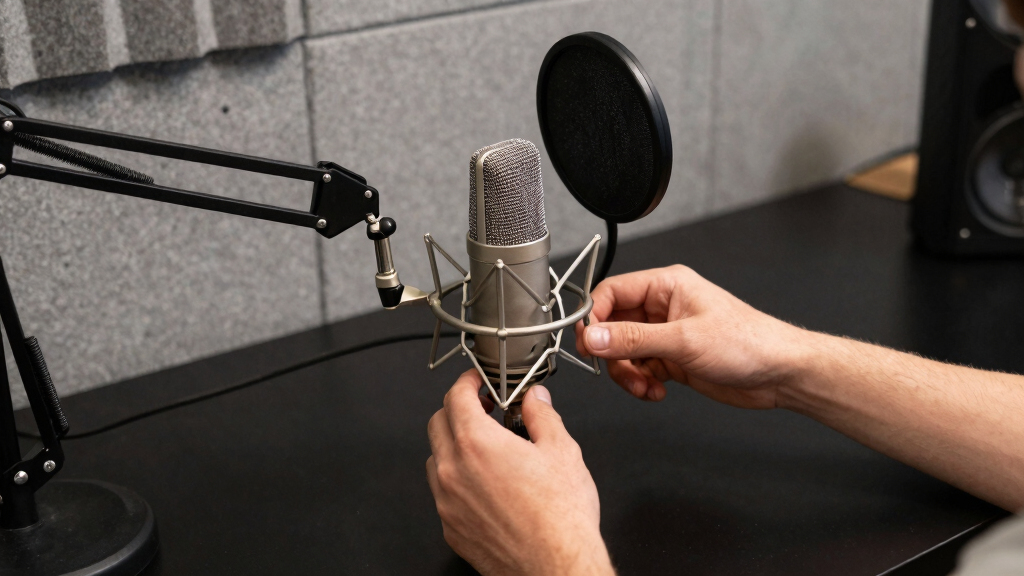
Our evaluation focused on performance, build quality, usability, and value. We prioritized microphones that deliver professional sound with clarity and warmth, considering their suitability across different recording environments. Ease of use, durability, and included accessories also factored into our rankings. To ensure relevance, we compared features like polar patterns, noise rejection, and connectivity options, selecting models that represent a range of budgets and use cases. This approach ensures each pick offers a distinct advantage for specific needs, helping buyers make informed decisions based on real-world performance and value.Factors to Consider When Choosing High-quality Studio Microphones
Choosing the right studio microphone involves balancing several key factors. Beyond price, consider your specific recording environment, intended use, and future flexibility. A microphone that sounds great in a quiet studio may struggle in a noisy space, so matching your mic to your environment is crucial. Additionally, think about connectivity options—XLR offers more professional control, while USB provides plug-and-play convenience. Durability and included accessories can also influence overall value, especially if you plan to upgrade or expand your setup. Understanding these broader considerations helps prevent common pitfalls and ensures your investment supports your evolving needs.Type of Microphone: Dynamic vs. Condenser
Dynamic microphones like the Shure SM7B excel at rejecting background noise and handling high sound pressure levels, making them suitable for untreated rooms and loud sources. Condenser microphones, such as the RØDE NT1 or Audio-Technica AT2035, capture more detailed sound and are preferred for studio vocals, but they are more sensitive to room noise. Your choice here hinges on your environment and recording needs—if you’re in a treated space, a condenser can deliver superior clarity; if not, a dynamic mic may be more forgiving and versatile.
Connectivity: USB vs. XLR
USB microphones are plug-and-play, ideal for beginners and quick setups, but they often lag behind XLR mics in terms of expandability and sound quality, especially in professional contexts. XLR microphones require an audio interface but offer higher fidelity, better preamps, and more control over your sound profile. Consider your long-term goals—if you plan to upgrade your studio or need top-tier audio, investing in an XLR setup makes more sense, even if it involves a steeper learning curve.
Sound Quality and Frequency Response
High-quality microphones should offer a flat, wide frequency response to accurately capture your voice or instrument. Look for models with a smooth response curve and minimal coloration, unless specific tonal characteristics are desired. A microphone with good transient response will also reproduce fast sound changes cleanly, which is vital for vocals and detailed recordings. Be wary of mics that emphasize certain frequencies excessively, as this can lead to unnatural sound or listener fatigue.
Build Quality and Accessories
Durability matters, especially if your setup involves frequent transport or live recording sessions. Metal construction and sturdy mounting options ensure longevity. Many high-quality mics come with shock mounts, pop filters, or cables—these accessories add value and can improve sound quality by reducing vibrations and plosives. Consider whether the included accessories align with your needs or if additional purchases are necessary to complete your setup.
Budget and Long-Term Value
While premium microphones deliver exceptional sound, they come with higher price tags. For beginners or casual users, spending on a mid-range model like the Audio-Technica AT2035 can provide excellent results without overspending. Conversely, professionals should prioritize sound fidelity and build quality, even if it means a bigger investment. Remember, a higher initial cost can translate into better durability and performance, ultimately saving money on replacements or upgrades later.
Frequently Asked Questions
Should I choose a dynamic or condenser microphone for streaming?
For streaming, a dynamic microphone like the Shure SM7B often provides better background noise rejection, making it ideal for untreated spaces or noisy environments. Condenser microphones, such as the Audio-Technica AT2020, capture more detail but can also pick up more ambient sounds, which might require additional soundproofing or positioning. Your choice depends on your environment and sound quality preferences; if your space is less controlled, a dynamic mic usually offers a more forgiving setup.
Is it worth investing in an XLR microphone for beginners?
Investing in an XLR microphone as a beginner can be worthwhile if you’re serious about improving your audio quality and plan to upgrade your setup over time. XLR mics often provide superior sound fidelity and more control through audio interfaces, but they require additional equipment such as a mixer or audio interface. If convenience and ease of use are priorities, a USB microphone might be better initially. However, if you want professional-sounding recordings, an XLR setup offers more room for growth.
How important is the included shock mount or pop filter?
Including accessories like shock mounts and pop filters can significantly enhance your recording quality. Shock mounts reduce vibrations transmitted through the mic stand, minimizing unwanted noise. Pop filters help control plosive sounds that can cause distortion. If these are not included, purchasing them separately is advisable, especially if you aim for broadcast-quality sound. They protect your investment by maintaining consistent sound quality over time and in various recording conditions.
Can I use a condenser microphone in a noisy room?
Using a condenser microphone in a noisy environment can be challenging because they tend to pick up ambient sounds more readily than dynamic mics. To get the best results, you might need additional soundproofing or acoustic treatment. Alternatively, a dynamic microphone like the Shure SM7B offers better noise rejection, making it more suitable for less controlled spaces. Your choice should align with your recording environment and quality expectations.
How much should I spend for a good high-quality studio microphone?
For professional-quality recordings, expect to spend between $150 and $500, depending on your needs. Entry-level condenser mics like the Audio-Technica AT2020 can be quite affordable while still delivering excellent sound. Mid-range models such as the AKG P220 or RØDE NT1 offer a noticeable upgrade in clarity and build. Higher-end options like the Shure SM7B are favored by professionals for their warmth and versatility, justifying their higher price tags. Balancing your budget with your intended use will help you make the most appropriate choice.