For most filmmakers, I’d start with the DJI Mini 5 Pro Fly More Combo Plus: its 1-inch sensor, obstacle sensing, and tracking features make it the strongest balance of image-making tools and portability in this lineup. The DJI Mavic 4 Pro is the premium choice for more demanding camera work, while the DJI Mini 4K Combo makes a simpler entry point for creators who want a stabilized 4K camera and spare batteries. Choosing among camera drones for 4K filmmaking means weighing image control, flight time, portability, and how much setup and post-production your work can support. This roundup also includes lower-cost GPS and beginner-focused options, but their feature claims do not put them on equal footing with the dedicated DJI camera platforms. Read on for the full breakdown by filmmaking use case.

Get audio and creator gear delivered free with Prime
- Fast, free delivery on millions of items
- Prime Video, Amazon Music and more included
- Member-only deals all year
Complete the kit


Key Takeaways
- The Mini 5 Pro is the most balanced filmmaking pick. Its 1-inch CMOS camera and obstacle sensing give it a more capable combination of image capture and flight assistance than the entry-level Mini 4K models.
- The Mavic 4 Pro is the lineup’s premium camera platform. Choose it over a Mini when camera flexibility and a more demanding production workflow matter more than compact size.
- The Mini 4K Combo makes more sense than the basic Mini 4K for longer outings. Its included second battery adds practical shooting time without changing the compact, beginner-friendly format.
- Bundles solve different problems, not camera-quality ones. The Mavic 4 Pro versions with a controller, Fly More accessories, or a backpack and memory card should be compared by included kit and workflow needs.
- Low-cost and beginner FPV models are not direct substitutes for filmmaking drones. The Ruko, N11 Pro, generic GPS drone, and PLEGBLE may suit casual flying, but buyers should verify camera stabilization and recording specifications before relying on them for polished footage.
| Ruko U11MINI 4K (RC3) Camera Drone with 5.5″ Touchscreen Remote |  | Best Beginner Pick with a Built-In Screen | Weight: Under 249 g | Video: 4K at 30 fps | Still photos: 8K | VIEW ON AMAZON | See Our Full Breakdown |
| N11 Pro 4K UHD GPS Drone with Camera |  | Best for Long Practice Sessions | Weight: 181 g | Still resolution: 4096 × 3072 | Video resolution: 2048 × 1080 | VIEW ON AMAZON | See Our Full Breakdown |
| DJI Mini 5 Pro Fly More Combo Plus with DJI RC 2, Drone with Camera, 1-Inch CMOS, 4K, Obstacle Sensing, ActiveTrack, 52-Min Flight |  | Best Overall for Compact 4K Filmmaking | Weight: 249.9 g | Camera sensor: 1-inch CMOS | Video: 4K/60fps HDR | VIEW ON AMAZON | See Our Full Breakdown |
| DJI Mavic 4 Pro Drone Fly More Combo Bundle with Advanced Camera and Obstacle Avoidance |  | Best for Demanding Production Setups | Item weight: 11.8 pounds | Dimensions: 14 × 16 × 7 inches | Camera system: Advanced camera system; resolution and sensor details not specified | VIEW ON AMAZON | See Our Full Breakdown |
| 4K GPS Drone with 4.5″ Screen Controller, Brushless Motor, 60 Min Flight Time, Under 249g |  | Best Compact Screen-Controller Value | Weight: 220 g | Video: 4K; frame rate not specified | Still resolution: 8.3 MP | VIEW ON AMAZON | See Our Full Breakdown |
| DJI Mini 4K Camera Drone Combo, 4K UHD, 249g, 3-Axis Gimbal, 10km Video Transmission, 2 Batteries, Auto Return, QuickShots |  | Best Lightweight Combo for 4K Filming | Weight: 249 g | Camera resolution: 4K UHD | Gimbal: 3-axis | VIEW ON AMAZON | See Our Full Breakdown |
| DJI Mavic 4 Pro Drone with DJI RC 2 |  | Best Premium Camera System | Main camera: 100MP Hasselblad | Video resolution: 6K/60fps HDR | Tele cameras: Dual tele cameras | VIEW ON AMAZON | See Our Full Breakdown |
| DJI Mini 4K Drone with 4K UHD Camera, Under 249g | 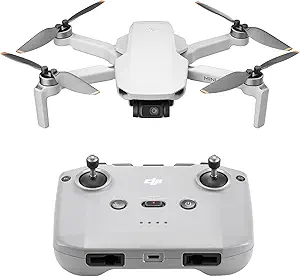 | Best for Beginner 4K Filmmaking | Weight: Under 249 g | Camera resolution: 4K UHD | Gimbal: 3-axis | VIEW ON AMAZON | See Our Full Breakdown |
| DJI Mavic 4 Pro Drone Bundle with 64GB Card and Backpack |  | Best Ready-to-Travel Pro Bundle | Included drone: DJI Mavic 4 Pro | Remote controller: RC 2 | Included storage: 64GB memory card | VIEW ON AMAZON | See Our Full Breakdown |
| DJI Inspire 2 Drone |  | Best for Experienced Cinema Crews | Weight: 16 pounds | Dimensions: 18 × 12 × 21 inches | Camera capture: Description cites 5.2K CinemaDNG RAW; listed resolution fields specify 4K | VIEW ON AMAZON | See Our Full Breakdown |
| PLEGBLE Drones with Camera for Adults 4K, Beginner FPV Drone |  | Best for Casual Beginner FPV | Camera: 4K wide-angle | Lens adjustment: 120° adjustable | Flight time: Up to 30 minutes with two batteries | VIEW ON AMAZON | See Our Full Breakdown |
| camera drones for 4k filmmaking | Weight | Flight time |
|---|---|---|
| Ruko U11MINI 4K | Under 249 g | Up to 64 minutes |
| N11 Pro 4K UHD GPS Drone with | 181 g | Up to 90 minutes total with three batteries |
| DJI Mini 5 Pro Fly More Combo | 249.9 g | Up to 52 minutes |
| DJI Mavic 4 Pro Drone Fly More | — | Extended flight time listed; duration not specified |
| 4K GPS Drone with 4.5" Screen | 220 g | Up to 60 minutes total with two batteries |
| DJI Mini 4K Camera Drone Combo | 249 g | — |
| DJI Mavic 4 Pro Drone with DJI | — | Up to 51 minutes |
| DJI Mini 4K Drone with 4K UHD | Under 249 g | — |
| DJI Mavic 4 Pro Drone Bundle w | — | — |
| DJI Inspire 2 Drone | 16 pounds | Up to 27 minutes |
| PLEGBLE Drones with Camera for | Under 249g | Up to 30 minutes with two batteries |
More Details on Our Top Picks
Ruko U11MINI 4K (RC3) Camera Drone with 5.5″ Touchscreen Remote
The Ruko U11MINI is a practical choice for new filmmakers who want to frame shots without pairing a phone: its 5.5-inch touchscreen controller keeps the live view and controls together. A 3-axis mechanical gimbal is a meaningful advantage for smoother footage over basic camera drones, while the listed 4K video capture suits casual aerial clips. Its up-to-64-minute flight time also gives beginners more practice time than the 4K GPS Drone with 4.5″ Screen Controller, though the two-battery drone may be easier to pack for travel. The tradeoff is a beginner-focused feature set rather than the advanced tracking and obstacle sensing found on the DJI Mini 5 Pro. The stated 20,000-foot range is a transmission specification, not a reason to fly beyond local rules or visual line of sight.
Pros:- 5.5-inch touchscreen controller works without a phone
- Three-axis mechanical gimbal supports steadier footage
- Up to 64 minutes of stated flight time
- Under-249g weight is listed
Cons:- Beginner-oriented feature set lacks the advanced tracking and sensing of the DJI Mini 5 Pro
- Video capture is listed at 4K/30fps rather than 4K/60fps
- Transmission depends on Wi-Fi or the R2 digital system
Best for: First-time drone filmmakers who want a dedicated screen, stabilized 4K footage, and fewer phone-related setup steps.
Not ideal for: Creators who need advanced subject tracking, obstacle sensing, or more production-focused camera controls than this beginner-oriented model lists.
- Weight:Under 249 g
- Video:4K at 30 fps
- Still photos:8K
- Gimbal:3-axis mechanical brushless
- Flight time:Up to 64 minutes
- Transmission range:Up to 20,000 feet
- Controller display:5.5-inch HD touchscreen
- Battery capacity:2200 mAh
Our verdict“Choose the Ruko U11MINI if a built-in screen and stabilized 4K/30fps capture matter more than advanced filmmaking automation.”
N11 Pro 4K UHD GPS Drone with Camera
The N11 Pro earns its place for buyers who value repeated practice flights over true 4K video delivery. Its three included batteries provide up to 90 minutes of combined flight time, giving a learner room to rehearse moves and repeat takes. GPS and optical-flow positioning, plus Follow Me and Auto Return, also make it more approachable than a manual-first filmmaking drone. But the camera data has a major distinction: although the listing calls it a 4K camera, the specified video resolution is 2048 × 1080, not native 4K. That makes it a weaker fit for this roundup’s 4K filmmaking goal than the Ruko U11MINI, which specifies 4K/30fps video and a mechanical gimbal. The N11 Pro’s long endurance is useful for learning, but buyers seeking crisp 4K masters should choose another model.
Pros:- Three batteries provide up to 90 minutes of combined flight time
- GPS and optical-flow positioning support hovering
- Follow Me and Auto Return simplify beginner flights
- 181 g listed weight
Cons:- Specified video resolution is 2048 × 1080, not native 4K
- No mechanical gimbal is listed, unlike the Ruko U11MINI
- 3,328-foot control range is shorter than the Ruko’s stated transmission range
Best for: Beginners who want long practice sessions across three batteries and are comfortable with Full HD video rather than native 4K footage.
Not ideal for: Filmmakers who need confirmed native 4K video, gimbal-stabilized capture, or high-resolution footage for cropping and large displays.
- Weight:181 g
- Still resolution:4096 × 3072
- Video resolution:2048 × 1080
- Flight time:Up to 90 minutes total with three batteries
- Control range:Up to 3,328 feet
- Camera lens:100° wide-angle, 90° adjustable tilt
- Positioning:GPS and optical flow
- Transmission:5 GHz FPV
Our verdict“Pick the N11 Pro for extended beginner practice, but skip it if native 4K video is a firm requirement.”
DJI Mini 5 Pro Fly More Combo Plus with DJI RC 2, Drone with Camera, 1-Inch CMOS, 4K, Obstacle Sensing, ActiveTrack, 52-Min Flight
The DJI Mini 5 Pro is the strongest balance here for creators who want high-quality footage without moving to a larger professional drone. Its 1-inch CMOS sensor and 4K/60fps HDR video give it a clearer filmmaking advantage over the Ruko U11MINI’s 4K/30fps specification, while omnidirectional sensing and ActiveTrack can help when following a moving subject. The foldable body and three included batteries make it more travel-ready than the DJI Mavic 4 Pro Fly More Combo, whose larger format suits less portable production setups. This is not a no-compromise choice: the listed weight is 249.9 g, so buyers should check rules that apply where they fly rather than assume it falls below every weight threshold. App download requirements and possible regional limits also add setup friction.
Pros:- 1-inch CMOS sensor with 4K/60fps HDR video
- Omnidirectional obstacle sensing with LiDAR and vision sensors
- ActiveTrack and vertical filming support varied shots
- Three included batteries and up to 52 minutes of stated flight time
Cons:- Listed weight of 249.9 g may affect rules tied to weight thresholds
- App download requires visiting DJI’s website due to platform restrictions
- Regional restrictions or permits may apply to night flying
Best for: Traveling filmmakers and solo creators who want a compact drone with a 1-inch sensor, 4K/60fps HDR, tracking, and obstacle sensing.
Not ideal for: Buyers who need a clearly sub-249g setup, want a simple phone-free workflow, or prefer to avoid app-install and regional flight restrictions.
- Weight:249.9 g
- Camera sensor:1-inch CMOS
- Video:4K/60fps HDR
- Gimbal rotation:225°
- Obstacle sensing:Omnidirectional, with LiDAR and vision sensors
- Flight time:Up to 52 minutes
- Included batteries:3
- Internal storage:42 GB
Our verdict“For creators seeking the most capable compact filmmaking package in this group, the Mini 5 Pro offers the strongest mix of image quality and flight assistance.”
DJI Mavic 4 Pro Drone Fly More Combo Bundle with Advanced Camera and Obstacle Avoidance
The Mavic 4 Pro Fly More Combo is the pick for filmmakers who prioritize a more production-oriented platform and a full accessory bundle over compact travel. Its advanced camera system, extended-flight setup, and omnidirectional obstacle sensing point toward more ambitious aerial work than the beginner-focused Ruko U11MINI. The bundle’s extra batteries, charging hub, backpack, and landing pad can also make a planned shoot easier to organize. The supplied product data, however, does not specify video resolution, frame rates, sensor size, or gimbal details, so I cannot rank its image performance precisely against the DJI Mini 5 Pro, whose 1-inch sensor and 4K/60fps HDR are stated. Its listed 11.8-pound item weight and larger dimensions also make it a poor match for lightweight travel or quick, casual flights.
Pros:- Advanced camera system is aimed at cinematic aerial work
- Omnidirectional obstacle sensing supports safer flight planning
- Fly More bundle includes extra batteries, charging hub, backpack, and landing pad
- Extended flight time is listed as a feature
Cons:- Listed item weight of 11.8 pounds is far less portable than the Mini 5 Pro
- Supplied data does not state video resolution, frame rates, or sensor size
- Complex features may require more setup and piloting experience than beginner models
Best for: Experienced creators and serious hobbyists planning dedicated shoots who want an advanced camera platform, obstacle sensing, and bundled field accessories.
Not ideal for: Travel filmmakers, beginners, or buyers who need confirmed camera specifications and a lightweight setup before choosing.
- Item weight:11.8 pounds
- Dimensions:14 × 16 × 7 inches
- Camera system:Advanced camera system; resolution and sensor details not specified
- Obstacle sensing:Omnidirectional obstacle avoidance
- Flight features:Intelligent flight modes
- Flight time:Extended flight time listed; duration not specified
- Bundle accessories:Extra batteries, charging hub, backpack, and landing pad
Our verdict“Choose this Mavic bundle for planned, accessory-heavy production work, but seek verified camera specifications before relying on it for a defined 4K workflow.”
4K GPS Drone with 4.5″ Screen Controller, Brushless Motor, 60 Min Flight Time, Under 249g
This foldable drone makes a straightforward case for travelers who want a controller screen without carrying a phone. Its 4.5-inch display, under-249g listed weight, and two-battery package keep the setup approachable, while GPS Auto Return and optical-flow hovering are useful aids for a first-time pilot. The stated 60 minutes of combined flight time is competitive with the Ruko U11MINI’s listed 64 minutes, but the Ruko specifies a three-axis mechanical gimbal and 4K/30fps video; this product only lists 4K video and does not specify a gimbal. That difference matters more than the near-match in battery time for filmmakers seeking reliably smooth motion. Its 8.3 MP still resolution is also modest beside the Ruko’s stated 8K photos, so this is better suited to casual travel clips than detailed photo work.
Pros:- 4.5-inch screen controller removes the need to use a smartphone
- Two batteries provide up to 60 minutes of combined flight time
- 220 g listed weight
- GPS Auto Return and optical-flow hovering are included
Cons:- Video frame rate and gimbal stabilization are not specified
- 8.3 MP still resolution is limited compared with the Ruko U11MINI’s stated 8K photos
- Indoor hovering depends on optical-flow positioning
Best for: Travelers and first-time pilots who want a dedicated controller screen, lightweight handling, and two batteries for casual aerial video.
Not ideal for: Filmmakers who need specified frame rates, a mechanical gimbal, high-resolution stills, or dependable indoor hovering without optical-flow positioning.
- Weight:220 g
- Video:4K; frame rate not specified
- Still resolution:8.3 MP
- Flight time:Up to 60 minutes total with two batteries
- Controller display:4.5-inch screen
- Dimensions:12.28 × 8.27 × 3.15 inches
- Battery:Lithium-ion, 7.4 V, 1600 mAh
- Motor:Brushless
Our verdict“Choose this model for a lightweight, screen-equipped travel setup, but favor the Ruko U11MINI if stabilized footage and clearer camera specifications matter more.”
DJI Mini 4K Camera Drone Combo, 4K UHD, 249g, 3-Axis Gimbal, 10km Video Transmission, 2 Batteries, Auto Return, QuickShots
The DJI Mini 4K Combo is a practical step up from the single-battery Mini 4K: its two batteries give filmmakers another flight window before they need to recharge. A 3-axis gimbal helps keep 4K footage steady during ordinary tracking and scenic shots, while the 249 g weight makes this easier to carry than either Mavic 4 Pro option. That portability comes with a clear ceiling: it records 4K rather than the Mavic 4 Pro’s 6K HDR, and each battery is rated for up to 31 minutes, not a full day of filming. Its beginner-friendly controls and QuickShots suit travel and casual production, but the DJI Fly app’s Google Play compatibility issue may add setup friction. I’d choose it over the standard Mini 4K when a spare battery matters more than higher-end image options.
Pros:- 249 g weight makes it easy to pack for travel
- 3-axis gimbal supports steady 4K footage
- Two included batteries provide more shooting time than the single-battery Mini 4K
- Beginner-friendly controls and QuickShots simplify basic cinematic moves
Cons:- Up to 31 minutes per battery limits each continuous flight
- 4K UHD lacks the Mavic 4 Pro’s 6K/60fps HDR capture
- DJI Fly app installation and updates may require downloading from DJI’s website
Best for: Travel filmmakers and new drone pilots who want stabilized 4K footage in a light package and value having a second battery.
Not ideal for: Professional crews needing 6K HDR, multiple focal lengths, or long uninterrupted takes; the Mavic 4 Pro is better equipped for those demands.
- Weight:249 g
- Camera resolution:4K UHD
- Gimbal:3-axis
- Video transmission range:Up to 10 km
- Battery life:Up to 31 minutes per battery
- Batteries included:2
- Wind resistance:Level 5
- Maximum altitude:4,000 meters
Our verdict“Choose this combo for portable, stabilized 4K filming with a spare battery, but step up to a Mavic 4 Pro for demanding professional image work.”
DJI Mavic 4 Pro Drone with DJI RC 2
For filmmakers who need more than a wide 4K view, the DJI Mavic 4 Pro brings a 100MP Hasselblad camera, dual tele cameras, and 6K/60fps HDR video. Those extra cameras give a production more framing choices without relying on a digital crop, a real advantage over the fixed-camera Mini 4K models. The 360° Infinity Gimbal and up-to-51-minute flight time also suit complex moves and longer location sessions. Night obstacle sensing and a high-bright, rotatable RC Pro 2 controller round out a system aimed at experienced operators. The tradeoff is added cost and complexity, while its 30 km transmission range does not remove local flight restrictions. I’d pick this over the Inspire 2 for a newer, feature-rich camera platform; the Inspire 2 may appeal more to crews already built around its cinema workflow.
Pros:- 6K/60fps HDR recording offers more image detail and grading flexibility than 4K-only models
- Hasselblad main camera and dual tele cameras support varied framing
- Up to 51 minutes of flight time can reduce battery changes during location work
- Night obstacle sensing and the high-bright RC Pro 2 support demanding shoots
Cons:- Advanced camera and flight features bring a steep learning curve for beginners
- Larger professional system is less convenient for casual travel than the Mini 4K
- DJI Fly app setup may require a download from DJI’s website
Best for: Experienced filmmakers and production teams who need HDR resolution, telephoto framing options, and extended flight time in one aerial camera system.
Not ideal for: First-time pilots or casual travelers who mainly need simple 4K clips; the Mini 4K is lighter and less complex.
- Main camera:100MP Hasselblad
- Video resolution:6K/60fps HDR
- Tele cameras:Dual tele cameras
- Gimbal:360° Infinity Gimbal
- Flight time:Up to 51 minutes
- Transmission range:Up to 30 km / 18.6 mi
- Obstacle sensing:0.1-lux Nightscape obstacle sensing
- Remote controller:7-inch rotatable, high-bright RC Pro 2
Our verdict“Choose the Mavic 4 Pro when a professional shoot benefits from 6K HDR, telephoto cameras, and long flights, rather than the Mini 4K’s simpler portability.”
DJI Mini 4K Drone with 4K UHD Camera, Under 249g
The standard DJI Mini 4K keeps the core filmmaking appeal simple: a light airframe, stabilized 4K UHD video, GPS Return to Home, and QuickShots for repeatable introductory camera moves. Compared with the Mini 4K Combo, it is the straightforward choice for someone who wants to start with one battery rather than carry a second; battery configurations can be selected separately, with listed totals reaching 93 minutes across three batteries. Its 3-axis gimbal is the key advantage over basic camera drones, helping footage look smoother without advanced piloting. The compromises are modest flight time per battery and less image flexibility than the Mavic 4 Pro’s 6K, multi-camera setup. I’d favor this model over the combo for a first-time pilot who wants a simple entry point, but frequent shooters should consider extra batteries.
Pros:- Under-249 g design is compact and easy to carry
- 3-axis gimbal stabilizes 4K UHD footage
- One-tap takeoff and landing, GPS Return to Home, and QuickShots help beginners
- Battery configurations can extend total listed flight time to 93 minutes
Cons:- 31-minute maximum flight time is per battery, so longer sessions require swaps
- Single-battery setup offers less included flight time than the Mini 4K Combo
- DJI Fly app compatibility and installation may require extra setup
Best for: First-time aerial filmmakers who want a compact, easy-to-learn drone for stabilized 4K travel and landscape footage.
Not ideal for: Creators who need extended shoots without battery swaps or professional 6K and telephoto options; consider the Mini 4K Combo or Mavic 4 Pro instead.
- Weight:Under 249 g
- Camera resolution:4K UHD
- Gimbal:3-axis
- Maximum flight time:Up to 31 minutes per battery
- Transmission range:Up to 10 km
- Wind resistance:Level 5
- Battery options:1, 2, or 3 batteries; listed totals of 31, 62, or 93 minutes
- Maximum altitude:4,000 meters
Our verdict“Pick the standard Mini 4K as an approachable first 4K filming drone, and choose the Combo if you want a second battery included.”
DJI Mavic 4 Pro Drone Bundle with 64GB Card and Backpack
This Mavic 4 Pro bundle is aimed at filmmakers who want a camera platform plus practical shoot-day accessories: the package lists a 64GB card, backpack, landing pad, card reader, and cleaning kit alongside the drone and RC 2 controller. That makes it more travel-ready than the standalone Mavic 4 Pro, although the supplied product details do not specify the camera resolution or flight time, so I would not assume they differ from the core model. The accessory bundle does not change the main decision: compared with the light Mini 4K Combo, this is a much more involved kit to carry, but it is positioned for advanced footage and intelligent flight modes. Its stated 8.2-pound item weight is a substantial portability drawback. I’d choose it when the included field kit matters; crews who already own accessories may prefer the standalone Mavic 4 Pro.
Pros:- Bundle includes a 64GB memory card, card reader, and card wallet
- Backpack and landing pad add practical support for field shoots
- Foldable design and listed intelligent flight modes suit travel-oriented filming
- Advanced obstacle avoidance is listed for the drone
Cons:- Listed item weight of 8.2 pounds makes it far less convenient to carry than a Mini 4K
- Advanced features may require more setup and piloting experience
- Provided product data does not specify camera resolution or flight time
Best for: Traveling professional videographers who want a Mavic 4 Pro package with storage, carrying, and field-cleaning accessories included.
Not ideal for: Light-packing creators or buyers who already own a suitable card, backpack, and field accessories; the Mini 4K Combo is easier to carry.
- Included drone:DJI Mavic 4 Pro
- Remote controller:RC 2
- Included storage:64GB memory card
- Additional accessories:Backpack, landing pad, cleaning kit, card wallet, card reader, spare propellers, storage cover, USB-C cables, 100W USB-C power adapter
- Obstacle avoidance:Advanced obstacle avoidance listed
- Intelligent flight modes:Yes
- Item weight:8.2 pounds
- Item dimensions:12 × 12 × 6 inches
Our verdict“Choose this bundle if you want the listed field accessories with a Mavic 4 Pro, but skip it if portability or a verified camera specification is your priority.”
DJI Inspire 2 Drone
The DJI Inspire 2 is the specialist choice here for crews prioritizing cinema-oriented capture and agile flight over easy transport. Its description cites 5.2K CinemaDNG RAW, a format aimed at post-production workflows with substantial room for image finishing, although the supplied spec fields separately list 4K resolution and ASF video capture. Buyers should verify the exact camera and recording configuration before choosing it for a project. Compared with the Mavic 4 Pro, the Inspire 2 is a larger, older-style production platform with a 27-minute flight time rather than a listed 51 minutes, but its 58 mph maximum speed and dual-battery system suit demanding moves. At 16 pounds and 18 × 12 × 21 inches, it is a poor fit for casual travel. I’d reserve it for experienced crews with a defined cinema workflow.
Pros:- Product description cites 5.2K CinemaDNG RAW for post-production flexibility
- Maximum speed of 58 mph supports fast, dynamic aerial moves
- Dual-battery system and obstacle avoidance are suited to professional operation
- Aluminum and carbon-fiber construction is listed
Cons:- 16-pound weight and large dimensions make transport and storage difficult
- Up to 27 minutes of flight time is shorter than the Mavic 4 Pro’s listed 51 minutes
- Provided camera and recording details conflict, so the exact capture configuration needs confirmation
Best for: Experienced aerial cinematographers and production crews who need a high-speed platform and a cinema-oriented RAW workflow.
Not ideal for: Solo travel creators, beginners, or anyone seeking a small 4K camera drone; the Mini 4K is far more portable and approachable.
- Weight:16 pounds
- Dimensions:18 × 12 × 21 inches
- Camera capture:Description cites 5.2K CinemaDNG RAW; listed resolution fields specify 4K
- Video capture format:ASF listed in specifications
- Flight time:Up to 27 minutes
- Maximum speed:58 mph
- Obstacle avoidance:Yes
- Connectivity:Bluetooth and Wi-Fi
- Operating temperature:-20° to 40°C
Our verdict“Choose the Inspire 2 only if your experienced crew needs its cinema-focused workflow and speed; most 4K travel filmmakers will find the Mini 4K more practical.”
PLEGBLE Drones with Camera for Adults 4K, Beginner FPV Drone
The PLEGBLE makes the most sense for a beginner who wants to try aerial framing and live phone viewing without starting with a more filmmaking-focused option such as the DJI Mini 4K. Its adjustable 4K wide-angle camera and real-time FPV transmission suit casual clips and inspections, while one-key takeoff and landing and an emergency stop make basic operation less intimidating. The foldable, under-249g design is easy to pack, and two batteries provide up to 30 minutes of flight time in total. That convenience comes with a clear tradeoff: the listed specs do not describe a mechanical gimbal or GPS features, so I would not choose it when stable, repeatable cinematic footage is the priority. App control also depends on bringing a smartphone, and its flips, gesture controls, and other modes may take practice.
Pros:- 4K wide-angle camera with an adjustable 120° lens and real-time FPV transmission
- One-key takeoff and landing plus an emergency stop offer accessible basic controls
- Foldable design and listed weight under 249g make it easy to carry
- Two batteries provide up to 30 minutes of stated flight time
Cons:- No gimbal or GPS is specified, limiting confidence in smooth, repeatable filmmaking shots
- App-based control requires a smartphone
- Multiple modes and gesture features may take beginners time to learn
Best for: First-time recreational flyers who want a foldable drone for casual 4K clips, live FPV viewing, and simple outdoor practice.
Not ideal for: Filmmakers who need dependable stabilized footage, GPS-assisted flight features, or a dedicated screen controller; this listing does not specify a gimbal or GPS, and app control requires a smartphone.
- Camera:4K wide-angle
- Lens adjustment:120° adjustable
- Flight time:Up to 30 minutes with two batteries
- Control:Remote control and app control
- Weight:Under 249g
- Battery:Lithium-ion
- Charging:USB-C/PD; supports up to 500 cycles
- Design and material:Foldable; ABS anti-drop material
Our verdict“Choose the PLEGBLE for portable beginner FPV flying and casual footage, but pick the DJI Mini 4K if stabilized filmmaking is your priority.”

How We Picked
I ranked these drones around their usefulness for repeatable 4K footage, not headline resolution alone. I gave more weight to camera sensor and stabilization, control and monitoring, flight-assistance features, usable flight time, portability, and the practical value of included batteries or accessories. A drone can record at 4K yet still be a weaker filmmaking tool if its camera control, stabilization, or footage workflow is limited.
The order favors models with clearer filmmaking strengths and more established camera features. That puts the Mini 5 Pro at the top as a compact all-rounder and the Mavic 4 Pro models among the premium choices, while the Mini 4K options rank as approachable entry points. Bundle variations are separated by what they add to a shoot, not treated as different camera systems. The Ruko, N11 Pro, generic GPS model, and PLEGBLE sit lower because their listed features point more toward accessible recreational flying than a dependable production setup.
Factors to Consider When Choosing Camera Drones For 4k Filmmaking
Before choosing a drone, I’d match the aircraft to the footage you need to deliver and the conditions where you’ll fly. A 4K label does not tell you how flexible the image will be, how smoothly the drone will move, or whether the included kit can cover a full shoot.
Look Beyond the 4K Label
Two drones can both record 4K video and produce footage with very different levels of detail, highlight handling, and color flexibility. Sensor size, lens characteristics, recording options, and camera processing all affect how well clips hold up when edited or viewed on a larger screen. Stabilization matters just as much: a sharp image with visible vibration or abrupt movement can be difficult to use. Check whether the camera offers the control your workflow needs, including exposure and color settings, rather than assuming resolution guarantees professional-looking footage. For quick social clips, a limited camera may be adequate; for client work or color grading, broader capture flexibility has more value.
Plan for the Whole Shoot, Not One Flight
Advertised flight time is not a reliable measure of how much footage you can capture in a real session. Wind, temperature, travel between locations, and conservative battery reserves all reduce time in the air. Multiple batteries can make a larger difference to a day’s coverage than a small upgrade in camera features, which is why combo kits deserve a close look. Also account for charging, transport, and time needed to reset the aircraft between flights. A compact drone with spare batteries may serve a one-person crew better than a more advanced model that is difficult to keep ready.
Choose Portability for Your Actual Locations
A small aircraft is easier to carry on hikes, travel days, and shoots where the drone is only one part of the camera kit. Larger premium models can offer a stronger camera platform, but their extra size and setup needs may make spontaneous flights less likely. Think about how often you will pack the drone, whether you need a dedicated case, and how much room remains for batteries and a controller. Weight can also affect which rules apply where you fly, so check current local requirements rather than relying on a product listing alone. The best fit is the drone you can legally and practically bring to the locations you film.
Treat Obstacle Sensing as Assistance, Not a Safety Plan
Obstacle sensing and automated tracking can reduce workload, especially when framing a moving subject, but they do not make every route safe. Thin branches, wires, glass, low light, and fast movement can challenge sensing systems. Automated modes also limit how much control you have over the camera path, so they may not produce the deliberate movement a planned shot requires. I’d treat these tools as support for piloting rather than permission to fly close to people or obstacles. For cinematic sequences, practice a slow manual move in an open area before attempting a complex pass.
Check the Controller and Monitoring Workflow
The controller affects how easily you can frame, focus on the scene, and monitor the live feed. A built-in screen can simplify setup by removing the need to connect a phone, while a phone-based workflow may suit buyers who prefer a lighter kit. Screen brightness, control layout, video-link reliability, and compatibility with your preferred device matter more during a shoot than a long list of app features. If you work with a director or client, consider whether the monitoring setup supports the way you share a live view. Compare complete kits, since controller differences can change the experience even when the drone camera is the same.
Budget for Storage, Batteries, and Rules
The aircraft is only one part of a usable filming setup. Fast, compatible memory cards, spare batteries, charging gear, and protective storage can be necessary to keep a shoot moving. Bundle accessories are helpful only when they fit your actual recording and travel needs, so check the contents rather than assuming every bundle is alike. Before buying, confirm the drone’s current flight restrictions, registration or operating requirements, and rules for filming in your intended locations. A modest model that fits your workflow and local rules can be a better production choice than a more capable drone you cannot use where you need it.
Frequently Asked Questions
Is a drone labeled 4K enough for paid filmmaking work?
Not by itself. I’d check sensor performance, stabilization, camera controls, and whether the footage suits the editing and delivery format you use. The 4K label describes resolution, not how much detail survives difficult light or how smoothly the image moves. For paid work, also consider flight reliability, battery planning, and the ability to repeat a shot consistently. A model with stronger camera and control features is usually a safer choice than one selected on resolution alone.
Should I choose the DJI Mini 5 Pro or a Mavic 4 Pro for filmmaking?
I’d choose the Mini 5 Pro when portability, automated flight assistance, and a capable compact camera matter most. The Mavic 4 Pro is a better fit when your production calls for a more premium camera platform and you can accommodate a larger kit. The Mini is easier to bring along, while the Mavic is aimed at buyers with more demanding imaging needs. Think about the footage you deliver regularly, not the most ambitious shot you might attempt once. If small size has real value on your shoots, the Mini may be the more useful tool.
Is the Mini 4K Combo worth choosing over the standard Mini 4K?
The Combo is the more practical option when you expect to film across several locations or want a spare battery ready between flights. Both listings center on the compact Mini 4K platform, so the main buying difference is the included kit rather than a major camera change. If most flights are brief and near a charging point, the standard version may cover your needs. Compare the exact package contents before ordering, since bundle names do not always tell the full story. I’d direct the savings toward accessories you know you will use.
Are the Ruko, N11 Pro, or PLEGBLE suitable for serious 4K filmmaking?
I’d treat these as recreational or entry-level candidates unless the seller provides clear, verifiable details about stabilization, camera controls, and recorded video quality. A 4K claim alone does not show whether footage will be smooth or flexible enough for a polished edit. The Ruko’s touchscreen controller may appeal to someone who wants an all-in-one flying setup, while the PLEGBLE’s beginner FPV positioning points toward casual flying rather than a production camera workflow. Compare sample footage and the return policy before relying on any of them for client work. For dependable filmmaking features, the DJI Mini and Mavic options are the stronger starting points in this roundup.
Which Mavic 4 Pro bundle should I buy?
Choose based on the equipment you need on the day of the shoot, not on the bundle label. The version with the DJI RC 2 suits buyers who need that controller, while the Fly More Combo is aimed at crews who want additional flight accessories for longer sessions. The bundle with a 64GB card and backpack may be convenient if those items fit your storage and travel plans, but confirm the card’s suitability for your recording settings. Check whether the drone, controller, batteries, charger, and case are included in the exact package being sold. If you already own compatible accessories, paying for duplicates adds little practical value.
Conclusion
For the best overall balance of compact size and filmmaking features, I recommend the DJI Mini 5 Pro Fly More Combo Plus. The best premium direction is the DJI Mavic 4 Pro, with the bundle choice depending on whether you need a controller, expanded flight accessories, or a backpack and memory card. For best value among approachable camera drones, I’d choose the DJI Mini 4K Combo if its extra battery suits your shoot; pick the standard Mini 4K when you want the simpler kit. Beginners who want a compact, stabilized camera should start with the Mini 4K, while the Ruko or PLEGBLE may be more appropriate for casual flying than serious production. If portability and quick tracking matter more than a larger premium camera platform, the Mini 5 Pro is the clearest fit; if demanding camera work leads your priorities, move up to the Mavic 4 Pro.
Fall Picks
fall essentials
As an affiliate, we earn on qualifying purchases.