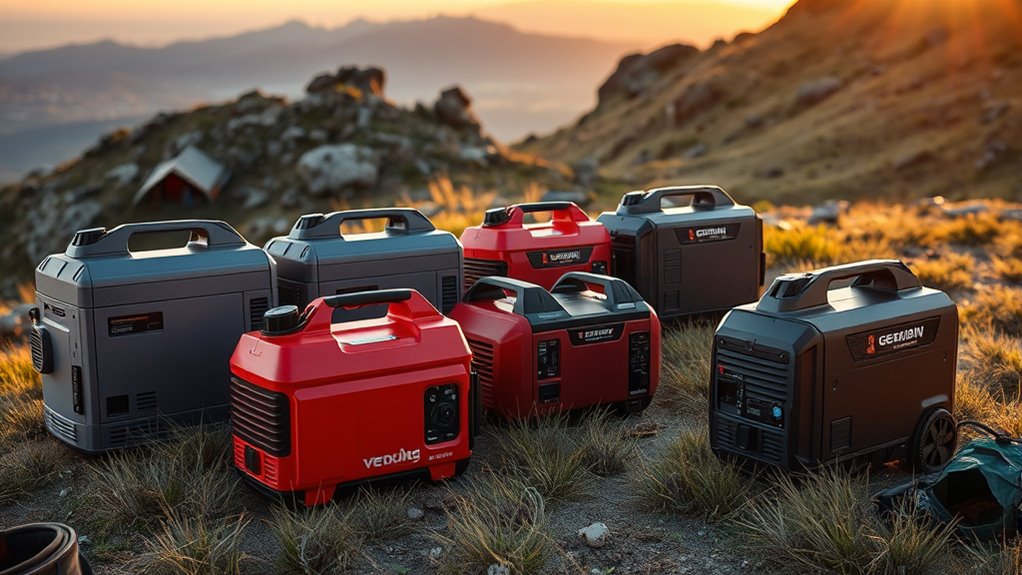

Portable generators range from small power stations for phones and lights to high-output gas generators designed for home backup. My best overall pick for broad backup needs is the Westinghouse WGen11500TFc, whose tri-fuel flexibility can matter when fuel availability changes. For quieter, lighter use, the WEN 3600-Watt inverter stands out for RV-friendly output, while the Jackery Explorer 300 is a simpler, fuel-free option for small electronics. The main tradeoffs are output versus weight and noise, plus the difference between gas-powered generators and battery power stations. Read on for the full comparison and help matching a model to your actual loads.

Get audio and creator gear delivered free with Prime
- Fast, free delivery on millions of items
- Prime Video, Amazon Music and more included
- Member-only deals all year
Complete the kit


Key Takeaways
- Fuel flexibility separates the larger backup picks: the Westinghouse WGen11500TFc and Generac 12,500-watt tri-fuel model offer three fuel choices, while several other high-output options use two.
- Peak wattage alone can mislead: running watts determine the sustained load a generator can support, so size around appliances operating together rather than the largest starting-watt number.
- Inverter models serve a different job from open-frame backup units: the WEN 2350 and WEN 3600 favor quieter, more portable use, while the large Generac, DuroStar, DuroMax, and Westinghouse models favor heavier loads.
- Power stations trade runtime and output for quiet, fuel-free operation: the 88Wh MARBERO M82 and 292Wh Jackery Explorer 300 suit small electronics, not whole-home backup.
- The lineup spans several distinct sizes: the WEN 2350 is the lightweight end, the Oxseryn 4400 and Evernexta 3000 sit between compact and backup classes, and the 13,000-watt-class units demand more space and careful setup.
| WEN Super Quiet 2350-Watt Portable Inverter Generator with Fuel Shut Off, Gasoline Power, Ultra Lightweight (56235i), Black |  | Best Compact Gas Inverter | Running wattage: 1,900 watts | Maximum wattage: 2,350 watts | Fuel: Gasoline | VIEW ON AMAZON | See Our Full Breakdown |
| Generac 12,500 Starting Watt Tri-Fuel Portable Generator, Electric Start |  | Best Tri-Fuel Backup Flexibility | Starting watts: 12,500 watts | Running watts: 9,500 watts | Fuel types: Gasoline, liquid propane, natural gas | VIEW ON AMAZON | See Our Full Breakdown |
| MARBERO Portable Power Station M82 (88Wh, 120W Surge) |  | Best Ultralight Battery Backup | Capacity: 88Wh / 24,000mAh | Running power: 80 watts | Surge power: 120 watts | VIEW ON AMAZON | See Our Full Breakdown |
| Westinghouse WGen11500TFc Tri-Fuel Portable Generator |  | Best High-Output Tri-Fuel Home Backup | Peak wattage: 14,500 watts (gasoline) | Running wattage: 11,500 watts (gasoline) | Fuel types: Gasoline, propane, natural gas | VIEW ON AMAZON | See Our Full Breakdown |
| WEN 3600-Watt Portable Inverter Generator, RV-Ready, Quiet and Lightweight with Fuel Shut Off |  | Best RV-Ready Inverter | Wattage: 3,600 watts | Engine displacement: 149 cc | Fuel tank: 1.6 gallons | VIEW ON AMAZON | See Our Full Breakdown |
| Generac GP6500 Portable Gas Generator, 8125 Starting Watts / 6500 Running Watts |  | Best for Mid-Range Home Backup | Starting watts: 8,125 watts | Running watts: 6,500 watts | Fuel: Gasoline | VIEW ON AMAZON | See Our Full Breakdown |
| Generac iQ4000 Dual Fuel Portable Inverter Generator |  | Best for Dual-Fuel Quiet-Use Needs | Starting watts: 4,000 W | Running watts: 3,000 W | Fuel: Gasoline or propane | VIEW ON AMAZON | See Our Full Breakdown |
| DuroStar DS13000MX 13,000-Watt Dual Fuel Portable Generator with Remote Electric Start |  | Best for Remote-Start High-Output Backup | Starting watts: 13,000 watts | Running watts: 10,500 watts | Fuel: Gasoline or propane | VIEW ON AMAZON | See Our Full Breakdown |
| DuroMax XP13000HX 13,000-Watt Dual Fuel Portable Generator |  | Best for Transfer-Switch-Ready Home Backup | Starting watts: 13,000 W | Running watts: 10,500 W | Fuel: Gasoline or propane | VIEW ON AMAZON | See Our Full Breakdown |
| Evernexta 3000W Inverter Generator |  | Best Compact Inverter Pick | Starting watts: 3,000 W | Running watts: 2,350 W | Fuel and engine: Gasoline; 97.7 cc 4-stroke OHV | VIEW ON AMAZON | See Our Full Breakdown |
| Westinghouse 14500 Peak Watt Dual Fuel Portable Generator with Electric Start and Transfer Switch Ready | 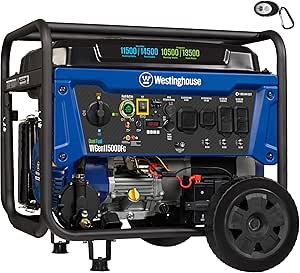 | Best for High-Demand Home Backup | Peak wattage: 14,500 watts | Running wattage: 11,500 watts | Fuel: Gasoline or propane | VIEW ON AMAZON | See Our Full Breakdown |
| Westinghouse 6500 Watt Dual Fuel Home Backup Portable Generator |  | Best Mid-Range Home Backup | Gasoline peak output: 6,500 watts | Gasoline running output: 5,300 watts | Propane peak output: 5,800 watts | VIEW ON AMAZON | See Our Full Breakdown |
| Westinghouse 12500 Watt Dual Fuel Portable Generator with Remote Electric Start |  | Best for Remote-Start Backup | Peak wattage: 12,500 watts | Running wattage: 9,500 watts | Fuel: Gasoline or propane | VIEW ON AMAZON | See Our Full Breakdown |
| Oxseryn 4400-Watt Gas-Powered Portable Inverter Generator with ECO Mode |  | Best Compact Fuel-Powered Pick | Peak wattage: 4,400 watts | Running wattage: 3,400 watts | Fuel: Gasoline | VIEW ON AMAZON | See Our Full Breakdown |
| Jackery Explorer 300 Portable Power Station (292Wh) |  | Best Quiet Power for Small Devices | Capacity: 292 Wh | Peak surge: 600 watts | Battery chemistry: LiFePO4 | VIEW ON AMAZON | See Our Full Breakdown |
| portable generator | Runtime | Weight | Fuel |
|---|---|---|---|
| WEN Super Quiet 2350-Watt Port | Up to 10 hours (listed; load conditions not specified) | 39 pounds | Gasoline |
| Generac 12,500 Starting Watt T | — | 219 pounds | — |
| MARBERO Portable Power Station | — | 3.2 pounds | — |
| Westinghouse WGen11500TFc Tri- | Up to 19 hours on gasoline | — | — |
| WEN 3600-Watt Portable Inverte | Up to 5 hours | 46 pounds | — |
| Generac GP6500 Portable Gas Ge | Up to 10.5 hours at 50% load | 182 lb | Gasoline |
| Generac iQ4000 Dual Fuel Porta | Up to 13 hours on gasoline or 16 hours on propane at 50% load | 111 lb | Gasoline or propane |
| DuroStar DS13000MX 13,000-Watt | Up to 17 hours | — | Gasoline or propane |
| DuroMax XP13000HX 13,000-Watt | Up to 17 hours; load and fuel conditions not specified | — | Gasoline or propane |
| Evernexta 3000W Inverter Gener | — | 41.8 lb | — |
| Westinghouse 14500 Peak Watt D | Up to 19 hours | — | Gasoline or propane |
| Westinghouse 6500 Watt Dual Fu | — | — | — |
| Westinghouse 12500 Watt Dual F | Up to 12 hours | — | Gasoline or propane |
| Oxseryn 4400-Watt Gas-Powered | Up to 14 hours at 25% load | 56 pounds | Gasoline |
| Jackery Explorer 300 Portable | — | 7.1 pounds | — |
More Details on Our Top Picks
WEN Super Quiet 2350-Watt Portable Inverter Generator with Fuel Shut Off, Gasoline Power, Ultra Lightweight (56235i), Black
At 39 pounds, the WEN 56235i is the easiest gas generator in this group to lift and pack, making it a strong match for campers who need more than a small battery station can provide. Its 1,900 running watts and clean inverter output can handle modest loads and sensitive electronics, while the 51-decibel operating figure favors quieter campsites over the louder WEN 3600-Watt model. The tradeoff is capacity: the one-gallon tank and limited output make it a poor fit for sustained appliance use or whole-home backup, and the listed runtime varies by load. Unlike the MARBERO M82, it can run on gasoline for longer or higher-demand tasks, but that adds fuel, engine noise, and maintenance. A parallel connection kit is sold separately if you want to link units.
Pros:- Low 39-pound weight is manageable for one person to carry
- Inverter output is suited to sensitive electronics
- Quiet 51-decibel operating figure fits noise-conscious campsites
- Fuel shutoff and eco-mode support more controlled operation
Cons:- One-gallon tank limits time between refueling during extended use
- 1,900 running watts cannot support larger household loads
- Parallel connection kit is an additional accessory
Best for: Campers and tailgaters who want a lightweight gas generator for small appliances, lighting, and sensitive electronics.
Not ideal for: Homeowners needing to run several major appliances or anyone seeking long runtime without refueling.
- Running wattage:1,900 watts
- Maximum wattage:2,350 watts
- Fuel:Gasoline
- Engine:79 cc, 4-stroke
- Fuel tank:1 gallon
- Runtime:Up to 10 hours (listed; load conditions not specified)
- Weight:39 pounds
- Outlets:5
- Dimensions:17.3 x 11.5 x 17.5 inches
Our verdict“Choose the WEN 56235i for portable, relatively quiet gas power on camping trips, not for heavy backup loads.”
Generac 12,500 Starting Watt Tri-Fuel Portable Generator, Electric Start
The Generac GP9500E is a better fit for serious backup than compact options like the WEN 56235i: its 9,500 running watts can serve multiple household circuits, and its tri-fuel design lets owners use gasoline, propane, or natural gas as availability changes. That fuel choice is the main differentiator here, especially for buyers who want alternatives to storing gasoline. Electric start, voltage regulation, and COsense safety features add practical support for backup use. The tradeoff is portability in name more than in everyday handling: at 219 pounds, it needs its wheel kit and a clear route to move, unlike the much lighter inverter generators in this roundup. Its listed runtime reaches 9.5 hours at half load, but it is still a substantial, fuel-burning machine rather than a quiet campsite companion.
Pros:- Tri-fuel capability provides options when one fuel source is unavailable
- 9,500 running watts suit substantial backup and work-site loads
- Electric start and included 12V battery simplify startup
- COsense and automatic voltage regulation add safety and power control features
Cons:- At 219 pounds, moving it requires wheels and may still take assistance
- Large size limits where it can be stored and operated
- Combustion-engine operation is less suited to quiet camping than inverter options
Best for: Homeowners or job-site operators who need high output and the flexibility to run on gasoline, propane, or natural gas.
Not ideal for: Campers, apartment dwellers, or solo users who need a generator they can lift, carry, or run quietly near others.
- Starting watts:12,500 watts
- Running watts:9,500 watts
- Fuel types:Gasoline, liquid propane, natural gas
- Fuel tank:7.5 gallons
- Runtime at 50% load:9.5 hours
- Runtime at 25% load:14 hours
- Weight:219 pounds
- Outlets:Two 120V 20A GFCI duplex, one 120/240V 30A twist-lock, one 120/240V 50A
- Warranty:3 years residential / 2 years commercial
Our verdict“Pick the Generac GP9500E when fuel flexibility and household-level output matter more than easy carrying or quiet operation.”
MARBERO Portable Power Station M82 (88Wh, 120W Surge)
The MARBERO M82 is a battery power station, not a fuel-powered generator, and its role is limited to small electronics and low-wattage devices. At just 3.2 pounds, it is far easier to carry than the WEN 56235i, and its eight output ports let travelers charge several phones or accessories without bringing a gas engine along. The built-in flashlight, including SOS mode, adds useful emergency function. But the small 88Wh capacity and 80W running output put a firm ceiling on what it can power; it cannot replace the WEN for appliances or longer-duration loads. It also needs recharging once depleted, rather than a fuel refill. Choose it for personal-device backup and portability, not for household backup, cooking appliances, or power tools.
Pros:- Very light and compact at 3.2 pounds
- Eight output ports accommodate several small devices
- Built-in flashlight offers brightness settings and SOS mode
- Adapter charging reaches 80% in a listed two hours
Cons:- 88Wh capacity runs down quickly compared with fuel-powered generators
- 80W running output excludes most appliances and power tools
- Requires access to a charging source after the battery is depleted
Best for: Backpackers, road-trippers, and emergency kits needing a lightweight way to charge phones and other small devices.
Not ideal for: Buyers who need to run appliances, power tools, or devices drawing more than its 80W running output.
- Capacity:88Wh / 24,000mAh
- Running power:80 watts
- Surge power:120 watts
- Weight:3.2 pounds
- Dimensions:6.5 x 4.6 x 3.1 inches
- Output ports:8 (AC, DC, USB, USB-C PD)
- Charging time:0–80% in 2 hours via adapter
- Flashlight runtime:Up to 68 hours
- Safety:BMS protection; UL drop tested
Our verdict“Choose the MARBERO M82 for lightweight device charging, but choose a gas generator like the WEN 56235i for appliance power.”
Westinghouse WGen11500TFc Tri-Fuel Portable Generator
For buyers prioritizing backup capacity, the Westinghouse WGen11500TFc leads this group with 11,500 running watts on gasoline and three fuel choices. It exceeds the Generac GP9500E in listed running output and offers a 50A outlet, transfer-switch readiness, and remote electric start for a more direct home-backup setup. Low THD under 5% is also a useful distinction for owners powering electronics alongside larger loads. The cost of that capability is size and weight: this is a heavy, wheeled unit, not a generator to load casually into a car for camping. Its up-to-19-hour runtime is tied to gasoline and the data does not specify the load behind that figure, so actual endurance will vary. For occasional trips, the WEN inverter models are easier to live with.
Pros:- 11,500 running watts support substantial backup loads
- Gasoline, propane, and natural gas provide fuel flexibility
- Remote electric start reduces effort when starting the unit
- Low THD and transfer-switch readiness suit home backup use
Cons:- Heavy, bulky design makes transport and storage difficult
- Large engine and output are excessive for small camping needs
- Listed 19-hour runtime does not specify the load conditions
Best for: Homeowners seeking high-output outage backup with three fuel options, remote start, and transfer-switch compatibility.
Not ideal for: Campers or buyers who need a compact, easily carried generator for occasional small loads.
- Peak wattage:14,500 watts (gasoline)
- Running wattage:11,500 watts (gasoline)
- Fuel types:Gasoline, propane, natural gas
- Engine:550 cc 4-stroke OHV
- Fuel tank:9.5 gallons
- Runtime:Up to 19 hours on gasoline
- Start type:Remote electric start
- Outlets:L14-30R 30A, 14-50R 50A, GFCI
- Warranty:3-year limited
Our verdict“Choose the WGen11500TFc for high-output home backup and fuel flexibility, not for lightweight portable use.”
WEN 3600-Watt Portable Inverter Generator, RV-Ready, Quiet and Lightweight with Fuel Shut Off
The WEN 3600-Watt inverter offers a useful middle ground between the compact 56235i and the large backup generators: it adds an RV-ready TT-30R outlet and 3,600 watts of listed output while remaining 46 pounds. That combination suits campers who want to power an RV connection and charge smaller devices from USB ports. Its clean inverter power, eco-mode, and fuel shutoff also make it more electronics-friendly than a conventional high-output model like the Generac GP9500E. The compromise is runtime and sound: the 1.6-gallon tank is listed for up to five hours, and the 65-decibel figure at quarter load is louder than the WEN 56235i’s stated 51 decibels. Recoil starting means there is no electric-start convenience. It is portable for its class, but not a quiet, hands-off backup choice.
Pros:- RV-ready TT-30R outlet connects to compatible RV setups
- Inverter output is suited to sensitive electronics
- 46-pound weight is manageable compared with large backup units
- USB ports, eco-mode, and fuel shutoff add useful camping features
Cons:- Listed runtime is up to five hours on a 1.6-gallon tank
- 65-decibel noise figure is higher than the WEN 56235i’s stated level
- Recoil starting requires manual effort
Best for: RV owners and campers who need an inverter generator with a TT-30R connection, clean power, and manageable carrying weight.
Not ideal for: Buyers needing long unattended runtime, electric start, or the quieter operation of a smaller inverter model.
- Wattage:3,600 watts
- Engine displacement:149 cc
- Fuel tank:1.6 gallons
- Runtime:Up to 5 hours
- Noise level:65 dB at quarter load
- Weight:46 pounds
- Receptacles:Two 120V, one RV 120V TT-30R, one 12V DC, two USB
- Starting method:Recoil
- Engine type:4-stroke
Our verdict“Pick this WEN for RV-friendly inverter power in a carryable package, provided its short runtime and recoil start fit your plans.”
Generac GP6500 Portable Gas Generator, 8125 Starting Watts / 6500 Running Watts
The Generac GP6500 is a practical middle ground for buyers who need more than a compact inverter can provide but do not need the output of a 13,000-watt machine. Its 6,500 running watts and stronger starting capacity can handle multiple household essentials, while the 10.5-hour runtime at half load helps stretch a tank through an outage. COsense detection adds automatic shutdown protection, and the included extension cord makes it easier to place the generator outdoors. Compared with the dual-fuel Generac iQ4000, this model offers substantially more running power but gives up propane flexibility and inverter-style clean power. The main portability compromise is its 182-pound weight: wheels help on suitable ground, but loading it into a vehicle or moving it up steps may take help. Its 120-volt output also limits compatibility with some 240-volt equipment.
Pros:- 6,500 running watts provide more capacity for household essentials than the Generac iQ4000.
- PowerRush starting capacity helps with appliances that draw extra power when starting.
- COsense detection and low-oil shutdown add automatic safety protections.
- Up to 10.5 hours of runtime at 50% load, with a 25-foot extension cord and never-flat wheels included.
Cons:- At 182 pounds, it is difficult to move or load without assistance.
- 120-volt output does not support equipment requiring 240 volts.
- Gasoline-only operation offers less fuel flexibility than the dual-fuel options in this roundup.
Best for: Homeowners who want gasoline-powered backup for several essential appliances and can keep the generator on a level, accessible outdoor spot.
Not ideal for: Buyers who need 240-volt equipment support, propane operation, inverter power for sensitive electronics, or a generator they can lift and transport alone.
- Starting watts:8,125 watts
- Running watts:6,500 watts
- Fuel:Gasoline
- Runtime:Up to 10.5 hours at 50% load
- Voltage and frequency:120 V; 60 Hz
- Weight:182 lb
- Dimensions:27.2 × 27 × 26.5 in
- Safety:COsense detection; low-oil shutdown
Our verdict“Choose the GP6500 for substantial 120-volt outage power if you can manage its weight and do not need dual-fuel operation.”
Generac iQ4000 Dual Fuel Portable Inverter Generator
The Generac iQ4000 is the more flexible choice for campers and households that value fuel options and clean power over maximum output. Its inverter design produces a clean sine wave suited to sensitive electronics, while the 3,000 running watts can cover a modest collection of appliances or campsite needs. Running on gasoline or propane gives owners a backup fuel option; the listed runtime reaches 16 hours on propane at half load. Compared with the lighter Evernexta 3000W inverter generator, the iQ4000 offers dual-fuel capability and more running capacity, but it weighs 111 pounds rather than 41.8. Electric start and COsense protection add convenience and safety, though they do not make it easy to carry. Buyers in California should skip this model because it is not CARB certified.
Pros:- Gasoline and propane operation lets owners choose between available fuel sources.
- Inverter output with less than 3% THD suits sensitive electronics.
- Electric start avoids pull-cord starting.
- COsense protection and listed runtimes of up to 13 hours on gasoline or 16 hours on propane at 50% load.
Cons:- At 111 pounds, it is much heavier than the Evernexta 3000W inverter generator.
- Its 3,000 running watts fall well short of the Generac GP6500 for larger backup loads.
- Not CARB certified, so it is not suitable for California buyers.
Best for: Campers and outage planners who want inverter power for electronics, the option to use propane, and enough output for moderate loads.
Not ideal for: California buyers, solo campers seeking a genuinely lightweight unit, or households needing high-output whole-home backup.
- Starting watts:4,000 W
- Running watts:3,000 W
- Fuel:Gasoline or propane
- Runtime:Up to 13 hours on gasoline or 16 hours on propane at 50% load
- Voltage:120 V
- Weight:111 lb
- Engine:212 cc
- Compliance:49-state compliant; not CARB certified
Our verdict“Pick the iQ4000 if dual-fuel flexibility and clean inverter power matter more than low weight or high-output home backup.”
DuroStar DS13000MX 13,000-Watt Dual Fuel Portable Generator with Remote Electric Start
For buyers who want high-output backup with the convenience of remote electric starting, the DuroStar DS13000MX stands apart from smaller portable generators in this group. It delivers 10,500 running watts and supports both gasoline and propane, making it suited to major outage loads and job-site demands. Its 8.3-gallon tank and listed 17-hour runtime can reduce refueling interruptions, while all-metal construction is aimed at a more rugged setup. Compared with the DuroMax XP13000HX, its standout distinction is remote start; the XP13000HX, by contrast, lists a 50-amp outlet and detailed 120/240-volt outlet options. The DS13000MX still has 240-volt output, but the supplied data does not detail its outlet configurations. This is a large, fuel-powered machine, not a quiet or easy-to-carry camping generator.
Pros:- 10,500 running watts suit demanding backup loads better than the Generac GP6500.
- Gasoline and propane operation provide fuel flexibility.
- Remote electric start adds convenience when the unit is set up outdoors.
- 8.3-gallon tank and a listed 17-hour runtime support longer operating periods.
Cons:- Large, heavy construction makes it difficult to move and store.
- High output is excessive for small electronics, camping, and light backup needs.
- Available product data does not specify the outlet configurations or weight.
Best for: Homeowners or job-site operators who need substantial dual-fuel output and want remote electric starting for a fixed outdoor setup.
Not ideal for: Campers, apartment dwellers, or anyone who needs a lightweight, quiet generator; also a poor fit for buyers who need clearly specified 50-amp transfer-switch connections.
- Starting watts:13,000 watts
- Running watts:10,500 watts
- Fuel:Gasoline or propane
- Voltage and frequency:240 V; 60 Hz
- Runtime:Up to 17 hours
- Fuel tank:8.3 gallons
- Engine:500 cc, 4-stroke
- Construction and safety:All-metal construction; CO sensor; low-oil shutdown
Our verdict“Choose the DS13000MX for substantial dual-fuel backup with remote starting, provided you have space and a plan for moving it.”
DuroMax XP13000HX 13,000-Watt Dual Fuel Portable Generator
The DuroMax XP13000HX is built around a specific backup advantage: it combines 10,500 running watts with a listed 120/240-volt, 50-amp outlet, giving homeowners a clear connection option for compatible transfer-switch setups. Dual-fuel operation and a 500 cc engine suit extended outages where fuel availability and larger household loads matter more than compact size. Compared with the DuroStar DS13000MX, the XP13000HX has more clearly specified outlet options, while the DuroStar highlights remote starting and an 8.3-gallon tank. The XP13000HX lists a 17-hour runtime, but the supplied data does not identify the fuel or load conditions for that figure. At 245 pounds, this is portable mainly in the sense that it can be moved with appropriate equipment; it is not a unit most people can reposition alone.
Pros:- 10,500 running watts offer far more backup capacity than the Generac GP6500.
- 120/240-volt output includes a 50-amp outlet listed for transfer-switch-ready connections.
- Dual-fuel operation allows use of gasoline or propane.
- CO Alert safety technology and all-copper windings are listed features.
Cons:- At 245 pounds, it is difficult to move without assistance.
- The listed 17-hour runtime does not specify the fuel or load conditions.
- Its high output and size are excessive for light-duty or portable recreation use.
Best for: Homeowners with a compatible transfer-switch setup who need 120/240-volt backup and can arrange help or equipment to move a heavy generator.
Not ideal for: Buyers seeking easy solo transport, quiet inverter power for electronics, or a lightweight generator for camping and tailgating.
- Starting watts:13,000 W
- Running watts:10,500 W
- Fuel:Gasoline or propane
- Voltage and frequency:120/240 V; 60 Hz
- Runtime:Up to 17 hours; load and fuel conditions not specified
- Engine:500 cc OHV
- Weight and dimensions:245 lb; 30 × 29 × 26 in
- Listed outlets:Four 120 V GFCI; one 120 V 30 A; one 120/240 V 30 A twist-lock; one 120/240 V 50 A
Our verdict“Choose the XP13000HX for high-capacity home backup when its 50-amp connection fits your setup and you can handle its substantial weight.”
Evernexta 3000W Inverter Generator
The Evernexta 3000W inverter is the easiest option here to carry and store, weighing just 41.8 pounds while supplying 2,350 running watts. That makes it a more natural fit for camping, RV trips, and smaller backup tasks than the 111-pound Generac iQ4000 or the much heavier open-frame generators. Its inverter output has less than 3% THD, supporting sensitive electronics, and the listed USB-A, USB-C, and 12-volt DC connections provide direct charging options. Eco Mode is intended to reduce fuel use when demand is lighter. The tradeoff is capacity: it cannot match the iQ4000’s running output or dual-fuel flexibility, and it is gasoline-only. Although described as ultra-quiet, the supplied noise range is 53–56 dB; it still must be operated outdoors.
Pros:- At 41.8 pounds, it is far easier to carry and store than the Generac iQ4000.
- Less than 3% THD is suited to sensitive electronic devices.
- USB-A, USB-C, and 12 V DC ports allow direct charging of compatible devices.
- Eco Mode and a listed noise level of 53–56 dB suit lighter recreational use.
Cons:- 2,350 running watts limit the number and size of loads it can power.
- Gasoline-only operation lacks the fuel flexibility of the Generac iQ4000.
- It must be operated outdoors and is not a whole-home backup solution.
Best for: Campers, RV travelers, and electronics users who need a compact gasoline inverter for modest loads and can keep it outdoors.
Not ideal for: Households seeking whole-home backup, buyers needing propane operation, or anyone expecting a 2,350-watt unit to run several heavy appliances at once.
- Starting watts:3,000 W
- Running watts:2,350 W
- Fuel and engine:Gasoline; 97.7 cc 4-stroke OHV
- Noise level:53–56 dB
- Weight:41.8 lb
- Dimensions:20.08 × 13.39 × 19.69 in
- Outlets:Two 120 V 20 A; USB-A; USB-C; 12 V DC
- Warranty:2 years
Our verdict“Pick the Evernexta for portable, clean inverter power on trips or for light backup, not for large household loads.”
Westinghouse 14500 Peak Watt Dual Fuel Portable Generator with Electric Start and Transfer Switch Ready
For buyers prioritizing household backup capacity, the Westinghouse WGen11500DFc sits at the top of this group: its 11,500 running watts can support more substantial loads than the 6,500-watt Westinghouse dual-fuel model. Gasoline or propane operation gives you another fuel option during an outage, while remote electric start reduces the effort of getting a large unit running. The stated runtime reaches 19 hours, and low-THD output is intended to suit sensitive electronics as well as appliances. The tradeoff is portability: at this output level, the bulky build is better treated as a home standby-style backup than a generator to move around often. It also needs regular engine maintenance, and the supplied data lists only two outlets, so check connection needs before buying.
Pros:- 11,500 running watts provide more capacity than the 6,500-watt Westinghouse backup model.
- Dual-fuel operation offers a choice between gasoline and propane.
- Remote electric start makes starting a large engine more convenient.
- Stated runtime of up to 19 hours can reduce refueling interruptions.
Cons:- Heavy, bulky construction makes frequent transport difficult.
- Only two outlets are listed, which may limit direct connections for some setups.
- A large fuel-powered engine requires ongoing maintenance and storage planning.
Best for: Homeowners who need substantial outage power for multiple appliances and want the option to run on gasoline or propane.
Not ideal for: Campers, frequent job-site movers, or buyers with limited storage space who need a light, easy-to-carry generator.
- Peak wattage:14,500 watts
- Running wattage:11,500 watts
- Fuel:Gasoline or propane
- Tank capacity:9.5 gallons
- Runtime:Up to 19 hours
- Engine displacement:550 cc
- Voltage:240 volts
- Starting system:Electric start
Our verdict“Choose this Westinghouse when high household backup output matters more than easy transport or a compact footprint.”
Westinghouse 6500 Watt Dual Fuel Home Backup Portable Generator
This Westinghouse is a more manageable home-backup choice for buyers who do not need the WGen11500DFc’s much higher output. It supplies 5,300 running watts on gasoline or 4,800 on propane, with a transfer-switch outlet for a suitable home connection and a TT-30R outlet for RV use. The CO sensor and low-oil shutdown add useful safeguards, while the included wheel kit and propane hose reduce the number of accessories to source separately. Its 4.7-gallon tank is smaller than the larger Westinghouse’s 9.5-gallon tank, and the listed maximum runtime is 14.5 hours, so expectations should match the load and fuel. Compared with the 56-pound Oxseryn inverter, this model is aimed at backup capacity, not easy lifting or quieter camping power.
Pros:- Gasoline and propane operation provide fuel flexibility.
- Includes a transfer-switch outlet and a dedicated RV outlet.
- CO sensor and automatic low-oil shutdown add protective features.
- Wheel kit and propane hose are included for setup.
Cons:- Running output is substantially lower than the 11,500-watt Westinghouse model.
- The 4.7-gallon tank is smaller than those on larger home-backup generators.
- Requires some assembly despite the included setup accessories.
Best for: Homeowners or RV owners who need moderate backup output, dual-fuel flexibility, and a transfer-switch connection without moving up to a very large generator.
Not ideal for: Buyers who need to run many high-demand household loads at once or want a lightweight generator for frequent camping trips.
- Gasoline peak output:6,500 watts
- Gasoline running output:5,300 watts
- Propane peak output:5,800 watts
- Propane running output:4,800 watts
- Fuel tank capacity:4.7 gallons
- Maximum runtime:Up to 14.5 hours
- Engine:274 cc, 4-stroke OHV
- Outlets:5-20R 120V household, TT-30R 30A RV, L14-30R 30A transfer switch
Our verdict“Pick this model for moderate home or RV backup needs when you want dual fuel and useful connections without the biggest generator in the lineup.”
Westinghouse 12500 Watt Dual Fuel Portable Generator with Remote Electric Start
The WGen9500DF offers a useful middle ground for outage backup: its 9,500 running watts exceed the 6,500-watt Westinghouse model’s gasoline output, while its listed capacity stays below the WGen11500DFc. That makes it a fit for buyers who need substantial household power but do not require the highest-output pick here. Remote electric start is a practical convenience when the generator is stored outside or starting it manually would be awkward, and dual-fuel operation adds flexibility if gasoline is scarce. Six outlets and transfer-switch readiness support varied connections, though the supplied details do not specify outlet types. Its 6.6-gallon tank and stated 12-hour runtime trail the larger Westinghouse model’s runtime claim. It remains heavy and bulky, so the remote start does not make it easy to transport.
Pros:- 9,500 running watts offer more capacity than the smaller Westinghouse backup model.
- Remote electric start adds convenience when the generator is stored away from the home.
- Dual-fuel capability provides a gasoline or propane option.
- Six outlets and transfer-switch readiness support multiple connection needs.
Cons:- Heavy, bulky construction makes it a poor fit for frequent transport.
- Its stated 12-hour runtime is shorter than the larger WGen11500DFc’s claim.
- Outlet types are not specified in the supplied product data.
Best for: Homeowners seeking high-output outage backup with remote starting, multiple outlets, and the option to use propane.
Not ideal for: Buyers who need a compact generator for RV travel or who want the greatest stated running output and runtime available in this group.
- Peak wattage:12,500 watts
- Running wattage:9,500 watts
- Fuel:Gasoline or propane
- Tank capacity:6.6 gallons
- Runtime:Up to 12 hours
- Engine displacement:457 cc
- Outlets:6; transfer-switch ready
- Starting system:Remote electric start
Our verdict“Choose the WGen9500DF if you want substantial dual-fuel backup with remote starting but do not need the largest Westinghouse unit’s output.”
Oxseryn 4400-Watt Gas-Powered Portable Inverter Generator with ECO Mode
For RV trips and smaller backup loads, the Oxseryn prioritizes carryability over the household capacity of the Westinghouse generators. At 56 pounds, it is far easier to move than either large dual-fuel Westinghouse, while its 3,400 running watts and RV port suit a more focused set of appliances and devices. ECO mode and inverter design make it the lineup’s more travel-minded fuel generator; the listed runtime reaches 14 hours at 25% load, a condition that matters when comparing it with runtime claims for larger units. Unlike the Westinghouse options, it runs on gasoline only, so it cannot switch to propane when fuel availability changes. Its open-frame construction also gives up some protection, and the stated noise level is under 72 dBA at 23 feet—not a promise of silent operation.
Pros:- At 56 pounds, it is much easier to move than the large Westinghouse backup generators.
- 3,400 running watts suit many focused RV and emergency loads.
- ECO mode supports a runtime claim of up to 14 hours at 25% load.
- Dedicated RV port complements its two 120V AC outlets.
Cons:- Gasoline-only operation offers less fuel flexibility than the dual-fuel Westinghouse models.
- Its running output is not suited to the broader loads supported by larger home-backup generators.
- Open-frame construction offers less enclosure protection, and the listed noise level is still audible.
Best for: RV campers and homeowners needing a comparatively light gasoline generator for modest loads, with a dedicated RV connection.
Not ideal for: Buyers who need whole-home backup, propane fuel flexibility, or a fully enclosed design for rough handling and weather exposure.
- Peak wattage:4,400 watts
- Running wattage:3,400 watts
- Fuel:Gasoline
- Weight:56 pounds
- Runtime:Up to 14 hours at 25% load
- Tank capacity:2 gallons
- Noise level:Under 72 dBA at 23 feet
- Outlets:2x 120V AC, 1x 12V DC, 1x RV port
Our verdict“Choose the Oxseryn for portable RV or modest backup power when low weight matters more than dual-fuel flexibility or high household output.”
Jackery Explorer 300 Portable Power Station (292Wh)
The Jackery Explorer 300 is a different kind of portable generator: it stores electricity in a 292Wh LiFePO4 battery rather than producing power from an engine. That makes it the easiest option here to carry at 7.1 pounds and avoids gasoline, exhaust, and engine maintenance during use. Its two AC outlets, USB ports, and car port cover phones, laptops, lights, and other small devices, but the 600W peak limit puts it far below the Oxseryn’s 3,400 running watts. It is not a substitute for powering major appliances through an extended outage; capacity is finite and recharging takes planning. A compatible 100W solar panel can bring it to 80% in a stated 2.8 hours, but the panel is not included. Choose it for quiet, small-scale power, not heavy loads.
Pros:- At 7.1 pounds, it is much easier to carry than any fuel-powered generator in this group.
- LiFePO4 battery chemistry is listed for more than 4,000 charge cycles.
- AC, USB-C, USB-A, and car ports support several small-device types.
- Compatible solar charging offers an off-grid replenishment option.
Cons:- The 292Wh capacity and 600W peak limit cannot match the output of the Oxseryn or Westinghouse generators.
- Solar panel is not included, adding a separate component for solar recharging.
- Finite stored energy requires recharging for extended or repeated use.
Best for: Campers, travelers, and emergency-kit buyers who want lightweight, quiet power for phones, laptops, lights, and other small electronics.
Not ideal for: Households needing to run refrigerators, heating equipment, or other high-wattage appliances, or buyers seeking long-duration power without recharging.
- Capacity:292 Wh
- Peak surge:600 watts
- Battery chemistry:LiFePO4
- Listed charge cycles:More than 4,000
- Weight:7.1 pounds
- Ports:2 AC outlets, 1 USB-C, 2 USB-A, 1 car port
- USB-C output:100 watts
- Solar charging:2.8 hours to 80% with a 100W panel
Our verdict“Pick the Explorer 300 for silent, easily carried power for small electronics, but choose a fuel generator for appliances or sustained high-output backup.”

How We Picked
I ranked these 15 portable generators by the job they can realistically handle, not by peak-watt figures alone. I weighed stated running output, fuel options, starting method, inverter design, RV-oriented features, portability, and the practical difference between combustion generators and battery power stations. A unit earns a stronger position when its feature mix suits a clear use case without asking buyers to accept unnecessary bulk or complexity.
The ranking also reflects tradeoffs. High-output, multi-fuel models rise for backup versatility, while compact inverter generators place higher for users who value manageable size and quieter operation over whole-home capacity. Power stations are included for small, indoor-friendly loads, but their limited energy capacity keeps them out of contention for sustained appliance backup. Since specifications and configurations can vary, I recommend verifying the exact model’s running watts, outlets, fuel compatibility, and safety instructions before purchase.
| portable generator | Fuel |
|---|---|
| WEN Super Quiet 2350-Watt Port | Gasoline |
| Generac 12,500 Starting Watt T | — |
| MARBERO Portable Power Station | — |
| Westinghouse WGen11500TFc Tri- | — |
| WEN 3600-Watt Portable Inverte | — |
| Generac GP6500 Portable Gas Ge | Gasoline |
| Generac iQ4000 Dual Fuel Porta | Gasoline or propane |
| DuroStar DS13000MX 13,000-Watt | Gasoline or propane |
| DuroMax XP13000HX 13,000-Watt | Gasoline or propane |
| Evernexta 3000W Inverter Gener | — |
| Westinghouse 14500 Peak Watt D | Gasoline or propane |
| Westinghouse 6500 Watt Dual Fu | — |
| Westinghouse 12500 Watt Dual F | Gasoline or propane |
| Oxseryn 4400-Watt Gas-Powered | Gasoline |
| Jackery Explorer 300 Portable | — |
Factors to Consider When Choosing Portable Generators
Start with the loads you need to power, then choose a generator format that fits how and where you will use it. These decisions matter more than a large headline wattage: they affect runtime, noise, setup, storage, and whether the unit can safely connect to the equipment you have.
Size for Running Loads, Not a Headline Number
Write down the appliances you expect to run at the same time and check each one’s running and startup wattage. Motors in refrigerators, pumps, and air conditioners can briefly draw more power when starting, so a generator that barely covers the steady load may still struggle. Peak or starting watts describe short bursts; they do not tell you how much power the unit can supply continuously. Avoid adding every appliance in the house if you only need a few essentials during an outage. Leave some capacity in reserve for startup surges and unexpected loads. If you plan to power sensitive electronics, check the generator’s output characteristics and follow the device maker’s guidance.
Choose Fuel Around Availability and Storage
Gasoline is familiar and widely used, but keeping enough on hand for an extended outage requires safe storage and attention to fuel freshness. Dual- and tri-fuel models can add options such as propane or natural gas, which may suit buyers who already store propane or have a suitable gas connection. Fuel flexibility does not mean every fuel delivers the same output, so check the rating for each fuel type rather than assuming the headline figure applies across the board. A connection to household natural gas also depends on appropriate equipment and installation. Think through how you will obtain, store, and connect fuel before paying for extra fuel capability. The best choice is the one you can operate safely when normal supply routines are disrupted.
Decide Whether an Inverter or Conventional Generator Fits
Inverter generators often make more sense for camping, RV use, and smaller loads where lower noise and easier transport are priorities. Conventional open-frame units commonly target larger loads, but their size, sound, and operating demands may be a poor match for a campsite or close neighbors. Do not treat “quiet” as silent: published sound figures depend on load and measurement distance, and real-world conditions vary. Some inverter models offer parallel capability, but compatible equipment and cables may be needed to combine output. Compare the complete setup rather than assuming a compact model can grow into a home-backup system later. If you need long-duration household power, capacity and fuel planning should take priority over portability alone.
Treat Portability as Weight Plus Handling
A generator can be called portable and still be difficult to move alone, especially once fuel is added. Check the listed weight, wheel and handle arrangement, dimensions, and whether the path to your storage spot includes steps or tight turns. Small inverter units are easier to carry, but they may not have enough output for large appliances. Bigger wheeled generators can supply more power yet need a stable outdoor operating area and enough room for safe ventilation. Think about loading it into a vehicle as well as rolling it across a driveway; those are different tasks. If you expect frequent moves, ease of handling can matter more than a modest increase in watts.
Plan Safe Connections Before an Outage
Portable generators must operate outdoors, away from doors, windows, and vents, because exhaust can cause fatal carbon monoxide exposure. Never run one in a home, garage, or enclosed area, even with doors open. If you want to power household circuits, use a properly installed transfer switch or another approved connection method; plugging a generator into a wall outlet can send power back onto utility lines and create serious danger. Check which outlets the generator provides and whether your intended appliances need special plugs or adapters. A model described as transfer-switch ready still requires compatible equipment and correct installation. Read the manual, follow local requirements, and plan cable routes before an outage rather than improvising during one.
Compare Runtime, Maintenance, and Battery Capacity
Runtime figures depend on load, fuel amount, and operating mode, so a published estimate is not a promise for every situation. Lowering the load can stretch fuel, but buyers should not count on running every appliance continuously. Gas generators need routine maintenance, including attention to oil, storage, and fuel condition; battery power stations avoid engine upkeep but need recharging and have finite stored energy. Watt-hours help describe a power station’s energy capacity, while watts describe the output it can supply at a moment. Those are different limits: a station may have enough stored energy for a device but still lack the output to start it. Choose a battery model for modest electronics and short needs, not as a substitute for a high-output fuel generator.
Frequently Asked Questions
Can a portable generator power a refrigerator during an outage?
Many fuel-powered models in this roundup can support a refrigerator, but the answer depends on its running demand and startup surge. Check the appliance label or manual, then compare those figures with the generator’s running output and available capacity for other devices. A refrigerator may cycle on and off, so avoid planning around its average draw alone. Keep spare capacity for startup and any other loads you expect to use at the same time. Small power stations such as the MARBERO M82 and Jackery Explorer 300 are not intended for extended refrigerator backup.
Should I choose a tri-fuel generator over a dual-fuel model?
Choose tri-fuel if having gasoline, propane, and natural gas available would make your backup plan more resilient. A dual-fuel unit may be the simpler fit if two fuel sources cover your needs and you do not have a suitable natural-gas connection. Compare output ratings for each fuel because the available power can differ by fuel type. Also account for the hardware and safe installation needed to connect a generator to a fuel supply. Paying for another fuel option only helps if you can access and use it when needed.
Is an inverter generator powerful enough for home backup?
Some inverter models can cover selected household essentials, but compact units are not equivalent to the high-output backup generators in this roundup. Add up the running loads you want to support and account for motor startup surges before deciding. An RV-ready outlet or a higher peak-watt figure does not automatically mean the generator can run a whole home. Inverter models can be a better fit when portability and lower noise matter more than powering multiple large appliances. For broader backup, compare the running output and connection options of larger units, then plan a safe transfer-switch setup.
Can I use a portable generator indoors or in a garage if the door is open?
No. Fuel-powered portable generators produce carbon monoxide, which can build up indoors and cause fatal poisoning even when a door or window is open. Operate them outdoors, away from doors, windows, and vents, and follow the manufacturer’s clearance instructions. Never place one in a garage, basement, shed, or other enclosed or partially enclosed space. Use a carbon monoxide alarm in the home as an added safety measure, not as permission to run the generator closer. Battery power stations do not produce engine exhaust during use, but their charging and operating instructions still apply.
When is a power station a better choice than a gas generator?
A power station is a better fit when you need quiet, fuel-free electricity for small devices and do not need long-duration or high-wattage backup. The Jackery Explorer 300 has more stated energy capacity than the MARBERO M82, but neither belongs in the same capacity class as the large fuel-powered models. Battery units avoid engine noise and routine engine maintenance, though they must be recharged and their stored energy is finite. Check both watt-hour capacity and maximum output against the devices you plan to run. For refrigerators, pumps, or multiple household appliances, a fuel generator is usually the more suitable option among these picks.
Conclusion
For buyers seeking one flexible option for substantial backup loads, my best overall pick is the Westinghouse WGen11500TFc, with tri-fuel capability setting it apart from many large alternatives. My best value direction is the WEN 3600-Watt inverter for buyers who need a practical middle ground for lighter backup or RV use, while recognizing it is not a whole-home solution. For beginners who want a compact, straightforward generator for modest loads, the WEN 2350 is the more approachable format; for quiet, fuel-free charging of small electronics, choose the Jackery Explorer 300 instead. Buyers seeking a premium, high-output backup setup should compare the Westinghouse WGen11500TFc with the Generac 12,500-watt tri-fuel model based on fuel needs and connection plans. If you need maximum output from a dual-fuel format, consider the DuroMax XP13000HX or DuroStar DS13000MX, but be ready for their greater size and more involved handling. Match the generator to the loads and operating location you can support safely, rather than choosing by peak watts alone.
Fall Picks
fall essentials
As an affiliate, we earn on qualifying purchases.