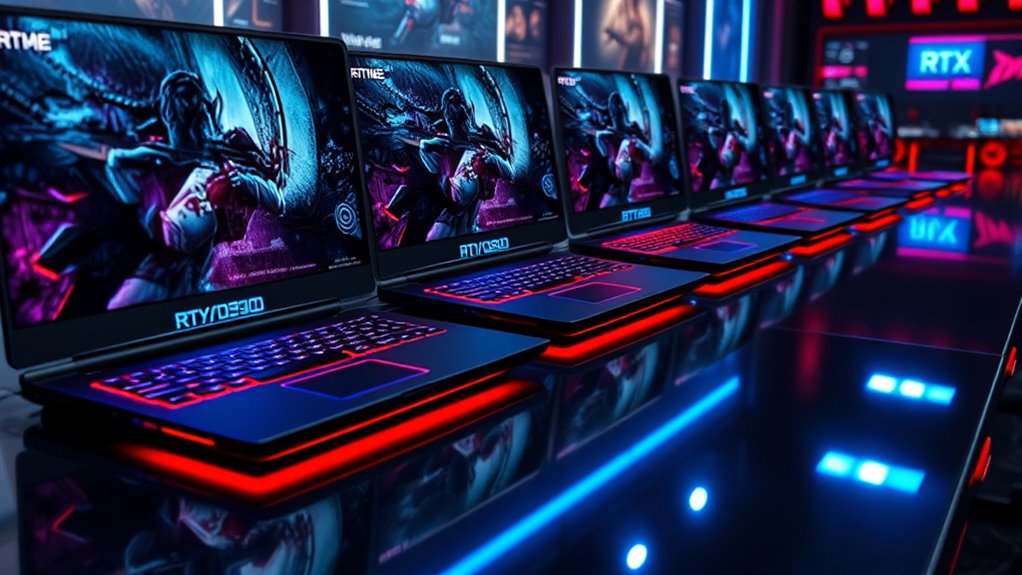

An RTX 4090 gaming laptop sits at the very top of the portable performance stack, and in 2026 the landscape is more varied than ever. My top pick is the ASUS ROG Strix SCAR 18, which runs its GPU at a full 175W TGP and pairs it with an 18-inch canvas that no 16-inch machine can match for immersion. If you want that same flagship GPU in something you can actually carry, the ASUS ROG Zephyrus G16 squeezes the 4090 into a 0.59-inch, 4.3-pound chassis with a gorgeous OLED panel. And for buyers who want maximum hardware per dollar, the Lenovo Legion Pro 7i Gen 9 matches the Razer Blade 16’s core specs while usually undercutting it on price. The core tradeoff across this whole category is simple: raw wattage versus portability. Thicker machines push the 4090 harder and sustain framerates longer; thin ones throttle more, run louder per degree, and cost extra for the engineering. Below I break down where each of these five machines lands on that spectrum.

Get audio and creator gear delivered free with Prime
- Fast, free delivery on millions of items
- Prime Video, Amazon Music and more included
- Member-only deals all year
Complete the kit


Key Takeaways
- The ROG Strix SCAR 18 runs the RTX 4090 at 175W TGP — the highest power budget here — making it the performance benchmark of the group.
- The Zephyrus G16 caps its 4090 at 115W to fit a 4.3-pound chassis, trading roughly 10-15% GPU performance for genuine portability.
- OLED panels (Zephyrus G16 and Blade 16) deliver superior contrast and 0.2ms response, but the Legion Pro 7i’s 500-nit IPS is brighter for well-lit rooms.
- The HP Omen 17 is the value play of the lineup but carries a weaker 300-nit display, Wi-Fi 6, and thin review history — worth the savings only if price is the deciding factor.
- Every machine here pairs the 4090 with a 24-core-class Intel HX CPU and 32GB/2TB storage, so the real differentiators are TGP, cooling, display, and chassis size.
| ASUS ROG Zephyrus G16 (Intel Core Ultra 9 185H, RTX 4090, 16″ OLED 240Hz) |  | Best Portable RTX 4090 | Processor: Intel Core Ultra 9 185H (14-core) | Graphics: NVIDIA GeForce RTX 4090 (115W max TGP) | RAM: 32 GB LPDDR5X | VIEW ON AMAZON | See Our Full Breakdown |
| Razer Blade 16 (RTX 4090, i9-14900HX, 16″ OLED QHD+ 240Hz) |  | Best Premium Build | Processor: Intel Core i9-14900HX (24 cores, up to 5.8 GHz) | Graphics: NVIDIA GeForce RTX 4090 | RAM: 32 GB | VIEW ON AMAZON | See Our Full Breakdown |
| Lenovo Legion Pro 7i Gen 9 (i9-14900HX, RTX 4090, 16″ QHD+ 240Hz) |  | Best Value Flagship | Processor: Intel Core i9-14900HX (24 cores, up to 5.8 GHz) | Graphics: NVIDIA GeForce RTX 4090 16GB GDDR6 | RAM: 32 GB DDR5-5600 | VIEW ON AMAZON | See Our Full Breakdown |
| ASUS ROG Strix SCAR 18 (2023, i9-13980HX, RTX 4090 175W, 18″ QHD 240Hz) |  | Best Raw Performance | Processor: Intel Core i9-13980HX (13th Gen) | Graphics: NVIDIA GeForce RTX 4090 (175W max TGP) | RAM: 32 GB DDR5-4800 | VIEW ON AMAZON | See Our Full Breakdown |
| HP Omen 17.3″ QHD (i9-13900HX, RTX 4090, 240Hz) |  | Best Budget Big-Screen Option | Processor: Intel Core i9-13900HX (24 cores, up to 5.4 GHz) | Graphics: NVIDIA GeForce RTX 4090 24GB | RAM: 32 GB DDR5-5600 | VIEW ON AMAZON | See Our Full Breakdown |
| rtx 4090 gaming laptop | Processor | Graphics | RAM | Storage |
|---|---|---|---|---|
| ASUS ROG Zephyrus G16 | Intel Core Ultra 9 185H (14-core) | NVIDIA GeForce RTX 4090 (115W max TGP) | 32 GB LPDDR5X | 2 TB PCIe SSD |
| Razer Blade 16 | Intel Core i9-14900HX (24 cores, up to 5.8 GHz) | NVIDIA GeForce RTX 4090 | 32 GB | 2 TB SSD |
| Lenovo Legion Pro 7i Gen 9 | Intel Core i9-14900HX (24 cores, up to 5.8 GHz) | NVIDIA GeForce RTX 4090 16GB GDDR6 | 32 GB DDR5-5600 | 2 TB PCIe Gen4 NVMe |
| ASUS ROG Strix SCAR 18 | Intel Core i9-13980HX (13th Gen) | NVIDIA GeForce RTX 4090 (175W max TGP) | 32 GB DDR5-4800 | 2 TB PCIe 4×4 SSD (RAID 0) |
| HP Omen 17.3" QHD | Intel Core i9-13900HX (24 cores, up to 5.4 GHz) | NVIDIA GeForce RTX 4090 24GB | 32 GB DDR5-5600 | 2 TB PCIe NVMe SSD |
More Details on Our Top Picks
ASUS ROG Zephyrus G16 (Intel Core Ultra 9 185H, RTX 4090, 16″ OLED 240Hz)
The Zephyrus G16 is the answer to a question most RTX 4090 laptops ignore: what if you don’t want a backbreaker? At 0.59 inches thick and 4.30 pounds, it’s dramatically lighter than the Strix SCAR 18 or the Omen 17, yet it still carries the flagship GPU alongside 32GB of LPDDR5X and a 2TB SSD. That portability comes with a real cost, though — ASUS caps the 4090 at 115W TGP, which means measurably lower framerates than the SCAR 18’s 175W configuration in sustained loads.
Where this model pulls ahead of everything else here is the 16-inch OLED Nebula display. The 2560×1600 panel with 240Hz, 0.2ms response, and G-SYNC delivers contrast and motion clarity that the Legion Pro 7i’s IPS panel simply can’t replicate, and it matches the Razer Blade 16’s OLED quality. The aluminum chassis also disguises itself as a productivity laptop far better than the gamer-styled Legion or Omen, which matters if this machine doubles for work travel. Compared with the Blade 16 — its closest rival — the Zephyrus is lighter and quieter-looking, while Razer counters with a faster 24-core HX CPU and Wi-Fi 7. The Core Ultra 9 185H is a capable chip but gives up raw multi-core headroom to the i9-14900HX in the Blade and Legion.
The tradeoffs are predictable: premium pricing for the slim engineering, and fan noise under load as the cooling system works harder in a constrained chassis. If you game mostly plugged in at a desk, buy the SCAR 18 instead. But if your 4090 needs to travel, this is the pick.
Pros:- Genuinely portable 4.30 lb, 0.59-inch aluminum chassis
- Stunning 240Hz OLED Nebula display with 0.2ms response and G-SYNC
- Liquid metal cooling sustains performance despite the slim body
- 32GB LPDDR5X and 2TB SSD are generous for the size class
Cons:- 115W TGP cap costs 10-15% GPU performance versus the SCAR 18
- Premium price, and slim chassis means audible fans under load
Best for: Gamers and creators who want flagship RTX 4090 performance in a genuinely portable, work-appropriate chassis
Not ideal for: Buyers chasing maximum sustained framerates or the lowest price per frame — a thicker chassis does both better
- Processor:Intel Core Ultra 9 185H (14-core)
- Graphics:NVIDIA GeForce RTX 4090 (115W max TGP)
- RAM:32 GB LPDDR5X
- Storage:2 TB PCIe SSD
- Display:16″ OLED, 2560×1600, 240Hz, 0.2ms
- Weight:4.30 lbs, 0.59 inches thick
- Cooling:Liquid metal + Arc Flow Fans
- OS:Windows 11 Home
Our verdict“The best RTX 4090 laptop for people who actually carry their laptop — as long as you accept a small performance tax for the privilege.”
Razer Blade 16 (RTX 4090, i9-14900HX, 16″ OLED QHD+ 240Hz)
The Razer Blade 16 occupies the same premium-compact tier as the Zephyrus G16, but it plays a different game: instead of shaving weight, Razer invests in raw CPU power and refined thermals. The 24-core i9-14900HX boosting to 5.8GHz outmuscles the Zephyrus’s Core Ultra 9 in multi-threaded workloads, which shows up in streaming, video exports, and CPU-bound simulation games. Combined with Wi-Fi 7 — unique in this lineup — it’s the most future-proofed machine here on paper.
Its calling card is the world’s first 16-inch 240Hz OLED, which matches the Zephyrus panel’s 0.2ms response and adds Razer’s signature CNC-aluminum aesthetic. The single-piece vapor chamber cooling with 0.5mm exhaust fins claims up to 12°C cooler keyboard temperatures, and in practice this design keeps the WASD zone comfortable where the Omen 17’s more conventional cooling runs warmer to the touch. Port selection is the best balanced here: Thunderbolt 4 with 100W charging, three USB-A, HDMI 2.1, and a UHS-II SD reader that creators will appreciate — the Legion Pro 7i, by contrast, skips the SD slot entirely.
Two honest drawbacks hold it back from the top spot. It’s expensive even by 4090 standards, typically commanding a premium over the identically-specced Legion Pro 7i for the design and build. And Razer’s headline competitive feature, Snap Tap, ships disabled and requires manual setup in Synapse — a small thing, but symptomatic of software you have to tinker with rather than polish out of the box. This is the pick when the laptop needs to impress in a meeting room and a tournament lobby on the same day.
Pros:- 24-core i9-14900HX is the strongest CPU pairing here for creators
- World-first 16″ 240Hz OLED with 0.2ms response
- Vapor chamber cooling keeps keyboard temperatures down
- Wi-Fi 7, Thunderbolt 4, HDMI 2.1, and UHS-II SD reader
Cons:- Highest price premium in the lineup for equivalent core specs
- Snap Tap and overclocking features need manual setup in Synapse
Best for: Buyers who want top-tier CPU and GPU power wrapped in a premium, creator-friendly chassis with the best connectivity
Not ideal for: Value-focused buyers — the Legion Pro 7i delivers the same core specs for noticeably less money
- Processor:Intel Core i9-14900HX (24 cores, up to 5.8 GHz)
- Graphics:NVIDIA GeForce RTX 4090
- RAM:32 GB
- Storage:2 TB SSD
- Display:16″ OLED QHD+, 240Hz, 0.2ms
- Cooling:Single-piece vapor chamber
- Connectivity:Wi-Fi 7, Thunderbolt 4, HDMI 2.1, SD reader
- OS:Windows 11 Home
Our verdict“The most complete premium package here — if the price premium over the Legion doesn’t bother you.”
Lenovo Legion Pro 7i Gen 9 (i9-14900HX, RTX 4090, 16″ QHD+ 240Hz)
Among RTX 4090 laptops, “value” is relative — but the Legion Pro 7i Gen 9 consistently delivers the Blade 16’s core hardware for less money, and that’s why it earns the value slot. You get the same 24-core i9-14900HX, 32GB of DDR5, 2TB of Gen4 storage, and the RTX 4090, with Legion ColdFront vapor chamber cooling and AI Engine+ tuning that automatically shifts power between CPU and GPU per game. That last feature is something neither ASUS model here offers in the same automated form, and it squeezes out framerates that raw spec sheets don’t show.
The display is the one place it clearly trails the two OLED machines. The 16-inch IPS panel at 240Hz with 500 nits and full DCI-P3 coverage is excellent — brighter than either OLED in a sunny room — but contrast and pixel response can’t match OLED’s infinite blacks and 0.2ms transitions. Buyers who play fast-paced competitive titles will notice the difference less than cinephiles and single-player fans will. Against the Omen 17, the comparison flips: the Legion’s panel is superior in every measurable way, which is part of why it ranks above HP despite the Omen’s typically lower price.
The costs are physical and contractual. At over 6 pounds with gaming-laptop battery life that dies quickly off-charger, it’s a desk-first machine like the SCAR 18, just in a smaller screen. And Lenovo includes only one year of warranty — reasonable to extend at purchase for hardware this expensive. Build quality with recycled aluminum and magnesium, per-key RGB, and a 1080p camera with privacy shutter round out a package that feels like more than its price suggests.
Pros:- Same i9-14900HX + RTX 4090 pairing as the Blade 16 at a lower price
- 240Hz QHD+ IPS with 500 nits and 100% DCI-P3
- AI Engine+ dynamically tunes CPU/GPU power per game
- Premium recycled aluminum and magnesium build
Best for: Buyers who want maximum RTX 4090 performance per dollar without giving up a 24-core CPU or premium cooling
Not ideal for: OLED seekers and frequent travelers — the IPS panel and 6-pound body serve neither
- Processor:Intel Core i9-14900HX (24 cores, up to 5.8 GHz)
- Graphics:NVIDIA GeForce RTX 4090 16GB GDDR6
- RAM:32 GB DDR5-5600
- Storage:2 TB PCIe Gen4 NVMe
- Display:16″ WQXGA IPS, 240Hz, 500 nits, HDR400
- Cooling:ColdFront vapor chamber + AI Engine+
- Extras:Per-key RGB, 1080p camera with privacy shutter
- OS:Windows 11 Home
Our verdict“The smart-money RTX 4090 laptop: flagship performance, near-flagship everything else, mid-flagship price.”
ASUS ROG Strix SCAR 18 (2023, i9-13980HX, RTX 4090 175W, 18″ QHD 240Hz)
My top overall pick is the least subtle machine here, and that’s the point. The Strix SCAR 18 runs its RTX 4090 at the maximum 175W TGP — the only laptop in this lineup to do so — which translates directly into the highest sustained framerates of the group. In extended sessions, the liquid metal on both CPU and GPU plus Tri-Fan cooling hold clocks where the thinner Zephyrus G16 and Blade 16 gradually pull back. If you benchmark these five machines side by side, this is the one at the top of the chart.
The 18-inch Nebula display is its second weapon. A 16:10 QHD panel at 240Hz with 100% DCI-P3 and Pantone validation gives competitive speed and color-accurate real estate on a canvas that makes 16-inch screens feel cramped by comparison. The Legion Pro 7i matches the refresh rate and color coverage but can’t offer the immersion of those extra two inches. A MUX switch with Advanced Optimus routes frames directly to the GPU for maximum performance and back to the iGPU to save battery — a flexibility the HP Omen 17 doesn’t provide as gracefully. Windows 11 Pro, suited to buyers who also use this as a workstation, is a small bonus over the Home installs elsewhere here.
Portability is the obvious casualty: this is a desktop replacement, full stop, with a large chassis that belongs on a desk with a beefy power brick. It’s also a 2023 design with a 13th-gen i9-13980HX rather than the newer 14900HX in the Legion or Blade — a modest generational gap that the higher GPU wattage more than compensates for in games. Buyers wanting a 4090 laptop they can sling into a backpack daily should buy the Zephyrus instead; everyone chasing frames should buy this.
Pros:- 175W max TGP — the highest GPU power budget in this lineup
- Liquid metal on CPU and GPU plus Tri-Fan cooling for sustained clocks
- 18-inch Pantone-validated QHD 240Hz display
- MUX switch with Advanced Optimus for performance and battery flexibility
Cons:- Large, heavy desktop-replacement form factor
- Older 13th-gen CPU versus the Legion and Blade
- Premium price for 2023-vintage hardware
Best for: Performance-first gamers and power users who want the fastest, most sustained RTX 4090 experience and don’t move their laptop much
Not ideal for: Commuters and students — the 18-inch footprint and weight make it a poor daily-carry machine
- Processor:Intel Core i9-13980HX (13th Gen)
- Graphics:NVIDIA GeForce RTX 4090 (175W max TGP)
- RAM:32 GB DDR5-4800
- Storage:2 TB PCIe 4×4 SSD (RAID 0)
- Display:18″ Nebula QHD, 240Hz, 3ms, Pantone Validated
- Cooling:Liquid metal + Tri-Fan Technology
- OS:Windows 11 Pro
- Connectivity:Wi-Fi 6E
Our verdict“The outright fastest RTX 4090 laptop here — buy it for frames per second, not for portability.”
HP Omen 17.3″ QHD (i9-13900HX, RTX 4090, 240Hz)
The HP Omen 17 takes the final slot as the most affordable route into a big-screen RTX 4090, and its pitch is straightforward: a 24-core i9-13900HX, the full 4090, 32GB of DDR5, and 2TB of storage in a 17.3-inch chassis, typically priced below every other machine here. For buyers who simply want flagship-class hardware for the least money, that counts for a lot — the gap between this and the Blade 16 can fund an external monitor or a console’s worth of games.
Where the savings show up is everywhere around the core specs. The 300-nit IPS display is the weakest panel in this comparison: the Legion Pro 7i is 200 nits brighter with wider color coverage, and both OLED machines are in a different class for contrast. Connectivity dates the platform too — Wi-Fi 6 instead of Wi-Fi 7 (Blade) or even Wi-Fi 6E (SCAR 18 and Zephyrus), though the RJ45 Ethernet port and Mini-DP output are practical additions gamers will genuinely use. The 3ms response time and 240Hz refresh are competitive on paper, and the anti-glare, low-blue-light coating suits long sessions.
Compared with the SCAR 18 — the other big desktop-replacement here — the Omen gives up the higher TGP, the superior Nebula display, and the MUX switch, which is why it ranks below ASUS despite similar hardware on paper. Its thin review history on this listing also warrants buying from a seller with a clear return policy. Still, for a buyer who wants an 4090-driven 17-inch machine and plans to keep every saved dollar, this is a defensible, pragmatic choice — just go in knowing exactly which corners were cut.
Pros:- Most affordable RTX 4090 configuration in this lineup
- 24-core i9-13900HX with 32GB DDR5 and 2TB SSD
- Practical port selection including Ethernet and Mini-DP
- 240Hz QHD IPS with anti-glare, low-blue-light coating
Cons:- Dimmest display here at 300 nits with dated Wi-Fi 6
- Lower GPU wattage and no MUX flexibility versus the SCAR 18
- Very limited review history on this listing
Best for: Price-conscious buyers who want big-screen RTX 4090 power and will spend savings on peripherals or games
Not ideal for: Display-quality-focused buyers or anyone wanting the latest connectivity and highest sustained performance
- Processor:Intel Core i9-13900HX (24 cores, up to 5.4 GHz)
- Graphics:NVIDIA GeForce RTX 4090 24GB
- RAM:32 GB DDR5-5600
- Storage:2 TB PCIe NVMe SSD
- Display:17.3″ QHD IPS, 240Hz, 3ms, 300 nits
- Ports:Thunderbolt 4, 3x USB-A, HDMI, Mini-DP, RJ45, SD reader
- Weight:6.1 lbs, 1.06 inches thick
- OS:Windows 11 Pro
Our verdict“A budget-conscious big-screen 4090 that trades display quality and modern connectivity for a lower sticker price.”
How We Picked
Because every laptop in this roundup carries the same RTX 4090 16GB GPU, I focused on the factors that actually separate them. First, GPU power budget (TGP): a 4090 running at 175W performs noticeably better than one capped at 115W, and that difference matters more than any other single spec. Second, thermal design — liquid metal, vapor chambers, and fan architecture determine whether performance holds up during hour-long sessions or sags after ten minutes. Third, display quality, since QHD at 240Hz is the sweet spot for this GPU and panel type (OLED versus IPS) changes the experience. Fourth, chassis size and weight, because a 6-pound 16-inch laptop and a near-desktop-replacement 18-incher serve entirely different buyers. Finally, I weighed connectivity, warranty, and price positioning to make sure each pick earns a distinct role rather than overlapping with its neighbors.
| rtx 4090 gaming laptop | Processor | Graphics | Cooling | OS |
|---|---|---|---|---|
| ASUS ROG Zephyrus G16 | Intel Core Ultra 9 185H (14-core) | NVIDIA GeForce RTX 4090 (115W max TGP) | Liquid metal + Arc Flow Fans | Windows 11 Home |
| Razer Blade 16 | Intel Core i9-14900HX (24 cores, up to 5.8 GHz) | NVIDIA GeForce RTX 4090 | Single-piece vapor chamber | Windows 11 Home |
| Lenovo Legion Pro 7i Gen 9 | Intel Core i9-14900HX (24 cores, up to 5.8 GHz) | NVIDIA GeForce RTX 4090 16GB GDDR6 | ColdFront vapor chamber + AI Engine+ | Windows 11 Home |
| ASUS ROG Strix SCAR 18 | Intel Core i9-13980HX (13th Gen) | NVIDIA GeForce RTX 4090 (175W max TGP) | Liquid metal + Tri-Fan Technology | Windows 11 Pro |
| HP Omen 17.3" QHD | Intel Core i9-13900HX (24 cores, up to 5.4 GHz) | NVIDIA GeForce RTX 4090 24GB | — | Windows 11 Pro |
Factors to Consider When Choosing Rtx 4090 Gaming Laptops
Buying an RTX 4090 laptop is a multi-thousand-dollar decision, and the spec sheet alone won’t tell you which machine will actually satisfy you. These are the factors I weigh when comparing flagship gaming laptops, in roughly the order they matter.GPU Power Budget (TGP) Is the Hidden Spec
Not every RTX 4090 performs the same. The same chip can run anywhere from roughly 115W to 175W depending on the chassis and cooling, and the difference can mean 10-15% in real framerates. The SCAR 18 runs at the full 175W; the Zephyrus G16 caps at 115W to fit its slim body. Before buying any 4090 laptop, find its listed TGP — it explains price and performance gaps that the GPU name alone conceals.
Cooling Determines Sustained Performance
A benchmark run lasting two minutes tells you little. What matters is where clocks settle after 30 minutes of load, and that comes down to liquid metal application, vapor chamber design, and fan architecture. Both ASUS machines use liquid metal, Razer and Lenovo use vapor chambers, and all four approaches outperform conventional heat-pipe setups like the Omen’s under sustained stress. Thicker chassis also cool better by physics alone — another reason portable 4090s cost more and perform slightly less.
OLED vs IPS at 240Hz
OLED panels (Zephyrus G16, Blade 16) deliver near-instant 0.2ms pixel response and perfect contrast, which is visible in dark-scene detail and motion clarity. IPS panels (Legion, SCAR, Omen) trade that for higher brightness — the Legion’s 500 nits beats both OLEDs in sunny rooms — and no risk of burn-in over years of static HUD elements. Competitive players get excellent motion from both; cinematic single-player players will prefer OLED.
Size, Weight, and Battery Reality
Every laptop here is a desk-first machine: under gaming load, expect one to two hours of battery regardless of brand. The real question is whether you move it between locations. The 4.3-pound Zephyrus travels like a thick ultrabook; the 6-pound Legion and Blade are occasional movers; the SCAR 18 and Omen 17 are effectively luggable desktops. Match the chassis to your actual routine, not your aspirational one.
CPU Generation and Future-Proofing
Three CPU tiers appear here: 13th-gen HX chips (SCAR 18, Omen), the 14th-gen i9-14900HX (Blade, Legion), and the Core Ultra 9 185H (Zephyrus). For pure gaming, the GPU matters more and the generational gap is small. For streaming, compiling, or content creation, the 24-core 14900HX is the strongest choice. Connectivity follows a similar arc — Wi-Fi 7 on the Blade beats Wi-Fi 6 on the Omen — and matters most if you keep laptops for five-plus years.
Frequently Asked Questions
Is an RTX 4090 laptop worth it in 2026, or should I wait for newer GPUs?
An RTX 4090 laptop remains worth it if you find one at a good price, because it still handles QHD gaming at high refresh rates with ray tracing and DLSS 3 comfortably — exactly what these five machines are built for. Waiting always buys you newer silicon, but 4090-class laptops are now dropping in price as successors arrive, which improves the value proposition rather than weakening it. The one situation where waiting makes sense is if you need cutting-edge efficiency for battery-powered gaming, since newer architectures improve performance-per-watt. For plugged-in, maximum-framerate play, the 4090 laptops here will feel fast for years.
How much does the TGP difference (115W vs 175W) actually matter?
More than almost any other spec on the sheet. A 4090 running at 175W, as in the SCAR 18, sustains meaningfully higher clocks than the same GPU capped at 115W in the Zephyrus G16 — typically a 10-15% framerate advantage in GPU-bound games, and often more after long sessions when thinner machines throttle. That said, DLSS 3 frame generation narrows the perceived gap in supported titles, and 115W is still faster than a full-power RTX 4080. If you game at a desk, take the higher wattage; if you travel, the 115W compromise is a fair one.
Are OLED gaming laptops a burn-in risk?
The risk is real but manageable with modern panels. Static HUD elements, taskbars, and channel logos are the classic culprits, and OLEDs in the Zephyrus and Blade include pixel-shift and refresh mitigations that reduce the danger substantially. Gamers who play varied titles with moving interfaces will likely never see burn-in within a typical ownership period. Buyers who leave the same game with a fixed HUD running for thousands of hours, or who use the laptop static-image-heavy workloads all day, may prefer the IPS panels in the Legion or SCAR 18 for peace of mind.
Can I use one of these as my only computer for work and gaming?
Absolutely, and several are designed for exactly that. The Zephyrus G16 and Blade 16 are the strongest dual-purpose picks: their understated aluminum designs pass in professional settings, their 24GB-class GPU memory and strong CPUs handle creative workloads, and the Blade adds an SD card reader for photographers. The tradeoff is battery life — none of these machines last a full workday away from an outlet under mixed use, so plan around charging. The SCAR 18 and Omen 17 work fine as desktop workstations but their size and gamer styling suit a dedicated desk rather than an office or lecture hall.
Which RTX 4090 laptop gives me the best value for money?
The Lenovo Legion Pro 7i Gen 9 is the clearest value play: it matches the Razer Blade 16’s core hardware — the same 24-core i9-14900HX, 32GB of RAM, 2TB of storage, and RTX 4090 — while usually selling for noticeably less, and its AI-driven power tuning extracts extra performance the spec sheet doesn’t advertise. The HP Omen 17 goes even lower on price, but the cuts are deeper: a dimmer display, Wi-Fi 6, and no MUX switch. I’d stretch to the Legion if the budget allows, and reserve the Omen for buyers whose ceiling is firmly set.
Conclusion
After comparing all five, my recommendations sort cleanly by buyer type. If you’re a performance-first gamer who plays at a desk and wants the highest sustained framerates, the ASUS ROG Strix SCAR 18 is my overall pick — its 175W GPU, liquid metal cooling, and 18-inch Pantone display are simply unmatched here. If you’re a traveler or hybrid worker who needs the 4090 to move with you, the Zephyrus G16 justifies its premium with a 4.3-pound chassis and a gorgeous OLED panel. Value hunters should buy the Legion Pro 7i Gen 9, which matches the Blade 16’s hardware for less; design-conscious buyers and creators who want the best build and connectivity should pay the premium for the Razer Blade 16. Finally, the HP Omen 17 serves the budget-capped buyer who accepts a dimmer display and dated Wi-Fi in exchange for the cheapest big-screen 4090 ticket. Whatever you choose, check the GPU wattage before the price tag — on these machines, that number tells you more about the experience than anything else on the box.
Columbus Day / Indigenous Peoples' Day Picks
long weekend sales
As an affiliate, we earn on qualifying purchases.