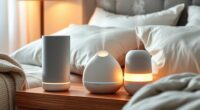
If you’re looking for effective sad lamps to lift your mood this winter, I recommend the Homedics Light Therapy Lamp with adjustable color and timer, the Circadian Optics Lumos 2.0 for desk use, and a model offering 10,000 Lux with adjustable brightness and timers. Each offers customizable settings and sleek designs perfect for your space. Keep exploring to find out which one suits your needs best and how to get the most benefit from your light therapy routine.
Key Takeaways
- Look for lamps with at least 10,000 Lux brightness for effective mood improvement.
- Choose models with adjustable color temperature, brightness, and multiple timer settings for personalized use.
- Opt for UV-free, full spectrum LED lamps to ensure safety during daily sessions.
- Select compact, portable designs suitable for desks, bedside tables, or travel.
- Prioritize lamps with longer warranties and reputable safety certifications for reliable, long-term use.
Homedics Light Therapy Lamp with Adjustable Color and Timer
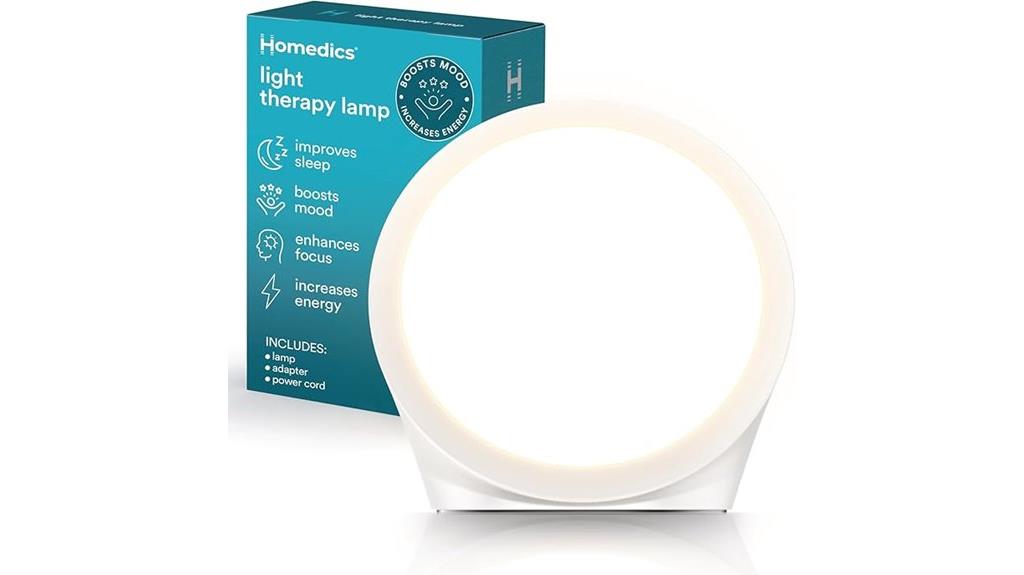
If you’re looking for a reliable way to lift your mood during the dark winter months, the Homedics Light Therapy Lamp with adjustable color and timer is an excellent choice. I appreciate how it mimics natural light with full spectrum white LEDs, ensuring safety for my eyes and skin. The adjustable color temperature helps me customize the lighting to match my body’s rhythms, enhancing comfort and effectiveness. With six timer settings, I can easily tailor session durations. Its sleek, portable design fits seamlessly into my home or office, making it easy to use whenever I need a mood boost or extra energy during those gloomy days.
Best For: individuals seeking a safe, customizable, and portable light therapy solution to improve mood, energy, and sleep during winter months or for seasonal affective disorder.
Pros:
- Mimics natural light with full spectrum white LEDs, ensuring safety for eyes and skin
- Adjustable color temperature and six timer settings for personalized use
- Compact, stylish, and portable design suitable for home or office environments
Cons:
- May require consistent daily use to see significant mood improvements
- Limited to light therapy; does not include additional features like sound or aromatherapy
- The effectiveness can vary depending on individual needs and severity of symptoms
Circadian Optics Lumos 2.0 Bright Light Therapy Desk Lamp
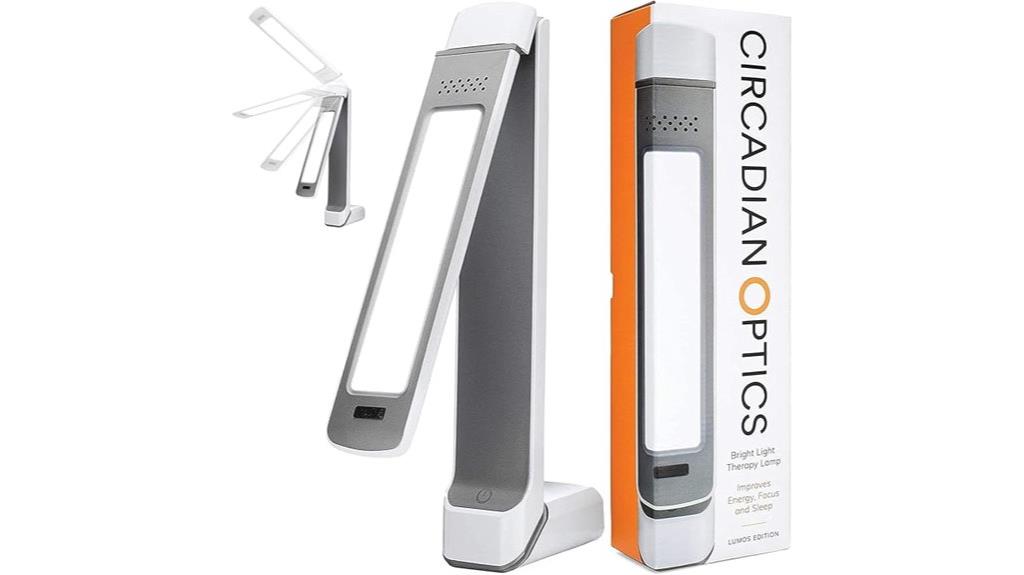
The Circadian Optics Lumos 2.0 Bright Light Therapy Desk Lamp is an excellent choice for anyone seeking a customizable, effective solution to combat winter blues. Its hyper-adjustable folding mechanism lets me position the 10,000 Lux full-spectrum light exactly how I need it, mimicking natural midday sun. The sleek, bold design fits well on my desk without taking up too much space, and the stable base keeps it secure. With a color temperature of 5500K and a lifespan of about 50,000 hours, it provides safe, consistent light therapy. This lamp helps regulate my circadian rhythm, boosting my mood, focus, and energy through the dark winter months.
Best For: individuals seeking a customizable, effective light therapy solution to improve mood, focus, and sleep during darker months or for circadian rhythm regulation.
Pros:
- Hyper-adjustable folding mechanism allows precise positioning for personalized light therapy.
- Brightness of 10,000 Lux with full-spectrum lighting and a natural midday sun color temperature of 5500K.
- Sleek, bold design with a stable, space-efficient base that complements any workspace.
Cons:
- Higher price point compared to basic desk lamps due to advanced features.
- Requires a power source and may be less portable for travel purposes.
- Some users may need to adjust positioning to find optimal light exposure for their needs.
Light Therapy Lamp with 10,000 Lux, Adjustable Brightness & Timer
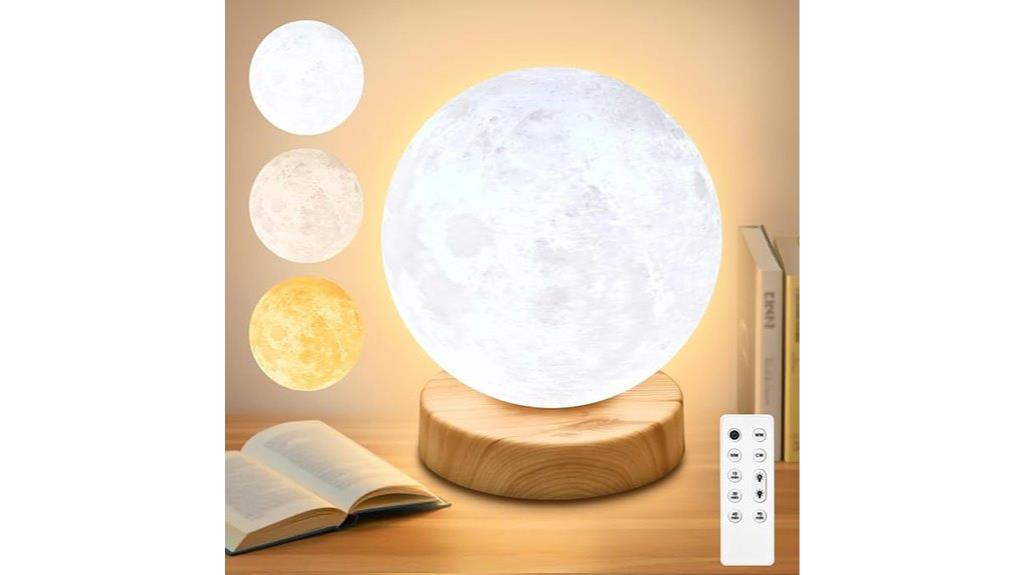
A light therapy lamp with 10,000 lux brightness and adjustable settings is an ideal choice for anyone struggling with winter blues or seasonal affective disorder. I find that its full spectrum light, with three color temperature levels, mimics natural sunlight perfectly. The four adjustable brightness options let me customize the light intensity, while the touch controls and remote make it easy to fine-tune the settings. Its calming moon design adds a tranquil touch to my space, whether I use it as a desk lamp or night light. The built-in timer and memory functions guarantee convenience, making it straightforward to incorporate into my daily routine for improved mood and energy.
Best For: those seeking natural sunlight simulation to improve mood, energy, and sleep quality during winter or in low-light environments.
Pros:
- Provides 10,000 Lux brightness with full spectrum light for effective therapy
- Adjustable brightness, color temperature, and timer for personalized use
- Elegant moon design adds a calming aesthetic to any space
Cons:
- May be too bright for sensitive users without proper adjustment
- Requires access to power outlet for operation
- Higher price point compared to basic desk lamps
Factors to Consider When Choosing a Sad Lamp for Winter Blues (Light Therapy)
When selecting a sad lamp, I consider factors like brightness levels to guarantee effective therapy and adjustable features for comfort. I also look at timer options and portability to fit my routine and lifestyle easily. Safety is key, so I prefer UV-free models that are gentle and risk-free for daily use.
Brightness Levels Needed
Choosing the right brightness level for a SAD lamp is essential to guarantee it effectively mimics natural sunlight and boosts your mood during winter. Experts recommend at least 10,000 Lux to provide the therapeutic benefits needed for mood improvement. Lower brightness levels, like 2,500 to 5,000 Lux, often require longer exposure times and may not offer significant relief. The ideal brightness varies depending on individual sensitivity; some people need higher Lux levels for noticeable benefits. Adjustable brightness options can help tailor the light to your comfort and response, making the therapy more effective. Remember, consistent use—about 20-30 minutes daily at the recommended Lux level—is key to achieving the best results. Selecting a lamp with proper brightness ensures you get the most out of your light therapy.
Adjustable Color Settings
Selecting a SAD lamp with adjustable color settings gives me the flexibility to customize my light therapy experience. I can choose warm tones to create a cozy, relaxing atmosphere or cool hues that mimic natural sunlight more closely. Different color temperatures help me simulate sunlight at various times of day, which supports my circadian rhythm and boosts my mood. Being able to tailor the colors also makes sessions more comfortable, reducing eye strain and glare during prolonged use. I appreciate that I can create a soothing environment or adjust the light to match my preferences, making therapy more effective and pleasant. Overall, adjustable color settings allow me to personalize my experience, enhancing both comfort and the benefits I get from my SAD lamp.
Timer and Convenience
A built-in timer is a practical feature that guarantees I don’t have to watch the clock during my light therapy sessions. It allows me to set specific session durations, ensuring consistent treatment without constant supervision. This helps prevent overexposure, as the lamp automatically turns off once the timer ends. I find easy-to-use controls essential, especially when I’m busy or need to stick to a routine, like early mornings. Some lamps even remember my preferred brightness and timer settings, making future sessions quicker and more convenient. Adjustable timers, ranging from 15 to 60 minutes, let me customize my therapy based on my schedule and needs. Overall, a reliable timer adds convenience and peace of mind, making my winter blues treatment more effective and hassle-free.
Design and Portability
When considering a sad lamp for winter blues, how it fits into your space and lifestyle makes a big difference. A compact design is ideal, allowing easy placement on desks, bedside tables, or countertops without taking up much room. I prefer lightweight and portable models because I can effortlessly move them between rooms or take them along on trips. Adjustable stands or flexible mounting options help me position the lamp just right for suitable light exposure. Slim profiles and minimal footprints keep my workspace or living area uncluttered. Additionally, features like integrated handles or easy-carry designs make it simple to relocate the lamp whenever needed. Overall, a well-designed, portable lamp seamlessly integrates into my daily routine and living space.
Safety and UV-Free Features
Since UV exposure can pose risks like skin damage and eye strain, choosing a UV-free sad lamp is a smart move for safe, extended use. UV-free lamps eliminate these risks by using full spectrum LEDs that mimic natural sunlight without harmful UV rays. This makes them suitable for daily use without worrying about long-term skin or eye health effects. Safety certifications and compliance with health standards further ensure the lamp’s UV-free features meet safety requirements. However, it’s important to follow proper distance and usage guidelines to maximize safety and therapeutic benefits. Even with UV-free lamps, responsible use is key. By selecting a certified, UV-free model, you can enjoy the benefits of light therapy confidently and safely throughout the winter season.
Price and Warranty
Choosing the right sad lamp involves balancing price and warranty to get the best value. Prices range from about $30 to over $200, depending on features and brand reputation. While a lower-cost model might save you money upfront, it may come with limited warranty coverage. A longer warranty—say, 3 to 4 years—often signals better quality and offers peace of mind against defects or malfunctions. Some lamps include warranties that cover repairs or replacements, making your investment more secure. Extended warranties or satisfaction guarantees, sometimes available as add-ons, further protect your purchase. I recommend comparing warranty terms carefully to ensure you’re covered without overspending. Ultimately, choosing a model with a solid warranty can save you money and hassle in the long run.
Frequently Asked Questions
Can Sad Lamps Replace Natural Sunlight Effectively?
Sad lamps can be quite effective, but they don’t fully replace natural sunlight. I’ve found that they boost my mood and energy levels, especially during winter months when sunlight is scarce. While they’re convenient and consistent, I still try to get outside when I can, because natural sunlight offers additional benefits like vitamin D. Overall, sad lamps are a helpful supplement, but they shouldn’t entirely replace time in the sun.
Are There Any Safety Concerns With Prolonged Use?
Like Icarus soaring too close to the sun, I worry about safety with prolonged lamp use. Yes, there are concerns, especially if you overexpose yourself, risking eye strain or skin issues. I recommend following the manufacturer’s guidelines and not exceeding recommended exposure times. Always consult a healthcare professional if you’re unsure, so your light therapy remains both safe and effective, helping you avoid any unintended pitfalls.
How Quickly Can I Expect Mood Improvements?
You might start feeling a difference within a few days to a week of regular use, but it varies from person to person. I recommend using the lamp consistently each morning for about 20-30 minutes. Keep in mind, some people notice improvements sooner, while for others, it takes a couple of weeks. Patience and consistency are key to experiencing the full mood-boosting benefits.
Do Sad Lamps Have Any Side Effects?
Think of sad lamps as dawn’s first light—powerful but gentle. They can cause side effects like eye strain, headache, or mild nausea if used excessively or improperly. I always recommend starting with short sessions and adjusting gradually. If you notice discomfort, it’s wise to stop and consult a healthcare professional. Remember, these lamps are tools to brighten your mood, but they need to be used wisely and carefully.
Are Specific Light Wavelengths More Beneficial?
Yes, specific light wavelengths are more beneficial for mood improvement. I’ve read that blue-enriched light around 480 nm can boost alertness and mood, while full-spectrum light mimics natural sunlight more closely. I recommend choosing a lamp that offers these wavelengths, especially if you’re dealing with winter blues. Using a device with the right spectrum can help you feel more energized and lift your spirits more effectively.
Conclusion
If you’re feeling down this winter, a sad lamp could really help lift your mood. Did you know that about 60% of people with seasonal affective disorder find relief with light therapy? It’s a simple, effective way to beat the winter blues. So, don’t wait—pick a lamp that suits your needs and start brightening your days. You deserve to feel better, even when the days are short and gray.