For most filmmakers who need a camera-mounted mic, I’d start with the RØDE VideoMic Pro+ for its onboard controls and high-pass filter; the RØDE VideoMicro II is a simpler compact pick, while the BOYA BY-BM6060 suits an XLR boom setup. The main choice is between a convenient on-camera microphone and a more involved boom configuration that can place the mic closer to the speaker. Connection type, power, wind protection, and handling noise all affect whether a mic fits your filming setup. A long shotgun tube alone won’t make dialogue sound close if the mic stays far from the subject. Read on for how all 13 options compare and which tradeoffs matter for your kind of production.

Get audio and creator gear delivered free with Prime
- Fast, free delivery on millions of items
- Prime Video, Amazon Music and more included
- Member-only deals all year
Complete the kit

Key Takeaways
- The RØDE VideoMic Pro+ earns the overall lead for filmmakers who want on-camera convenience paired with practical onboard controls; it is not a substitute for positioning a boom mic close to dialogue.
- The Movo X3-II is the more production-oriented Movo option in this lineup, with an XLR connection and included boom accessories, while the compact VXR10 and X1-Mini better suit lightweight camera or phone rigs.
- The two BOYA BY-BM6060 listings are distinct kit configurations: one explicitly names phantom power, while the other is presented for camera and DSLR use. Check the exact package and powering method before choosing.
- The Sennheiser MKE 600 listing is identified as a wireless microphone system, unlike most of the wired camera and XLR options here; verify the included components and connection details against your intended rig.
- Accessories and workflow separate several contenders: the COMICA VM20 includes an OLED display, adjustable gain, and wind protection, while the VidPro XM-55 emphasizes a broad kit rather than a single standout operating feature.
| Movo VXR10 Universal Shotgun Microphone for Camera |  | Best for On-the-Go Camera and Phone Filmmaking | Compatibility: iPhone, Android, DSLR, mirrorless, camcorder, GoPro, laptop | Body material: Aluminum | Power: Plug-in power | VIEW ON AMAZON | See Our Full Breakdown |
| Movo X1-Mini Video Shotgun Microphone for Camera and Smartphones |  | Best for Compact 24-Bit Capture | Compatibility: iPhone, Android devices, cameras, camcorders, audio recorders, tablets, laptops | Audio resolution: 24-bit | Construction: Aluminum with shock mount | VIEW ON AMAZON | See Our Full Breakdown |
| Ruittos Condenser Interview Microphone for Video and DSLR Cameras, 11 inches |  | Best for Simple Battery-Powered Interviews | Microphone form factor: Shotgun | Polar pattern: Unidirectional | Connectivity: XLR and 3.5 mm jack | VIEW ON AMAZON | See Our Full Breakdown |
| VidPro XM-55 13-Piece Professional Video & Broadcast Shotgun Microphone Kit |  | Best Accessory Kit for Field Setups | Polar pattern: Super cardioid | Connections: XLR and 3.5 mm | Power: One included AA battery | VIEW ON AMAZON | See Our Full Breakdown |
| BOYA BY-BM6060 Super-Cardioid Shotgun Condenser Microphone with Phantom Power |  | Best for XLR Production Rigs | Polar pattern: Super cardioid | Connectivity: XLR | Power options: Phantom power or AA battery | VIEW ON AMAZON | See Our Full Breakdown |
| COMICA VM20 Shotgun Microphone for Camera with OLED Power Display, Rycote Shockmount, Windscreen, Wind Muff, and Adjustable Gain | 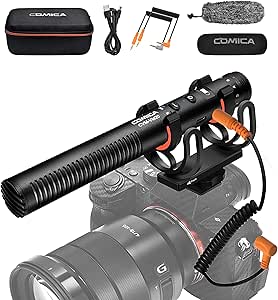 | Best for On-Camera Control | Polar pattern: Super cardioid | Connector: 3.5 mm jack | Frequency response: 15 kHz (as listed) | VIEW ON AMAZON | See Our Full Breakdown |
| RØDE VideoMic Pro+ Premium On-Camera Shotgun Microphone with High-Pass Filter |  | Best Premium On-Camera Pick | Polar pattern: Unidirectional | Frequency response: 20 Hz–20 kHz | Signal-to-noise ratio: 74 dB | VIEW ON AMAZON | See Our Full Breakdown |
| Movo X3-II Shotgun Microphone for Camera – 11” XLR Supercardioid Boom Mic for Filmmaking, DSLR Video, Interviews & Content Creation – Includes Rycote Shockmount, Grip & XLR Cables |  | Best XLR Boom Kit Value | Length: 11 in | Polar pattern: Super cardioid | Connectivity: XLR; listed connector options include XLR and 3.5 mm | VIEW ON AMAZON | See Our Full Breakdown |
| BOYA BY-BM6060 Super-Cardioid Shotgun Microphone for Camera DSLR Video |  | Best for Straightforward XLR Film Rigs | Polar pattern: Super cardioid | Connector: XLR | Power options: Phantom power or one AA battery | VIEW ON AMAZON | See Our Full Breakdown |
| Comica VM30 Wireless Shotgun Microphone for iPhone, Canon, Nikon, Sony Cameras |  | Best for Wireless Camera-to-Phone Flexibility | Connectivity: USB-C and 3.5 mm; wired and wireless modes | Polar pattern: Super cardioid | Recording format: 48 kHz/24-bit | VIEW ON AMAZON | See Our Full Breakdown |
| Ruittos 14-inch Long Shotgun Microphone for Video Recording |  | Best for Long-Run Camera Setups | Microphone form factor: Shotgun | Polar pattern: Unidirectional | Connector type: 3.5 mm jack | VIEW ON AMAZON | See Our Full Breakdown |
| RØDE VideoMicro II Ultra-Compact On-Camera Shotgun Microphone | 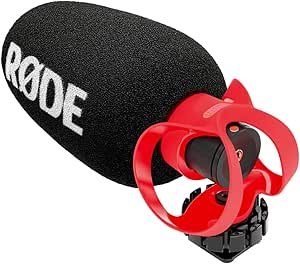 | Best Compact On-Camera Pick | Microphone form factor: Shotgun | Polar pattern: Unidirectional | Connector type: 3.5 mm jack | VIEW ON AMAZON | See Our Full Breakdown |
| Sennheiser Pro Audio Wireless Microphone System, Black (MKE600) |  | Best for Professional Power Flexibility | Model: MKE600 | Microphone type: Wireless microphone system (as listed) | Pickup: High directivity | VIEW ON AMAZON | See Our Full Breakdown |
| shotgun microphones for film | Polar pattern | Signal-to-noise ratio |
|---|---|---|
| Movo VXR10 Universal Shotgun M | — | — |
| Movo X1-Mini Video Shotgun Mic | — | — |
| Ruittos Condenser Interview Mi | Unidirectional | 80 dB |
| VidPro XM-55 13-Piece Professi | Super cardioid | 74 dB |
| BOYA BY-BM6060 Super-Cardioid | Super cardioid | 80 dB |
| COMICA VM20 Shotgun Microphone | Super cardioid | 43 dB |
| RØDE VideoMic Pro+ Premium On- | Unidirectional | 74 dB |
| Movo X3-II Shotgun Microphone | Super cardioid | 80 dB |
| BOYA BY-BM6060 Super-Cardioid | Super cardioid | 76 dB |
| Comica VM30 Wireless Shotgun M | Super cardioid | — |
| Ruittos 14-inch Long Shotgun M | Unidirectional | 80 dB |
| RØDE VideoMicro II Ultra-Compa | Unidirectional | 78 dB |
| Sennheiser Pro Audio Wireless | — | — |
More Details on Our Top Picks
Movo VXR10 Universal Shotgun Microphone for Camera
The VXR10 is the most flexible pick here for filmmakers who move between a camera and a phone. Its included device cables and adapters make it easier to switch setups than the XLR-only BOYA BY-BM6060, while the aluminum body and built-in shock mount help limit handling noise during handheld shooting. A fuzzy windscreen and carrying case also make it practical for quick outdoor interviews. The tradeoff is a simpler, plug-in-powered setup rather than the XLR workflow offered by the BOYA or VidPro XM-55. Compatibility can still depend on the exact phone or camera, and mic placement matters: aim it poorly and voices may sound muffled or distorted. I’d choose it for lightweight, run-and-gun work, not as a substitute for a dedicated boom-mic system.
Pros:- Works with a broad range of phones, cameras, computers, and action cameras
- Aluminum body and built-in shock mount suit handheld shooting
- Includes a fuzzy windscreen, carrying case, and device cables
- Compact setup is convenient for quick location interviews
Cons:- Plug-in power limits use with devices that cannot supply compatible power
- Compatibility and adapter needs vary across phone and camera models
- Directional pickup makes careful positioning important for clear dialogue
Best for: Solo filmmakers and mobile video creators who need one compact mic for compatible phones, cameras, and casual interviews.
Not ideal for: Film crews building an XLR boom setup or users whose camera or phone requires an adapter not included in the kit.
- Compatibility:iPhone, Android, DSLR, mirrorless, camcorder, GoPro, laptop
- Body material:Aluminum
- Power:Plug-in power
- Connections:3.5mm TRS/TRRS
- Included adapters:Lightning-to-3.5mm and USB-C-to-3.5mm
- Included accessories:Fuzzy windscreen, carrying case, camera cable, shock mounts, smartphone cable
Our verdict“Choose the VXR10 if you want a compact, adaptable mic for phone-and-camera filmmaking rather than an XLR-focused production setup.”
Movo X1-Mini Video Shotgun Microphone for Camera and Smartphones
The X1-Mini brings a useful step up in stated recording resolution while keeping a small, device-flexible format. Its 24-bit audio capture and included foam and furry windscreens suit creators who want room to work with dialogue in post and need basic wind protection on location. Compared with the Movo VXR10, it offers a more clearly specified capture format and broad listed device support; the VXR10, by contrast, calls out Lightning and USB-C adapters in its included accessories. The X1-Mini’s aluminum construction and shock mount are sensible for camera-top or mobile use, but it has no built-in battery and depends on the connected device for power. It also remains a compact on-camera shotgun, not a replacement for the more production-oriented XLR options such as the VidPro XM-55.
Pros:- Specified 24-bit audio capture gives creators a practical format for post-production workflows
- Listed compatibility includes phones, cameras, recorders, tablets, and laptops
- Aluminum construction and shock mount help manage handling noise
- Foam and furry windscreens cover basic indoor and outdoor use
Cons:- No built-in battery; operation relies on power from the connected device
- Some phones may need adapters beyond the listed connections
- Compact on-camera shotgun design offers less placement flexibility than an XLR boom mic
Best for: Independent filmmakers and video creators recording dialogue on compatible phones, cameras, tablets, or laptops who want a compact mic with 24-bit capture.
Not ideal for: Crews needing an XLR boom microphone, independent power, or a setup that avoids checking device and adapter compatibility.
- Compatibility:iPhone, Android devices, cameras, camcorders, audio recorders, tablets, laptops
- Audio resolution:24-bit
- Construction:Aluminum with shock mount
- Connectivity:3.5mm TRS, TRRS, USB-C
- Power:Device-powered; no built-in battery
- Included accessories:Shock mount, foam windscreen, furry windscreen, cables, carrying case
Our verdict“Pick the X1-Mini for a compact, broadly compatible setup with specified 24-bit capture, but choose an XLR model for boom-based production.”
Ruittos Condenser Interview Microphone for Video and DSLR Cameras, 11 inches
The Ruittos 11-inch microphone is a straightforward choice for interviews when a camera-mounted or stand-supported mic is more useful than a phone-first kit. Its unidirectional pickup is intended to favor the main sound source, and the included stand and wind cap support a basic interview setup. Unlike the plug-in-powered Movo VXR10, this model runs on one AA battery, so it does not depend on a compatible device power output; the tradeoff is carrying and replacing batteries. Its listed XLR and 3.5 mm connections suggest broader wiring options, though buyers should check the exact camera input and cable arrangement before a shoot. Compared with the BOYA BY-BM6060, it is a simpler interview-oriented option, but the available specifications give less detail about its frequency range and pickup performance.
Pros:- Unidirectional pickup is suited to prioritizing a speaker over surrounding sound
- Runs on one AA battery rather than relying on plug-in power
- Includes a stand and anti-wind foam cap for basic interview use
- Listed for use with cameras and camcorders
Cons:- AA battery is required and is not included
- Cable length and connection needs may not suit every camera rig
- Available specifications provide limited detail for judging tonal performance
Best for: Camera operators recording seated interviews or conference speakers who want a simple, battery-powered directional microphone and can verify the required cable connection.
Not ideal for: Phone-first filmmakers or crews who need a clearly specified XLR boom workflow, detailed frequency-response data, or included battery power.
- Microphone form factor:Shotgun
- Polar pattern:Unidirectional
- Connectivity:XLR and 3.5 mm jack
- Power source:One 1.5V AA battery
- Signal-to-noise ratio:80 dB
- Impedance:2300 ohm
- Compatible devices:Camcorder, camera
- Included accessories:Stand and anti-wind foam cap
Our verdict“Choose the Ruittos for a basic camera interview setup if its battery and cable requirements match your gear.”
VidPro XM-55 13-Piece Professional Video & Broadcast Shotgun Microphone Kit
The XM-55 makes the most sense when the kit matters as much as the microphone. Its 13-piece bundle of mounts, cables, and accessories gives a camera operator more ways to assemble a field rig than the leaner Movo VXR10 package, while its super-cardioid pickup is designed to focus on a forward sound source. The aluminum enclosure and included AA battery support a self-contained camera setup, and XLR plus 3.5 mm connections broaden wiring options. There are clear tradeoffs: the listed weight is 2.4 pounds, which can be tiring on a lightweight camera, and the stated 16 kHz frequency response may limit appeal for buyers seeking more detailed high-frequency capture. I’d favor it for accessory-rich camera work, not for the lightest handheld or boom operation.
Pros:- 13-piece kit supplies multiple mounts, cables, and accessories
- Super-cardioid pattern is designed to reduce off-axis pickup
- Aluminum enclosure is suited to regular location use
- Includes one AA battery and supports XLR and 3.5 mm connections
Cons:- Listed weight of 2.4 pounds may burden compact camera rigs
- Specified frequency response reaches 16 kHz
- Battery-powered operation requires keeping AA batteries available
Best for: Camera operators who want a bundled, battery-powered shotgun setup with multiple mounts and cables for field or broadcast-style recording.
Not ideal for: Lightweight handheld and travel filmmakers, or crews prioritizing a lighter mic and more expansive stated frequency response.
- Polar pattern:Super cardioid
- Connections:XLR and 3.5 mm
- Power:One included AA battery
- Frequency response:16 kHz
- Signal-to-noise ratio:74 dB
- Enclosure material:Aluminum
- Weight:2.4 pounds
- Included kit:13-piece kit with mounts, cables, and accessories
Our verdict“Choose the XM-55 when a broad accessory bundle outweighs the added carrying weight and you have checked its stated frequency response against your recording needs.”
BOYA BY-BM6060 Super-Cardioid Shotgun Condenser Microphone with Phantom Power
The BY-BM6060 is the strongest fit in this batch for filmmakers already working with XLR equipment. Its super-cardioid pickup, 60 Hz–20 kHz stated frequency range, and 200-ohm impedance make it a more production-oriented choice than the 3.5 mm-friendly Movo VXR10. It also offers more than one power route according to the supplied data: phantom power or an AA battery, giving a crew some flexibility between a mixer-based rig and a simpler camera setup. That flexibility does not make it a phone-ready mic, however; its XLR-only connection rules out direct use with many consumer devices without additional gear. The mic is also relatively bulky for handheld camera work. Compared with the VidPro XM-55, it is lighter by the listed figures, but it does not come with the same 13-piece kit.
Pros:- Super-cardioid pickup suits focused dialogue recording
- XLR connection fits compatible professional camera and mixer workflows
- Can use phantom power or an AA battery, according to the supplied product data
- Listed 60 Hz–20 kHz frequency range provides clear operating-range information
Cons:- XLR-only connectivity is inconvenient for many phones and consumer cameras
- Requires phantom power or an AA battery to operate
- Bulkier form is less suited to handheld camera-top use
Best for: Film crews with XLR-compatible cameras or field mixers who want a super-cardioid condenser mic for dialogue and can supply phantom power or an AA battery.
Not ideal for: Phone-first creators and filmmakers using cameras without XLR inputs who want a compact, ready-to-connect kit.
- Polar pattern:Super cardioid
- Connectivity:XLR
- Power options:Phantom power or AA battery
- Frequency range:60 Hz–20,000 Hz
- Impedance:200 ohm
- Signal-to-noise ratio:80 dB
- Weight:230 g
- Channels:1
Our verdict“Pick the BY-BM6060 if your film kit already supports XLR and you want a focused shotgun mic with flexible power options.”
COMICA VM20 Shotgun Microphone for Camera with OLED Power Display, Rycote Shockmount, Windscreen, Wind Muff, and Adjustable Gain
I’d choose the COMICA VM20 when quick audio adjustments and battery visibility matter more than a traditional XLR workflow. Its OLED power display and stepless gain control make it easier to check and shape levels on a compact camera or phone setup, while the 75/150Hz low-cut options can help curb rumble. Compared with the RØDE VideoMic Pro+, the VM20 adds a clear screen and broad device compatibility, but its listed 43 dB signal-to-noise ratio is a weaker paper specification than the RØDE’s 74 dB. The metal body and included wind protection suit mobile shoots, though one-channel 3.5 mm connectivity limits more involved sound rigs. Its controls may also take patience for beginners, and some professional cameras may need an additional cable.
Pros:- OLED display shows power status at a glance
- Stepless gain adjustment and two low-cut filter settings
- Metal construction and a compact form suit mobile camera rigs
- Rechargeable battery supports up to 60 hours and charging while in use, according to the supplied product details
Cons:- Single-channel 3.5 mm connection is limiting for professional XLR workflows
- Listed 43 dB signal-to-noise ratio trails the RØDE VideoMic Pro+ specification
- The onboard controls may feel involved for beginners
Best for: Solo filmmakers switching between a compatible smartphone, DSLR, or camcorder who want visible battery status and hands-on gain control.
Not ideal for: Sound teams building an XLR-based boom setup or recording stereo, since this is a single-channel microphone with 3.5 mm connectivity.
- Polar pattern:Super cardioid
- Connector:3.5 mm jack
- Frequency response:15 kHz (as listed)
- Signal-to-noise ratio:43 dB
- Low-cut filters:75 Hz and 150 Hz
- Gain:Stepless adjustable
- Power:Rechargeable lithium-polymer battery
- Construction:Aluminum and metal body
Our verdict“Pick the VM20 for a flexible camera-or-phone rig with visible power and direct level control, but choose an XLR mic for a boom-centered film sound kit.”
For a camera-mounted mic where clean, ready-to-use dialogue matters, I rank the RØDE VideoMic Pro+ above the more feature-forward COMICA VM20. Its listed 74 dB signal-to-noise ratio and 20 Hz–20 kHz response make it the stronger paper choice for capturing a broad range of sound with less noise, while digital switching and multiple power options make location setup more adaptable. It is still an on-camera solution, not a substitute for placing a boom mic near the speaker; its pickup perspective can sound distant when the camera is far away. Compared with the XLR-connected Movo X3-II, the RØDE is the simpler fit for a compact camera rig, but it offers less obvious flexibility for a separate recorder or boom workflow. The listed premium positioning and setup needs may not suit a bare-bones kit.
Pros:- Listed 74 dB signal-to-noise ratio
- 20 Hz–20 kHz frequency response
- Rechargeable, battery, and USB power options
- Digital switching provides direct control on the microphone
Cons:- Designed for on-camera use rather than a dedicated boom or studio setup
- May require setup to get the desired result
- Its premium positioning may be unnecessary for a simple camera rig
Best for: Filmmakers and camera operators who want a premium, self-contained on-camera mic with flexible power choices and onboard switching.
Not ideal for: Boom operators and productions needing an XLR microphone for a separate recorder, or filmmakers who routinely keep the camera far from the subject.
- Polar pattern:Unidirectional
- Frequency response:20 Hz–20 kHz
- Signal-to-noise ratio:74 dB
- Power options:Rechargeable battery, battery, or USB
- Included battery:Lithium polymer
- Weight:4.32 oz
- Dimensions:4.3 × 6.69 × 2.59 in
Our verdict“Choose the VideoMic Pro+ for a capable premium camera-mounted setup, but use an XLR boom mic when film dialogue requires off-camera placement.”
Movo X3-II Shotgun Microphone for Camera – 11” XLR Supercardioid Boom Mic for Filmmaking, DSLR Video, Interviews & Content Creation – Includes Rycote Shockmount, Grip & XLR Cables
The Movo X3-II is the clearest fit here for filmmakers moving beyond camera-top audio: its 11-inch XLR design, boom grip, shockmount, windscreens, and cables make a useful starting package for dialogue capture. It can run from phantom power or one AA battery, giving it more location flexibility than an XLR mic dependent on a single power arrangement. Its listed 80 dB signal-to-noise ratio also compares favorably on paper with the COMICA VM20’s 43 dB figure, though specs alone do not predict the sound of a complete recording chain. Against the BOYA BY-BM6060, the Movo’s included accessories make the initial rig more self-contained. The tradeoff is setup: XLR requires a compatible recorder or camera input, and boom handling still calls for careful shock isolation.
Pros:- XLR connection suits boom and recorder workflows
- Phantom-power or single-AA operation
- Includes shockmount, grip, windscreens, and XLR cables
- Listed 80 dB signal-to-noise ratio
Cons:- Requires phantom power or an AA battery and compatible recording equipment
- Handling noise remains a concern without proper shockmount use
- The 11-inch length may not fit every compact camera setup
Best for: Independent filmmakers and interview crews who need an XLR boom microphone with core mounting and cable accessories in the package.
Not ideal for: Phone-first creators or camera operators seeking a simple plug-in mic, since XLR power and recorder compatibility add setup steps.
- Length:11 in
- Polar pattern:Super cardioid
- Connectivity:XLR; listed connector options include XLR and 3.5 mm
- Frequency range:60 Hz–20 kHz
- Signal-to-noise ratio:80 dB
- Impedance:200 ohm
- Power:Phantom power or one AA battery
- Weight:4.55 oz
Our verdict“Choose the X3-II for an accessory-rich entry into XLR boom recording, but pick a compact 3.5 mm mic for a simpler camera-mounted rig.”
BOYA BY-BM6060 Super-Cardioid Shotgun Microphone for Camera DSLR Video
I’d put the BOYA BY-BM6060 on the shortlist for crews who want a conventional XLR shotgun with straightforward power choices. Its super-cardioid pickup and switchable low-cut filter are aimed at isolating dialogue and managing low-frequency rumble, while phantom-power or AA operation can accommodate different location kits. Compared with the Movo X3-II, the BOYA’s appeal is a simpler microphone-led package rather than the Movo’s broader set of supplied boom accessories. Its XLR-only connection is a sensible match for a recorder, but a poor fit for phone recording without an adapter and suitable input chain. The product data lists an 80 dB audible-noise figure, an unusually high value that makes direct noise comparisons uncertain; I would not treat it as a clear performance advantage. Plan on supplying appropriate mounting and wind protection.
Pros:- Super-cardioid pattern focuses pickup toward the subject
- Switchable low-cut filter
- Supports phantom power or one AA battery
- XLR connection suits compatible cameras and recorders
Cons:- XLR-only connectivity is inconvenient for phones and many entry-level cameras
- External power is required
- The supplied product details do not establish a dependable audible-noise comparison
Best for: Documentary and interview crews using an XLR recorder or camera input who want phantom or battery power and a low-cut option.
Not ideal for: Smartphone filmmakers or users without XLR recording gear, since adapters and a compatible power/input setup may be needed.
- Polar pattern:Super cardioid
- Connector:XLR
- Power options:Phantom power or one AA battery
- Signal-to-noise ratio:76 dB
- Channels:1
- Weight:4.6 oz (as supplied in product details)
- Warranty:2 years
Our verdict“Choose the BY-BM6060 for a basic XLR film setup with flexible power, but favor the Movo X3-II if bundled boom accessories matter more.”
Comica VM30 Wireless Shotgun Microphone for iPhone, Canon, Nikon, Sony Cameras
The Comica VM30 stands apart from the wired choices here by offering both wired and wireless recording. That can help a small crew move between a camera-mounted setup and a phone-based shoot without changing microphone systems, while its low-cut filters, gain adjustment, and safety mode add useful control. Compared with the RØDE VideoMic Pro+, the VM30’s wireless option is the bigger workflow advantage; the RØDE is the more straightforward premium on-camera pick when wireless transmission is not needed. The stated wireless range reaches 200 m in the specs, while the supplied pros list 100 m, so I would treat the range as dependent on the specific operating conditions rather than a guaranteed working distance. Two batteries and a more involved setup add friction, and wireless features do not replace close mic placement for film dialogue.
Pros:- Supports both wired and wireless recording modes
- Low-cut filters, gain adjustment, and safety mode provide recording controls
- Compatible with a wide range of listed cameras, phones, tablets, and computers
- Product details list up to 38 hours in wired mode and 14 hours in wireless mode
Cons:- Wireless setup adds pairing and configuration steps
- Requires two included lithium-metal batteries
- Listed wireless range conflicts across the supplied details: 200 m in specs and 100 m in the pros
Best for: Solo creators and small film crews switching between compatible cameras and phones who need a choice of wired or wireless capture.
Not ideal for: Crews seeking a simple XLR boom microphone or a plug-and-play camera-top solution without wireless pairing and added setup.
- Connectivity:USB-C and 3.5 mm; wired and wireless modes
- Polar pattern:Super cardioid
- Recording format:48 kHz/24-bit
- Wireless range:Up to 200 m listed in specifications; 100 m also stated in product details
- Battery life:Up to 38 hours wired; up to 14 hours wireless
- Power:Two included lithium-metal batteries
- Impedance:50 ohm
- Enclosure:Metal and plastic
Our verdict“Pick the VM30 when one mic must serve wired camera and wireless phone workflows, but choose the Movo X3-II for a conventional XLR boom kit.”
Ruittos 14-inch Long Shotgun Microphone for Video Recording
The 14-inch Ruittos makes the most sense for a camera or camcorder setup where a longer cable run is useful: its listed 8-meter cable can keep the operator farther from the recording position. Its unidirectional pickup is intended to focus on the main source, though the supplied details do not specify a supercardioid pattern or other directional measurements. Compared with the RØDE VideoMicro II, this is a larger, less portable option, but it includes a stand and foam wind cap and is described as having a metal enclosure. That longer cable may also be awkward on a compact camera rig, and the microphone needs a separate AA battery. Choose it for a straightforward fixed or interview setup; skip it if a small, battery-free on-camera mic is the priority.
Pros:- Unidirectional pickup is designed to favor the main sound source over surrounding noise.
- Eight-meter cable supports setups where the camera and operator are farther from the microphone.
- Metal enclosure and included stand suit a more stationary recording arrangement.
- Foam wind cap is included for basic wind protection.
Cons:- Requires an AA battery that is not included.
- The long cable can add bulk and tangling risk on a mobile camera rig.
- The supplied details do not specify professional boom-mic directional performance or a balanced XLR output.
Best for: Camcorder and camera operators recording interviews or presentations from a position that benefits from a long cable run.
Not ideal for: Run-and-gun filmmakers seeking a very compact, battery-free microphone or a tidy setup with minimal cable management.
- Microphone form factor:Shotgun
- Polar pattern:Unidirectional
- Connector type:3.5 mm jack
- Cable length:8 meters
- Power source:Battery powered; AA battery required
- Signal-to-noise ratio:80 dB
- Enclosure material:Metal
- Included accessories:Stand and anti-wind foam cap
Our verdict“Choose the Ruittos for a camera or camcorder setup that benefits from its long cable, but pick the RØDE VideoMicro II for lighter, simpler on-camera work.”
RØDE VideoMicro II Ultra-Compact On-Camera Shotgun Microphone
The RØDE VideoMicro II is the easiest fit here for filmmakers who want a mic to stay on a small camera without adding much weight: at 24 g, it is far more travel-friendly than the 14-inch Ruittos. Its directional pickup and Helix isolation mount target two common on-camera problems—background sound and handling vibration—while its compact format suits quick setups. It is listed as needing no batteries, though the product data also lists battery power, so check the connection and power requirements for your specific camera or phone. Unlike the Sennheiser MKE600, it does not offer listed phantom-or-battery powering or a switchable low-cut filter. Its 3.5 mm connection also limits compatibility to devices with that input.
Pros:- Very light at 24 g, keeping a compact camera rig easy to carry.
- Helix isolation mount is designed to reduce handling noise.
- Directional pickup helps prioritize sound in front of the camera.
- Works with compatible cameras and smartphones through a 3.5 mm jack.
Cons:- A 3.5 mm input is required, which rules out many professional XLR-only setups.
- Unidirectional pickup offers less flexibility than a multi-pattern microphone.
- Product data is inconsistent about battery power, so confirm power compatibility for the intended device.
Best for: Traveling filmmakers and solo creators using a camera or smartphone with a 3.5 mm input who want a lightweight on-camera mic.
Not ideal for: Boom operators or productions needing XLR connectivity, phantom power, or a documented low-cut filter for wind management.
- Microphone form factor:Shotgun
- Polar pattern:Unidirectional
- Connector type:3.5 mm jack
- Compatible devices:Camera and smartphone
- Item weight:24 g
- Dimensions:3.14 x 0.85 x 0.85 inches
- Signal-to-noise ratio:78 dB
- Audible noise:22 dB
- Isolation mount:Helix isolation mount
Our verdict“Pick the VideoMicro II for lightweight, direct-to-camera filming with a compatible 3.5 mm input; choose the MKE600 for a more adaptable professional power setup.”
Sennheiser Pro Audio Wireless Microphone System, Black (MKE600)
The Sennheiser MKE600 earns a place for productions that need more than a basic camera-top mic: its high directivity is intended to focus pickup, and a switchable low-cut filter offers a way to reduce wind rumble before recording. Its power options—phantom or battery—make it more adaptable to professional camera and audio setups than the battery-dependent Ruittos. The included foam windshield and shock mount also give buyers useful starting accessories. The listing calls it a wireless microphone system, but the supplied specs describe a microphone powered by phantom or batteries and do not identify a wireless transmitter or receiver; I would verify the exact package before planning a wireless workflow. It is a stronger fit for equipped crews than for phone-first creators who may prefer the compact RØDE VideoMicro II.
Pros:- High-directivity pickup is suited to focusing on a subject in front of the camera.
- Switchable low-cut filter helps reduce wind-related low-frequency noise.
- Phantom and battery powering accommodate different camera and audio setups.
- Foam windshield and shock mount are included.
Cons:- The supplied listing does not clarify wireless components despite calling it a wireless system.
- May need additional equipment to integrate with a particular camera or production rig.
- Less suited to minimalist phone setups than the compact RØDE VideoMicro II.
Best for: Film crews and camera operators who can use phantom power or batteries and want a directional mic with a switchable low-cut filter.
Not ideal for: Smartphone-first creators or buyers expecting a complete wireless transmitter-and-receiver kit without confirming the package contents.
- Model:MKE600
- Microphone type:Wireless microphone system (as listed)
- Pickup:High directivity
- Low-cut filter:Switchable
- Powering options:Phantom or battery powered
- Included accessories:Foam windshield and shock mount
- Color:Black
Our verdict“Choose the MKE600 when your film setup can use phantom or battery power and you want a low-cut filter, but verify the package if you expect wireless operation.”

How We Picked
I ranked these microphones around their fit for film dialogue capture, not just their stated tube length or accessory count. I compared the intended recording setup—camera shoe, smartphone, XLR boom, or wireless use—alongside practical factors such as power requirements, available controls, included mounting and wind protection, and how much extra gear a buyer may need. Because a shotgun mic’s placement affects dialogue more than its appearance, I also weighed whether each product description suggests a workable path to putting the mic close to the subject.
The VideoMic Pro+ leads for its blend of on-camera usability and controls; picks with XLR connections rank higher for crews building a boom workflow, while compact camera and phone models serve lighter kits. Broader kits can help first-time buyers, but accessories alone do not establish recording quality, so I did not let bundle size decide the order. Some listings provide limited or ambiguous setup details, including the MKE 600 wireless-system listing and the two BY-BM6060 configurations; I treat those as reasons to verify the exact package rather than assume undocumented features.
| shotgun microphones for film | Polar pattern |
|---|---|
| Movo VXR10 Universal Shotgun M | — |
| Movo X1-Mini Video Shotgun Mic | — |
| Ruittos Condenser Interview Mi | Unidirectional |
| VidPro XM-55 13-Piece Professi | Super cardioid |
| BOYA BY-BM6060 Super-Cardioid | Super cardioid |
| COMICA VM20 Shotgun Microphone | Super cardioid |
| RØDE VideoMic Pro+ Premium On- | Unidirectional |
| Movo X3-II Shotgun Microphone | Super cardioid |
| BOYA BY-BM6060 Super-Cardioid | Super cardioid |
| Comica VM30 Wireless Shotgun M | Super cardioid |
| Ruittos 14-inch Long Shotgun M | Unidirectional |
| RØDE VideoMicro II Ultra-Compa | Unidirectional |
| Sennheiser Pro Audio Wireless | — |
Factors to Consider When Choosing Shotgun Microphones For Film
I’d choose a shotgun mic by starting with the way dialogue will be recorded, then checking what the microphone needs to connect, mount, and operate in that workflow. These points can prevent a common mismatch: buying a mic that fits the camera shoe but not the audio plan for the shoot.
Match the microphone to your recording position
A camera-mounted shotgun is convenient when the camera stays near the subject, but it can capture distant dialogue when the camera is across a room or using a wide frame. A boom lets a crew place the mic nearer the speaker and outside the frame, which often matters more than choosing a longer microphone. If you work solo, decide whether you can monitor and position a boom while operating the camera. For interviews, a stand or boom pole may be more useful than an upgraded shoe mount. Avoid treating a directional pickup pattern as a way to isolate a speaker at any distance. Choose the recording position first, then select a mic format that supports it.
Check the connection and power before buying
Camera-mounted mics commonly connect through a camera input, while XLR models are aimed at recorders, mixers, or cameras with compatible inputs. Some XLR microphones require phantom power, and a setup without it may need another power source or different gear. Confirm connector type at both ends of the signal path, including adapters, cables, and any wireless receiver. An adapter can solve a plug mismatch, but it does not automatically supply power or make every connection behave as expected. This is a frequent source of avoidable silence or added setup complexity. When a product listing is unclear about power or included components, verify those details before planning a shoot around it.
Think about camera handling and mounting noise
A mic attached to a camera can pick up taps, button presses, lens movement, and vibration from the operator. A suitable shockmount helps isolate some handling noise, but it cannot remove every sound transferred through the camera or mount. Check whether the included mount fits your shoe, rig, or boom arrangement, and whether its size suits your camera. If your production relies on handheld movement, handling noise can be as disruptive as background sound. A boom setup may keep the mic away from camera controls, but it adds a pole, cable management, and another task for the crew. Choose the least complicated mounting approach that still keeps the mic close and stable.
Plan for wind and location noise
Outdoor dialogue can be spoiled by wind hitting the microphone, even when the speaker’s voice is clear indoors. A foam windscreen is useful for mild airflow, while a furry wind cover is generally intended for stronger conditions; neither makes every windy location easy to record. Check whether the package includes the type of protection your expected locations call for. Wind protection can also affect how quickly you can move between indoor and outdoor setups, so carrying compatible options may save interruptions. Traffic, ventilation, and crowds are different problems: a directional mic cannot erase noise that reaches it alongside the voice. For difficult locations, plan for quieter positioning and record room tone or ambience separately when practical.
Choose controls for the person running sound
On-mic gain, filters, and power displays can make quick adjustments easier when the operator has access to the microphone. They add less value if a separate recorder handles those settings or if the mic is overhead on a boom. A high-pass filter can reduce some low-frequency rumble, but it will not remove all wind or handling noise, and aggressive filtering can change the sound of a voice. Automatic or adjustable controls also need to match the operator’s skill and the recording environment. Beginners may prefer a clear, simple signal path over a mic with settings they cannot monitor. Before paying for extra controls, decide who will adjust them and how the recorded signal will be checked.
Budget for the whole sound kit, not just the mic
A working film sound setup may also need a boom pole, XLR cable, recorder or compatible camera input, headphones, wind protection, and a way to monitor levels. A bundle can reduce the number of separate purchases, but inspect its contents rather than assuming every accessory suits professional use. A phone-compatible mic may serve a small creator kit well but may not slot neatly into an XLR sound cart. On the other hand, a boom-ready microphone can require more supporting gear and another crew role. Spend more when a mic’s connection, controls, or supplied mounting gear solve a real workflow problem. Keep funds for monitoring and positioning, since those often matter more than simply moving to a longer microphone.
Frequently Asked Questions
Should I use a camera-mounted shotgun mic or put one on a boom?
I’d use a camera-mounted mic when the camera can stay close to the speaker and a fast, compact setup matters most. For scripted scenes, interviews, or wider shots, a boom can place the mic nearer the voice while keeping it out of frame. That closer position often matters more than moving to a longer shotgun model. A boom also adds work: someone needs to hold or position it, watch the frame, and manage the cable. If you film alone, choose based on what you can reliably operate and monitor.
Can I connect an XLR shotgun microphone directly to a DSLR or mirrorless camera?
Only if the camera has a compatible XLR input or you add an appropriate adapter or audio interface. Check whether the microphone needs phantom power and whether the camera or connecting device can provide it. A physical connector adapter does not necessarily provide the required power or suitable gain control. Also check how you will monitor levels, since many cameras offer limited audio controls. If your camera has only a small mic input, a self-powered camera mic may be a simpler match.
Is a longer shotgun microphone always better for film dialogue?
No. A longer tube can be suited to a more directional design, but it does not make distant dialogue sound close or remove noise from a busy location. Placement, distance, room acoustics, and correct aiming all shape the result. A long mic can also be less convenient on a small camera rig or in tight interiors. I’d prioritize a setup that lets you position the microphone near the speaker, then select a length that fits the locations and crew.
What should I check when two listings use the same microphone model name?
Compare the exact model suffix, included accessories, power method, connector, and intended use rather than relying on the shared name. In this roundup, the BOYA BY-BM6060 listings describe different configurations, and their details should not be treated as interchangeable. Check whether a shockmount, wind cover, cable, or power option is actually included in the package you plan to buy. Also confirm compatibility with your camera or recorder. If the listing leaves a key setup detail vague, verify it before making the mic part of a production plan.
Does a wireless shotgun microphone replace a dedicated wireless lavalier system?
Not automatically. A wireless shotgun setup sends audio without a cable running to the camera, but the microphone still needs suitable placement and a clear path for capturing dialogue. A lavalier clips close to the speaker and can be more practical when the subject moves or the mic must stay hidden. A shotgun can capture a more open perspective, which may suit interviews or camera-facing work. Compare the transmitter, receiver, mounting approach, and connection included in the specific kit; the product name alone does not confirm how it fits your rig.
Conclusion
For a flexible camera-mounted starting point, I’d choose the RØDE VideoMic Pro+ as best overall. The Movo VXR10 is my best value-style pick for a lightweight, straightforward camera setup, while the RØDE VideoMicro II is the most compelling compact option when keeping a rig small matters. Beginners who want a broad accessory bundle can look at the VidPro XM-55, but should check that the kit components suit their camera and workflow. For a boom-oriented setup, the Movo X3-II stands out for its XLR connection and included accessories; for onboard display and adjustment features, the COMICA VM20 is the more control-focused choice. I’d treat the Sennheiser MKE 600 listing as a specific-needs option only after confirming what the described wireless system includes. The best fit comes down to where the mic will sit, what powers it, and who will monitor the sound.
Halloween Picks
halloween
As an affiliate, we earn on qualifying purchases.