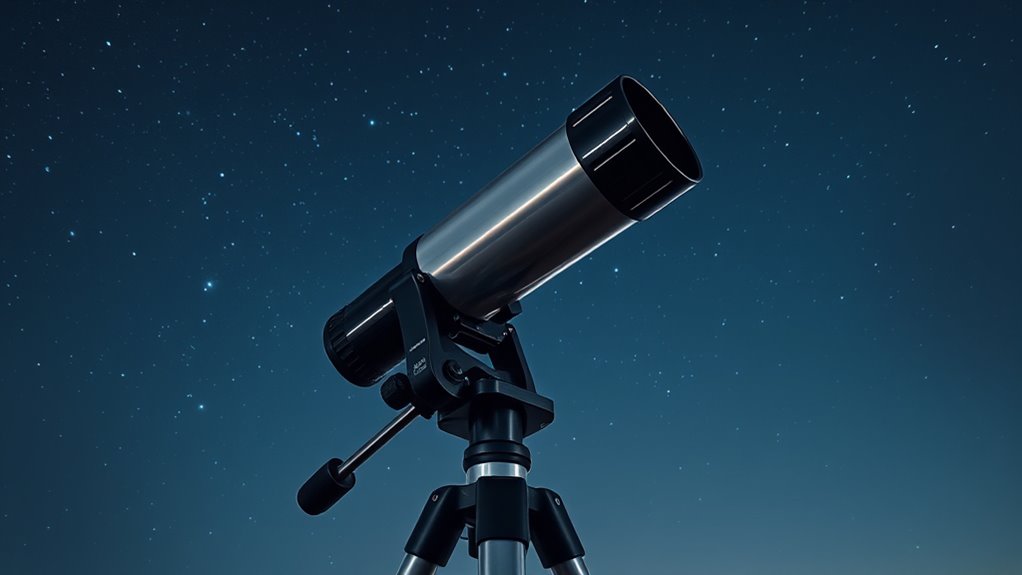

Choosing the right telescope for astrophotography can be challenging, as it involves balancing image quality, ease of use, and budget. The Celestron NexStar 8SE stands out as the best overall due to its reliable computerized mount and versatile optics. For those prioritizing portability, the DWARFLAB Dwarf Mini Smart Telescope offers compact convenience, while the SVBONY SV555 APO appeals to serious enthusiasts seeking high-quality imaging capabilities. The main tradeoffs in this category revolve around complexity versus ease of use and cost versus performance. Keep reading for a detailed breakdown of each option to help you find the best fit for your astrophotography goals.

Get audio and creator gear delivered free with Prime
- Fast, free delivery on millions of items
- Prime Video, Amazon Music and more included
- Member-only deals all year
Complete the kit


Key Takeaways
- The top-ranked telescopes combine high-quality optics with user-friendly features, especially for beginners and intermediate users.
- Premium models like the Celestron NexStar 8SE and SVBONY SV555 APO offer superior imaging but come with higher costs and complexity.
- Portability is a key factor in choices like the DWARFLAB Dwarf Mini, which sacrifices some aperture and detail for compactness.
- Computerized mounts significantly simplify tracking and imaging, making them a priority for serious astrophotographers.
- Budget options like the Gskyer 70mm provide decent entry points but may struggle with long-exposure astrophotography quality.
| DWARFLAB Dwarf Mini Smart Telescope – Portable Astronomy Telescope |  | Best for Ultra-Portable Astrophotography on the Go | Weight: 1.85 lbs | Sensor: Sony IMX662 | Sensor Size: 1/2.8-inch | VIEW ON AMAZON | See Our Full Breakdown |
| Gskyer 70mm Aperture 400mm AZ Mount Astronomical Refracting Telescope for Kids and Beginners | 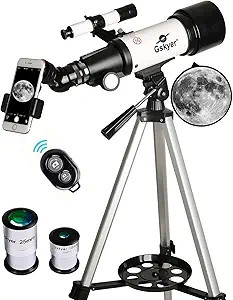 | Best for Entry-Level and Family Astronomy | Aperture: 70mm | Focal Length: 400mm | Magnification: Variable with accessories | VIEW ON AMAZON | See Our Full Breakdown |
| SVBONY SV503 Telescope for Adults, 102mm Aperture, F7 ED Refractor |  | Best for Serious Astrophotographers Seeking Sharp, Color-Free Images | Aperture: 102mm | Focal Length: 714mm | Focal Ratio: F7 | VIEW ON AMAZON | See Our Full Breakdown |
| MEEZAA 150EQ Newtonian Reflector Telescope for Adults and Beginners |  | Best for Bright Deep-Sky Imaging and Beginners | Aperture: 150mm | Focal Length: 650mm | Magnification Range: 26X to 130X | VIEW ON AMAZON | See Our Full Breakdown |
| DWARFLAB Dwarf 3 Smart Telescope, App-Controlled Astrophotography Camera |  | Best for Versatile Day and Night Imaging on the Move | Weight: 3 lb / 1.35 kg | Lens System: Dual imaging (telephoto and wide-angle) | Auto-Tracking: Yes, 4K clarity | VIEW ON AMAZON | See Our Full Breakdown |
| Celestron NexStar 8SE Computerized Telescope – Schmidt-Cassegrain |  | Best Overall for Versatile Astrophotography | Aperture: 8 inches | Optics Type: Schmidt-Cassegrain | Mount: Computerized GoTo | VIEW ON AMAZON | See Our Full Breakdown |
| SVBONY SV555 APO Astrophotography Refractor Telescope, F4.5-F22, 54mm Aperture, Full-Frame Compatibility, EAF Mount Kit Included |  | Best for Portable, Precise Deep-Sky Imaging | Optical Tube Length: 24.3 centimeters | Objective Lens Diameter: 54mm | Weight: 3.8 kg | VIEW ON AMAZON | See Our Full Breakdown |
| Celestron Advanced VX 8″ Schmidt-Cassegrain Computerized EQ Telescope |  | Best for Stable, High-Resolution Deep-Sky Imaging | Aperture: 8 inches | Focal Length: 2032mm | Eyepiece: 25mm | VIEW ON AMAZON | See Our Full Breakdown |
| telescopes for astrophotography | Aperture | Focal Length |
|---|---|---|
| DWARFLAB Dwarf Mini Smart Tele | — | — |
| Gskyer 70mm Aperture 400mm AZ | 70mm | 400mm |
| SVBONY SV503 Telescope for Adu | 102mm | 714mm |
| MEEZAA 150EQ Newtonian Reflect | 150mm | 650mm |
| DWARFLAB Dwarf 3 Smart Telesco | — | — |
| Celestron NexStar 8SE Computer | 8 inches | — |
| SVBONY SV555 APO Astrophotogra | 54mm | — |
| Celestron Advanced VX 8" Schmi | 8 inches | 2032mm |
More Details on Our Top Picks
DWARFLAB Dwarf Mini Smart Telescope – Portable Astronomy Telescope
The DWARFLAB Dwarf Mini Smart Telescope stands out for its exceptional portability, weighing just 1.85 lbs, making it ideal for those who want to carry their astrophotography setup on outdoor adventures. Unlike larger, more complex models like the Celestron NexStar 8SE, this device emphasizes ease of transport and quick setup with app control and auto GOTO, though it sacrifices some optical detail due to its compact size. Its advanced imaging features, including long exposure support, are surprisingly robust for such a small device, but it relies heavily on a smartphone app for full functionality, which might be limiting for users seeking standalone operation.
Pros:- Extremely lightweight and compact, perfect for travel
- Easy app control with integrated star maps
- Supports long exposure photography and cloud processing
Cons:- Dependent on smartphone app, which may limit flexibility
- Limited optical specifications, less suitable for detailed astrophotography
Best for: Travelers and outdoor enthusiasts who prioritize portability and simple setup for astrophotography.
Not ideal for: Users seeking a dedicated, high-performance telescope for deep-sky imaging without reliance on smartphones.
- Weight:1.85 lbs
- Sensor:Sony IMX662
- Sensor Size:1/2.8-inch
- Pixel Size:2.9μm
- Exposure Support:up to 90 seconds
- Connectivity:USB-C
Our verdict“This is best suited for casual astrophotographers who need a portable, easy-to-use device for quick captures outdoors.”
Gskyer 70mm Aperture 400mm AZ Mount Astronomical Refracting Telescope for Kids and Beginners
The Gskyer 70mm Refractor offers an accessible entry point into astrophotography and stargazing, especially for kids and beginners. Its fully coated optics and included smartphone adapter make capturing lunar and planetary shots straightforward, but its modest 70mm aperture limits high-magnification imaging compared to larger scopes like the MEEZAA 150EQ. The AZ mount and lightweight design make it portable, yet the basic mount may struggle to support heavier accessories or precise tracking needed for detailed astrophotography. This model is perfect for casual use and learning but less suited for serious deep-sky imaging.
Pros:- Affordable and easy to set up for beginners
- Includes smartphone adapter and remote for simple imaging
- Lightweight and portable for travel and outdoor use
Cons:- Limited magnification potential for detailed imaging
- Basic mount may not support heavy or advanced accessories
Best for: Parents, students, and newcomers wanting a simple, portable telescope for casual astrophotography and exploration.
Not ideal for: Advanced users aiming to do detailed deep-sky astrophotography or require stable, high-precision tracking.
- Aperture:70mm
- Focal Length:400mm
- Magnification:Variable with accessories
- Finder Scope:5×24 with cross-hair lines
- Mount:AZ Mount
- Tripod:Adjustable aluminum alloy
Our verdict“This telescope is ideal for beginners and families seeking a user-friendly, portable device for casual astrophotography.”
SVBONY SV503 Telescope for Adults, 102mm Aperture, F7 ED Refractor
The SVBONY SV503 excels in delivering high-quality images thanks to its 102mm ED glass lens and F7 focal ratio, making it one of the better options for astrophotography that demands sharpness and true color. Compared to the MEEZAA 150EQ, it offers more refined optical quality but at the cost of portability; it’s heavier and less suited for casual outings. Its dual-speed focuser and 360° field rotator facilitate precise camera adjustments, yet its manual focus can be a hurdle for beginners. While it lacks a finderscope, its optical performance makes it a worthwhile choice for those ready to invest in serious imaging.
Pros:- High-quality ED glass minimizes chromatic aberration
- Dual-speed focuser and field rotator enable precise focusing
- Fully multi-coated optics improve image contrast and clarity
Cons:- Heavier and less portable, requiring a stable mount
- Manual focus may be less convenient for quick imaging adjustments
Best for: Intermediate to advanced astrophotographers focused on capturing detailed, color-accurate images of deep-sky objects.
Not ideal for: Beginners or casual users who prefer fully automated setups or lightweight, portable scopes.
- Aperture:102mm
- Focal Length:714mm
- Focal Ratio:F7
- Objective Lens:102mm ED
- Optical Coating:Fully Multi-Coated
- Field of View:1.45 degrees
Our verdict“This refractor is best suited for dedicated astrophotographers seeking high optical quality and precise control, with less focus on portability.”
MEEZAA 150EQ Newtonian Reflector Telescope for Adults and Beginners
The MEEZAA 150EQ provides a large 150mm aperture that captures detailed images of the Moon, planets, and some deep-sky objects with ease. Its stable German equatorial mount allows smooth tracking, which is critical for astrophotography, especially when compared to simpler altazimuth mounts like on the Gskyer 70mm. While assembly may be time-consuming, its comprehensive accessory set and sturdy tripod make it a practical choice for beginners ready to grow into more serious imaging. However, its weight and setup complexity can be barriers for casual users or those seeking quick setups.
Pros:- Large 150mm aperture for bright, detailed images
- Stable equatorial mount with smooth tracking
- Complete accessories for versatile viewing and imaging
Cons:- Assembly can be time-consuming and complex
- Heavy tripod may be cumbersome for transport
Best for: Beginner and casual astronomers wanting a large aperture and tracking capabilities for deep-sky and planetary imaging.
Not ideal for: Users seeking a lightweight, portable scope for quick trips or minimal setup effort.
- Aperture:150mm
- Focal Length:650mm
- Magnification Range:26X to 130X
- Mount Type:German Equatorial
- Tripod Material:Stainless steel
- Included Accessories:Eyepieces, Barlow, finderscope, moon filter
Our verdict“This telescope makes sense for beginners eager to explore deep-sky astrophotography with a stable mount and ample light-gathering power.”
DWARFLAB Dwarf 3 Smart Telescope, App-Controlled Astrophotography Camera
The DWARFLAB Dwarf 3 offers a unique combination of dual lenses for daytime and nighttime imaging, with a focus on portability and ease of use, making it an interesting alternative to larger, more specialized astrophotography setups like the SVBONY SV503. Its app-controlled auto-tracking and 4K clarity elevate its usability for beginners and outdoor users who want quick results, though its advanced features come with a higher price tag. The limited information on battery life and power options suggests this is best for short sessions rather than extended imaging marathons.
Pros:- Lightweight and portable for travel and outdoor use
- Dual lens system for versatile imaging during day and night
- Simplified app interface with cloud processing for beginners
Cons:- Limited information on power options and battery life
- Potentially high cost for the feature set
Best for: Outdoor adventurers and hobbyists seeking a compact, multi-purpose device for daytime and nighttime imaging without the bulk of traditional telescopes.
Not ideal for: Dedicated astrophotographers requiring extensive manual control or high-end optical performance.
- Weight:3 lb / 1.35 kg
- Lens System:Dual imaging (telephoto and wide-angle)
- Auto-Tracking:Yes, 4K clarity
- Connectivity:USB-C, app-controlled
- Included Accessories:Carrying bag, filters, pouch
Our verdict“This telescope is best for hobbyists wanting a portable, all-in-one device that handles both daylight and astrophotography with ease.”
Celestron NexStar 8SE Computerized Telescope – Schmidt-Cassegrain
The Celestron NexStar 8SE stands out for its large 8-inch aperture, which captures more light and reveals finer details in deep-sky objects compared to smaller scopes like the SVBONY SV555. Its fully automated GoTo system simplifies locating celestial targets, making it ideal for astrophotographers who want both ease of use and impressive image quality. While its compact design enhances portability, it remains somewhat heavy, requiring a sturdy setup. Its higher price reflects its advanced features, which may be a stretch for beginners. Compared to the Celestron Advanced VX 8”, it offers similar optics but with a more user-friendly interface and smaller footprint, though at the expense of some stability in rough terrains. This model is best suited for amateur astronomers seeking a balance of power and convenience, especially for deep-sky imaging. However, its weight and initial setup need consideration for those frequently traveling or new to mounting systems.
Pros:- Large 8-inch aperture captures detailed images of faint objects
- Fully automated GoTo system simplifies object locating
- SkyAlign technology allows quick and easy setup
Cons:- Relatively heavy and less portable for frequent travel
- Requires initial setup and alignment, which might be time-consuming
Best for: Amateur astronomers who want a versatile, ready-to-go telescope capable of detailed deep-sky imaging with ease of use.
Not ideal for: Travelers or users who prioritize lightweight, portable setups, as the NexStar 8SE is relatively bulky and requires some setup effort.
- Aperture:8 inches
- Optics Type:Schmidt-Cassegrain
- Mount:Computerized GoTo
- Object Database:40,000+ objects
- Warranty:2 years
Our verdict“This telescope is well-suited for dedicated astrophotographers who value power and convenience over portability.”
SVBONY SV555 APO Astrophotography Refractor Telescope, F4.5-F22, 54mm Aperture, Full-Frame Compatibility, EAF Mount Kit Included
The SVBONY SV555 APO makes a compelling choice for astrophotographers seeking a high-quality, portable refractor. Its Petzval triplet lens provides exceptional image clarity and minimal aberrations, outperforming basic achromats like some entry-level refractors. The adjustable aperture from F4.5 to F22 offers versatility, allowing for wide-field or more detailed imaging depending on conditions. Its full-frame sensor compatibility supports expansive fields of view, ideal for deep-sky objects. The included EAF mount kit streamlines focusing, especially valuable for imaging sessions. Compared with the Celestron NexStar 8SE, it excels in portability and specialized imaging flexibility but falls short in raw light-gathering power. Its weight at 3.8 kg may be a consideration for those needing ultra-lightweight gear. This scope is perfect for dedicated astrophotographers who prioritize image quality and portability over large apertures, though manual focusing can require extra effort.
Pros:- High-quality Petzval triplet lens yields clear, aberration-free images
- Adjustable aperture from F4.5 to F22 offers imaging flexibility
- Full-frame sensor support enables wide-field astrophotography
- Includes EAF mount kit for precise, automated focusing
Cons:- Relatively heavy at 3.8 kg, less ideal for ultralight travel
- Manual focus may demand additional effort for fine adjustments
Best for: Astrophotographers who need a portable, high-precision refractor capable of detailed deep-sky imaging with full-frame sensors.
Not ideal for: Users who prefer large aperture scopes for broad sky surveys or those who need ultra-light gear for frequent transport.
- Optical Tube Length:24.3 centimeters
- Objective Lens Diameter:54mm
- Weight:3.8 kg
- Aperture:54mm
- Focus Type:Manual
- Full-Frame Compatibility:Yes
Our verdict“This scope is ideal for astrophotographers seeking high-quality, portable imaging with adjustable focal ratios and precise focusing capabilities.”
Celestron Advanced VX 8″ Schmidt-Cassegrain Computerized EQ Telescope
The Celestron Advanced VX 8″ combines high-end optics with a solid German Equatorial mount, making it a prime choice for serious astrophotographers. Its StarBright XLT coatings enhance image brightness and contrast, surpassing the basic coatings on some other models. The computerized mount with a vast object database supports precise star tracking, crucial for long-exposure imaging. Its sturdy tripod and accessories ensure stability during extended sessions. Compared to the NexStar 8SE, it offers a more robust mount and better stability, but at the cost of increased weight and complexity. This setup is best suited for users with a dedicated observing space who want to capture detailed deep-sky images. However, its size and assembly requirements could deter casual or mobile users.
Pros:- High-quality StarBright XLT coatings for bright, detailed images
- Sturdy German Equatorial mount with precise GoTo tracking
- Large object database simplifies locating faint objects
- Includes comprehensive accessories for immediate use
Cons:- Heavy and bulky, requiring a stable setup area
- More complex assembly process may challenge beginners
- Higher price point for entry-level users
Best for: Intermediate to advanced astrophotographers who need a stable platform for high-resolution deep-sky imaging and long exposures.
Not ideal for: Beginners or travelers who need a lightweight, easy setup, as the Advanced VX is relatively bulky and complex to assemble.
- Aperture:8 inches
- Focal Length:2032mm
- Eyepiece:25mm
- Magnification:102x (up to 480x with optional eyepieces)
- Mount:Advanced VX German Equatorial
- Weight Capacity:30 lbs
Our verdict“This telescope excels for dedicated astrophotographers seeking stability and high-resolution imaging, provided they are prepared for its size and setup complexity.”

How We Picked
I selected these telescopes based on a combination of performance, usability, build quality, and value specifically for astrophotography. Priority was given to models that offer stable tracking, high-quality optics, and suitable mounts for long exposure imaging. I also considered ease of setup and learning curve, as well as user reviews and expert opinions. The ranking reflects how well each telescope balances these factors, with a focus on those that serve both beginners and more advanced astrophotographers while considering different budget levels.Factors to Consider When Choosing Telescopes For Astrophotography
When choosing a telescope for astrophotography, several key factors impact your success and satisfaction. It’s not just about aperture size; mount stability, camera compatibility, and overall ease of use play critical roles. Knowing what to prioritize can help avoid common pitfalls like underestimating the importance of tracking accuracy or overinvesting in features you won’t use. Here are the main considerations to keep in mind:Aperture Size and Optical Quality
The aperture determines how much light your telescope can gather, directly impacting the clarity and detail of your images. Larger apertures typically produce better results, but they also add weight and cost. For astrophotography, a high-quality optical system is more important than sheer size, as poor optics can negate the benefits of a bigger aperture. Look for models with premium lenses or mirrors that minimize aberrations and produce sharp images across the frame.
Mount Type and Tracking Stability
A reliable mount is essential for astrophotography, as long exposure images require precise tracking of celestial objects. Computerized GoTo mounts simplify target acquisition and tracking, reducing star trails and image blur. Manual mounts or less stable setups will demand more skill and patience, which can be frustrating for beginners. Investing in a sturdy, motorized mount often justifies the higher initial cost with significantly better image quality and ease of use.
Ease of Use and Learning Curve
Some telescopes come with complex setups and steep learning curves, which can be discouraging for newcomers. Features like automated alignment, user-friendly interfaces, and integrated cameras make the process more approachable. However, more advanced systems often require additional accessories and software familiarity. Consider your experience level and willingness to learn before choosing a highly automated or technical model.
Camera Compatibility and Imaging Features
Ensure the telescope supports your preferred imaging equipment, whether DSLR, dedicated astro cameras, or smartphone adapters. Some models include features like built-in electronic focusers, full-frame compatibility, or specialized mounts that facilitate high-quality astrophotography. Compatibility issues can lead to wasted time and money, so verify specifications carefully before purchase.
Budget and Long-term Investment
Astrophotography can be an expensive hobby, especially when considering accessories like mounts, cameras, and filters. While cheaper telescopes may be suitable for casual observing or short exposures, they often fall short for deep-sky imaging. Investing in a higher-quality model can save frustration and improve results over time, but it’s wise to balance your current needs with future growth. Consider starting with a mid-range option if you’re unsure, then upgrading as you gain experience.
Frequently Asked Questions
Can I do astrophotography with a beginner telescope?
Yes, but your results will depend on the quality of the mount and optics. Entry-level telescopes can produce decent images of the moon and planets, especially if they come with computerized mounts and tracking features. However, deep-sky imaging requires more stability, precise tracking, and often additional accessories, which can be challenging for beginners. Starting with a model that offers good tracking and easy setup can help you progress without frustration.
Do I need a specialized astrophotography telescope or can I use a regular telescope?
Many regular telescopes can be used for astrophotography, but dedicated astrophotography models tend to offer better stability, tracking, and compatibility with cameras. Refractors with flat-field optics, for example, minimize distortions across the image frame. Reflectors and SCTs can work too, but they often require more precise collimation and adjustment. For serious imaging, investing in a telescope designed specifically for astrophotography generally yields better results.
Is a computerized mount necessary for astrophotography?
While not strictly necessary, a computerized mount significantly simplifies the process, especially for long exposure imaging. It allows for precise tracking of celestial objects, reduces star trails, and makes target acquisition faster. Manual mounts can work for short exposures or planetary imaging but tend to be more challenging and time-consuming. For most amateurs aiming for high-quality deep-sky images, a computerized mount is a worthwhile investment.
What size aperture should I look for as a beginner?
Apertures between 70mm and 130mm are typically manageable for beginners and still capable of capturing impressive images of the moon and planets. Larger apertures improve light-gathering ability but also increase weight, complexity, and cost. Starting with a moderate aperture that balances portability and image quality allows you to learn the fundamentals without becoming overwhelmed or overspending prematurely.
How important is software compatibility for astrophotography?
Software plays a crucial role in capturing, stacking, and processing astrophotos. Compatibility with your mount and camera is essential to streamline your workflow. Many systems support popular astrophotography software like Sequence Generator Pro, PHD2, or Sharpcap, which can automate focusing, guiding, and image stacking. Ensuring your telescope and accessories are compatible with your preferred software helps prevent technical headaches and enhances your imaging capabilities.
Conclusion
For general enthusiasts and those new to astrophotography, the Celestron NexStar 8SE offers a reliable, all-around solution with excellent tracking and optics. Budget-conscious beginners should consider the Gskyer 70mm for casual lunar and planetary imaging. Serious hobbyists and those with a focus on deep-sky imaging will find the SVBONY SV555 APO and Celestron Advanced VX 8 worth the investment for their superior quality and features. Those prioritizing portability or entry-level use might lean toward the DWARFLAB Dwarf Mini. Overall, your choice depends on your experience level, desired results, and budget—match these factors carefully to find the best fit.
As an affiliate, we earn on qualifying purchases.Halloween Picks
halloween