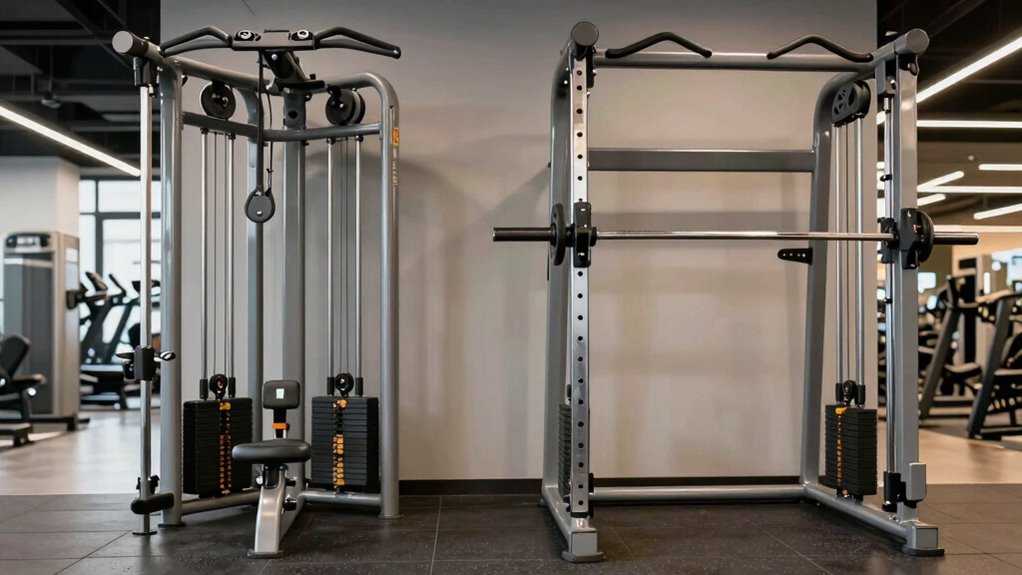

Choosing between a functional trainer and a Smith machine hinges on your workout style, space constraints, and training needs. The Inspire Series FT2 PRO stands out for its versatility and safety features, making it ideal for full-body routines and beginners. The REP Arcadia offers extensive cable options and customization, perfect for experienced lifters seeking variety. Meanwhile, the Inspire SF3 blends Smith machine stability with functional cable training, suited for those who want both strength and versatility in one machine. Lastly, the RitKeep Smith Machine excels as an all-in-one powerhouse, supporting heavy weights and complex routines. Understanding these differences helps you decide whether you prioritize safety, variety, or raw strength in your home gym.

Get audio and creator gear delivered free with Prime
- Fast, free delivery on millions of items
- Prime Video, Amazon Music and more included
- Member-only deals all year
Complete the kit


Key Takeaways
- Functional trainers excel in versatility, offering a wide range of cable-based exercises for full-body training.
- Smith machines provide stability and safety for heavy lifts and beginners, often with integrated weight stacks and safety bars.
- Size and weight are major considerations: Smith machines tend to be bulkier and heavier, requiring more space.
- Price varies significantly, with multi-function machines like RitKeep‘s offering extensive features at a premium.
- Your choice depends on whether you prioritize exercise variety and functional movement or heavy lifting and safety.
| Inspire Series FT2 PRO Smith Functional Trainer with Bench and Accessories |  | Best Overall for Versatility and Safety | Max weight on Smith Bar: 350 lbs | Weight stacks: 2 x 165 lbs (upgradable with an extra 50 lbs each) | Dimensions: 52.4″ L x 83.2″ H (89 in Max) x 64″ W | VIEW ON AMAZON | See Our Full Breakdown |
| REP Fitness Arcadia™ Functional Trainer – All-in-One Cable Machine for Home and Garage Gym |  | Best for Customization and Variety | Cable Positions: 32 | Weight Stacks: 170lbs (upgradeable to 220lbs) | Max Resistance with Bands: 540lbs | VIEW ON AMAZON | See Our Full Breakdown |
| Inspire Fitness Red SF3 Smith Functional Trainer – 2-in-1 Smith Bar + Dual 165 lb Weight Stacks |  | Best for Combined Strength and Functional Training | Weight Stacks: 165 lb each | Total Weight Capacity: up to 360 lb | Dimensions: 59″ W × 46″ L × 84″ H | VIEW ON AMAZON | See Our Full Breakdown |
| RitKeep Smith Machine with 310LB Weight Stacks & Lat Pulldown for Home Gym |  | Best for All-in-One Power and Heavy Lifting | Weight Stacks: 310 lbs | Max Support Capacity: 2200 lbs | Number of Attachments: 10+ | VIEW ON AMAZON | See Our Full Breakdown |
| Inspire Fitness Home Gym Functional Trainer with Selectorized Smith Bar and 2 x 165 lb Weight Stacks |  | Best for Compact Versatility and Resistance | Weight Stacks: 2 x 165 lb | Max Resistance: 330 lb | Accessories Included: Triceps Rope, 2 x 2-Ring D Handles, Dual Hook Curl Bar, Ankle Strap, Multi-Purpose Belt, 2 x 5 lb Add-On Weights | VIEW ON AMAZON | See Our Full Breakdown |
| functional trainer vs smith machine | Weight stacks |
|---|---|
| Inspire Series FT2 PRO Smith F | 2 x 165 lbs (upgradable with an extra 50 lbs each) |
| REP Fitness Arcadia™ Functiona | 170lbs (upgradeable to 220lbs) |
| Inspire Fitness Red SF3 Smith | 165 lb each |
| RitKeep Smith Machine with 310 | 310 lbs |
| Inspire Fitness Home Gym Funct | 2 x 165 lb |
More Details on Our Top Picks
Inspire Series FT2 PRO Smith Functional Trainer with Bench and Accessories
The Inspire Series FT2 PRO stands out for its combination of a functional trainer and Smith machine, offering a safe, full-body workout. Its patented Smith bar with safety features allows users to lift heavy without a spotter, while adjustable pulleys support diverse exercises. Compared to standalone functional trainers, this model integrates safety into a compact design, making it a balanced choice for home users. However, its size and weight mean it requires a dedicated space, and the price may be high for casual users looking for simpler equipment.
Pros:- Versatile full-body workout with adjustable pulleys
- Built-in safety features with integrated Smith bar
- Includes extensive accessories for diverse routines
- Compact with integrated storage
Cons:- Heavy and large footprint requiring significant space
- Additional weight upgrades sold separately
- Price not specified, potentially high
Best for: Home users seeking a safe, versatile machine that can handle a variety of exercises without additional equipment.
Not ideal for: Lifters with limited space or those on a tight budget who prefer simpler systems.
- Max weight on Smith Bar:350 lbs
- Weight stacks:2 x 165 lbs (upgradable with an extra 50 lbs each)
- Dimensions:52.4″ L x 83.2″ H (89 in Max) x 64″ W
- Accessories included:Triceps Rope, 6 x 2-Ring Rubber D Handles, Dual Hook Straight Bar, Dual Hook Curl Bar, Ankle Strap, Multi-Function Belt, 2 x 5 lb Add-On Weights
- Warranty:Limited lifetime on frame and parts for home use, 10 years for light commercial
Our verdict“Ideal for users who want a safe, all-in-one system with full-body capabilities and safety features.”
REP Fitness Arcadia™ Functional Trainer – All-in-One Cable Machine for Home and Garage Gym
The REP Arcadia™ offers extensive exercise options thanks to 32 cable positions and dual weight stacks up to 170 lbs, upgradeable to 220 lbs. Its modular design supports many attachments, making it perfect for users who want to tailor their workout routines. Unlike the Smith machines, which focus on guided lifts, this model provides more freedom of movement, appealing to experienced lifters. However, its size and complexity mean it’s best suited for dedicated home gyms, and upgrade costs can add up.
Pros:- Many cable positions for full-body exercises
- Heavy-duty dual weight stacks
- Customizable with attachments and bands
- Built-in storage
Cons:- Price may be high for casual users
- Requires ample space for movement
- Upgrade options increase costs
Best for: Experienced gym-goers who seek an adaptable, cable-heavy training system for diverse routines.
Not ideal for: Beginners or those with limited space and a tighter budget.
- Cable Positions:32
- Weight Stacks:170lbs (upgradeable to 220lbs)
- Max Resistance with Bands:540lbs
- Attachment Compatibility:Multiple including handles, cuffs, ropes, bars
- Built-in Storage:Yes
Our verdict“Best suited for advanced users who prioritize exercise variety and customization in their training.”
Inspire Fitness Red SF3 Smith Functional Trainer – 2-in-1 Smith Bar + Dual 165 lb Weight Stacks
The Inspire SF3 merges a Smith machine with a functional trainer, providing the stability of guided lifts alongside cable versatility. Its dual 165 lb stacks support a wide range of exercises, making it ideal for users who want both strength training and functional movements. The robust steel frame and safety features support heavier lifting, but its weight and size can be a drawback for smaller spaces. The assembly process is more complex due to its size, but it offers excellent durability and exercise variety.
Pros:- Full-body workout options with cable and pulley
- Built-in Smith bar with safety features
- Heavy-duty construction for durability
- Supports both guided and free movement exercises
Cons:- Very heavy and large footprint
- Expensive compared to simpler systems
- Assembly can be complex
Best for: Experienced home gym enthusiasts wanting both guided heavy lifts and functional movements.
Not ideal for: Beginners or those with limited space and minimal lifting experience.
- Weight Stacks:165 lb each
- Total Weight Capacity:up to 360 lb
- Dimensions:59″ W × 46″ L × 84″ H
- Weight:approximately 631 lb
- Includes:Tricep rope, dual hook curl bar, ankle strap, D-handles, multi-purpose belt, 2 × 5 lb add-on weights
Our verdict“Excellent for users seeking a combined system that supports heavy lifting and functional training in one machine.”
RitKeep Smith Machine with 310LB Weight Stacks & Lat Pulldown for Home Gym
The RitKeep ANVIL S1 offers a comprehensive setup combining a Smith machine, functional trainer, power rack, and pull-up station. Its dual 155 lb stacks support serious strength training, and with 33 pulley positions, it provides exercise variety. The heavy-duty steel frame supports up to 2200 lbs, making it suitable for advanced lifters. Despite its impressive capabilities, its large size and complex setup may be daunting for smaller spaces or less experienced users. Additionally, weight plates are sold separately, adding to the overall investment.
Pros:- All-in-one design with various training options
- Heavy-duty steel frame supports massive weights
- Multiple pulley positions for exercise variety
- Built-in lat pulldown and low row stations
Cons:- Weight plates not included
- Large size requires significant space
- Complex assembly process
Best for: Power lifters and serious strength trainers who want an all-in-one robust machine.
Not ideal for: Casual users or those with limited space and simpler workout preferences.
- Weight Stacks:310 lbs
- Max Support Capacity:2200 lbs
- Number of Attachments:10+
- Frame Material:14-gauge steel
- Adjustable Pulley Positions:33
Our verdict“Best for strength-focused users seeking an all-in-one machine capable of heavy training with extensive exercise options.”
Inspire Fitness Home Gym Functional Trainer with Selectorized Smith Bar and 2 x 165 lb Weight Stacks
The Inspire Fitness Home Gym offers a space-efficient solution combining a selectorized Smith bar with a functional trainer system. Its resistance system supports up to 330 lbs without Olympic plates, and it includes a pull-up bar, bench, and a variety of attachments. This model is perfect for those who want a comprehensive gym in a smaller footprint, but its complexity and weight mean it’s best suited for users comfortable with assembly and heavier equipment. The integrated design limits some exercise freedom compared to standalone functional trainers.
Pros:- Versatile with multiple attachments
- High resistance capacity up to 330 lbs
- Compact design suitable for home gyms
- Built-in pull-up bar and storage
Cons:- Heavy and may require significant space
- Complex assembly process
- Limited exercise freedom compared to larger systems
Best for: Home users needing a versatile, space-saving system with high resistance capacity.
Not ideal for: Users with very limited space or those who prefer simple, lightweight equipment.
- Weight Stacks:2 x 165 lb
- Max Resistance:330 lb
- Accessories Included:Triceps Rope, 2 x 2-Ring D Handles, Dual Hook Curl Bar, Ankle Strap, Multi-Purpose Belt, 2 x 5 lb Add-On Weights
- Construction:Industrial-grade steel
- Additional Features:Built-in pull-up bar, tablet holder, accessory storage
Our verdict“Ideal for space-conscious users who want a versatile, high-resistance system in a smaller footprint.”

How We Picked
Our selection process focused on machines that deliver a clear distinction between functional trainers and Smith machines, emphasizing versatility, safety, build quality, and space efficiency. We prioritized products that cater to different user needs—from beginners to advanced lifters—while considering price, durability, and ease of use. Each model was evaluated for its ability to perform multiple exercises, the quality of its safety features, and how well it integrates into a home gym environment. Our goal was to highlight options that exemplify the core differences and help buyers identify which type aligns best with their fitness goals.
Factors to Consider When Choosing Functional Trainer Vs Smith Machine
Deciding between a functional trainer and a Smith machine depends on your workout goals, available space, and experience level. Functional trainers excel in providing a wide range of cable-based exercises that promote functional movement, making them ideal for improving mobility and muscle engagement. Smith machines, on the other hand, offer guided, stable lifts that are safer for heavy weight training and beginners. This guide will help clarify these differences, highlighting key features, tradeoffs, and what to consider before making your choice.
Exercise Variety and Movement Freedom
Functional trainers shine when it comes to variety. Their adjustable pulleys and multiple cable positions allow for hundreds of different exercises targeting all muscle groups. This makes them perfect for functional movements and rehab routines. Smith machines, by contrast, focus on guided, linear lifts—great for bench presses or squats, but less versatile for dynamic, multi-directional movements.
Safety and Ease of Use
Safety features are a major advantage of Smith machines, especially for novice lifters. Their guided bar reduces the risk of losing balance or dropping weights, making them a safer option for heavy lifts. Functional trainers require more control and proper technique but offer a more natural range of motion, which can prevent joint strain and improve functional strength over time.
Space and Size Considerations
Most functional trainers are more space-efficient, especially models with integrated storage and adjustable parts. Smith machines tend to be larger and heavier, often requiring a dedicated room or a significant portion of your gym space. If space is limited, a compact functional trainer may be more practical, but if you have ample room, a heavy-duty Smith machine can support more complex routines.
Cost and Investment
Budget plays a key role. Entry-level functional trainers are generally more affordable and suitable for beginners. High-end models with extensive features, like the RitKeep or Inspire SF3, come at a premium but offer durability and a wide exercise selection. Smith machines, especially multi-functional ones, tend to cost more upfront due to their size and build quality, but they can serve as a cornerstone for heavy lifting routines.
Frequently Asked Questions
Which is better for beginners: a functional trainer or a Smith machine?
For beginners, a Smith machine often provides a safer environment to learn basic lifts like squats and presses due to its guided bar and safety stops. However, a functional trainer can help develop better movement patterns and balance, which are crucial for long-term progress. If safety and simplicity are priorities, the Smith machine is generally the better starting point.
Can a functional trainer replace a Smith machine?
It depends on your goals. A functional trainer offers greater exercise variety and more natural movement, making it suitable for overall fitness, rehab, and sports performance. A Smith machine, however, is more specialized for heavy, guided lifts and might be preferable if your focus is on strength training or lifting heavy weights with added safety.
Are functional trainers or Smith machines better for space-limited home gyms?
Generally, functional trainers tend to be more compact and versatile, making them a good fit for smaller spaces. Some models, like the Inspire Home Gym, combine multiple functions in a smaller footprint. Smith machines are often bulkier and heavier, requiring more dedicated space, but they can replace multiple pieces of equipment if space allows.
Which machine supports more exercise types?
Functional trainers clearly support a broader range of exercises due to their multiple cable positions and attachments, allowing for functional, rehabilitative, and bodybuilding movements. Smith machines are primarily suited for guided weightlifting exercises like squats, bench presses, and shoulder presses, limiting their versatility.
How does price influence the choice between these options?
Entry-level functional trainers are typically more affordable and ideal for casual or beginner users. High-end models with extensive features can be costly but provide durability and versatility. Smith machines, especially those with multiple functions and heavy-duty construction, often come with a higher price tag, reflecting their capacity for heavy lifting and stability. Your budget should align with your intended use and long-term goals.
Conclusion
If you’re just starting out or prefer guided, heavy lifts with a focus on safety, a Smith machine makes a lot of sense. Those seeking a versatile, space-efficient option that promotes functional movement and variety should opt for a functional trainer. Advanced users and serious lifters might lean toward multi-function models like the RitKeep or Inspire SF3 for comprehensive training. Ultimately, your choice should align with your workout style, space, and budget, ensuring your setup motivates consistent progress.
Halloween Picks
halloween
As an affiliate, we earn on qualifying purchases.