

If you’re feeling overwhelmed by environmental stress, it helps to recognize your feelings as valid and focus on what you can control. Taking proactive steps like joining eco-activism, supporting sustainable choices, and practicing self-care can turn helplessness into empowerment. Connecting with others who share your concerns boosts resilience and hope. By balancing action with mindful self-care, you can manage climate anxiety effectively. Keep exploring ways to nurture your mental health and stay motivated for meaningful change.
Key Takeaways
- Recognize and validate your feelings of climate anxiety as normal and valid.
- Engage in active eco activism to regain a sense of control and hope.
- Practice self-care, mindfulness, and establish healthy routines to manage stress effectively.
- Limit exposure to distressing news and focus on actionable, controllable steps.
- Connect with community groups to share experiences, build support, and sustain motivation.
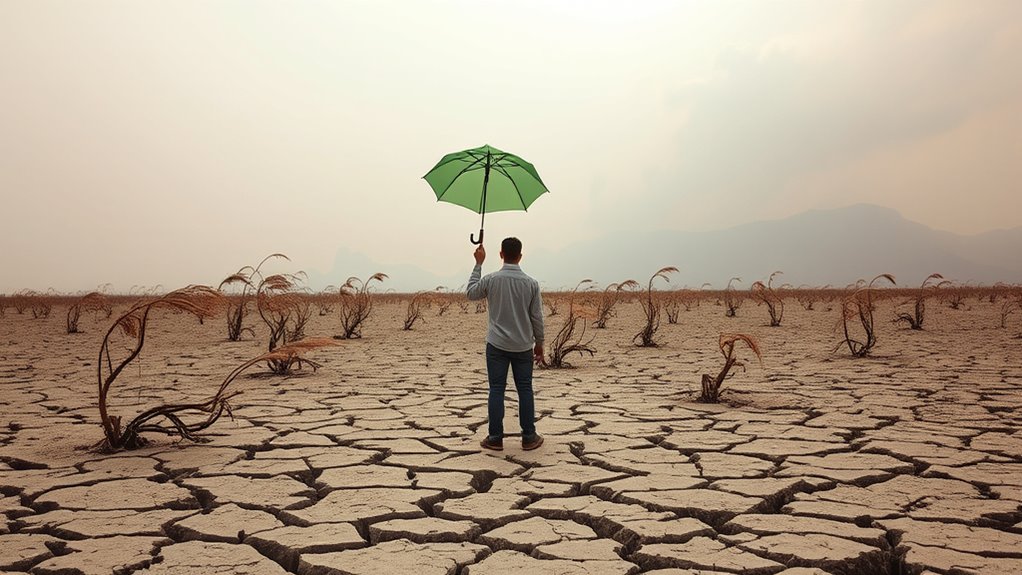
Climate anxiety has become an increasingly common response to the urgent environmental crises we face today. The sense of helplessness and worry about the planet’s future can feel overwhelming, but channeling that anxiety into constructive actions can make a difference. One effective way to manage these feelings is by exploring eco activism strategies. Taking part in community clean-ups, advocating for sustainable policies, or even spreading awareness on social media helps you regain a sense of agency. When you actively engage in these efforts, you shift from feeling powerless to feeling empowered, which can substantially reduce feelings of despair. These strategies not only contribute to tangible environmental progress but also bolster your mental health resilience. Knowing you’re making a positive impact can help you cope better with the stress of climate change, reinforcing your emotional strength over time. Incorporating climate awareness into your daily routine can further enhance your understanding and motivate ongoing engagement. Building mental health resilience in the face of climate anxiety involves more than just activism. It requires establishing healthy routines that support your emotional well-being. Setting aside time for self-care, practicing mindfulness or meditation, and maintaining social connections are essential components. When you prioritize your mental health, you create a buffer against the emotional toll of environmental crises. Remember, it’s okay to acknowledge your feelings of fear or frustration—they’re valid responses. But instead of dwelling on helplessness, focus on what you can control and influence. For example, reducing your carbon footprint, supporting eco-friendly businesses, or educating others about sustainability can be empowering actions that reinforce your resilience. It’s also helpful to stay informed without becoming overwhelmed. Seek out credible, balanced sources of information that provide a clear picture without sensationalism. Limiting exposure to distressing news and taking breaks from social media can protect your mental health. Connecting with like-minded individuals through eco activism groups or community events can foster a sense of solidarity, which is essential when facing environmental anxiety. Sharing experiences, exchanging ideas, and celebrating small victories together remind you that you’re not alone in this fight. Ultimately, managing climate anxiety involves blending active engagement with mindful self-care. By implementing eco activism strategies and nurturing your mental health resilience, you can transform feelings of helplessness into hope and action. Your efforts matter, and even small steps can lead to meaningful change. Remember, maintaining your emotional well-being is necessary—not only for your health but also for sustaining your capacity to advocate for the planet long-term. Facing climate change is formidable, but with intentional strategies, you can navigate your fears and continue making a positive impact.
mindfulness meditation for climate anxiety
As an affiliate, we earn on qualifying purchases.
As an affiliate, we earn on qualifying purchases.
Frequently Asked Questions
How Can I Support Friends Experiencing Climate Anxiety?
You can support friends experiencing climate anxiety by practicing supportive communication and offering emotional validation. Listen actively without judgment, acknowledge their feelings, and avoid dismissing their concerns. Share reassurance that they’re not alone and encourage small, positive actions they can take. Your understanding and empathy can help ease their stress, making them feel heard and supported as they navigate their worries about the environment.
Are There Effective Therapies for Climate-Related Stress?
You can explore therapeutic approaches like cognitive-behavioral therapy (CBT) and mindfulness-based techniques, which are effective for climate-related stress. These methods help build emotional resilience by addressing negative thoughts and fostering present-moment awareness. Engaging in therapy provides a safe space to process your feelings, develop coping skills, and strengthen your mental health. Prioritizing these approaches can empower you to manage climate anxiety more effectively.
What Role Does Community Action Play in Reducing Anxiety?
Community action plays a pivotal role in easing your climate anxiety. Studies show that active community engagement boosts feelings of collective resilience, making you feel less isolated. When you participate in local initiatives, you contribute to meaningful change and find support from others sharing your concerns. This shared effort helps reduce stress, empowering you to face environmental challenges with confidence, knowing you’re part of a collective movement working toward a healthier planet.
Can Mindfulness Practices Help Manage Environmental Worries?
Mindfulness meditation can markedly help manage your environmental worries by grounding you in the present moment. Practicing stress reduction techniques like deep breathing and mindful observation allows you to acknowledge your feelings without becoming overwhelmed. Incorporate daily mindfulness habits to build resilience against climate anxiety, helping you stay focused and calm. Over time, these techniques empower you to face environmental concerns with clarity and emotional balance, reducing overall stress.
How Does Climate Anxiety Affect Physical Health?
When your climate anxiety flares, it’s like carrying a heavy backpack everywhere—you feel the strain physically. It can cause stress-related symptoms like headaches, fatigue, and muscle tension, impacting your physical health. Chronic worry releases cortisol, which may weaken your immune system over time. Recognizing these effects helps you take steps to manage stress, protecting your body while addressing environmental concerns. You’re not alone in feeling this way.
As an affiliate, we earn on qualifying purchases.
Conclusion
Remember, even as you face the tempest of climate anxiety, you’re not alone—think of yourself as a knight in shining armor, ready to tackle the challenges ahead. Embrace small actions, stay connected with others, and keep hope alive—just like the pioneers of old, who believed in a brighter horizon. With resilience and courage, you’ll navigate this stormy age, proving that, like the bravest of hearts, your efforts can change the course of history.
sustainable lifestyle starter kit
As an affiliate, we earn on qualifying purchases.
As an affiliate, we earn on qualifying purchases.
self-care products for stress relief
As an affiliate, we earn on qualifying purchases.
As an affiliate, we earn on qualifying purchases.