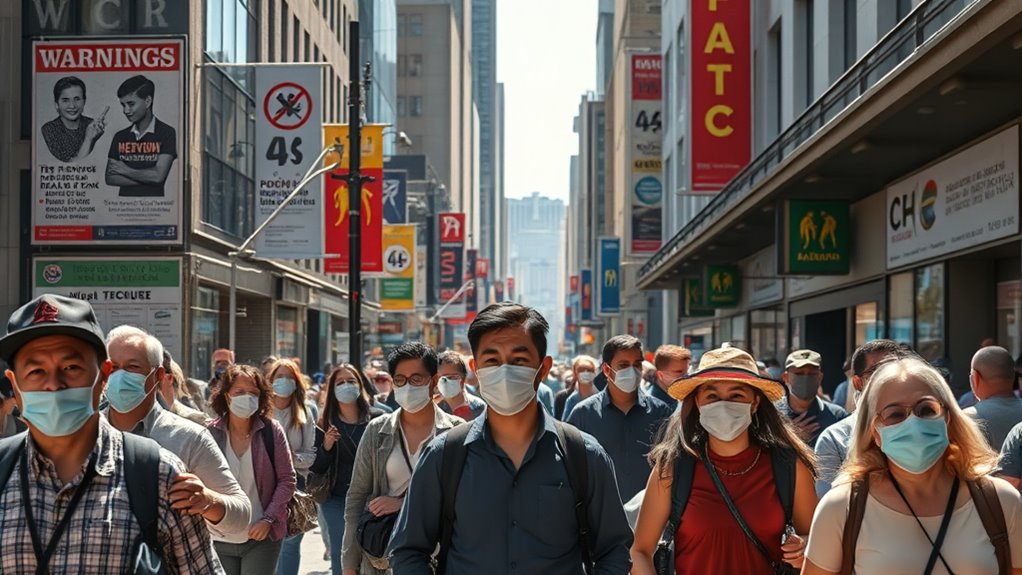

To learn from past pandemics, you should understand how effective policies rely on clear strategies, strong data collection, and public trust. Prioritizing high-risk groups, managing resources efficiently, and implementing quarantine protocols are key steps that save lives and prevent healthcare overload. Transparency and lessons learned from previous outbreaks help build resilient systems. To improve your response to health crises, explore how these lessons shape current approaches—they offer valuable insights you won’t want to miss.
Key Takeaways
- Effective data collection and analysis inform adaptable policies for evolving health crises.
- Prioritizing high-risk groups ensures equitable and impactful vaccine distribution.
- Clear, transparent communication builds public trust and compliance with quarantine and health measures.
- Learning from past pandemics improves outbreak response strategies and system resilience.
- Coordinated efforts across government, healthcare, and communities enhance overall pandemic management.
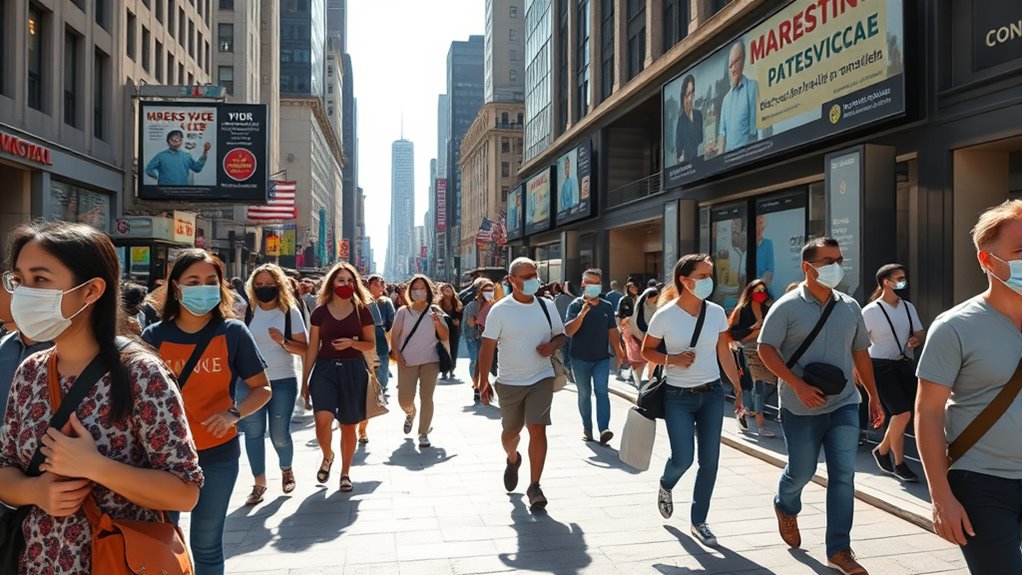
What exactly is public health policy, and why does it matter? It’s a set of decisions, plans, and actions aimed at protecting and improving the health of communities. These policies guide how governments and organizations respond to health crises, manage resources, and implement strategies to prevent disease spread. When a pandemic hits, public health policy becomes your blueprint for safety, shaping everything from vaccine distribution to quarantine protocols. Without clear policies, efforts can become disorganized, leaving communities vulnerable and overwhelmed. Effective policies also rely on accurate data collection to inform decision-making and adapt strategies as situations evolve. Vaccine distribution is a critical element of public health policy during pandemics. When a new vaccine becomes available, deciding who gets it first isn’t just about fairness but also about maximizing impact. Effective policies prioritize high-risk populations, healthcare workers, and vulnerable groups to stem the spread quickly. During past pandemics, countries that established efficient vaccine distribution channels managed to reduce infection rates faster. They set up clinics, streamlined supply chains, and used data to identify hotspots needing urgent attention. You see, a well-planned vaccine rollout can save lives, prevent healthcare systems from collapsing, and restore normalcy faster. But it requires coordination, transparency, and public trust—things that are built through clear policies and communication. Quarantine protocols are another essential piece of public health policy. When an infectious disease spreads rapidly, isolating infected individuals and enforcing quarantine measures can slow transmission. During past pandemics, strict quarantine protocols helped contain outbreaks, but their success depended on how well they were implemented and accepted by the public. Effective quarantine policies balance the need to protect public health with respecting individual rights. They specify who should quarantine, for how long, and under what conditions. Clear guidelines ensure people understand their responsibilities and reduce confusion or resistance. For example, during the COVID-19 pandemic, countries with well-communicated quarantine protocols saw better compliance and fewer new cases. You can think of quarantine policies as the backbone of outbreak control—they buy time to ramp up healthcare capacity and develop treatments or vaccines. In essence, public health policies around vaccine distribution and quarantine protocols are your frontline defenses. They aren’t just bureaucratic procedures; they’re crucial tools that determine how effectively a society can respond to health emergencies. When these policies are based on lessons learned from past pandemics, they tend to be more effective, saving lives and reducing suffering. Your role, whether as a policymaker, healthcare worker, or community member, is to understand these strategies and support their implementation. In doing so, you help build resilient systems that can face future health crises with confidence and clarity.
Top picks for "public health policy"
Open Amazon search results for this keyword.
As an affiliate, we earn on qualifying purchases.
Frequently Asked Questions
How Can Public Health Policies Balance Individual Rights and Community Safety?
You can balance individual rights and community safety by ensuring policies are transparent, evidence-based, and involve public input. Clearly communicate the reasons behind measures like mask mandates or vaccination requirements, emphasizing how they protect everyone’s health. By respecting individual rights while prioritizing community safety, you foster trust and compliance, creating a collaborative effort to manage public health crises effectively. This approach promotes fairness and social cohesion during emergencies.
What Role Does Government Transparency Play During a Pandemic?
Government transparency is vital during a pandemic because it builds trust and guarantees you stay informed. When authorities openly share data confidentiality measures and actively manage misinformation, you can better understand the risks and follow guidelines confidently. Transparency also helps prevent panic and rumors, empowering you to make informed decisions for your safety and community well-being. Without it, misinformation spreads, and public health efforts become less effective.
How Do Cultural Differences Influence Pandemic Response Strategies?
You might think cultural differences don’t matter, but they shape pandemic responses more than you’d expect. Cultural communication influences how openly societies share information, while societal norms determine compliance with health measures. Ironically, what’s accepted in one culture as normal can hinder or help containment efforts elsewhere. Recognizing these differences allows you to tailor strategies effectively, ensuring public cooperation and better health outcomes across diverse communities.
What Are the Long-Term Economic Impacts of Pandemic Policies?
You’ll find that pandemic policies can considerably impact long-term economic recovery and fiscal sustainability. While measures like stimulus packages boost immediate growth, they may also increase national debt, challenging future budgets. Balancing support for businesses and workers with responsible fiscal planning ensures sustainable recovery. If you prioritize strategic investments and fiscal discipline, you can help your economy bounce back stronger and maintain financial stability over the long run.
How Can Public Trust Be Maintained During Health Crises?
You can uphold public trust during health crises by actively engaging with your community and fostering transparent communication. Address misinformation promptly and clearly, providing accurate information through trusted sources. Show empathy and listen to concerns, demonstrating that authorities prioritize public well-being. By involving community members in decision-making and maintaining open dialogue, you build confidence and ensure people feel informed and respected throughout the crisis.
Conclusion
By learning from past pandemics, you can steer public health policies more effectively, like a captain steering through stormy seas. Embrace the lessons of swift action, clear communication, and adaptation, knowing these are your guiding stars. Remember, each experience is a stepping stone, helping you build a resilient system that withstands future storms. With wisdom from history, you hold the power to protect communities and turn uncertainty into a path of hope.