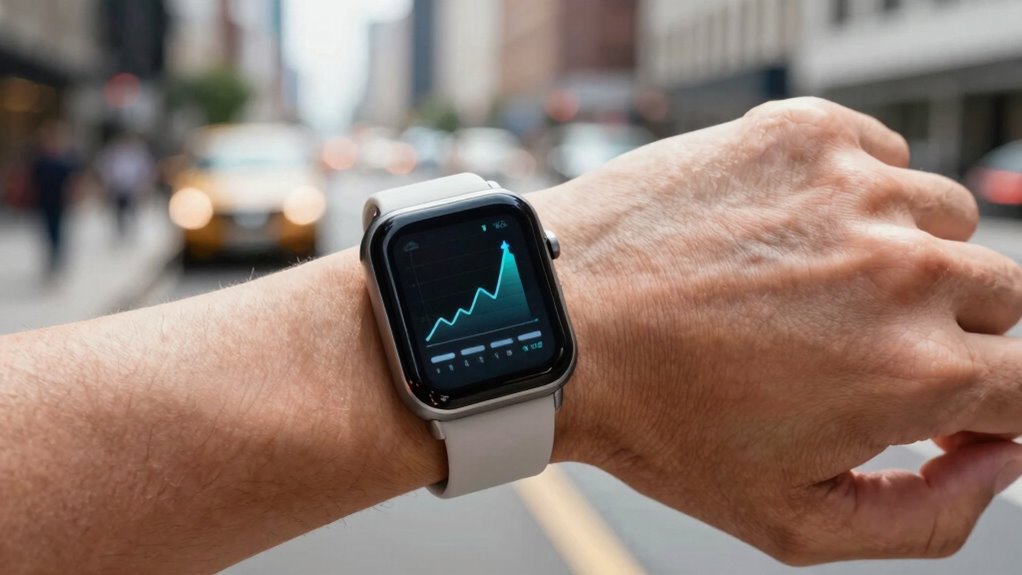

Wearable data can be helpful because it boosts your self-awareness, motivates healthy habits, and allows you to track your progress over time. However, it can also cause stress when you become fixated on daily goals, fluctuations, or inaccurate measurements. The constant stream of information might lead to anxiety or frustration if you feel you’re not meeting targets. If you keep exploring, you’ll discover ways to make technology work for you, not against you.
Key Takeaways
- Wearable data provides valuable health insights that can motivate positive lifestyle changes and increase self-awareness.
- Overfixation on goals and fluctuations in data can lead to stress, anxiety, and frustration.
- Privacy concerns about data security may cause unease, overshadowing the device’s benefits.
- Sensor inaccuracies can mislead users, causing unnecessary worry or false reassurance.
- Mindful use of wearables helps balance the advantages of data tracking with awareness of its limitations and potential stress.
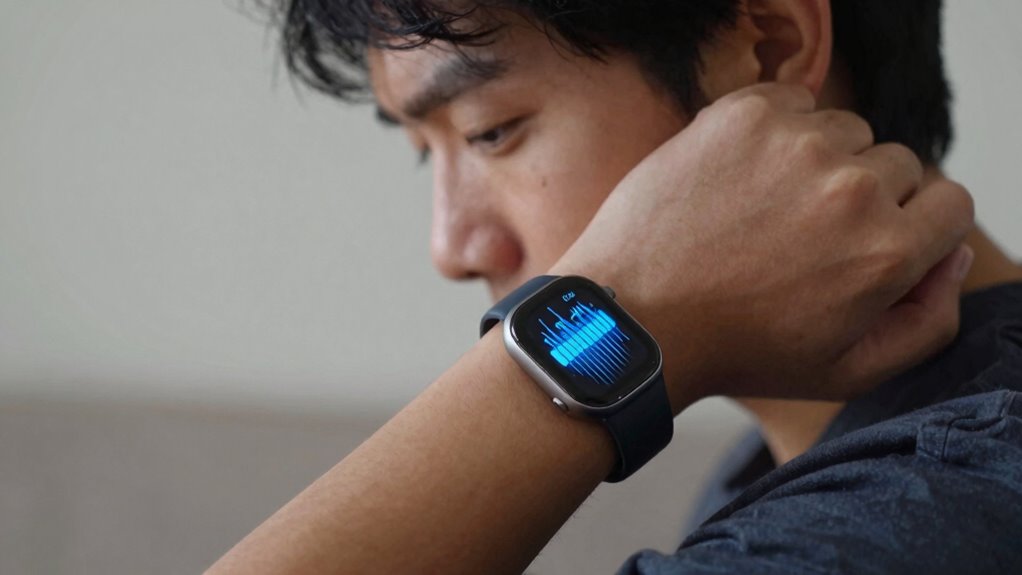
Wearable devices have become powerful tools for tracking health and fitness, offering valuable insights that can motivate positive changes. They can help you monitor your steps, heart rate, sleep patterns, and even stress levels. This constant stream of data often feels empowering, giving you a clear picture of your habits and progress. But as helpful as these devices are, they can also introduce stress, especially when you start obsessing over every number or statistic. It’s easy to become fixated on hitting daily goals or worrying about slight fluctuations in your data. Such anxiety can overshadow the benefits, turning what should be a motivational tool into a source of frustration.
Another aspect that makes wearable data both helpful and stressful is the issue of privacy concerns. You might feel uneasy knowing that your health information is stored digitally and potentially shared with third parties. Many devices collect sensitive data, and questions about who has access to it and how it’s used can cause discomfort. If you’re not confident about the security measures in place, it might lead to anxiety about your personal information being compromised or misused. This worry can add a layer of stress that diminishes the positive impact of tracking your health. Understanding data security and how your information is protected can help alleviate some of these fears.
Data accuracy is also a major factor. While wearable devices are generally reliable, they’re not perfect. Sometimes, they record inaccurate steps, heart rate, or sleep data due to sensor limitations or user error. When you rely heavily on this information to make health decisions, inaccuracies can be misleading or even harmful. For example, thinking you’ve slept poorly based on faulty sleep tracking might lead to unnecessary stress or fatigue. Conversely, believing you’re more active than you actually are can give a false sense of achievement, which might discourage you from pushing yourself further. The inconsistency in data accuracy can cause doubt and confusion, making it harder to trust the insights your device provides. Additionally, understanding that sensor limitations can impact data reliability can help you maintain a balanced perspective. Recognizing the limitations of wearable devices and their impact on data accuracy can help you interpret your results more realistically and reduce unnecessary worry. Being aware of these privacy concerns and how your data is handled can also help you make more informed choices about technology use.
In the end, wearable devices are a double-edged sword. They can inspire you to lead a healthier lifestyle, but they can also create anxiety over privacy and data reliability. The unpredictability of data fluctuations can sometimes make it difficult to stay motivated or confident in your progress. The key is to use them mindfully—celebrating progress without obsessing over every number and staying aware of the limits of technology. Recognizing that no device captures every nuance of your health perfectly, and that occasional inaccuracies are normal, can help you stay grounded. Don’t let the stress of inaccuracies or privacy worries overshadow the benefits. When used thoughtfully, wearable data can be a helpful tool rather than a source of stress.
best wearable fitness tracker for stress monitoring
As an affiliate, we earn on qualifying purchases.
As an affiliate, we earn on qualifying purchases.
Frequently Asked Questions
Can Wearable Data Predict Future Health Issues Accurately?
Wearable data can sometimes predict future health issues, but its predictive accuracy isn’t foolproof. You need to take into account data reliability, as inaccuracies or gaps can lead to false alarms or missed concerns. While advanced algorithms improve predictions, they still can’t guarantee certainty. So, use wearable data as a helpful tool, but don’t rely on it solely—consult healthcare professionals for a thorough health assessment.
How Secure Is My Data Collected by Wearables?
Your wearable data’s security isn’t guaranteed. It’s protected through data encryption, making unauthorized access difficult, but vulnerabilities exist. Privacy policies vary widely; some companies prioritize your privacy, others less so. Stay alert—read these policies carefully. Trustworthy brands implement robust security measures, yet no system is infallible. Keep your awareness sharp and regularly update your device’s security settings to help safeguard your sensitive health information.
Do Wearable Devices Work Well for All Age Groups?
Wearable devices work well across age groups, but success depends on age-specific adoption and device compatibility. Younger users often adapt quickly and enjoy features tailored to their lifestyles. Older adults may face challenges with technology familiarity or device compatibility issues. Choosing age-appropriate devices with simple interfaces and compatible features can enhance user experience for all ages, ensuring everyone benefits from wearable technology without frustration.
Can Wearable Data Replace Traditional Medical Evaluations?
Wearable data can’t fully replace traditional medical evaluations yet. While they offer real-time insights, privacy concerns and data accuracy issues limit their effectiveness. You might get helpful information about your health, but a healthcare professional still needs to interpret symptoms and conduct tests. Relying solely on wearable data could lead to missed diagnoses or false alarms, so it’s best used as a supplementary tool rather than a replacement.
What Should I Do if Wearable Data Causes Anxiety?
If wearable data causes anxiety, think of it as a storm in a teacup. To ease mental health concerns, take a step back and limit data tracking, focusing instead on overall well-being. Talk to a healthcare professional about your worries, and practice mindfulness to stay grounded. Remember, data overload can amplify stress, so prioritize your mental health over every fluctuating number. You’re more than just numbers on a screen.
wearable sleep tracking device with data accuracy
As an affiliate, we earn on qualifying purchases.
As an affiliate, we earn on qualifying purchases.
Conclusion
While wearable data can be a powerful tool to improve your health and keep you motivated, it can also become a double-edged sword, making you anxious or obsessed with numbers. Remember, not every fluctuation defines your worth or progress. Don’t put all your eggs in one basket; use data as a guide, not a gospel. Sometimes, it’s best to take a step back and focus on how you feel—don’t let the data run the show.
privacy-focused health wearable device
As an affiliate, we earn on qualifying purchases.
As an affiliate, we earn on qualifying purchases.
wearable heart rate monitor with reliable sensors
As an affiliate, we earn on qualifying purchases.
As an affiliate, we earn on qualifying purchases.