

Searching for the best blender power guide in 2026? The top pick, Blender 5.2 LTS User Guide for Beginners 2026, offers a comprehensive start for newcomers, combining clarity with depth. For those seeking advanced strategies, the Blender 5.2 LTS Practical Guide stands out for its extensive coverage of professional workflows. The main challenge in this category is balancing detailed information with ease of use; many guides are either too technical or too superficial. Continue reading to see how these guides compare across performance, usability, and value, helping you find the perfect fit for your skill level and goals.

Get audio and creator gear delivered free with Prime
- Fast, free delivery on millions of items
- Prime Video, Amazon Music and more included
- Member-only deals all year
Complete the kit


Key Takeaways
- Top guides vary significantly in scope, from beginner-focused to professional-level resources, influencing their target audience.
- Comprehensive guides like Blender 5.2 LTS Practical Guide tend to be more suitable for advanced users due to their depth, while simplified guides excel for beginners.
- The best value guides combine affordability with clear, actionable content, often including practical projects.
- Ease of understanding and step-by-step instructions are key differentiators for beginner guides, reducing learning curves.
- Price and content depth often correlate; more detailed guides typically cost more but offer extensive learning paths.
| Blender 5.2 LTS Practical Guide: A Complete Guide to 3D Modeling, Sculpting, Animation, Geometry Nodes, Rendering, Compositing, and Professional Production |  | Best for Advanced Users and Professionals | Software Version: Blender 5.2 LTS | Focus Areas: 3D modeling, Sculpting, Animation, Geometry Nodes, Rendering, Compositing | Content Type: Tutorials, Practical Examples | VIEW ON AMAZON | See Our Full Breakdown |
| Blender 5.2 LTS User Guide for Beginners 2026 |  | Best for New Users Learning Blender 5.2 | Software Version: Blender 5.2 LTS | Focus Areas: Modeling, Materials, Lighting, Rendering | Content Type: Step-by-step Instructions | VIEW ON AMAZON | See Our Full Breakdown |
| Blender for Beginners: Learn Blender the Easy Way |  | Best for Simplified Learning and Quick Results | Software Version: Blender 4.5 LTS | Focus Areas: Modeling, Materials, Lighting, Rendering, Animation | Content Type: Step-by-step Tutorials | VIEW ON AMAZON | See Our Full Breakdown |
| Blender 5.0 User Guide for Beginners: A Complete Guide to 3D Modeling, Animation, Rendering, and Geometry Nodes with Hands-On Projects |  | Best for Hands-On Learners and Practical Beginners | Software Version: Blender 5.0 | Focus Areas: Modeling, Animation, Rendering, Geometry Nodes | Content Type: Hands-On Projects | VIEW ON AMAZON | See Our Full Breakdown |
| Blender for Beginners Part 1: A Reference Guide to 3D Modeling, Shading, and Animating Workflows with Blender 4.5 LTS |  | Best for Focused Workflow Learning | Software Version: Blender 4.5 LTS | Focus Areas: Modeling, Shading, Animation | Content Type: Workflow Guide | VIEW ON AMAZON | See Our Full Breakdown |
| Blender All-in-One For Dummies |  | Best Comprehensive Reference for Beginners and Intermediate Users | Coverage: All Blender features | Audience: Beginners and casual users | Format: Printed book with tutorials | VIEW ON AMAZON | See Our Full Breakdown |
| Blender for Beginners: The Dummy-Proof Guide to Blender Explained Simply |  | Best for Absolute Novices Looking for Quick Results | Audience: Complete beginners | Content Focus: Basic modeling, AI, and animation | Format: Printed guide | VIEW ON AMAZON | See Our Full Breakdown |
| Blender 5.1 Mastery Guide: Learn Step-by-Step 3D Creation by Building Real Projects, Mastering Interface, Lighting, Materials, Animation, and a Perpetual Motion Loop |  | Best for Intermediate to Advanced Users Focused on Project-Based Learning | Focus: Real projects and technical mastery | Audience: Intermediate to advanced users | Content: Interface, lighting, materials, animation | VIEW ON AMAZON | See Our Full Breakdown |
| Learn Blender 5: The Ultimate Beginner’s Guide with Step-by-Step Instructions for 3D Modeling, Rendering, and Animation | 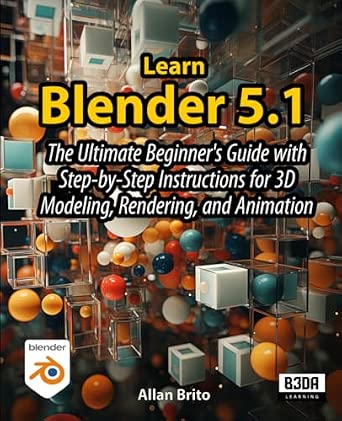 | Best for New Users Starting Their Blender Journey | Audience: Beginners with no prior experience | Content: Modeling, rendering, animation | Format: Book with tutorials | VIEW ON AMAZON | See Our Full Breakdown |
| Blender 5.2 LTS User Guide: The Complete Beginner-to-Advanced Manual for 3D Modeling, Animation, Sculpting, Rendering, Geometry Nodes, Video Editing, Game Asset Creation, and Professional Workflow |  | Best for Users Seeking an All-in-One Mastery Manual | Coverage: Modeling, animation, sculpting, rendering, nodes, video editing | Audience: Beginners to advanced users | Content: Full spectrum of Blender features | VIEW ON AMAZON | See Our Full Breakdown |
| blender power guide | Software Version | Focus Areas | Content Type | Suitable for |
|---|---|---|---|---|
| Blender 5.2 LTS Practical Guid | Blender 5.2 LTS | 3D modeling, Sculpting, Animation, Geometry Nodes, Rendering, Compositing | Tutorials, Practical Examples | Intermediate to Professional Users |
| Blender 5.2 LTS User Guide for | Blender 5.2 LTS | Modeling, Materials, Lighting, Rendering | Step-by-step Instructions | Beginners with no prior Blender experience |
| Blender for Beginners: Learn B | Blender 4.5 LTS | Modeling, Materials, Lighting, Rendering, Animation | Step-by-step Tutorials | Complete newcomers |
| Blender 5.0 User Guide for Beg | Blender 5.0 | Modeling, Animation, Rendering, Geometry Nodes | Hands-On Projects | Beginners preferring practical learning |
| Blender for Beginners Part 1: | Blender 4.5 LTS | Modeling, Shading, Animation | Workflow Guide | Beginners seeking structured workflows |
| Blender All-in-One For Dummies | — | — | — | — |
| Blender for Beginners: The Dum | — | — | — | — |
| Blender 5.1 Mastery Guide: Lea | — | — | — | — |
| Learn Blender 5: The Ultimate | — | — | — | — |
| Blender 5.2 LTS User Guide: Th | — | — | — | — |
More Details on Our Top Picks
Blender 5.2 LTS Practical Guide: A Complete Guide to 3D Modeling, Sculpting, Animation, Geometry Nodes, Rendering, Compositing, and Professional Production
This comprehensive guide stands out for its extensive coverage of Blender 5.2’s advanced features, making it ideal for users who want a deep dive into 3D modeling, sculpting, animation, and rendering workflows. Unlike the beginner-focused Blender 5.2 LTS User Guide for Beginners 2026, this book offers practical tutorials and detailed techniques tailored to production-level work. The tradeoff is that its dense content can be overwhelming for newcomers, requiring prior familiarity with Blender basics. It’s best suited for intermediate to professional users who need a structured, comprehensive resource to refine their skills and tackle complex projects.
Pros:- Extensive coverage of advanced Blender features
- Includes practical examples and tutorials for professional workflows
- Suitable for both learners and experienced users seeking depth
Cons:- Overwhelming for complete beginners due to its complexity
- No specific price information available, which may impact decision-making
Best for: Experienced 3D artists and professionals seeking an in-depth, technical manual for Blender 5.2 workflows
Not ideal for: Absolute beginners or users looking for quick-start guides, as the content may be too extensive and complex
- Software Version:Blender 5.2 LTS
- Focus Areas:3D modeling, Sculpting, Animation, Geometry Nodes, Rendering, Compositing
- Content Type:Tutorials, Practical Examples
- Suitable for:Intermediate to Professional Users
- Guide Type:Comprehensive Technical Manual
Our verdict“This guide is perfect for experienced users aiming to master Blender 5.2’s full capabilities, but not for those just starting out.”
Blender 5.2 LTS User Guide for Beginners 2026
This beginner’s guide makes Blender 5.2 accessible through clear, step-by-step instructions covering fundamental tasks like modeling, materials, lighting, and rendering. Compared with Blender for Beginners: Learn Blender the Easy Way, it offers broader coverage suitable for users who want an all-in-one starting point. Its straightforward approach helps new users build confidence, but it lacks detailed technical specs or advanced topics that more experienced users might seek later. This makes it an ideal choice for those new to Blender but not for users wanting an in-depth technical resource.
Pros:- Clear, beginner-friendly instructions
- Covers a wide range of Blender features
- Provides practical, easy-to-follow techniques
Cons:- Lacks detailed technical specifications
- No information on supplementary resources or updates
Best for: Complete newcomers seeking a structured, beginner-friendly introduction to Blender 5.2
Not ideal for: Users with prior experience or those looking for advanced tutorials, as it focuses on fundamentals
- Software Version:Blender 5.2 LTS
- Focus Areas:Modeling, Materials, Lighting, Rendering
- Content Type:Step-by-step Instructions
- Suitable for:Beginners with no prior Blender experience
- Guide Type:Introductory Manual
Our verdict“This guide is best suited for absolute beginners ready to learn Blender 5.2 from scratch without prior experience.”
Blender for Beginners: Learn Blender the Easy Way
This guide simplifies Blender learning with easy-to-follow, step-by-step instructions covering modeling, materials, lighting, rendering, and geometry nodes. Compared to the Blender 5.2 LTS User Guide for Beginners 2026, it emphasizes quick mastery through straightforward tutorials, making it ideal for absolute beginners who want rapid results. The main tradeoff is that it lacks detailed technical specifications and may omit some of the deeper features new users will eventually need. I recommend this for users who prefer a more streamlined, less technical introduction to Blender.
Pros:- Clear, step-by-step guidance
- Covers essential Blender features for beginners
- Easy-to-follow instructions for quick learning
Cons:- Lacks detailed technical specs
- No coverage of advanced or new features beyond basics
Best for: Beginners seeking an easy, step-by-step approach to learn Blender quickly
Not ideal for: Users wanting a detailed, comprehensive guide to all Blender features or advanced techniques
- Software Version:Blender 4.5 LTS
- Focus Areas:Modeling, Materials, Lighting, Rendering, Animation
- Content Type:Step-by-step Tutorials
- Suitable for:Complete newcomers
- Guide Type:Simplified Manual
Our verdict“This guide is perfect for absolute beginners who want straightforward, quick tutorials without technical overload.”
Blender 5.0 User Guide for Beginners: A Complete Guide to 3D Modeling, Animation, Rendering, and Geometry Nodes with Hands-On Projects
This guide provides a well-rounded introduction to Blender 5.0, emphasizing hands-on projects that help users learn by doing. Compared with the Blender 5.2 LTS User Guide for Beginners 2026, it offers more practical exercises, making it ideal for learners who prefer active engagement over passive reading. While its content is comprehensive for beginners, it doesn’t delve into technical specifications or advanced features, which could limit experienced users. It’s particularly beneficial for those who learn best through practical application rather than theory.
Pros:- Includes practical, hands-on projects
- Covers multiple aspects of Blender 5.0
- Suitable for learners who prefer active engagement
Cons:- No detailed technical specifications
- Content may be too basic for experienced users
Best for: Beginners who learn best through hands-on projects and practical exercises
Not ideal for: Advanced users or those seeking in-depth technical details, since the focus remains on beginner-level projects
- Software Version:Blender 5.0
- Focus Areas:Modeling, Animation, Rendering, Geometry Nodes
- Content Type:Hands-On Projects
- Suitable for:Beginners preferring practical learning
- Guide Type:Project-Based Manual
Our verdict“This guide is ideal for beginners who learn best through practical projects and hands-on practice rather than theoretical reading.”
Blender for Beginners Part 1: A Reference Guide to 3D Modeling, Shading, and Animating Workflows with Blender 4.5 LTS
This book offers a detailed, step-by-step introduction to Blender 4.5 LTS, emphasizing core workflows in modeling, shading, and animation. Compared with the Blender 5.2 LTS Practical Guide, it focuses more on workflow processes suitable for beginners aiming to develop consistent techniques. While it is comprehensive for newcomers, it does not include details on more recent features introduced after Blender 4.5 or technical specifications. It makes sense for users who want a clear, structured path to mastering Blender’s fundamental workflows, but less so for those interested in the latest updates or advanced features.
Pros:- Clear, step-by-step workflow guidance
- Focuses on modeling, shading, and animation
- Helps build a solid foundation for Blender users
Cons:- No detailed technical specifications
- Limited to Blender 4.5 features, missing newer updates
Best for: Beginners focused on learning core workflows in Blender 4.5 LTS
Not ideal for: Users seeking the latest Blender features or advanced techniques beyond basic workflows
- Software Version:Blender 4.5 LTS
- Focus Areas:Modeling, Shading, Animation
- Content Type:Workflow Guide
- Suitable for:Beginners seeking structured workflows
- Guide Type:Workflow Manual
Our verdict“This book is best for new users aiming to develop consistent, workflow-based skills in Blender 4.5 LTS.”
Blender All-in-One For Dummies
This extensive guide stands out for its detailed tutorials covering every aspect of Blender, making it an ideal starting point for newcomers. Unlike specialized books like Learn Blender 5, it offers broad coverage, but its lack of included software or advanced content limits its usefulness for those seeking hands-on tools or deep technical insights. Its step-by-step instructions help build foundational skills, though experienced users might find it too superficial. Overall, this guide serves as a solid primer, especially for those who prefer a structured, comprehensive overview before diving into complex projects.
Pros:- Comprehensive coverage of Blender features
- Detailed tutorials suitable for beginners
- Good introductory resource for new users
Cons:- No software or hardware included
- May be too basic for experienced users
- Lacks advanced project guidance
Best for: beginners or hobbyists who want a thorough introduction to Blender’s core features
Not ideal for: advanced users or professionals needing in-depth technical training or software access
- Coverage:All Blender features
- Audience:Beginners and casual users
- Format:Printed book with tutorials
- Level:Beginner to intermediate
- Content Depth:Basic to moderate
- Extras:No included software
Our verdict“This guide is perfect for newcomers seeking a broad, detailed overview of Blender’s capabilities.”
Blender for Beginners: The Dummy-Proof Guide to Blender Explained Simply
This pick emphasizes simplicity, making it ideal for complete beginners who want to grasp Blender basics quickly. Compared with Blender All-in-One For Dummies, it offers more straightforward instructions and includes tutorials on AI and animation, which can excite new users. However, its focus on simplicity means it lacks detailed technical explanations or coverage of advanced features—skipping over those for clarity. This guide makes sense for users eager to start creating without getting bogged down in technicalities, though it might fall short for those aiming for professional mastery.
Pros:- Simple, easy-to-understand instructions
- Includes tutorials on AI and animation
- Helps users learn Blender quickly
Cons:- Lacks detailed technical specifications
- No coverage of advanced features
- May be too basic for experienced users
Best for: complete beginners who want easy, quick-to-understand tutorials
Not ideal for: users seeking in-depth technical details or advanced Blender workflows
- Audience:Complete beginners
- Content Focus:Basic modeling, AI, and animation
- Format:Printed guide
- Level:Beginner
- Content Depth:Introductory
- Extras:Tutorials on AI and animation
Our verdict“This guide suits absolute beginners who want a straightforward, fast introduction to Blender’s core functions.”
Blender 5.1 Mastery Guide: Learn Step-by-Step 3D Creation by Building Real Projects, Mastering Interface, Lighting, Materials, Animation, and a Perpetual Motion Loop
This guide excels at taking users beyond basics by guiding them through real-world projects, making it ideal for users who want to deepen their skills in Blender 5.1. Compared with Learn Blender 5, it emphasizes practical application by building projects that reinforce interface, lighting, and animation techniques. Its comprehensive, step-by-step approach ensures a solid understanding of key features, but its complexity makes it less suitable for complete newcomers or those seeking a quick overview. This makes it perfect for users aiming to master Blender through hands-on practice rather than theory.
Pros:- Focus on real-world projects
- Comprehensive tutorials on interface, lighting, and animation
- Step-by-step guidance builds practical skills
Cons:- No specific price details available
- Potentially too advanced for complete beginners
- Content might be overwhelming without prior experience
Best for: intermediate users or hobbyists ready to build real projects and improve their technical skills
Not ideal for: beginners or users seeking only basic knowledge without project focus
- Focus:Real projects and technical mastery
- Audience:Intermediate to advanced users
- Content:Interface, lighting, materials, animation
- Level:Intermediate to advanced
- Format:Guidebook
- Price:Not specified
Our verdict“This guide is best suited for users who want to learn Blender through hands-on, project-based techniques.”
Learn Blender 5: The Ultimate Beginner’s Guide with Step-by-Step Instructions for 3D Modeling, Rendering, and Animation
This book offers a clear, structured approach to learning Blender 5, covering essential skills like modeling, rendering, and animation. Compared to Blender for Beginners: The Dummy-Proof Guide, it provides more detailed step-by-step instructions, making it a strong choice for those new to 3D design. However, its lack of detailed content depth or advanced topics means it’s not suitable for users looking to expand beyond basic skills. This resource makes sense for any aspiring 3D artist wanting a solid foundation to grow from, especially with no prior experience needed.
Pros:- Clear, step-by-step instructions
- Covers modeling, rendering, and animation
- Designed for complete newcomers
Cons:- No detailed content depth
- Lacks advanced feature coverage
- No user reviews or ratings available
Best for: absolute beginners eager to learn Blender from scratch
Not ideal for: users seeking advanced workflows or specialized features from the start
- Audience:Beginners with no prior experience
- Content:Modeling, rendering, animation
- Format:Book with tutorials
- Level:Beginner
- Content Depth:Basic to moderate
- Extras:Step-by-step instructions
Our verdict“This guide is ideal for complete beginners who want a straightforward, comprehensive introduction to Blender 5.”
Blender 5.2 LTS User Guide: The Complete Beginner-to-Advanced Manual for 3D Modeling, Animation, Sculpting, Rendering, Geometry Nodes, Video Editing, Game Asset Creation, and Professional Workflow
This comprehensive guide covers Blender 5.2 LTS extensively, making it suitable for users at all levels—from beginners to seasoned professionals. Unlike Blender All-in-One For Dummies, which offers a broad overview, this manual dives into advanced features like sculpting, geometry nodes, and game asset creation, supporting a wider range of projects. Its detailed, step-by-step approach ensures thorough understanding, yet its sheer scope can be intimidating for newcomers who need a more focused starting point. This guide makes the most sense for those committed to mastering Blender across multiple disciplines, regardless of their current skill level.
Pros:- Extensive coverage of Blender features
- Suitable for all skill levels
- Detailed, step-by-step instructions
Cons:- No specific price info provided
- Could be overwhelming for beginners
- No customer reviews or ratings available
Best for: users aiming for a comprehensive mastery of Blender 5.2, from beginner to advanced
Not ideal for: casual users or those new to 3D who prefer simpler, focused tutorials
- Coverage:Modeling, animation, sculpting, rendering, nodes, video editing
- Audience:Beginners to advanced users
- Content:Full spectrum of Blender features
- Level:Beginner to professional
- Format:Manual
- Price:Not specified
Our verdict“This guide is perfect for dedicated learners seeking a complete, all-in-one resource for Blender 5.2 mastery.”

How We Picked
These guides were evaluated based on their clarity, depth of content, target audience, and practical usability. We prioritized resources that balance technical accuracy with accessibility, ensuring they cater to both beginners and advanced users. The ranking reflects not just the comprehensiveness of the material but also how well each guide helps users achieve tangible results in Blender. We considered user feedback, the relevance of included topics, and the overall value for different skill levels to create a fair, useful lineup.
| blender power guide | Software Version | Content Type | Suitable for | Guide Type |
|---|---|---|---|---|
| Blender 5.2 LTS Practical Guid | Blender 5.2 LTS | Tutorials, Practical Examples | Intermediate to Professional Users | Comprehensive Technical Manual |
| Blender 5.2 LTS User Guide for | Blender 5.2 LTS | Step-by-step Instructions | Beginners with no prior Blender experience | Introductory Manual |
| Blender for Beginners: Learn B | Blender 4.5 LTS | Step-by-step Tutorials | Complete newcomers | Simplified Manual |
| Blender 5.0 User Guide for Beg | Blender 5.0 | Hands-On Projects | Beginners preferring practical learning | Project-Based Manual |
| Blender for Beginners Part 1: | Blender 4.5 LTS | Workflow Guide | Beginners seeking structured workflows | Workflow Manual |
| Blender All-in-One For Dummies | — | — | — | — |
| Blender for Beginners: The Dum | — | — | — | — |
| Blender 5.1 Mastery Guide: Lea | — | — | — | — |
| Learn Blender 5: The Ultimate | — | — | — | — |
| Blender 5.2 LTS User Guide: Th | — | — | — | — |
Factors to Consider When Choosing Blender Power Guide
Choosing the right blender power guide depends on several factors that influence how effectively you learn and apply Blender skills. Whether you’re a beginner or a seasoned artist, understanding these considerations can help you avoid common pitfalls and select a resource that matches your goals and learning style.Target Skill Level
Identify whether you need a guide that introduces foundational concepts or one that dives into advanced techniques. Some guides are designed for absolute beginners, focusing on step-by-step tutorials, while others assume prior knowledge and explore complex workflows. Picking a guide aligned with your current skills ensures a smoother learning curve and prevents frustration.
Content Scope and Depth
Consider how comprehensive the guide is—does it cover only modeling, or does it include animation, rendering, and compositing? Extensive guides can be overwhelming but offer a one-stop resource, whereas shorter guides might require supplementary materials. Match the guide’s scope with your specific learning goals to avoid gaps or unnecessary information overload.
Learning Style and Format
Some guides include detailed explanations, while others emphasize visual tutorials or practical projects. Think about whether you learn best through reading, watching videos, or hands-on practice. Choosing a format that resonates with your style can accelerate skill acquisition and keep you engaged.
Price and Value
More comprehensive guides often come at a higher cost, but they can save you time and frustration in the long run. Balance your budget with the depth of content offered. Sometimes, investing in a premium guide pays off if it significantly enhances your learning experience or provides exclusive project files and resources.
Update Frequency and Support
Blender updates frequently, so ensure the guide you choose is current and covers recent features. Additionally, consider whether the resource offers support, community access, or supplementary materials. These extras can be valuable for troubleshooting and ongoing learning, especially for complex topics.
Frequently Asked Questions
Is a beginner guide enough to master Blender for professional work?
While a beginner guide provides a solid foundation, mastering Blender for professional work typically requires progressing to more advanced resources. Beginner guides are excellent for grasping core concepts and workflows, but professional proficiency involves exploring complex techniques, custom scripting, and optimization. Supplementing beginner guides with advanced courses, tutorials, and hands-on practice is often necessary to reach a professional level.
Should I buy a more comprehensive guide even if I only want to learn specific skills?
Purchasing a comprehensive guide can be beneficial if you plan to expand your skills in multiple areas of Blender over time. However, if your focus is narrow—such as only character modeling or animation—selecting a specialized, targeted guide might be more efficient. Consider your long-term goals and choose a resource that offers depth in your primary interest while allowing room to explore other aspects later.
Are online tutorials enough, or should I invest in a printed or downloadable guide?
Online tutorials are excellent for quick learning and visual demonstrations, but structured guides often provide a more organized approach to learning Blender’s features. Printed or downloadable guides typically include curated content, step-by-step instructions, and reference material that can be revisited easily. Combining both methods—structured guides and online tutorials—can create a richer, more flexible learning experience.
How important is it for a guide to be updated for the latest Blender version?
Using an updated guide is important because Blender’s interface and features change regularly. An outdated guide may reference obsolete tools or workflows, leading to confusion or wasted effort. Choosing a current guide ensures you learn the most efficient methods and access the latest features, saving time and making your skills more relevant in professional environments.
Can I rely solely on free resources for learning Blender’s power features?
Free resources are a good starting point, especially for basic concepts and quick tips. However, for mastering Blender’s advanced capabilities, investing in high-quality guides or courses often provides more structured, comprehensive, and reliable content. Paid guides typically include organized lessons, practical projects, and expert insights that free materials might lack, helping you learn more efficiently and thoroughly.
Conclusion
For beginners just starting out, Blender for Beginners: Learn Blender the Easy Way offers a gentle introduction with practical exercises. If you aim to develop professional-level skills, the Blender 5.2 LTS User Guide for Beginners 2026 or the Blender 5.2 LTS Practical Guide provide more depth and detail. Budget-conscious learners should consider guides that balance affordability with actionable content, like the Blender All-in-One For Dummies. Advanced users seeking a complete resource might prefer the Blender 5.2 LTS User Guide for its extensive coverage of features and workflows. Ultimately, your choice should align with your current skill level, learning goals, and budget to ensure steady progress in mastering Blender’s powerful capabilities.
Halloween Picks
halloween
As an affiliate, we earn on qualifying purchases.