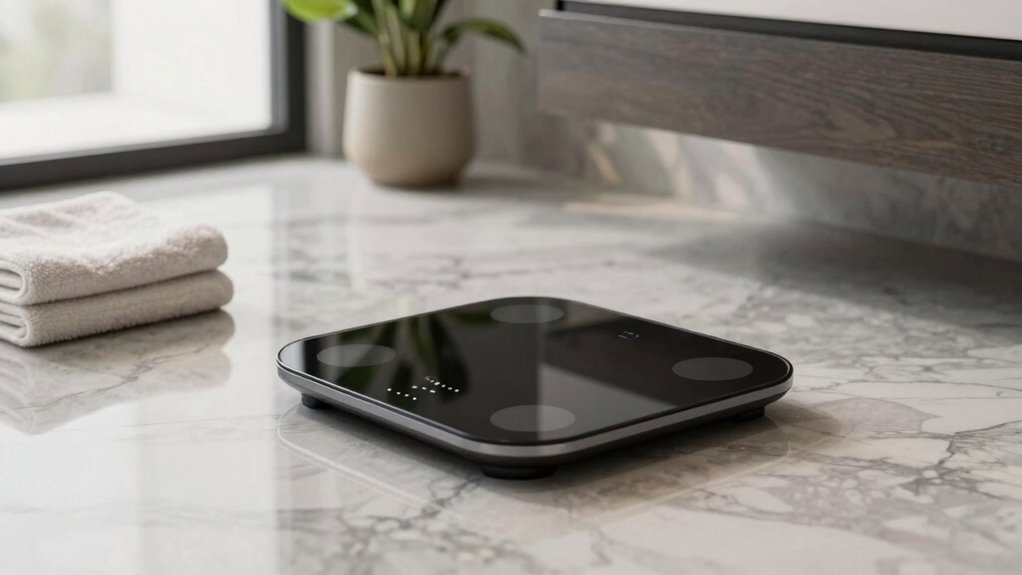
To keep your smart scale’s data consistent, focus on proper setup and regular maintenance. Follow the manufacturer’s instructions carefully to guarantee accurate device calibration and seamless integration with health apps. Place your scale on a stable, even surface, and use it at the same time each day, preferably in the morning before eating or drinking. Regular updates and calibrations are essential for reliable results. Keep these tips in mind, and you’ll attain more insights on maintaining accuracy.
Key Takeaways
- Follow manufacturer instructions carefully during initial setup and calibration.
- Ensure the scale is placed on a stable, even surface to improve measurement consistency.
- Use the scale at the same time each day, preferably mornings, for reliable data.
- Keep devices and apps updated with the latest firmware and software versions.
- Sync the scale with health apps and other devices regularly to prevent data discrepancies.
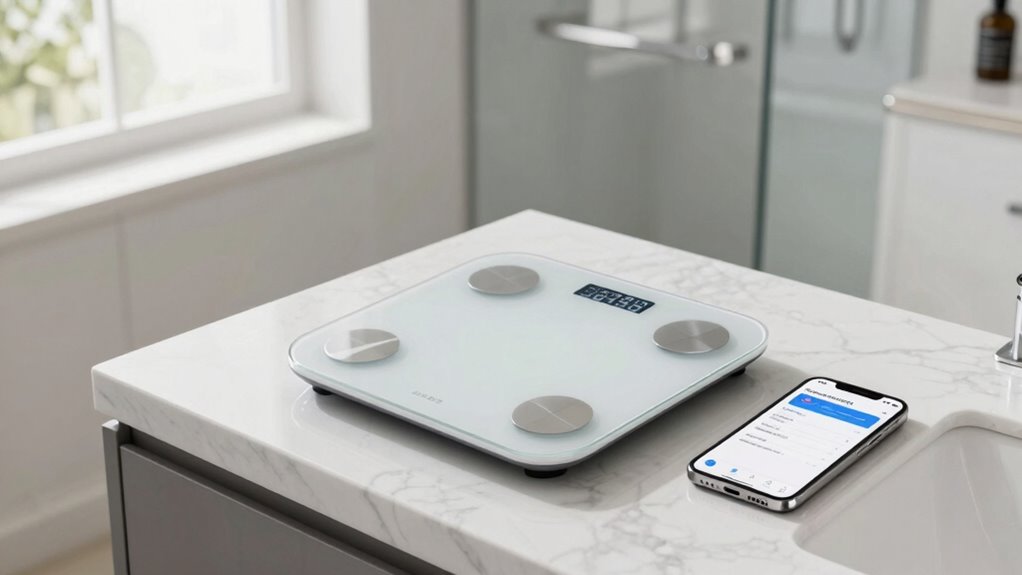
Have you ever wondered how to set up your smart scale correctly for accurate readings? The key lies in understanding the setup process, especially when it comes to data integration and user calibration. Properly integrating your smart scale with your preferred health apps ensures that your data flows seamlessly, giving you reliable insights over time. When you connect your scale to a fitness app or a health dashboard, it’s essential to follow the manufacturer’s instructions carefully, making sure all devices are synced properly. This step minimizes discrepancies and keeps your data consistent across platforms.
User calibration is another crucial aspect of setup that directly impacts the accuracy of your readings. Many smart scales allow you to calibrate yourself as the primary user. When you perform user calibration, you input your personal details—like height, age, and gender—so the scale can more accurately interpret your weight and body composition metrics. Without proper calibration, the scale might produce skewed data, especially if multiple people use it or if your details aren’t updated regularly. Take the time to calibrate the scale correctly, following the provided instructions, and revisit this step whenever your personal details change, such as after significant weight fluctuations or health changes.
To keep your data more consistent, make sure your smart scale is set up in a stable environment. Avoid placing it on uneven surfaces or exposing it to temperature and humidity extremes, which can distort readings. Regularly updating the scale’s firmware and the associated apps also helps prevent data discrepancies caused by software glitches. When you update the device, you often improve data integration capabilities and fix bugs that might influence calibration accuracy. Additionally, understanding the importance of biodiversity in your environment can contribute to better device longevity and performance, as stable surroundings help maintain calibration accuracy. Recognizing environmental factors that affect device performance can also help you optimize your setup for consistent results. Being aware of calibration procedures specific to your device model can further ensure accuracy over time.
Consistency is also about routine. Use your smart scale at the same time each day, ideally in the morning after waking up and before eating or drinking. This consistency reduces variability caused by hydration levels or recent meals, providing a more stable baseline for your measurements. Remember, the more consistently you use and calibrate your device, the more reliable your data becomes.
Ultimately, mastering the setup—focusing on proper data integration and user calibration—sets the foundation for trustworthy health data. When your smart scale is correctly configured, it becomes a powerful tool to track your progress accurately and make informed decisions about your health and fitness journey. Keep the device well-maintained, calibrated, and connected, and you’ll enjoy more reliable, consistent insights that truly reflect your body’s changes over time.
As an affiliate, we earn on qualifying purchases.
Frequently Asked Questions
How Often Should I Recalibrate My Smart Scale?
You should recalibrate your smart scale every 3 to 6 months to maintain measurement reliability. Regular calibration guarantees the scale provides accurate readings, which is essential for tracking your progress accurately. If you notice inconsistent results or after moving the scale to a new location, recalibrating sooner is a good idea. Consistent calibration helps keep your data trustworthy, so you can rely on your scale’s measurements for your health and fitness goals.
Can Multiple Users Use the Same Smart Scale Accurately?
Yes, multiple users can use the same smart scale accurately if it supports user profiles and scale compatibility. To maintain user privacy, make sure each person logs into their profile securely. This way, the scale can distinguish users and track individual data accurately. Regularly updating the scale’s software and ensuring compatibility with your devices also helps keep measurements consistent across different users.
What Environmental Factors Affect Smart Scale Accuracy?
Environmental conditions can subtly influence your smart scale’s measurement precision. Factors like room temperature, humidity, and even surface stability play a gentle role in how accurately your device reads your weight. To keep data reliable, place your scale on a flat, stable surface and avoid sudden environmental changes. By tending to these conditions, you guarantee consistent, trustworthy results, making every measurement a true reflection of your progress.
Is Firmware Updating Necessary for Data Consistency?
Yes, firmware updates are necessary for data consistency. They often include improvements to data synchronization, guaranteeing your smart scale transmits accurate readings consistently. By regularly updating the firmware, you reduce the risk of software bugs or compatibility issues that could skew your data. Staying current with updates helps maintain the accuracy of your measurements and ensures your device functions smoothly across different environments.
How Does User Positioning Impact Measurement Accuracy?
Your posture influence and surface stability are like the steady foundation of a house—crucial for accurate measurements. When you stand upright with proper alignment and guarantee the surface is stable, your weight distribution is even, leading to precise results. Slouching or wobbling causes data to dance unpredictably, much like a boat rocked by waves. To keep measurements consistent, focus on steady posture and firm footing every time you step on the scale.
best stable surface for smart scale
As an affiliate, we earn on qualifying purchases.
As an affiliate, we earn on qualifying purchases.
Conclusion
By following the smart scale setup rule, you guarantee your data stays accurate and reliable over time. Consistent measurements can lead to better health insights and more effective progress tracking. Did you know that users who calibrate their smart scales regularly see a 15% increase in data accuracy? Keep your scale calibrated and your data trustworthy—small steps that make a big difference in reaching your health goals.
smart scale with app integration
As an affiliate, we earn on qualifying purchases.
As an affiliate, we earn on qualifying purchases.
As an affiliate, we earn on qualifying purchases.