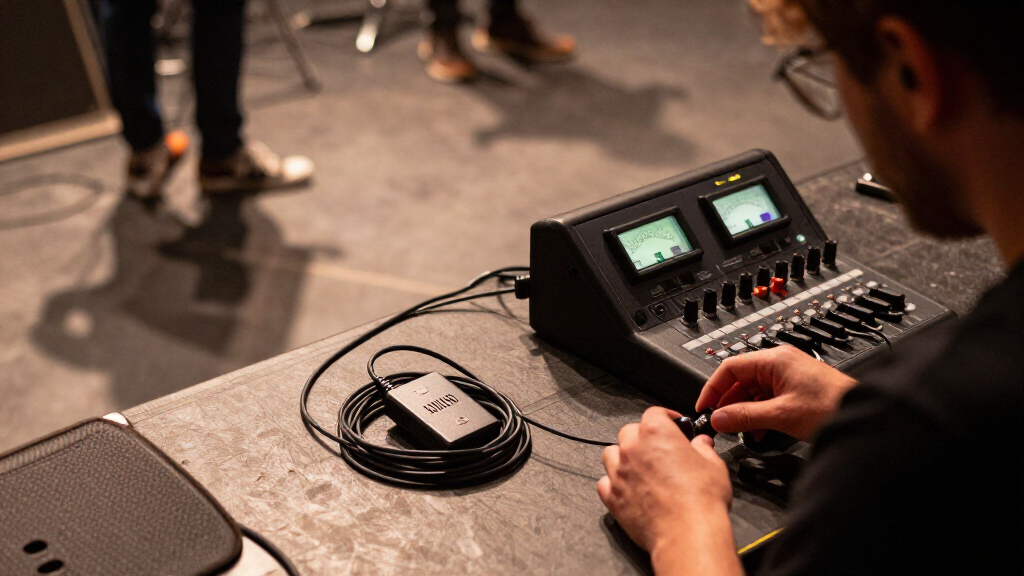

For most musicians seeking a practical wireless stage setup, I’d start with the Xvive U45 for its 5.8 GHz operation and true diversity design; the Phenyx Pro PTM-10 is a stronger fit when a rack-style UHF system suits the venue, while the LEKATO MS-20 stands out for sending one mix to two receivers. The biggest tradeoffs are wireless reliability, channel and receiver flexibility, and how well the system fits your stage and monitoring needs. This roundup also includes wired IEMs, which can be useful as a lower-complexity listening option but are not wireless systems. Read on for the full breakdown of all 15 picks and guidance on matching one to your rig.

Get audio and creator gear delivered free with Prime
- Fast, free delivery on millions of items
- Prime Video, Amazon Music and more included
- Member-only deals all year
Complete the kit


Key Takeaways
- Xvive U45 leads the wireless picks for musicians who want a compact system with 5.8 GHz operation and true diversity; venue interference and range still depend on the environment.
- Phenyx Pro PTM-10 takes a different route with UHF stereo operation, making it the rack-oriented alternative rather than a like-for-like compact replacement.
- LEKATO MS-20 is the clearest match for a shared monitor feed because the listed package includes one transmitter and two receivers.
- The roundup includes three wired IEM choices—KZ ZS10 Pro in two color listings, CCA CRA, and CCZ Yinyoo Melody—so buyers should not mistake every entry for a complete wireless system.
- The wireless options span 2.4 GHz, 5.8 GHz, and UHF designs; the best match depends on your venue, wireless traffic, receiver count, and whether you need a portable or rack-based rig.
| POGOLAB Wireless In-Ear Monitor System |  | Best for Low-Latency UHF Monitoring | Wireless band: UHF | Selectable channels: 7 | Latency: 1 ms | VIEW LATEST PRICE | See Our Full Breakdown |
| JOYO JW-07 2.4 GHz Wireless In-Ear Monitor System |  | Best for Long Rehearsals | Wireless frequency: 2.4 GHz | Audio resolution: 48 kHz/16-bit | Latency: <5 ms | VIEW LATEST PRICE | See Our Full Breakdown |
| Linsoul KZ ZS10 Pro Hybrid Wired In-Ear Monitors, 4BA+1DD, Detachable Cable, No Microphone, Black |  | Best Wired Alternative | Driver configuration: 4 balanced armature drivers + 1 dual-magnetic dynamic driver | High-frequency extension: Beyond 40 kHz | Faceplate material: 304 stainless steel | VIEW LATEST PRICE | See Our Full Breakdown |
| WENTELMUSIC A88T 2.4GHz Wireless In-Ear Monitor System |  | Best for Simple Instrument Setups | Wireless technology: 2.4 GHz RF | Audio latency: Less than 4 ms | Wireless range: Up to 100 ft (30.5 m) | VIEW LATEST PRICE | See Our Full Breakdown |
| VOXFULL M6S 2.4 GHz Wireless In-Ear Monitor System |  | Best for Shared Monitoring | Wireless frequency: 2.4 GHz | Audio processing: 24-bit/48 kHz | Input modes: Mono or stereo | VIEW LATEST PRICE | See Our Full Breakdown |
| CCA CRA Wired In-Ear Monitor Headphones |  | Best Wired Starter Option | Driver type: Dynamic driver | Diaphragm thickness: 3.8 μm | Connectivity: Wired | VIEW LATEST PRICE | See Our Full Breakdown |
| Xvive U4 Wireless In-Ear Monitor System |  | Best Compact Wireless Setup | Wireless technology: 2.4 GHz | Working range: Over 90 ft (27 m) | Latency: Less than 5 ms | VIEW LATEST PRICE | See Our Full Breakdown |
| Xvive U45 5.8 GHz True Diversity Wireless In-Ear Monitor System |  | Best for RF Stability Features | Wireless frequency: 5.8 GHz | Audio resolution: 24-bit/48 kHz | Frequency response: 20 Hz–20 kHz | VIEW LATEST PRICE | See Our Full Breakdown |
| Linsoul KZ ZS10 Pro Hybrid Wired In-Ear Monitors, 4BA+1DD, Detachable Cable, No Mic, Dark Black |  | Best Wired Detail and Isolation | Driver configuration: 4 balanced armature drivers + 1 dynamic driver | Connectivity: Wired | Connector: 3.5 mm audio jack | VIEW LATEST PRICE | See Our Full Breakdown |
| LEKATO MS-02 Wireless In-Ear Monitor System |  | Best for Shared Wireless Monitoring | Wireless frequency: 2.4 GHz | Latency: Less than 4.5 ms in mono mode | Audio sampling rate: 24-bit/48 kHz | VIEW LATEST PRICE | See Our Full Breakdown |
| LEKATO MS-20 Wireless In-Ear Monitor System with One Transmitter and Two Receivers |  | Best for Shared Monitoring | Wireless frequency: 2.4 GHz | Included devices: 1 transmitter and 2 receivers | Maximum supported devices: Up to 10 pairs | VIEW LATEST PRICE | See Our Full Breakdown |
| MELONARE PM-2 Portable Wireless In-Ear Monitor System with Charging Case |  | Best for Mobile-Rig Flexibility | Wireless band: 2.4 GHz | Audio resolution: 24-bit/48 kHz | Frequency response: 20 Hz–20 kHz | VIEW LATEST PRICE | See Our Full Breakdown |
| Phenyx Pro PTM-10 UHF Stereo Wireless In-Ear Monitor System |  | Best for Venue-Style Setup Control | Frequency band: 900 MHz | Tunable frequencies: 89 | Maximum simultaneous systems: 5 | VIEW LATEST PRICE | See Our Full Breakdown |
| LEKATO MS-1 2.4 GHz Wireless In-Ear Monitor System |  | Best for a Simple Starter Setup | Wireless frequency: 2.4 GHz | Audio transmission: Stereo or mono | Latency: Less than 12 ms | VIEW LATEST PRICE | See Our Full Breakdown |
| CCZ Yinyoo Melody Wired In-Ear Monitors, 1DD + 1BA, No Microphone |  | Best Wired Alternative | Driver configuration: 1 dynamic driver + 1 balanced armature | Cable: Detachable 4-core 4N OFC | Connector: 3.5 mm jack | VIEW LATEST PRICE | See Our Full Breakdown |
| wireless in-ear monitors for musician | Battery life |
|---|---|
| POGOLAB Wireless In-Ear Monito | Up to 5 hours |
| JOYO JW-07 2.4 GHz Wireless In | Over 8 hours |
| Linsoul KZ ZS10 Pro Hybrid Wir | — |
| WENTELMUSIC A88T 2.4GHz Wirele | Up to 5 hours |
| VOXFULL M6S 2.4 GHz Wireless I | Up to 10 hours in description; 8 hours in product details |
| CCA CRA Wired In-Ear Monitor H | — |
| Xvive U4 Wireless In-Ear Monit | Up to 5 hours |
| Xvive U45 5.8 GHz True Diversi | 5 hours |
| Linsoul KZ ZS10 Pro Hybrid Wir | — |
| LEKATO MS-02 Wireless In-Ear M | Up to 6–8 hours |
| LEKATO MS-20 Wireless In-Ear M | Up to 30 hours with charging case |
| MELONARE PM-2 Portable Wireles | Up to 10 hours per charge; up to 30 hours with charging case |
| Phenyx Pro PTM-10 UHF Stereo W | — |
| LEKATO MS-1 2.4 GHz Wireless I | More than 5 hours |
| CCZ Yinyoo Melody Wired In-Ear | — |
More Details on Our Top Picks
POGOLAB Wireless In-Ear Monitor System
The POGOLAB MWB-1 suits musicians who want very low stated latency and UHF channel selection in a compact rechargeable system. Its 1 ms latency is lower than the JOYO JW-07’s under-5-ms specification, a useful distinction for players sensitive to timing feel while monitoring. Seven selectable channels give some flexibility when sharing a busy stage, while balanced XLR and AUX/LINE inputs make it easier to connect with different rigs. The tradeoff is endurance: up to five hours leaves less room for long rehearsals or extended event days than the JOYO’s over-eight-hour rating. Its 164-foot range is also specified for line-of-sight use, so stage barriers may affect placement. I’d choose it for short sets where latency matters more than all-day battery capacity.
Pros:- Specified 1 ms latency supports a tight monitoring feel.
- Seven selectable UHF channels offer channel flexibility.
- USB-C charging and included cable simplify recharging.
- Balanced XLR and AUX/LINE inputs support more than one source connection.
Cons:- Up to five hours of battery life is shorter than the JOYO JW-07’s stated runtime.
- The 164-foot range is specified only for line-of-sight use.
Best for: Performers who prioritize very low stated latency, need selectable UHF channels, and can recharge between shorter sets.
Not ideal for: Musicians playing long rehearsals or multi-set events without charging breaks, or anyone who needs a documented range beyond line of sight.
- Wireless band:UHF
- Selectable channels:7
- Latency:1 ms
- Audio quality:48 kHz/24-bit
- Frequency response:35 Hz–16.5 kHz
- Range:Up to 164 ft (50 m), line of sight
- Battery life:Up to 5 hours
- Inputs:Balanced XLR; AUX/LINE
Our verdict“Choose the POGOLAB if low stated latency and UHF channel choice matter more than extended battery life.”
JOYO JW-07 2.4 GHz Wireless In-Ear Monitor System
For players who would rather avoid charging between rehearsal and a gig, the JOYO JW-07’s over-eight-hour battery life is its clearest advantage. Its latency is specified at under 5 ms, while the POGOLAB MWB-1 claims 1 ms; the JOYO trades that lower figure for longer stated runtime and frequency hopping intended to help reduce interference. A 2.4 GHz link and 40–60-foot open-space range make it a practical choice for guitar practice, DJing, and modest stage setups, though obstacles can limit that reach. The key limitation for band use is that one transmitter cannot connect to multiple receivers. That makes it better suited to an individual monitoring setup than a shared system where several musicians need the same feed.
Pros:- Over-eight-hour stated battery life suits longer sessions.
- Latency is specified at under 5 ms.
- Frequency hopping is intended to help reduce wireless interference.
- Twelve channel banks are divided into four groups.
Cons:- One transmitter cannot connect to multiple receivers.
- The 40–60-foot range is specified for open space, not obstructed stages.
Best for: Guitarists and solo performers who need a rechargeable system for long practice sessions and do not need one transmitter to feed several musicians.
Not ideal for: Bands planning to send one monitor mix to multiple receivers, or performers who need a specified range beyond open-space conditions.
- Wireless frequency:2.4 GHz
- Audio resolution:48 kHz/16-bit
- Latency:<5 ms
- Operating range:40–60 ft in open space
- Battery life:Over 8 hours
- Channel banks:12, divided into 4 groups
- Weight:62 g
- Enclosure materials:Metal, plastic
Our verdict“Pick the JW-07 for individual monitoring and longer sessions, but look elsewhere if several musicians need the same transmitter feed.”
Linsoul KZ ZS10 Pro Hybrid Wired In-Ear Monitors, 4BA+1DD, Detachable Cable, No Microphone, Black
This KZ ZS10 Pro is not wireless, but it belongs in a monitor roundup for musicians willing to trade freedom of movement for a direct wired connection. Its four balanced armatures and dynamic driver are designed to combine detailed highs with fuller lows, while the ergonomic housing aims to isolate up to 26 dB of outside noise. Compared with the wireless POGOLAB MWB-1, it avoids transmitter batteries, radio links, and wireless range limits; the cost is being physically tethered to the monitor output. A detachable cable is useful if a cable wears out or a musician wants to replace it, though the included cable’s appearance may vary by version. There is no microphone, so I’d treat it as a dedicated monitoring option, not a headset for calls or talkback.
Pros:- Hybrid four-balanced-armature and one-dynamic-driver design.
- Detachable cable can be replaced or upgraded.
- Housing is designed to isolate up to 26 dB of noise.
- Stainless steel faceplate and resin housing provide distinct construction materials.
Cons:- Wired connection restricts movement compared with the POGOLAB MWB-1 and other wireless systems.
- No microphone is included.
- Cable appearance may vary by version.
Best for: Musicians who prefer a wired, radio-free monitor connection and want replaceable cabling with passive noise isolation.
Not ideal for: Performers who need wireless mobility on stage, or buyers who want a microphone for calls or talkback.
- Driver configuration:4 balanced armature drivers + 1 dual-magnetic dynamic driver
- High-frequency extension:Beyond 40 kHz
- Faceplate material:304 stainless steel
- Housing material:Imported resin
- Cable:Detachable, gold-plated ODC cable
- Noise isolation:Up to 26 dB
- Microphone:None
- Color:Black
Our verdict“Choose the KZ ZS10 Pro if you value a wired monitor signal and replaceable cable more than wireless freedom.”
WENTELMUSIC A88T 2.4GHz Wireless In-Ear Monitor System
The WENTELMUSIC A88T is a straightforward fit for musicians who want a plug-in wireless link for an instrument or audio source, with mono or stereo monitoring available. Its 6.35 mm transmitter connector makes the intended setup easy to understand, and the stated latency under 4 ms is slightly lower than the JOYO JW-07’s under-5-ms figure. The A88T also claims a range up to 100 feet, compared with JOYO’s 40–60 feet in open space, though neither figure alone guarantees performance through stage obstacles. Battery life is only up to five hours, making the JOYO a stronger candidate for long sessions. The A88T is also not water resistant, so it is a less suitable choice for sweaty, wet, or exposed performance environments.
Pros:- Latency is specified at less than 4 ms.
- Range is stated as up to 100 ft.
- 6.35 mm connector suits compatible instrument and audio outputs.
- Supports mono or stereo monitoring.
Cons:- Up to five hours of battery life is shorter than the JOYO JW-07’s stated runtime.
- Not water resistant.
- The stated maximum range does not describe performance through obstacles.
Best for: Instrumentalists who want a simple 6.35 mm-connected wireless monitor system for shorter rehearsals or sets.
Not ideal for: Musicians who need long battery runtime, water resistance, or a range specification tested through obstacles.
- Wireless technology:2.4 GHz RF
- Audio latency:Less than 4 ms
- Wireless range:Up to 100 ft (30.5 m)
- Battery life:Up to 5 hours
- Connector:6.35 mm audio jack
- Audio:Mono/Stereo
- Water resistance:Not water resistant
- Driver type:Balanced armature
Our verdict“Choose the A88T for a simple 6.35 mm wireless setup and shorter sessions, but favor the JOYO JW-07 for longer battery life.”
VOXFULL M6S 2.4 GHz Wireless In-Ear Monitor System
The VOXFULL M6S stands apart for groups: one transmitter can pair with up to six receivers, unlike the JOYO JW-07, whose transmitter cannot connect to multiple receivers. That makes the M6S a more practical starting point when several musicians need the same monitor feed, though the kit includes only one receiver, so additional receivers are not part of the listed contents. Mono or stereo input selection and automatic pairing also reduce setup steps, while 24-bit/48 kHz processing gives it a higher stated bit depth than JOYO’s 16-bit system. Battery claims are inconsistent: the description says up to 10 hours, while product details list eight hours. I’d plan around the lower figure, especially for long events. Its included in-ear headphones and 6.35 mm jack make it a ready-to-connect kit, but not a complete multi-musician package.
Pros:- One transmitter can pair with up to six receivers.
- Automatic pairing simplifies setup.
- Supports mono and stereo input modes.
- Includes in-ear headphones, cable, and 6.35 mm jack.
Cons:- The kit includes only one receiver, so additional units are needed for a group.
- Battery life is listed as both eight hours and up to 10 hours.
- Charging takes three hours.
Best for: Small bands or worship teams seeking a transmitter that can support multiple receivers and a system with mono or stereo input.
Not ideal for: Buyers expecting a complete multi-receiver bundle, or performers who require a single unambiguous battery-life figure.
- Wireless frequency:2.4 GHz
- Audio processing:24-bit/48 kHz
- Input modes:Mono or stereo
- Pairing:Automatic
- Maximum receivers per transmitter:6
- Battery life:Up to 10 hours in description; 8 hours in product details
- Battery charge time:3 hours
- Headphone connection:6.35 mm jack
Our verdict“Choose the M6S when shared monitoring is the priority, but budget for additional receivers and plan around its lower stated battery figure.”
CCA CRA Wired In-Ear Monitor Headphones
The CCA CRA is a practical choice for musicians who want an affordable-style wired monitoring setup without adding a wireless transmitter and receiver to their rig. Its dynamic driver and thin diaphragm are described as supporting detailed, balanced sound, while the lightweight metal-and-resin housings and memory-wire hooks help keep the earpieces in place during movement. Compared with the wireless Xvive U4, the CRA avoids battery limits and radio links, but its cable ties the performer to the monitor output and can snag during active stage work. It also has a simpler driver setup than the KZ ZS10 Pro, which combines balanced armatures with a dynamic driver. I’d choose the CRA for straightforward wired monitoring, not for a roundup buyer who specifically needs wireless freedom.
Pros:- Lightweight 22 g design with memory-wire ear hooks
- Dynamic driver and thin diaphragm are specified for detailed, balanced audio
- Tangle-resistant cable helps reduce setup friction
- Works with devices that have a 3.5 mm jack
Cons:- Wired connection restricts movement compared with the Xvive U4 and LEKATO MS-02
- Sound isolation may be unsuitable for performers who need to hear their surroundings
Best for: Musicians who already have a 3.5 mm monitor output and want lightweight wired earbuds for rehearsals or stationary performance.
Not ideal for: Performers who need wireless movement on stage, or musicians who must hear substantial ambient sound while monitoring.
- Driver type:Dynamic driver
- Diaphragm thickness:3.8 μm
- Connectivity:Wired
- Connector:3.5 mm jack
- Impedance:25 ohm
- Sensitivity:105 dB
- Weight:22 g
- Enclosure material:Metal and plastic
Our verdict“Choose the CCA CRA for simple, lightweight wired monitoring, but skip it if wireless stage movement is your priority.”
Xvive U4 Wireless In-Ear Monitor System
The Xvive U4 is a compact system for musicians who want wireless monitoring without moving up to a more feature-rich receiver design. Its 2.4 GHz link, six channels, range over 90 feet, and latency below 5 ms suit rehearsals and smaller performance setups where quick deployment matters. Unlike the wired CCA CRA or KZ ZS10 Pro, it frees the performer from a cable running back to the monitor output; unlike the LEKATO MS-02, the supplied details do not list stereo modes or support for multiple receivers from one transmitter. The main limitation is up to five hours of battery life, which leaves less room for long calls or extended events. I’d pick it for a simple single-performer wireless rig, rather than all-day use.
Pros:- Less than 5 ms latency supports responsive on-stage monitoring
- Six channels offer options for coordinating wireless setups
- Specified range is over 90 feet
- Metal enclosure and rechargeable transmitter and receiver
Cons:- Battery life is listed as up to five hours
- Not water resistant
- The supplied details do not specify stereo operation or multi-receiver support
Best for: Solo performers and small-stage musicians who want a straightforward wireless link and can recharge between shorter sessions.
Not ideal for: Musicians needing long uninterrupted battery life, multi-receiver sharing, or water-resistant equipment.
- Wireless technology:2.4 GHz
- Working range:Over 90 ft (27 m)
- Latency:Less than 5 ms
- Channels:6
- Battery life:Up to 5 hours
- Connectivity:3.5 mm headphone jack
- Enclosure material:Metal
- Included items:1 receiver, 1 transmitter, 1/4-inch to XLR adapter, bag
Our verdict“Choose the Xvive U4 for a compact, single-performer wireless setup, provided its five-hour battery limit fits your schedule.”
Xvive U45 5.8 GHz True Diversity Wireless In-Ear Monitor System
The Xvive U45 stands apart for its 5.8 GHz True Diversity reception and dual-antenna receiver, features aimed at keeping the wireless connection steadier on a busy stage. Channel scanning gives musicians a way to find an available channel, while support for up to six systems suits groups coordinating several monitor links. Its 24-bit/48 kHz audio and latency below 5 ms make it a more technically specified option than the Xvive U4, which uses 2.4 GHz and lists six channels but no channel scan in the supplied details. The tradeoff is that the U45 still lists only five hours of battery life, and compatible in-ear headphones are not specified as included. I’d favor it when reception tools matter more than longer runtime or an all-in-one kit.
Pros:- True Diversity reception uses a dual-antenna receiver
- Channel scanning helps locate an available RF channel
- Less than 5 ms latency and 24-bit/48 kHz audio are specified
- Supports up to six systems in the same area
Cons:- Battery life is listed as five hours
- Compatible in-ear headphones are not specified as included
- Its RF and channel features may be more than a basic single-performer setup needs
Best for: Stage musicians and small ensembles who want channel scanning and True Diversity reception to help manage RF conditions.
Not ideal for: Performers who need a complete system with included earbuds or longer battery life for extended events.
- Wireless frequency:5.8 GHz
- Audio resolution:24-bit/48 kHz
- Frequency response:20 Hz–20 kHz
- Signal-to-noise ratio:110 dB
- Latency:Less than 5 ms
- Maximum channels:6
- Battery life:5 hours
- Input connectivity:Balanced XLR or 1/4-inch TS
Our verdict“Pick the U45 when RF management features matter more than longer runtime or included earbuds.”
Linsoul KZ ZS10 Pro Hybrid Wired In-Ear Monitors, 4BA+1DD, Detachable Cable, No Mic, Dark Black
The KZ ZS10 Pro is the wired pick here for musicians who want a more elaborate driver arrangement and a fit intended to block outside noise. Its four balanced armature drivers plus one dynamic driver distinguish it from the single-dynamic-driver CCA CRA, while the stated isolation of up to 26 dB may help a performer focus on a monitor mix in a loud setting. The detachable cable is another practical advantage: a damaged lead can be replaced without replacing the earpieces. But it remains wired, so it cannot match the stage freedom of the wireless Xvive U45 or LEKATO MS-02, and it has no microphone. I’d choose it for detailed, isolated wired monitoring, not for musicians who need wireless movement or a mic-equipped headset.
Pros:- Hybrid configuration combines four balanced armature drivers with one dynamic driver
- Detachable gold-plated cable can be replaced or upgraded
- Fit is designed for extended wear and noise isolation up to 26 dB
- 304 stainless steel faceplate with resin housing
Cons:- Wired connection limits movement compared with the Xvive U45 and LEKATO MS-02
- No microphone is included
- Strong isolation may be a drawback when performers need to hear room sound
Best for: Performers who prefer wired monitoring, want a replaceable cable, and value an isolating fit in noisy rehearsal or stage environments.
Not ideal for: Musicians who need wireless stage movement, an included microphone, or a monitor that lets in more ambient sound.
- Driver configuration:4 balanced armature drivers + 1 dynamic driver
- Connectivity:Wired
- Connector:3.5 mm audio jack
- Cable:Detachable, gold-plated ODC cable
- Faceplate material:304 stainless steel
- Housing material:Imported resin
- Noise isolation:Up to 26 dB
- Warranty:1 year
Our verdict“Choose the KZ ZS10 Pro for detailed, isolating wired monitoring with a replaceable cable, not for wireless freedom.”
LEKATO MS-02 Wireless In-Ear Monitor System
The LEKATO MS-02 makes the strongest case here for sharing a monitor feed: one transmitter can support up to four receivers, so several musicians can listen to the same source without each needing a separate transmitter. Mono and stereo modes add flexibility, and the listed latency is below 4.5 ms in mono mode. Compared with the Xvive U4, the MS-02 also lists longer battery life—up to 6–8 hours—and more explicit multi-receiver support. The stated 100-foot range applies to open areas, so I wouldn’t treat it as a guaranteed distance through venue walls or crowded RF conditions. Its earbuds are not included, which adds a separate choice and setup step. This suits bands sharing a feed better than solo users seeking a minimal kit.
Pros:- One transmitter supports up to four receivers
- Mono and stereo modes offer different monitoring setups
- Latency is listed below 4.5 ms in mono mode
- Battery life is specified as up to 6–8 hours, longer than the Xvive U4 listing
Cons:- Earbuds are not included
- The stated range of up to 100 feet applies to open areas
- Multi-receiver capability may be unnecessary for a solo performer
Best for: Bands or small ensembles that want several performers to hear one transmitter’s monitor feed, with mono or stereo operation.
Not ideal for: Musicians who need earbuds included, dependable range through obstacles, or a system already bundled with their preferred in-ear monitors.
- Wireless frequency:2.4 GHz
- Latency:Less than 4.5 ms in mono mode
- Audio sampling rate:24-bit/48 kHz
- Wireless range:Up to 100 feet in open areas
- Battery life:Up to 6–8 hours
- Modes:Mono and stereo
- Receiver support:Up to 4 receivers per transmitter
- Earbuds:Not included
Our verdict“Choose the LEKATO MS-02 if several musicians need to share one wireless monitor feed and you have earbuds to pair with it.”
LEKATO MS-20 Wireless In-Ear Monitor System with One Transmitter and Two Receivers
The MS-20’s included two receivers make it a practical pick for duos or small groups who want to hear the same mix without buying a receiver for every musician immediately. Its transmitter can support up to 10 pairs, while mono/stereo switching lets a band choose a simpler shared signal or stereo monitoring when the source supports it. The charging case offers up to 30 hours of combined use, a clear advantage over the MS-1’s stated runtime of more than five hours per charge. The tradeoffs are that earphones are not included, so the system needs compatible buds of your own, and the 150-foot range is specified for open areas rather than crowded venues. I’d choose this over the MS-1 for group capacity and longer case-supported runtime, but not for a ready-to-use kit.
Pros:- Includes one transmitter and two receivers
- Supports up to 10 pairs of devices
- Charging case provides up to 30 hours of combined use
- Offers mono/stereo modes and OTG connectivity
Cons:- Earphones are not included
- The 150-foot range is stated for open areas
- OTG performance depends on compatible devices
Best for: Duos and small bands who already own suitable earphones and want two receivers included with room to add more.
Not ideal for: Musicians who need earbuds in the box or need a range guarantee for a crowded venue.
- Wireless frequency:2.4 GHz
- Included devices:1 transmitter and 2 receivers
- Maximum supported devices:Up to 10 pairs
- Audio resolution:24-bit/48 kHz
- Battery life:Up to 30 hours with charging case
- Wireless range:150 ft in open area
- Audio modes:Mono and stereo
- Connectivity:OTG and USB-C
- Earphones:Not included
Our verdict“Choose the MS-20 if multiple musicians need a shared wireless mix and you already have earphones; choose a system with included buds if you need a complete kit.”
MELONARE PM-2 Portable Wireless In-Ear Monitor System with Charging Case
The PM-2 suits musicians who build mixes from a phone, tablet, or laptop, since its OTG input supports compatible mobile devices as well as its mono and stereo monitoring modes. That makes it a more adaptable choice for rehearsal and compact performance setups than the Phenyx Pro PTM-10, which is built around XLR and 6.3 mm inputs and a rack-mountable transmitter. The PM-2 also supports up to 10 sets operating at once and offers up to 30 hours of combined runtime with its charging case. That total depends on recharging; each charge provides up to 10 hours. OTG requires a compatible device and the included cable, so musicians using a conventional mixer may find the connection less direct than with the PTM-10. Its stated range of up to 150 feet also doesn’t promise the same coverage in obstructed venues.
Pros:- OTG audio input supports compatible mobile devices
- Offers mono and stereo modes with independent receiver volume control
- Charging case extends combined runtime to up to 30 hours
- Supports up to 10 sets operating at once
Cons:- OTG requires the included cable and a compatible device
- Runtime is up to 10 hours per charge before using the case
- The stated range of up to 150 feet may not reflect obstructed venues
Best for: Solo performers and small acts who use compatible phones, tablets, or laptops as part of a portable monitoring setup.
Not ideal for: Musicians who want a rack-based transmitter with standard XLR or 6.3 mm inputs and a straightforward mixer connection.
- Wireless band:2.4 GHz
- Audio resolution:24-bit/48 kHz
- Frequency response:20 Hz–20 kHz
- Signal-to-noise ratio:100 dB
- Battery life:Up to 10 hours per charge; up to 30 hours with charging case
- Charging case capacity:2000 mAh
- Input:OTG audio
- Modes:Mono and stereo
- Simultaneous sets:Up to 10
Our verdict“Pick the PM-2 for a portable, mobile-device-friendly monitoring rig, but favor the Phenyx Pro PTM-10 for rack integration and conventional audio inputs.”
Phenyx Pro PTM-10 UHF Stereo Wireless In-Ear Monitor System
The PTM-10 is the most traditional performance-rig option in this group: its transmitter has XLR and 6.3 mm hybrid inputs, and the package includes rack-mount hardware, earbuds, and a bodypack receiver. Onstage, its EQ, balance, limiter, and lock controls give a musician more ways to shape and protect a personal monitor mix than the simpler LEKATO MS-1. Its 900 MHz operation provides 89 tunable frequencies, with support for up to five simultaneous systems, making it a better fit for a venue that needs channel choices than the MS-1’s 2.4 GHz plug-and-pair approach. The tradeoff is scale: only one bodypack receiver is included, so adding musicians means extra equipment, and the stated range tops out at 160 feet. I’d favor it for a conventional stage rig, not for a compact mobile setup.
Pros:- Includes transmitter, bodypack receiver, earbuds, and rack-mount kit
- Provides EQ, balance, limiter, and lock functions
- Offers 89 tunable frequencies on the 900 MHz band
- Supports stereo or mono monitoring and up to five simultaneous systems
Cons:- Only one bodypack receiver is included
- Operating range is stated as up to 160 feet
- Rack-oriented setup is less suited to musicians seeking a compact portable system
Best for: Performers and small venues building a rack-based monitor setup who want tuning options and onboard mix controls.
Not ideal for: Bands seeking several included bodypacks, a pocket-sized system, or mobile-device OTG input.
- Frequency band:900 MHz
- Tunable frequencies:89
- Maximum simultaneous systems:5
- Operating range:Up to 160 ft / 50 m
- Monitoring modes:Stereo and mono
- Inputs:XLR and 6.3 mm hybrid
- Included receiver:1 bodypack receiver
- Included accessories:Earbuds, rack-mount kit, carrying case, power adapter, and 2 AA batteries
Our verdict“Choose the PTM-10 for a conventional stage rig with useful signal and mix controls; choose the LEKATO MS-1 for a simpler, more compact wireless setup.”
LEKATO MS-1 2.4 GHz Wireless In-Ear Monitor System
The MS-1 is a straightforward entry point for a musician who wants a wireless personal mix without the PTM-10’s rack hardware and extra stage controls. Automatic pairing keeps setup simple, and one transmitter can connect to as many as six receivers, so a band can share a signal as its needs grow. It supports mono or stereo transmission and lists latency below 12 ms; stereo does require a stereo source and cable, which can catch a buyer expecting the mode alone to create a stereo mix. Compared with the MS-20, the MS-1 has less receiver capacity and a shorter stated range, but its setup is more compact and its essentials are easy to understand. More than five hours per charge may be enough for rehearsal, though longer sessions require charging breaks or another solution.
Pros:- Pairs automatically for a simple setup
- Supports mono and stereo transmission
- Can connect up to six receivers to one transmitter
- Latency is specified as less than 12 ms
Cons:- Battery life is more than five hours per charge
- The stated 100-foot range applies to open areas
- Stereo transmission requires a stereo source and cable
Best for: Solo performers or rehearsal-room musicians who want a simple wireless monitor link and may later add receivers for bandmates.
Not ideal for: Musicians needing long uninterrupted sessions, more than six receivers, or a stated range beyond 100 feet.
- Wireless frequency:2.4 GHz
- Audio transmission:Stereo or mono
- Latency:Less than 12 ms
- Audio resolution:24-bit/48 kbps
- Frequency response:20 Hz–20 kHz
- Dynamic range:105 dB
- Wireless range:Up to 100 feet in open area
- Battery life:More than 5 hours
- Receiver capacity:Up to 6 receivers per transmitter
Our verdict“The MS-1 makes sense for straightforward rehearsals and smaller groups, while the MS-20 is a better fit when longer case-supported runtime and more receivers matter.”
CCZ Yinyoo Melody Wired In-Ear Monitors, 1DD + 1BA, No Microphone
The Melody is the wired counterpoint to the wireless systems in this roundup: its 3.5 mm connection avoids transmitter batteries and wireless range limits, but it also ties the musician to a cable and a compatible output. That tradeoff may suit a stationary player or someone who prefers a direct connection over managing a wireless link. The dynamic driver and balanced armature combination gives it a different hardware approach from a basic single-driver earphone, while the detachable cable can be replaced without replacing the earpieces. Its ear fins and memory ear hooks are intended to help keep the lightweight shells in place during movement. Unlike the Phenyx Pro PTM-10, it needs no transmitter or bodypack, but it does not provide wireless freedom, a microphone, or volume control. I’d pick it for simple wired monitoring, not mobile stage movement.
Pros:- Lightweight earpieces weigh 2.3 g each
- Detachable 4-core OFC cable
- Ear fins and memory ear hooks support a secure fit
- Includes three pairs of silicone ear tips
Cons:- Wired connection restricts movement compared with the wireless systems
- No microphone in this version
- Volume control is not supported
Best for: Musicians who prefer a direct 3.5 mm monitor connection, want a lightweight fit, and don’t need wireless movement or a microphone.
Not ideal for: Performers who need a wireless stage connection, onboard volume controls, or a microphone on the cable.
- Driver configuration:1 dynamic driver + 1 balanced armature
- Cable:Detachable 4-core 4N OFC
- Connector:3.5 mm jack
- Earpiece weight:2.3 g per headset
- Included ear tips:3 pairs
- Microphone:Not included
- Warranty:1 year
Our verdict“Choose the Melody if you want lightweight wired monitoring through a 3.5 mm jack; choose a wireless system such as the PTM-10 when stage mobility matters.”
How We Picked
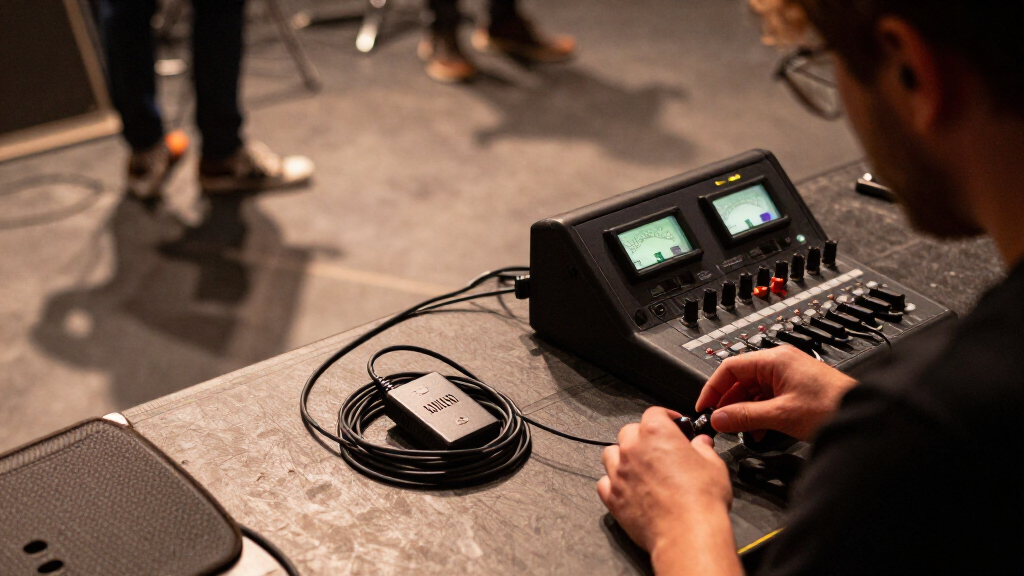
I ranked these options around the needs of working musicians: a usable wireless format, practical fit with a stage or rehearsal setup, flexibility for one or more performers, and the likely effort involved in integrating the system. I gave extra weight to clearly differentiated designs, such as the U45’s 5.8 GHz true diversity approach, the PTM-10’s UHF stereo format, and the MS-20’s included two-receiver package. I also treated the wired models honestly as personal-monitor headphones, not complete wireless solutions.
That means the ranking favors systems with a clear use case and meaningful setup advantages, rather than treating wireless frequency or a feature list as a guarantee of better sound or reliability. Products with less specified positioning can still suit straightforward use, but buyers should verify the exact connection, included accessories, range expectations, and compatibility before committing. The two KZ ZS10 Pro entries share a model name and core configuration but appear in different color listings, so I don’t treat them as distinct performance tiers.
Factors to Consider When Choosing Wireless In-ear Monitors For Musicians
Choosing a musician’s IEM setup starts with the whole signal path, not the earphones alone. I’d match the transmitter to the venue and mixer, then check how many performers need the feed, how you’ll control the mix, and what backup plan you have if the wireless link becomes unreliable.
Match the Wireless Band to Your Venue
Wireless performance depends on the radio environment around you, so the frequency printed on a system is only one part of the decision. A 2.4 GHz unit may be convenient for portable setups, but that band can be busy in spaces with Wi-Fi and other wireless gear. The U45’s 5.8 GHz design offers another band to consider, while the PTM-10’s UHF format belongs to a different style of stage setup. Check local spectrum rules and venue coordination needs before choosing a UHF system. For regular gigs, ask the venue or engineer what bands are already in use and scan or coordinate channels where the equipment allows it. Don’t judge a system’s range from an advertised figure alone: walls, body position, antennas, and nearby transmitters can all change the result.
Plan the Mix and the Number of Receivers
A wireless link carries a monitor mix; it does not automatically give each musician an independent mix. If a band shares one transmitter, everyone may hear the same balance unless the mixer and system support separate feeds. The LEKATO MS-20’s two-receiver package is useful for a pair of performers sharing a feed, but it does not by itself mean each receiver can select a different mix. Before buying, count the transmitters and receivers you need, then confirm how additional units pair and whether more mixes require extra mixer outputs. A singer who needs vocal prominence may prefer a dedicated mix even if that means a separate transmitter. Confirm who controls monitor levels on stage so adjustments don’t disrupt another performer’s listening balance.
Check Mixer Outputs and Stereo Needs
Many setup problems come from buying the wireless pack first and checking the mixer later. Verify whether your desk provides the balanced or unbalanced outputs the transmitter accepts, and whether you need a mono send or a stereo pair. Stereo can preserve panning and spatial cues, but it uses more mixer outputs and may not help much if the band already works from a simple mono monitor mix. Think through how the signal will be routed at rehearsals as well as at venues; a system that works only with one console can become a hassle. Ask whether the transmitter input level can be matched to your mixer to avoid distortion or a weak signal. Keep a wired fallback available for rehearsals or technical problems, especially if your performance depends on hearing cues clearly.
Treat Earphones, Fit, and Isolation as Part of the System
A wireless transmitter cannot compensate for earphones that fit poorly or fail to isolate enough stage sound. A secure seal can improve perceived bass and reduce the need to raise listening levels, while an uncomfortable fit can become distracting during a long set. The wired KZ ZS10 Pro, CCA CRA, and CCZ Yinyoo Melody options may serve as personal listening choices, but they do not replace the wireless transmitter and receiver. Check connector compatibility before pairing separate earphones with a bodypack, and confirm that the cable sits securely during movement. Give yourself time to test different tips and rehearse at realistic stage volume. Don’t assume that a more complex driver configuration alone will make an earphone a better stage monitor; fit, isolation, and a useful mix matter just as much.
Choose Portability or a Rack-Based Workflow
Compact wireless systems are appealing when you want a quick setup, fewer rack components, and less gear to carry between rehearsals. A rack-oriented option such as the Phenyx Pro PTM-10 may suit a band with a fixed stage rack and a more structured wireless workflow. Compare not just the transmitter size but also how it mounts, how it receives power, how you store receivers, and how quickly you can troubleshoot it. Portable systems can be easier for solo performers, but a small form factor does not remove the need to manage charging and spare batteries. Bands that tour or share equipment should label packs and keep a record of channel assignments. Pick the format that matches how your rig is actually transported and maintained, rather than the one that looks simplest in a product listing.
Set a Sensible Budget for Reliability and Backup
Spend according to the cost of a failure during your performance, not just the number of features on a box. A casual rehearsal setup may be fine with a straightforward portable system, while frequent gigs can justify more planning around frequency coordination, receiver count, and dependable power. Before paying more, identify the specific benefit you need—such as a different operating band, a rack workflow, or support for a second receiver. Also budget for ear tips, batteries or charging routines, spare cables, and a wired fallback if those are missing from your current kit. A backup plan is especially useful when the monitor feed carries click tracks or other timing cues. If you cannot confirm compatibility or how a system handles multiple performers, resolve that uncertainty before making it the center of your stage setup.
Frequently Asked Questions
Can I use the wired IEMs in this roundup without a wireless transmitter?
Yes. The KZ ZS10 Pro, CCA CRA, and CCZ Yinyoo Melody are wired earphones, so they need a compatible headphone output or bodypack to receive audio. They can suit a musician who already has a wired monitor feed or wants a simpler personal listening setup. They do not provide the freedom of movement offered by a transmitter-and-receiver system. Check connector and cable compatibility with your mixer or pack before ordering. If you need a complete wireless stage setup, choose a wireless system and treat these wired models as separate earphone options.
Is a 5.8 GHz system automatically more reliable than a 2.4 GHz system?
No frequency guarantees a clean connection in every venue. The Xvive U45 uses 5.8 GHz and true diversity, while several options in this roundup operate at 2.4 GHz, but performance still depends on local interference, placement, and the room. Ask what other wireless devices are active and test the system from the positions where you perform. A different band can help when one part of the spectrum is crowded, but it is not a substitute for checking the actual environment. For regular venue work, learn how the system pairs and what options it offers if the signal becomes unstable.
Does the LEKATO MS-20 give two musicians separate monitor mixes?
The listed package includes one transmitter and two receivers, which makes it suited to sharing a transmitted feed. That package detail alone does not establish that each receiver can hear an independent mix. Separate mixes usually require separate mixer outputs and a system designed to transmit them independently. If one performer needs a different vocal or instrument balance, confirm the system’s routing and receiver capabilities before buying. Otherwise, plan for both musicians to hear the same mix and work with the engineer to make it useful for everyone.
Should I choose the Phenyx Pro PTM-10 or a compact 2.4 GHz system?
Choose based on your rig and venue workflow, not simply the wireless band. The PTM-10 is a UHF stereo system and may make more sense for a musician or band building around a rack-based setup. A compact 2.4 GHz model may be easier to carry and set up for rehearsals or smaller portable rigs. Check what frequencies your venue can support, what outputs your mixer provides, and how many receivers you need. If you already coordinate several wireless systems, consult the venue or an RF technician before adding another transmitter.
What should I buy first if I’m new to in-ear monitoring?
Start by confirming that your mixer can provide a monitor output and deciding whether you need freedom to move around the stage. A wired IEM can be a straightforward way to learn how a personal mix feels, while a complete wireless system adds transmitter, receiver, power, and frequency-management decisions. If movement matters, compare a simple wireless setup with your band’s existing gear and check how it connects before ordering. Ask the engineer for a usable mix at a controlled level, then adjust gradually rather than turning the pack up to overcome a poor fit. Keep a wired backup available until your wireless setup has been checked in rehearsal and at the venue.
Conclusion
For the best overall wireless pick, I’d choose the Xvive U45 if its 5.8 GHz true diversity design suits your venue and compact setup. The best value-oriented fit is the LEKATO MS-1 for musicians seeking a straightforward 2.4 GHz system, while the best premium-style, rack-focused choice is the Phenyx Pro PTM-10 for buyers who want a UHF stereo workflow and can confirm venue compatibility. For beginners, the JOYO JW-07 or another simple portable system may be easier to approach than a rack-based rig, provided its connections match your mixer. For two performers sharing one feed, the LEKATO MS-20’s included two receivers are the most direct match; for a wired setup or backup, consider the KZ ZS10 Pro, CCA CRA, or CCZ Yinyoo Melody, knowing none is a wireless system. Choose around your mixer, venue, and required mix count first—the right fit matters more than a feature list.
Halloween Picks
halloween
As an affiliate, we earn on qualifying purchases.