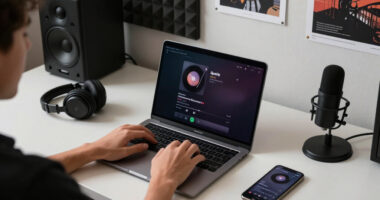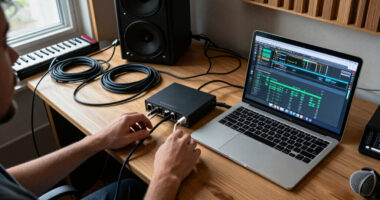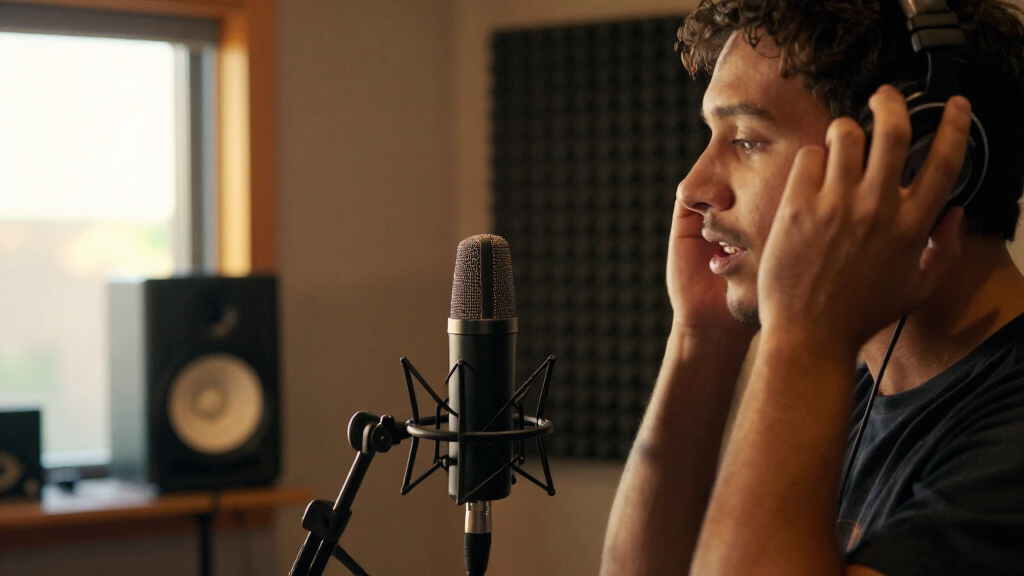
“Wireless studio microphones” can mean a wireless link for recording a speaker in a treated room, a podcast, or a video session. In that setting, RØDE Wireless PRO and DJI Mic 2 are useful alternatives: both use clip-on transmitters with built-in microphones, send audio wirelessly to a receiver, and can record sound on the transmitter. Neither replaces a studio condenser microphone on a boom arm for every voice or instrument, but both simplify recording when a speaker needs to move or a cable would get in the way.

Get audio and creator gear delivered free with Prime
- Fast, free delivery on millions of items
- Prime Video, Amazon Music and more included
- Member-only deals all year

Audigo Wireless Microphone with Recording Studio App for iOS and Android
- ✔ Connectivity: Bluetooth and Wi-Fi
- ✔ Connector: USB Type-C
- ✔ Recording format: 24-bit/48 kHz stereo (as described)

MAONO PD200W Hybrid Wireless Podcast Microphone for PC, Dynamic XLR USB Mic
- ✔ Connectivity: Wireless, USB, and XLR
- ✔ Polar pattern: Cardioid
- ✔ Capsule: 30 mm dynamic
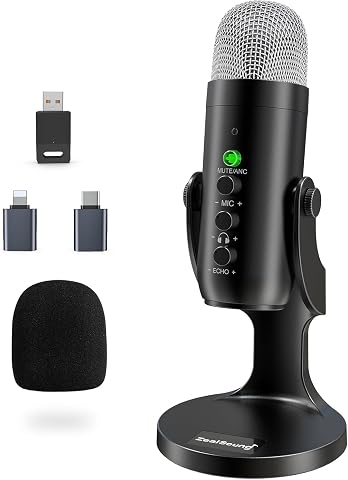
ZealSound K66 Wireless Microphone for PC, iPhone, iPad & Android with Noise Cancellation and Zero-Latency Monitoring
- ✔ Connectivity: 2.4GHz wireless and wired USB
- ✔ Compatibility: PC, Mac, iPhone, iPad, Android, PS4, PS5
- ✔ Audio capture: 48 kHz
The decision is less about which system can record a voice and more about how much protection and control the session needs. Wireless PRO favors production workflows, including 32-bit float onboard recording, timecode support, and a receiver with flexible output options. DJI Mic 2 keeps operation approachable, offers onboard recording and noise reduction, and can connect directly to compatible DJI gear. Choose RØDE when a missed take or difficult sync creates expensive rework; choose DJI when ease of setup, a compact creator kit, and a lower entry price matter more.
At a Glance
| Criteria | RØDE Wireless PRO | DJI Mic 2 | Winner |
|---|---|---|---|
| Recording backup and recovery | 32-bit float onboard recording on transmitters supports recovery from clipped or quiet recordings; internal recording is a central workflow feature. | Onboard transmitter recording provides a backup, but standard 32-bit float recovery is not the core selling point. | A |
| Studio sound and processing | Clip-on omnidirectional mics; sound quality is suitable for speech, with external mic inputs for alternate lavaliers. | Clip-on omnidirectional mics with noise reduction; clear speech capture, with sound character and processing choices aimed at creators. | Depends |
| Workflow and synchronization | Timecode support and multiple receiver outputs suit multi-camera or post-production workflows. | Simpler workflow with less emphasis on integrated timecode; well suited to direct recording and common creator setups. | A |
| Connectivity and compatibility | Camera, computer, and mobile use via receiver connections; external lavalier inputs expand mic choices. | Receiver connections support common camera, computer, and mobile workflows; direct connection with compatible DJI devices can simplify setups. | Depends |
| Setup and everyday use | More controls and options to configure; useful once a production workflow is established. | Straightforward setup and controls make it accessible for solo recording and quick shoots. | B |
| Price and value | Typically costs more; premium is justified when production safeguards and timecode save editing or reshoot effort. | Generally less expensive; strong value for straightforward dialogue capture and creator use. | B |
Audigo Wireless Microphone with Recording Studio App for iOS and Android
Audigo is the strongest match here for creators who want the recording studio to travel with the phone. Its pocket-sized condenser captures stereo audio and video directly to a smartphone or tablet, while the companion app brings multitrack recording, editing, mixing, and effects into the same workflow. That makes it more than a wireless mic feeding a separate recorder: the app is central to how the product earns its place.Compared with the MAONO PD200W, Audigo favors compact, app-driven production over a familiar desk microphone that can also plug into USB or XLR equipment. It is also more oriented toward shaping a finished recording than the ZealSound K66, whose appeal is quick connection and direct access to gain, echo, mute, and headphone monitoring. The magnetic base and multi-mic sync add practical flexibility for mobile recording, and the listed 24-bit/48 kHz stereo capture suits creators who want a wider sound field than a straightforward voice-only setup.The tradeoff is dependence on a compatible phone or tablet and the app. Advanced functions may require a paid subscription, so buyers who prefer a computer-based signal chain or dislike app-dependent tools should look to MAONO instead. Up to six hours of recording is also the shortest stated battery life among these options, making Audigo less comfortable for long sessions without a charging plan. It is our top pick when mobile editing matters more than long endurance or conventional studio routing.
Pros:
- Pocket-sized design combines capture with a portable recording workflow.
- 24-bit/48 kHz stereo recording with adjustable width supports more than basic voice capture.
- Bluetooth and Wi-Fi connectivity avoid a separate receiver in the described setup.
- Companion app includes multitrack recording, editing, mixing, and effects.
Cons:
- Up to six hours of recording is limited for extended sessions.
- Full functionality depends on a compatible mobile device, and advanced app features may require a subscription.
- Its app-centered workflow is less suited to buyers building around conventional USB or XLR studio routing.
Best for: Mobile creators who want to record, edit, and mix multitrack audio on a compatible phone or tablet.
Not ideal for: Long-session podcasters, XLR-first studio owners, or buyers who want an advanced workflow without relying on an app.
Bottom line: Choose Audigo when a pocket-sized mic and mobile multitrack production matter more than battery endurance or traditional studio connections.
“Choose Audigo when a pocket-sized mic and mobile multitrack production matter more than battery endurance or traditional studio connections.”
MAONO PD200W Hybrid Wireless Podcast Microphone for PC, Dynamic XLR USB Mic
MAONO PD200W is the pick for buyers who want a wireless microphone that can also join a wired studio. Its dynamic capsule and cardioid pickup suit focused speech recording, while the choice of wireless, USB, or XLR lets us use it with a laptop today and an audio interface or mixer later. That flexibility gives it a more conventional studio role than the mobile-first Audigo.For podcast hosts, a key distinction is support for two microphones on one receiver, which can simplify a dual-host setup. The stated wireless range is up to 60 m and battery life up to 60 hours, a considerable endurance advantage over Audigo’s listed six hours. MAONO also handles up to 128 dB SPL, and its app provides EQ and reverb controls. In comparison, the ZealSound K66 offers straightforward on-mic adjustment and zero-latency monitoring, but the supplied description does not list XLR connectivity or dual-mic receiver support.That broader setup range comes with more pieces to understand. App-based sound customization can slow down beginners who want to plug in and speak, and camera or Lightning accessories for video sync are sold separately. Its larger, heavier desktop format is also less pocketable than Audigo. MAONO is our preferred choice for a desk-based podcast or studio that may change connections over time; buyers who mainly record on a phone while moving around will find Audigo’s integrated mobile workflow more natural.
Pros:
- Wireless, USB, and XLR connectivity support varied recording setups.
- One receiver can support two microphones for dual-host recording.
- Up to 60 hours of battery life and a stated 60 m range suit longer or more mobile sessions.
- Dynamic cardioid capsule, noise reduction, mute, volume control, and app-based EQ/reverb support voice work.
Cons:
- App-based sound customization may take time for beginners to learn.
- Camera and Lightning accessories required for video sync are sold separately.
- Its desktop-oriented size and listed 1.32 kg weight make it less portable than Audigo.
Best for: Podcast hosts and vocal creators who want wireless operation now, with USB and XLR options for different studio setups.
Not ideal for: Creators seeking a tiny mobile rig or a minimal setup with no app learning curve or extra camera accessories.
Bottom line: Choose MAONO PD200W if connection flexibility and long battery life matter more than pocketability and a phone-first editing workflow.
“Choose MAONO PD200W if connection flexibility and long battery life matter more than pocketability and a phone-first editing workflow.”
ZealSound K66 Wireless Microphone for PC, iPhone, iPad & Android with Noise Cancellation and Zero-Latency Monitoring
The ZealSound K66 is aimed at creators who want to connect quickly and adjust sound at the microphone. Its 2.4GHz wireless mode and wired USB backup cover common recording situations, while the included Lightning and USB-C adapters broaden compatibility across computers and mobile devices. On-mic gain, echo, and mute controls mean a user can make basic adjustments without opening an app or reaching for separate software controls.Its defining studio feature is zero-latency headphone monitoring, which lets us hear the input in real time while speaking or recording. That makes it a more direct self-monitoring option than the supplied Audigo description, which emphasizes app-based editing and mixing. Compared with MAONO, K66 is more approachable for a solo creator who values plug-and-play setup over XLR expansion, dual-mic support, or a long stated battery life. Its cardioid pattern and 48 kHz capture align with focused voice work such as streaming and podcasting.There are limits to that simplicity. The noise-reduction mode may change vocal tone, so creators pursuing a natural sound should compare it with the default setting and adjust carefully. Wireless use also requires battery management, although wired mode offers a fallback. The supplied information does not specify battery life or a wireless range, so we would not choose it on endurance claims. K66 makes the most sense for a solo streamer or beginner who wants hands-on controls; for a growing podcast rig, MAONO offers more connection paths, while Audigo provides deeper mobile production tools.
Pros:
- Plug-and-play wireless and wired USB modes support a range of devices.
- Zero-latency headphone monitoring supports real-time listening while recording.
- On-mic gain, echo, and mute controls enable quick adjustments.
- Included Lightning and USB-C adapters support phones, tablets, and computers.
Cons:
- Noise reduction may alter the natural tone of a voice.
- Wireless operation requires battery management; no runtime is specified in the supplied details.
- The described feature set is less suited to expandable XLR or dual-microphone podcast rigs than MAONO.
Best for: Solo streamers, beginners, and mobile-device users who want simple setup, direct monitoring, and accessible on-mic controls.
Not ideal for: Dual-host podcasters, XLR-based studios, or anyone who needs a specified long wireless runtime or range.
Bottom line: Choose K66 for an accessible solo recording setup with direct monitoring, and step up to MAONO if your studio needs XLR or multiple microphones.
“Choose K66 for an accessible solo recording setup with direct monitoring, and step up to MAONO if your studio needs XLR or multiple microphones.”
As an Amazon Associate we earn from qualifying purchases.
Key Differences
The clearest gap is in production protection. Wireless PRO records onboard in 32-bit float and supports timecode, giving editors more ways to recover a level problem or align clips from multiple devices. DJI Mic 2 also records onboard, which can save a take if the wireless signal falters, but its appeal is a simpler route from setup to usable dialogue. In a controlled studio, where a speaker stays near the receiver, the backup difference may rarely affect the finished sound. On a moving shoot or a session that cannot easily be repeated, it carries more weight.
For ordinary speech, neither system should be treated as a complete substitute for a dedicated studio microphone and room treatment. Both can capture clear dialogue, and both have noise-control features, but a lavalier’s placement and the room’s acoustics shape the result. Wireless PRO’s extra routing and sync features matter most when the recording feeds a larger production. DJI Mic 2 is the more comfortable fit for a solo creator who wants a compact kit, common device connections, and less setup overhead.
The price difference buys workflow insurance and flexibility, not a guaranteed leap in voice quality. Pay more for RØDE when timecode, recovery options, or external lavalier choices will be used. Save with DJI when recording is mostly a single speaker, a camera or phone, and a straightforward edit. If the work is stationary podcasting or voiceover, compare either wireless system against a wired USB or XLR studio microphone before buying: a cable can deliver a simpler signal path and better value when mobility is unnecessary.
Detailed Comparison
Recording backup and recovery (RØDE Wireless PRO wins — major)
Both transmitters can record audio internally, so either system can preserve a take when the radio link is interrupted. Wireless PRO has the stronger recovery story: 32-bit float recording can help editors handle unexpectedly loud or quiet input levels after capture. The advantage is moderate in a quiet studio with a fixed speaker and careful levels, but major when shoots are difficult to repeat or levels vary. DJI’s onboard backup is still useful; it just offers less protection against level-setting mistakes.
Studio sound and processing (moderate difference)
For spoken voice, both systems can produce clean results when the transmitter is placed well and the room is controlled. DJI Mic 2’s noise reduction can help in some noisy environments, while Wireless PRO offers a flexible path to external lavaliers and other mic choices. This is a modest, situation-dependent difference rather than a universal sound-quality win: processing can reduce some background noise, but neither system can remove room echo or replace good mic placement.
Workflow and synchronization (RØDE Wireless PRO wins — major)
Wireless PRO wins for productions that need timecode and flexible receiver outputs. Those features can reduce manual syncing and fit the system into multi-camera work. DJI Mic 2 is easier to approach for a direct camera, phone, or creator workflow, but offers less built-in production synchronization. The gap is major for a crew editing multiple devices and minor for a single-camera interview that can be synced by waveform.
Connectivity and compatibility (moderate difference)
Both systems cover common camera, computer, and mobile recording, though the exact cable or adapter depends on the device. DJI has a practical advantage for owners of compatible DJI equipment, where direct pairing can remove a separate receiver from the setup. RØDE offers external lavalier inputs that can broaden mic choice. The winner depends on the user’s gear: DJI for an integrated DJI setup, RØDE for mic flexibility.
Setup and everyday use (DJI Mic 2 wins — moderate)
DJI Mic 2 is the easier recommendation for quick solo sessions: its creator-focused workflow makes it simple to get a speaker connected and recording. Wireless PRO has more controls and production features to learn, which pay off when a session uses them but add little to a basic talking-head recording. This is a moderate everyday advantage for DJI if the system is used casually or by different operators.
Price and value (DJI Mic 2 wins — moderate)
DJI Mic 2 generally costs less, making it the better value for straightforward dialogue capture. Wireless PRO’s higher price makes sense when timecode, 32-bit float recovery, or a more involved production workflow saves time or protects a valuable take. If those features will sit unused, the extra spend is hard to justify. If reshooting is costly, the premium can be rational.
RØDE Wireless PRO: Pros and Cons
Pros:
- 32-bit float onboard recording adds protection against level mistakes.
- Timecode and flexible receiver outputs suit more involved productions.
- External lavalier inputs support alternative microphones.
Cons:
- Costs more than a simpler creator kit.
- Extra controls add setup complexity.
- Production features may go unused in fixed, one-speaker sessions.
DJI Mic 2: Pros and Cons
Pros:
- Straightforward setup for solo creators and quick shoots.
- Onboard recording provides a useful backup.
- Often lower priced, with direct integration for compatible DJI devices.
Cons:
- Less built-in support for timecode-heavy workflows.
- Lacks Wireless PRO’s 32-bit float recovery advantage.
- DJI-specific integration is useful only with compatible equipment.
Who Should Choose What
Choose RØDE Wireless PRO if:
- You record interviews or shoots that are difficult to repeat and want onboard recovery options.
- You need timecode or flexible routing in a multi-camera post-production workflow.
- You plan to use external lavaliers and value production flexibility.
Choose DJI Mic 2 if:
- You want a simple wireless kit for solo video, mobile content, or casual interviews.
- You already use compatible DJI equipment and benefit from direct pairing.
- You want to spend less and do not need timecode or 32-bit float recovery.
Skip both if: Your recording is stationary podcasting, voiceover, or instrument work where a wired studio microphone can stay in place; compare a USB or XLR mic and room treatment instead.
Value for Money
DJI Mic 2 is the better value for most basic speech recording because it captures dialogue, offers an onboard backup, and avoids paying for production tools a solo creator may never use. RØDE Wireless PRO earns its higher price when a recording needs timecode, recovery from level mistakes, or external lavalier flexibility. In those cases, the value comes from fewer sync problems and less risk of losing a usable take, not from an automatic improvement in studio tone. Pay the premium only when those workflow advantages match the way you record.
Final Verdict
For a solo creator or small studio recording one speaker at a time, choose DJI Mic 2. It is easier to operate, usually costs less, and covers the central job of capturing wireless dialogue with an onboard backup. Choose RØDE Wireless PRO for paid shoots, multi-camera sessions, or recordings where timecode and 32-bit float recovery can prevent costly editing or reshoots. The deciding factor is the production cost of failure: if a missed level or sync problem is expensive, RØDE is the stronger tool; if not, DJI is the smarter buy. For fixed studio work, consider a wired microphone before choosing either wireless system.
Frequently Asked Questions
Are wireless clip-on systems a good choice for studio recording?
They work well for spoken voice when the speaker needs mobility or a cable-free setup. For a seated podcast or voiceover, a wired USB or XLR microphone may offer a simpler and more cost-effective studio path.
Which system is safer if the wireless signal drops?
Both can record audio on the transmitter, so a signal problem does not have to ruin the take. Wireless PRO adds 32-bit float onboard recording, giving it a stronger option for recovering from poor input levels during editing.
Does DJI Mic 2 sound better than RØDE Wireless PRO?
There is no universal winner for voice quality. Mic placement, room acoustics, and processing choices often matter more than the system name. Test the sound in the intended room when possible, especially if the recording is for a polished podcast or voiceover.
Is Wireless PRO worth paying more for?
Yes if timecode, 32-bit float recovery, or external lavalier choices will be used in a production workflow where mistakes cost time or reshoots. For simple single-camera dialogue, DJI Mic 2 is usually the better value.