The legal fight over AI copyrights centers on who owns works created by artificial intelligence—whether it’s the programmer, user, or no one at all. Existing copyright laws are designed for human creators, making it unclear how they apply to AI-generated content. Courts are debating if AI works qualify for copyright and who holds rights. As laws evolve, understanding this complex issue can help you stay informed about the future of AI and intellectual property.

Get audio and creator gear delivered free with Prime
- Fast, free delivery on millions of items
- Prime Video, Amazon Music and more included
- Member-only deals all year
Key Takeaways
- The legal fight revolves around who owns AI-created works: the programmer, user, or no one.
- Existing copyright laws mainly protect human-created works, causing questions about AI-generated content.
- Courts are debating if AI outputs qualify for copyright and who holds the rights.
- Laws are being considered or changed to clarify ownership and fair use in AI-generated content.
- Future legal decisions will shape how AI-created works are protected and credited.
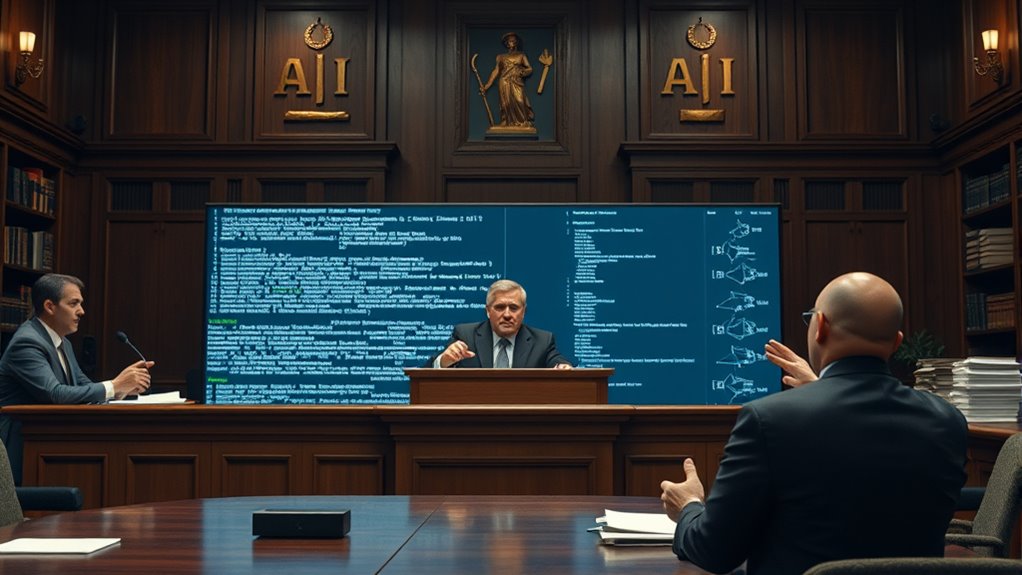
As artificial intelligence continues to generate original works, a legal battle is brewing over who holds the rights to AI-created content. This issue revolves around the core concepts of intellectual property and how existing laws apply to creations made by machines. Traditionally, copyright laws grant rights to human creators, but with AI, the question becomes who should be recognized as the author—the person who programmed the AI, the user who directed it, or perhaps no one at all. This ambiguity creates a complex legal landscape that needs clear rules to protect innovation while balancing public interests.
You might wonder how existing intellectual property laws fit into this new domain. Copyright law, for example, is designed to protect original works created by humans. When an AI produces a piece of art, music, or writing, it challenges the idea of originality and authorship. Courts are now faced with deciding whether AI-generated works can be copyrighted and, if so, who should hold those rights. Some argue that since AI lacks consciousness and creativity in the human sense, the rights should stay with the human who owns or controls the AI. Others believe that if a person significantly influences the output, they should be considered the rightful owner.
AI-generated works challenge originality rights; ownership debates focus on human control and influence over machine creations.
Another important aspect of this debate is fair use. This legal doctrine allows limited use of copyrighted materials without permission under certain circumstances, like commentary, criticism, or education. As AI tools often learn from existing copyrighted works, questions arise about whether their training or outputs qualify as fair use. For example, if an AI analyzes copyrighted images to create a new piece, does that fall under fair use, or does it infringe on the original rights? The lines are blurry, and courts are still debating how fair use applies when AI is involved. These decisions will influence how freely AI can build on existing content without infringing copyrights and how creators can protect their works.
You should also know that legal experts and lawmakers are actively working to adapt intellectual property laws to better suit AI-generated content. Some suggest creating new categories of rights or modifying existing laws to clarify who owns AI-created works and how fair use applies. Until then, creators, developers, and users must navigate this uncertain terrain carefully, understanding that the current system may not fully address the unique challenges posed by AI. Additionally, the complexity of defining authorship in AI-generated works adds an extra layer of difficulty in legal interpretations. As technology advances, expect ongoing legal battles and evolving regulations to shape the future of AI and copyright law, ensuring that innovation is protected while respecting the rights of original creators.
As an affiliate, we earn on qualifying purchases.
Frequently Asked Questions
How Do Existing Copyright Laws Apply to Ai-Generated Works?
You might wonder how copyright laws apply to AI-generated works. Currently, copyright exceptions often limit protection to human creators, so AI-created content may not qualify for copyright. Moral rights, which protect a creator’s personal connection to their work, usually don’t extend to AI. This means that, without clear legal rules, AI-generated works might lack the same protections as human-made creations, raising questions about ownership and rights.
Who Owns the Rights to Ai-Created Content?
You might wonder who owns rights to AI-created content. Currently, AI ethics influence this, but laws are still catching up. Typically, the creator or user of the AI holds the intellectual property rights, although this isn’t always clear. As AI advances, legal debates focus on how existing copyright laws apply, emphasizing the need for updated regulations that address ownership, accountability, and the role of human input in AI-generated works.
Can Artists Claim Damages From AI Copyright Infringements?
It’s ironic, isn’t it? You create art, and AI might infringe, yet claiming damages feels like a stretch when fair use or moral rights come into play. You can try, but courts often weigh AI’s role and intent. While you might seek damages, protect your moral rights, and argue fair use, the outcome’s uncertain. Ultimately, AI copyright disputes challenge your rights more than clarify them.
What Are the Potential Impacts on Creativity and Innovation?
You might find that AI copyright disputes impact your creative freedom and innovation. If creators face legal uncertainties or restrictions, it could become harder to experiment and push boundaries. These barriers might stifle originality, making you hesitant to explore new ideas or collaborate. However, clear laws could also protect your work, encouraging more innovation. Ultimately, the ongoing legal battles could shape how freely you can create and innovate in the future.
How Might Future Legislation Change AI Copyright Regulations?
Future legislative proposals could reshape AI copyright laws like a puzzle coming together, creating clearer rules. You might see new standards that define ownership and authorship, making legal reform strategies more precise. These changes could encourage innovation by reducing uncertainty, or they could impose stricter controls. As lawmakers adapt regulations, your creative work might gain better protections or face new hurdles, depending on how future laws balance innovation and rights.
copyright management software for AI
As an affiliate, we earn on qualifying purchases.
As an affiliate, we earn on qualifying purchases.
Conclusion
As you navigate the evolving landscape of AI copyrights, remember that each legal case is like a seed planted in the future’s garden. Today’s rulings shape the growth of creativity and innovation, symbolizing the delicate balance between human inspiration and machine assistance. Stay informed and engaged, because in this ongoing battle, your voice helps determine whether our creative spirit will flourish or fade behind the shadows of uncertainty. The future of art and law depends on your awareness.
As an affiliate, we earn on qualifying purchases.
digital rights management for AI-generated works
As an affiliate, we earn on qualifying purchases.
As an affiliate, we earn on qualifying purchases.
Columbus Day / Indigenous Peoples' Day Picks
long weekend sales
As an affiliate, we earn on qualifying purchases.