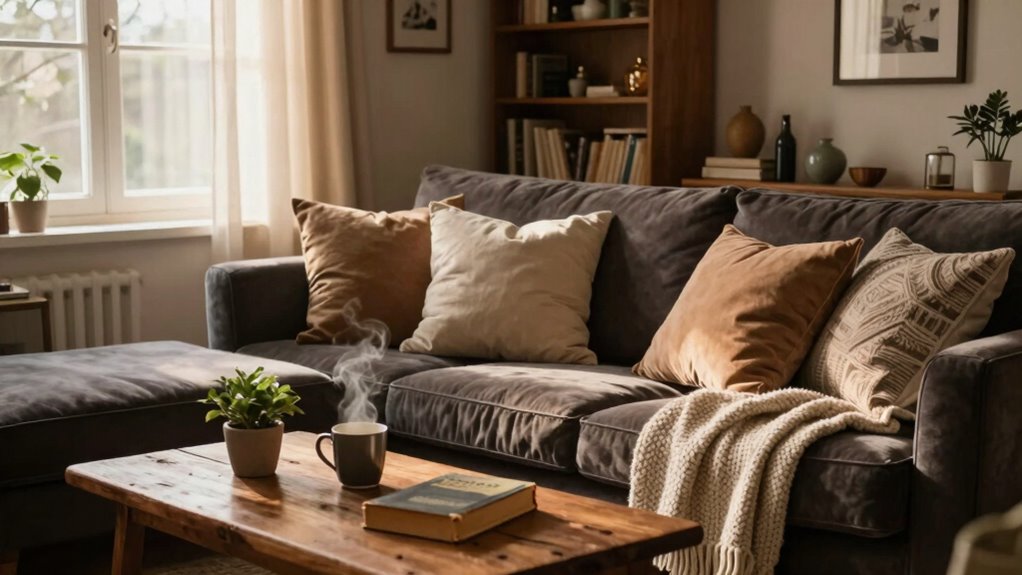

In the homebody era, comfort has shifted from fleeting luxury to an essential part of daily life, making your personal space a sanctuary for relaxation. You can create a cozy environment using warm tones, soft textures, natural materials, and calming lighting. Emphasizing well-being, your space should promote mental health and reflect your personality. By prioritizing comfort and natural elements, you transform your home into a restorative retreat. Keep exploring to discover how to craft the perfect cozy haven.

Get audio and creator gear delivered free with Prime
- Fast, free delivery on millions of items
- Prime Video, Amazon Music and more included
- Member-only deals all year
Key Takeaways
- Comfort has shifted from luxury to essential, making personal spaces a sanctuary for relaxation and well-being.
- Cozy aesthetics use warm tones, soft textures, and natural materials to create inviting, calming environments.
- Natural light and environmental elements enhance mood and foster a restorative, health-conscious home atmosphere.
- Personal spaces are designed to support mental health, emphasizing tranquility, meaningfulness, and emotional safety.
- The Homebody Era prioritizes quality, customization, and sustainability in creating a comforting, retreat-like living environment.

In recent years, the concept of comfort has shifted from fleeting luxury to a fundamental part of everyday life, driven by the rise of the homebody era. Now, your personal space isn’t just a place to sleep or store your belongings; it’s a sanctuary where you can truly unwind and feel at ease. You prioritize creating an environment that reflects your personality and nurtures your well-being. Cozy aesthetics play a vital role in this transformation. You’re drawn to warm tones, soft textures, and inviting decor that make your space feel like a warm embrace. Think plush throws, fluffy rugs, and comfortable seating—elements that invite you to sink in and relax after a busy day.
Your personal space becomes more than just functional; it becomes a reflection of your desire for comfort and tranquility. You carefully select pieces that foster a sense of calm, opting for natural materials and minimalist designs that avoid clutter and chaos. The goal is to craft an environment that’s visually soothing and emotionally restorative. You may add plants to introduce a touch of nature, or use ambient lighting to set a cozy mood, making your space feel more intimate and welcoming. The focus is on creating a harmonious atmosphere where you can feel truly yourself, free from external pressures and distractions. Recognizing how natural materials influence comfort can help you create a space that’s both sustainable and inviting. Incorporating biodiversity into your home can also enhance this sense of connection to nature and promote a healthier environment. Additionally, understanding the impact of interior design principles can help you optimize your space for maximum comfort and well-being.
Create a calming, clutter-free space with natural materials, plants, and warm lighting for true comfort and tranquility.
Incorporating natural light can significantly enhance the cozy atmosphere and improve your overall mood in your personal sanctuary. This shift toward prioritizing personal space and cozy aesthetics influences how you decorate and organize your home. You’re more intentional about how your space feels, not just how it looks. Every item is chosen with comfort in mind, whether it’s a chair that molds perfectly to your shape or a blanket that’s just the right weight. You understand that comfort isn’t a luxury but a necessity, especially in a world that’s increasingly fast-paced and demanding. Your home becomes a retreat where you can recharge, reflect, and find peace. Creating a health-conscious environment can further support your overall well-being and mental health.
As you embrace the homebody lifestyle, you find that your space isn’t just about aesthetics; it’s about cultivating an environment that supports your mental and emotional health. Cozy aesthetics and personal space work together to create a setting that’s both beautiful and functional, helping you feel grounded and centered. This new understanding of comfort emphasizes quality over quantity and experience over appearance. It’s about making your home a place where you truly want to spend your time—a personal haven tailored to your needs and tastes.
As an affiliate, we earn on qualifying purchases.
Frequently Asked Questions
How Has Remote Work Influenced Home Design Trends?
Remote work has considerably shaped home design trends by emphasizing cozy aesthetics and multifunctional spaces. You now prioritize creating a comfortable, inviting environment that can double as a workspace, blending relaxation with productivity. You incorporate cozy textiles, warm lighting, and adaptable furniture to maximize space utility. This shift encourages a more personalized, flexible home layout, ensuring your environment supports both work and leisure seamlessly, aligning with the evolving needs of remote workers.
What Are the Environmental Impacts of Increased Home-Centric Lifestyles?
You might notice that increased home-centric lifestyles impact the environment through higher energy consumption, as homes use more electricity and heating. Additionally, indoor air quality can decline with more time spent indoors, especially if ventilation isn’t sufficient. This can lead to health issues and increased reliance on energy-intensive air purification systems. To mitigate these impacts, consider improving insulation, using energy-efficient appliances, and enhancing ventilation to maintain good indoor air quality.
How Do Cultural Differences Shape Home Comfort Preferences?
Cultural differences shape your home comfort preferences by influencing your choice of traditional decor and how you incorporate cultural rituals. For example, you might favor specific colors, patterns, or furniture styles rooted in your heritage. These elements create a familiar, cozy environment that resonates with your cultural identity. Your home becomes a sanctuary where traditional decor and rituals reinforce your sense of belonging and emotional well-being.
What Role Does Technology Play in Enhancing Home Comfort?
Technology plays a vital role in enhancing your home comfort through smart integration. You can customize your environment with smart thermostats, lighting, and appliances, creating personalized spaces that match your preferences. These innovations adapt to your routines, ensuring maximum comfort and convenience. By integrating smart technology, you transform your home into a haven tailored specifically to your needs, making everyday living more relaxing, efficient, and enjoyable.
How Has the Homebody Trend Affected Urban Housing Development?
Imagine you’re living in a city where zoning policies now prioritize urban greenery, influenced by the homebody trend. This shift encourages developers to design homes with outdoor spaces and green areas, making urban living more comfortable and sustainable. You’ll notice a rise in compact, eco-friendly housing that balances privacy with community access. The trend pushes urban development toward greener, more livable neighborhoods, blending convenience with a renewed appreciation for nature.
As an affiliate, we earn on qualifying purchases.
Conclusion
As you embrace the Homebody Era, comfort becomes more than just a trend—it’s a lifestyle. Did you know that 70% of people now prioritize creating cozy, personalized spaces at home? This shift shows that you’re not alone in valuing comfort and self-care. So, keep curating your perfect sanctuary, because in today’s world, feeling truly at home is the ultimate form of luxury. Your space is your haven—make it yours.
As an affiliate, we earn on qualifying purchases.
As an affiliate, we earn on qualifying purchases.
Columbus Day / Indigenous Peoples' Day Picks
long weekend sales
As an affiliate, we earn on qualifying purchases.