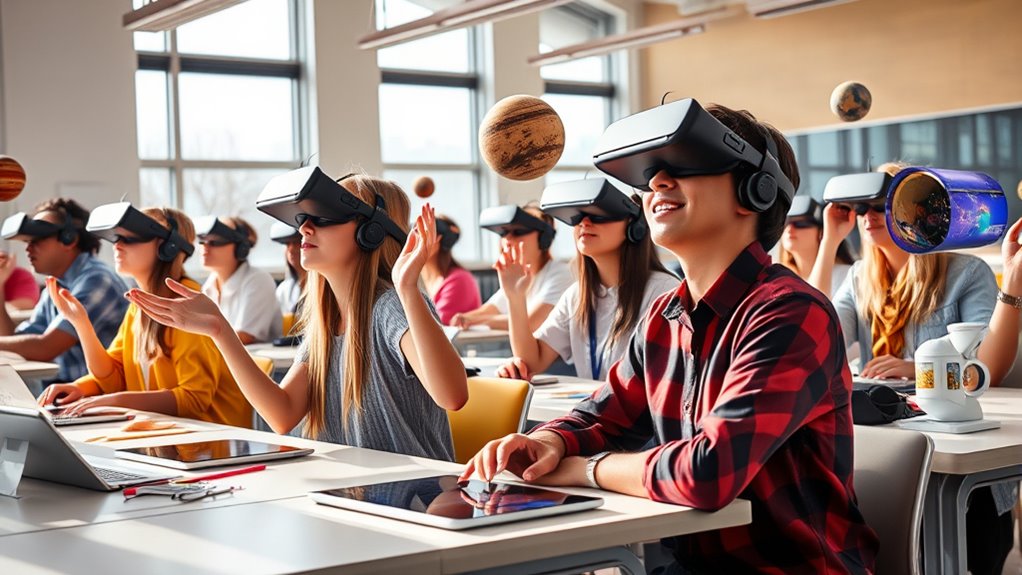

Extended reality (XR), including VR and AR, transforms your classroom by creating immersive, interactive experiences that broaden learning horizons. You can take virtual field trips to historic sites, explore the solar system, or navigate human anatomy with ease. XR encourages collaboration, boosts critical thinking, and makes complex concepts more accessible. This technology enhances engagement and prepares students for a digital future. Continue exploring to discover how XR can truly revolutionize your teaching approach.

Get audio and creator gear delivered free with Prime
- Fast, free delivery on millions of items
- Prime Video, Amazon Music and more included
- Member-only deals all year
Key Takeaways
- XR creates immersive, interactive classroom experiences like virtual field trips and exploration of inaccessible environments.
- VR and AR broaden learning horizons beyond traditional settings, enhancing engagement and subject comprehension.
- Students collaborate in shared digital spaces, developing teamwork, communication, and problem-solving skills.
- XR visualizes abstract concepts through virtual walkthroughs, making complex ideas tangible and easier to grasp.
- Integrating VR and AR improves educational effectiveness, digital literacy, and prepares students for a technology-driven future.
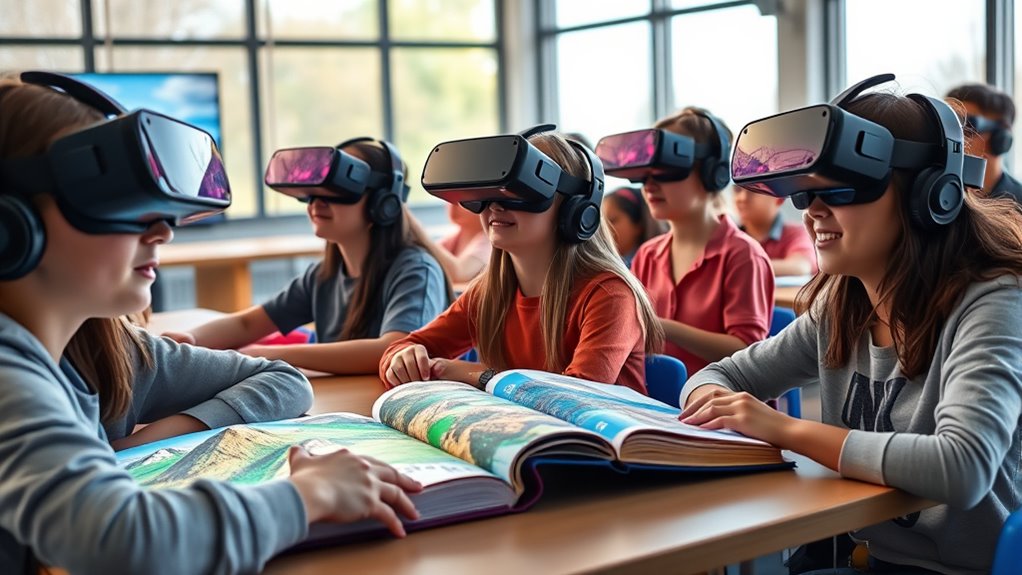
Have you ever wondered how technology can transform the way we learn? Extended reality, including virtual reality (VR) and augmented reality (AR), is changing education by creating engaging, interactive experiences right in your classroom. Instead of relying solely on textbooks and lectures, you can now take virtual field trips that transport you to historic sites, distant planets, or ancient cities without ever leaving your seat. These virtual excursions make learning more dynamic, allowing you to explore environments that would be impossible or impractical to visit physically. Whether it’s wandering through the Louvre or snorkeling in the Great Barrier Reef, virtual field trips expand your horizons and deepen your understanding of the subject matter.
Virtual field trips in VR and AR expand horizons and deepen understanding beyond traditional classroom learning.
Moreover, extended reality fosters immersive collaboration among students. When you and your classmates put on VR headsets or use AR apps, you can work together in a shared digital space, regardless of your physical locations. This immersive collaboration encourages teamwork, communication, and problem-solving, all within a realistic and engaging environment. For example, you might collaboratively build a complex molecule or solve a historical mystery, discussing ideas and making decisions as if you were physically together. This type of interactive learning helps you develop critical thinking skills and learn from your peers in ways traditional methods can’t match. Plus, the technology often adapts to your individual learning pace, providing instant feedback and tailored challenges that keep you motivated and challenged.
Extended reality also introduces new ways to visualize abstract concepts. Instead of just reading about the solar system or the human anatomy, you can virtually walk through a model, observing details from different angles. This hands-on approach makes complex ideas more tangible and easier to grasp. It’s especially beneficial for visual and kinesthetic learners who thrive on interaction and direct engagement. As you explore these digital environments, you’re not just passively absorbing information—you’re actively participating in your education, which improves retention and makes learning more enjoyable. To enhance these immersive experiences, understanding ear wax odor and other sensory cues can sometimes play a role in virtual simulations, making the environment feel even more real and engaging.
The integration of VR and AR in classrooms isn’t just about making lessons more fun; it’s about making education more effective. It bridges gaps in traditional teaching, offers personalized learning experiences, and prepares you for a future where digital literacy is essential. As these technologies become more accessible and affordable, you’ll find more opportunities to engage in virtual field trips, collaborate in immersive environments, and develop skills that will serve you well beyond school. Ultimately, extended reality transforms the classroom into a vibrant, interactive space where learning is limitless and exciting.
VR headset for classroom education
As an affiliate, we earn on qualifying purchases.
As an affiliate, we earn on qualifying purchases.
Frequently Asked Questions
How Cost-Effective Is Implementing XR Technology in Schools?
Implementing XR technology in schools can be cost-effective if you carefully conduct a cost analysis and explore funding opportunities. While initial expenses might be high, you can save money long-term through improved engagement and learning outcomes. Look for grants, sponsorships, and partnerships to offset costs. By planning strategically, you make XR implementation more affordable, ensuring your students benefit from innovative learning tools without straining your school’s budget.
What Are the Privacy Concerns Related to XR Student Data?
You should be aware that privacy concerns with XR student data revolve around data security and compliance with privacy legislation. XR platforms collect sensitive student information, risking breaches if security isn’t tight. Ensuring student data security means following privacy legislation like FERPA or GDPR, which protect student information. As a result, you need robust data policies and encryption to prevent unauthorized access and maintain trust in XR educational tools.
How Do Teachers Receive Training for XR Classroom Integration?
You receive training through specialized professional development programs designed to boost your preparedness for XR classroom integration. These sessions often include hands-on workshops, tutorials, and ongoing support, helping you become comfortable with VR and AR tools. By participating in these programs, you gain the skills needed to effectively incorporate XR into your lessons, ensuring you’re confident and prepared to enhance student engagement and learning outcomes with new technologies.
Are There Curriculum Standards for Xr-Based Lessons?
Did you know that 65% of educators believe that clear curriculum standards are vital for integrating XR effectively? You’ll find that many education systems are developing specific curriculum standards for XR-based lessons, aiming to guide lesson planning and guarantee consistency. These standards help you align XR activities with learning goals, making it easier to design engaging, effective lessons that meet educational benchmarks and improve student outcomes.
How Accessible Are XR Tools for Students With Disabilities?
You can make XR tools more accessible for students with disabilities by integrating assistive technology and inclusive design. Many XR platforms now include features like audio descriptions, captioning, and customizable controls, helping all students engage fully. Developers and educators are increasingly focusing on universal design principles, ensuring XR experiences accommodate diverse needs, making learning more inclusive and equitable for students with disabilities.
AR educational apps for students
As an affiliate, we earn on qualifying purchases.
As an affiliate, we earn on qualifying purchases.
Conclusion
As you explore extended reality in education, you might wonder if VR and AR truly transform learning. Evidence suggests they boost engagement and understanding, making complex concepts more tangible. While some claim these tools are just trendy, research indicates they have lasting benefits when integrated thoughtfully. So, it’s worth considering that XR isn’t just a fad but a powerful way to revolutionize classrooms—if you embrace its potential, you could unleash new levels of student success.
As an affiliate, we earn on qualifying purchases.
augmented reality history learning tools
As an affiliate, we earn on qualifying purchases.
As an affiliate, we earn on qualifying purchases.
Fall Picks
fall essentials
As an affiliate, we earn on qualifying purchases.