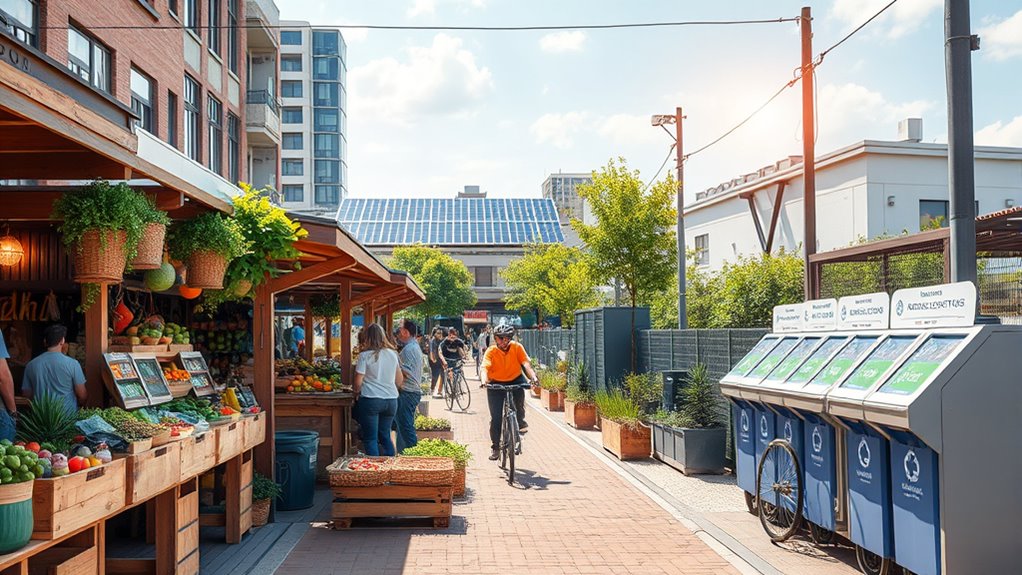

To build a zero-waste economy, adopt circular solutions like designing products for durability, repairability, and recyclability. Focus on maximizing resource efficiency at every stage, extending product lifespans, and turning waste into valuable inputs. Support innovative businesses that embrace regenerative practices and sustainable materials. Your choices can drive industry change and help create a system where resources are reused continuously. Keep exploring to discover how these strategies can transform your impact on the environment.
Key Takeaways
- Implementing design strategies for durability, repairability, and recyclability extends product lifespans and minimizes waste.
- Promoting repair, refurbishment, and reuse creates a circular economy that reduces resource extraction and environmental impact.
- Utilizing recyclable and biodegradable materials facilitates ecosystem reintegration and supports zero-waste goals.
- Supporting sustainable business practices and innovative infrastructure accelerates resource efficiency and waste reduction.
- Encouraging individual and collective actions fosters a culture of resource conservation and circular resource management.
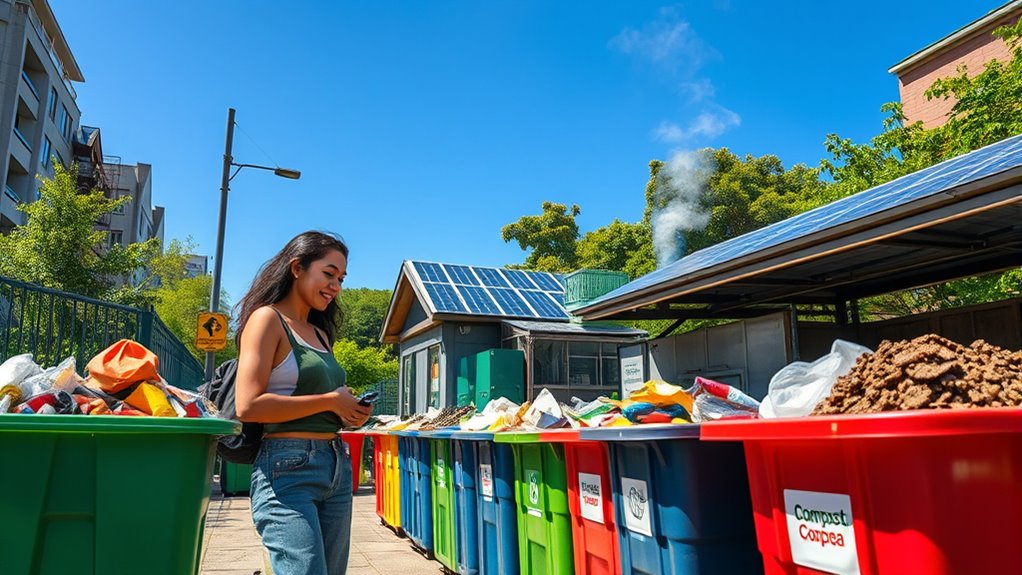
Have you ever wondered how we can make our resources last longer and reduce waste? The answer lies in understanding and improving resource efficiency and carefully managing the product lifecycle. When you focus on resource efficiency, you’re making sure that every bit of raw material, energy, or water is used best, minimizing waste at every stage. This approach guarantees that fewer resources are needed to produce the same goods, which benefits both the environment and your wallet. It encourages designing products that last longer, are easier to repair, and can be repurposed or recycled when they’re no longer useful. By extending the product lifecycle, you help reduce the frequency of new production, which in turn cuts down on resource extraction, energy consumption, and pollution.
Thinking about resource efficiency also means re-evaluating how products are made and used. For instance, choosing modular designs allows you to replace only worn-out parts instead of discarding the entire product. This not only prolongs the lifespan of goods but also keeps valuable materials circulating in the economy longer. When you prioritize resource efficiency, you’re actively reducing the demand for raw materials, which alleviates pressure on ecosystems and helps preserve natural habitats. Furthermore, designing products with their entire lifecycle in mind promotes reuse and recycling, creating a closed-loop system where waste becomes a resource rather than trash. Incorporating private placement equity markets into sustainable business strategies can help fund innovations in resource-efficient technologies and infrastructure.
Choose modular designs to extend product life and keep valuable materials in circulation.
In a circular economy, the focus shifts from linear take-make-waste models to regenerative processes. You play a part by supporting companies that prioritize sustainable design and manufacturing practices. For example, buying products made with recyclable or biodegradable materials ensures that at the end of their life, they can be reintegrated into the ecosystem rather than piling up in landfills. Encouraging repair and refurbishment also helps keep products in use longer, saving resources and reducing environmental impact. When you adopt these practices, you’re not just saving money—you’re actively contributing to a more sustainable world.
Ultimately, building a zero-waste economy hinges on your choices and actions. Every decision to invest in durable, repairable, and recyclable products improves resource efficiency and extends the product lifecycle. The more you embrace these principles, the less waste accumulates, and the closer we get to a circular system where resources are continually reused. This not only preserves the planet’s finite resources but also fosters innovation in design and production that benefits everyone. By understanding and applying these concepts in your daily life, you become a crucial part of the movement toward a sustainable, zero-waste future.
Frequently Asked Questions
How Can Small Businesses Implement Circular Economy Practices?
You can implement circular economy practices by adopting sustainable sourcing, which reduces waste and environmental impact, and using innovative packaging that’s reusable or recyclable. Focus on designing products for longevity, encouraging customers to return or repurpose items, and partnering with local suppliers committed to eco-friendly practices. These steps help minimize waste, lower costs, and build a reputation for sustainability, all while supporting your business’s growth and positive environmental impact.
What Are the Main Challenges in Transitioning to Zero-Waste Systems?
You’ll face challenges like balancing waste reduction with cost and resource efficiency. Moving to zero-waste systems requires changing your current processes, which can be complex and time-consuming. You may encounter resistance from staff or suppliers, and some waste streams might be difficult to eliminate. Staying committed to sustainable practices and continuously optimizing resource use can help you overcome these hurdles and successfully build a zero-waste economy.
How Do Circular Solutions Impact Employment and Local Economies?
Circular solutions boost employment and strengthen local economies by creating new job opportunities in recycling, refurbishing, and sustainable design. As you adopt these practices, you contribute to economic resilience by reducing waste and dependence on raw materials, which stabilizes markets. You’ll find that supporting circular initiatives not only benefits the environment but also fosters local growth, innovation, and community engagement, ultimately making your economy more robust and adaptable.
What Role Do Consumers Play in Promoting Circular Solutions?
You play a crucial role in promoting circular solutions through your consumer behavior. By choosing to support recycling initiatives and opting for sustainable products, you help reduce waste and encourage companies to adopt eco-friendly practices. Your actions can influence market demand, pushing industries toward circular models. Every time you recycle or buy responsibly, you contribute directly to building a zero-waste economy and fostering environmental sustainability.
Are There Successful Case Studies of Circular Economies Worldwide?
Yes, there are successful case studies of circular economies worldwide. For example, companies focus on product redesign to extend product life and incorporate material innovation to create recyclable or biodegradable materials. You can learn from organizations like Philips, which redesigns products for longevity, and TerraCycle, which innovates in recycling waste into new materials. These efforts demonstrate how adopting circular principles leads to sustainable growth and resource efficiency.
Conclusion
Think of the world as a garden—you’re the gardener tending to every plant, every seed, and every drop of water. Embracing circular solutions is like nurturing a garden that recycles and renews itself, ensuring growth without waste. When you choose to build a zero-waste economy, you’re planting seeds of sustainability that bloom for generations. Your actions become the gentle rain that keeps this garden thriving, turning our shared future into a lush, endless harvest.