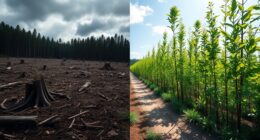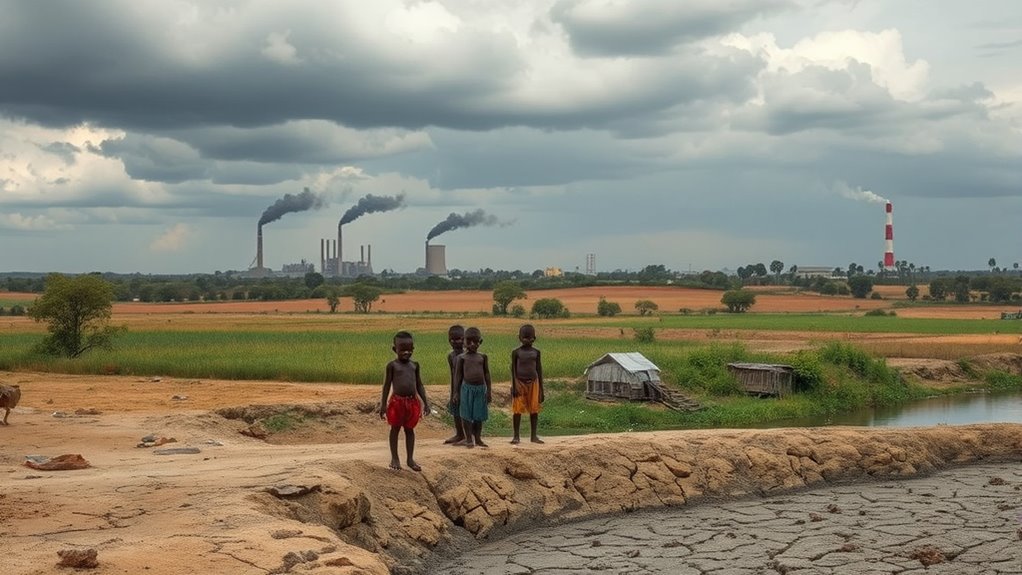

Developing nations demand climate justice because they face the harshest impacts of climate change despite contributing the least to global emissions. Wealthier countries have historically benefited from fossil fuels while ignoring their responsibilities to support vulnerable communities. These nations need fair climate finance, technology transfer, and support to adapt and recover. If you want to understand how this imbalance persists and what solutions are possible, continue exploring these crucial issues.
Key Takeaways
- Developing nations face severe climate impacts despite contributing minimally to emissions, highlighting global inequities.
- Wealthy countries have historically benefited from fossil fuels, creating a responsibility to support vulnerable communities.
- Insufficient climate finance from rich nations worsens inequalities and hampers developing countries’ adaptation efforts.
- Climate justice demands fair resource distribution, technology transfer, and recognition of historical responsibilities.
- Addressing climate inequality is essential for a sustainable, equitable future where vulnerable populations are protected.
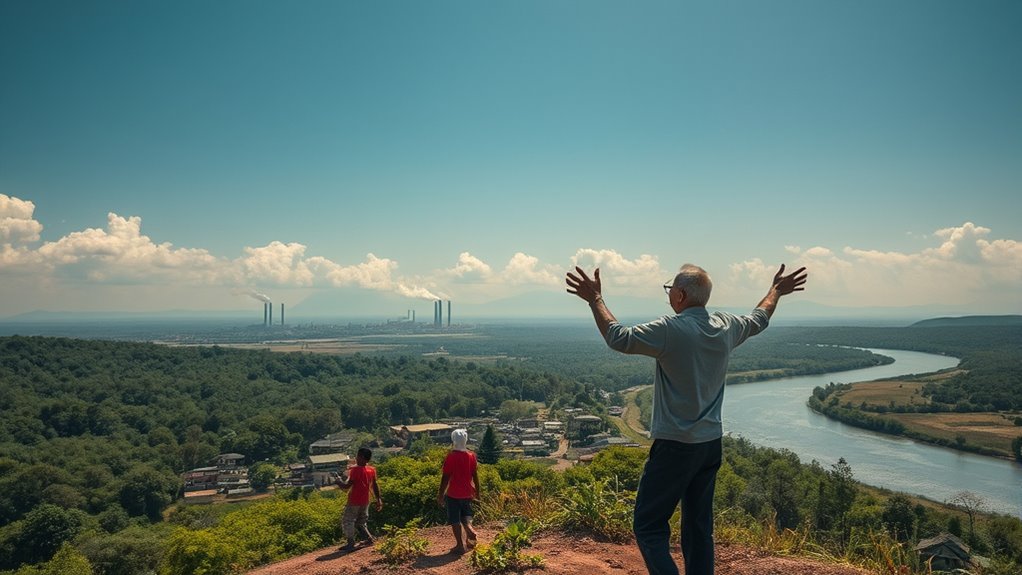
Have you ever wondered why some communities suffer the worst impacts of climate change while others barely notice? The answer lies in the unequal distribution of resources and responsibilities, especially when it comes to climate finance and environmental justice. Developing nations often bear the brunt of climate disasters—floods, droughts, and storms—despite contributing the least to global emissions. This imbalance highlights a core issue: the need for fair climate finance that recognizes historical responsibilities and supports those most vulnerable. When wealthier countries or corporations fail to provide adequate funding, it deepens existing inequalities and leaves poorer communities without the means to adapt or recover. Climate finance, hence, isn’t just about money; it’s a matter of justice, ensuring that those who have benefited least from industrialization aren’t left to face the worst consequences alone. Additionally, digital platforms used for hackathons can facilitate the development of innovative solutions to address climate inequality and support vulnerable communities.
Climate justice demands fair funding for vulnerable communities impacted by unequal resource distribution.
You might notice that wealthy nations tend to prioritize their own climate strategies, often neglecting the needs of developing countries. This neglect perpetuates environmental injustice, where marginalized communities suffer disproportionately despite playing a minimal role in causing the crisis. Developing nations demand justice because they understand that climate change is a global problem requiring shared responsibility. They argue that the developed world must provide financial support, technology transfer, and capacity-building efforts to help them adapt to climate impacts. Without such support, it’s impossible for these countries to implement sustainable solutions or protect their vulnerable populations effectively.
Furthermore, climate finance isn’t just about funding projects; it’s a way to acknowledge and address historical inequities. Wealthier nations benefited from fossil fuel development, while many developing countries are still struggling to meet basic needs. When climate finance flows inadequately or inconsistently, it reinforces a cycle of inequality that hampers progress toward environmental justice. These nations are calling for transparent, predictable commitments that recognize their rights and contribute to a more equitable global response. They want climate policies that don’t just mitigate emissions but also promote social justice, ensuring that vulnerable populations have fair access to resources and decision-making processes.
Ultimately, addressing climate inequality requires a shift in how we view responsibility and justice. It’s about recognizing that climate change impacts are not evenly distributed, and that those least responsible deserve support and recognition. Developing nations are demanding justice because they understand that climate solutions must be rooted in fairness, compassion, and shared accountability. Only through equitable climate finance and a genuine commitment to environmental justice can we hope to create a sustainable future where no community is left behind.
Frequently Asked Questions
How Do Developed Nations Justify Their Historical Emissions?
Developed nations justify their historical emissions by emphasizing their past emission accountability and economic development. They argue that their industrial growth, driven by fossil fuels, contributed substantially to current climate change. They often claim that developing nations should recognize their historical responsibility and that current emissions should be the focus. While acknowledging past actions, they emphasize that ongoing efforts to reduce emissions are essential, balancing development needs and climate justice.
What Specific Reparations Are Developing Countries Seeking?
You seek recognition through specific reparations like financial contributions, technology transfer, and capacity-building support. These demands aim to address historical accountability and guarantee fairness mechanisms are in place. Developing nations argue that developed countries should compensate for past emissions by funding climate adaptation projects, debt relief, and sustainable development initiatives. This approach emphasizes justice and equity, fostering a cooperative path toward global climate resilience and shared responsibility.
How Can Climate Policies Ensure Fairness for All Nations?
To guarantee fairness for all nations, you should prioritize climate finance that supports developing countries’ needs and implement equitable policies that consider each country’s circumstances. You can foster collaboration through transparent decision-making and shared responsibilities, ensuring that resources are directed where they’re most needed. By actively promoting inclusivity and fairness, you help create a global climate response that respects everyone’s rights and promotes sustainable development.
What Role Do International Organizations Play in Climate Justice?
International organizations play a pivotal role in climate justice by promoting fair policies and supporting developing nations. They facilitate green financing to fund sustainable projects and encourage carbon offsetting programs that reduce emissions. You can rely on these organizations to advocate for equitable climate action, ensuring that wealthier countries contribute fairly and that developing nations have access to resources needed for climate resilience and sustainable growth.
How Does Climate Change Disproportionately Affect Marginalized Communities?
You see that marginalized communities face climate change disproportionately, experiencing environmental displacement and health disparities. As climate impacts intensify, these communities often lack resources to adapt, forcing them from their homes and exposing them to hazardous conditions. You can help by supporting policies that address environmental displacement and health disparities, ensuring vulnerable populations receive equitable resources and protections, so they’re not left behind in the fight against climate change.
Conclusion
You see, climate inequality isn’t just a distant dilemma; it’s a demand for justice, a call for change. Developing nations deserve dignity, dedication, and decisive action. By bridging borders and balancing burdens, we can build a brighter, fairer future. Remember, addressing injustice isn’t just about policy—it’s about people, progress, and potential. Stand strong, support sovereignty, and serve sustainability, because only then can we truly tackle the tides of climate inequality together.