To reduce and redistribute food waste, focus on planning meals carefully to avoid excess, store food properly to extend freshness, and donate unopened, safe-to-eat items to local charities or food banks. Composting organic scraps using methods like outdoor bins, vermicomposting, or Bokashi can turn waste into nutrient-rich soil, decreasing landfill use. Implementing these strategies helps cut waste, supports sustainability, and benefits your community—continue exploring how you can make a difference today.
Key Takeaways
- Implement composting methods like outdoor bins, vermicomposting, or Bokashi to reduce organic waste and produce nutrient-rich soil.
- Donate surplus food to food banks, shelters, or charities to prevent waste and support community food security.
- Plan meals carefully to minimize leftovers and spoilage, reducing overall food waste.
- Educate consumers and businesses about proper storage and expiration dates to prevent unnecessary disposal.
- Establish food redistribution programs and partnerships to efficiently redirect edible surplus food to those in need.
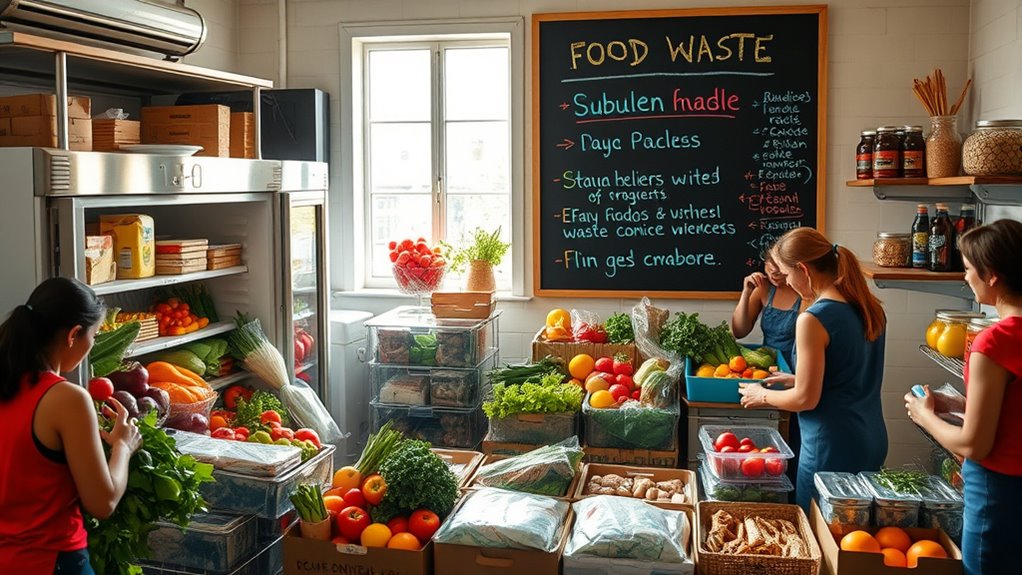
Have you ever wondered what happens to all the food that gets thrown away? It’s a common question as we toss out leftovers, spoiled produce, or uneaten meals without much thought. The truth is, much of this waste ends up in landfills, where it decomposes and releases methane, a potent greenhouse gas that worsens climate change. But there are practical ways you can reduce this waste and even give some of it a second life. Two effective strategies are composting methods and participating in food donation programs.
Composting methods offer a sustainable solution for food scraps that can’t be eaten. Instead of sending scraps to the landfill, you can turn organic waste into nutrient-rich soil for your garden. There are various composting options to fit your space and lifestyle. Traditional compost bins are ideal if you have outdoor space; they allow you to layer food scraps like vegetable peels, coffee grounds, and eggshells with yard waste. If you don’t have a yard, vermicomposting, or worm composting, is a clever indoor option that uses worms to break down food waste quickly. Bokashi composting is another method, which ferments food scraps in airtight buckets, making it suitable for small spaces and even for composting meat or dairy that traditional composts often avoid. These composting methods not only reduce the amount of waste you send to landfills but also help you create valuable soil that can improve your garden’s health. Additionally, understanding the benefits of waste diversion can help motivate more sustainable practices.
On the other hand, food donation programs provide a way to ensure surplus food reaches those in need rather than going to waste. Many communities have food banks, shelters, or charitable organizations actively seeking donations of unopened, non-perishable, or even prepared foods. You can contribute by regularly checking with local food donation programs to see what items they need most. If you have excess fresh produce or cooked meals, some programs accept these donations, but always confirm they meet safety guidelines. Participating in food donation programs requires a little planning, but it can make a significant difference for individuals facing food insecurity. It’s a way to turn surplus food into sustenance for others, reducing waste and helping your community.
Frequently Asked Questions
How Does Food Waste Impact Global Greenhouse Gas Emissions?
Food waste profoundly impacts your carbon footprint by releasing methane emissions from decomposing organic matter in landfills. When you waste food, you’re contributing to higher greenhouse gas emissions that accelerate climate change. Reducing food waste means fewer methane emissions and a smaller carbon footprint. By being mindful of your food choices and waste, you directly help lower global greenhouse gases and support a healthier environment for everyone.
What Policies Are Most Effective in Reducing Food Waste?
You can’t beat the system without the right tools. Effective policies include offering policy incentives that encourage businesses and consumers to reduce waste, such as tax breaks for donating surplus food. Community programs play an essential role by raising awareness and providing food redistribution services. These strategies work hand in hand, creating a win-win situation that minimizes waste while helping those in need.
How Can Consumers Better Plan to Avoid Waste?
You can better plan to avoid waste by focusing on meal prep and creating a detailed shopping list. Before shopping, check what you already have, then plan meals around those ingredients. Make a shopping list based on your meal plan to prevent impulse buys. When you prepare meals in advance, you minimize leftovers that might go to waste. These strategies help you buy only what you need and use it efficiently.
What Are Innovative Technologies for Food Redistribution?
Imagine a web connecting surplus food to those who need it. Innovative technologies like smart logistics and food tracking play a crucial role here. They optimize the movement of excess food, reduce waste, and guarantee quick redistribution. You can leverage these tools to streamline food recovery efforts, making sure leftovers find a new home instead of landfills. These solutions turn complex challenges into manageable opportunities, creating a more sustainable and efficient food system.
How Do Food Waste Reduction Efforts Vary Across Different Countries?
You’ll see that food waste reduction efforts differ across countries due to cultural practices and economic incentives. In some places, traditions emphasize sharing and conserving food, leading to less waste, while others rely on policies that reward businesses for minimizing surplus. You can influence change by understanding these cultural nuances and supporting economic incentives that promote sustainable practices, helping reduce waste worldwide.
Conclusion
By taking small steps to reduce food waste and redistributing leftovers, you can make a big difference. Remember, every little bit helps—don’t let perfect be the enemy of good. When you act now, you’re not only saving resources but also helping those in need. It’s true what they say: a journey of a thousand miles begins with a single step. So start today, and together, we can turn the tide on food waste.