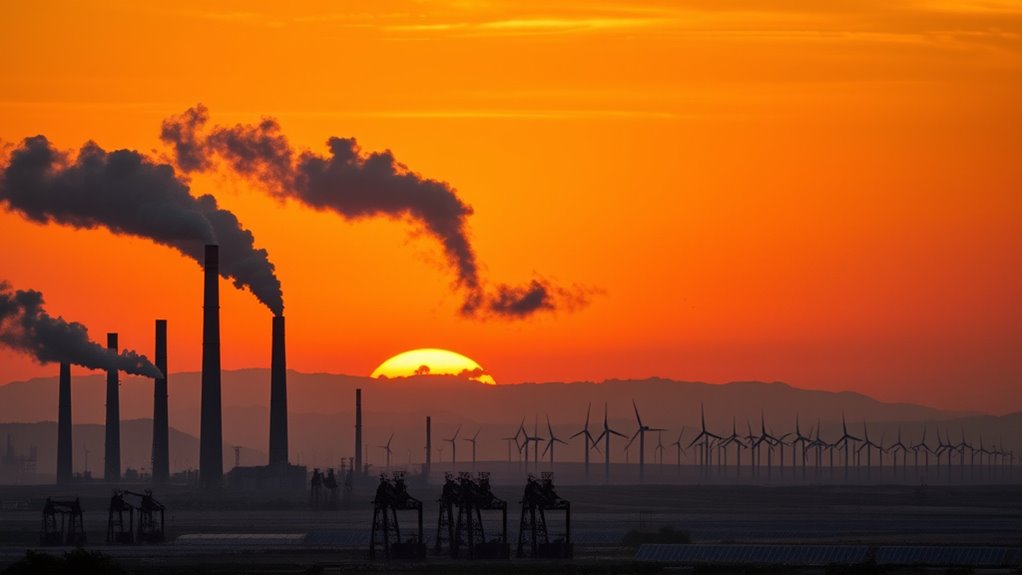

Dependence on fossil fuels harms the environment, threatens energy security, and accelerates climate change. To create a sustainable future, you should support shifting to renewables like solar, wind, and hydro which are abundant and cleaner. Investing in these sources reduces emissions and diversifies energy supplies. By making smarter choices and advocating for policy changes, you can help accelerate this shift. Stay with us to discover how a move toward renewables can transform your energy future.
Key Takeaways
- Transitioning to renewables reduces reliance on finite fossil fuels and minimizes greenhouse gas emissions.
- Investing in solar, wind, and hydro energy promotes sustainable and abundant power sources.
- Diversifying energy portfolios enhances energy security and mitigates geopolitical and supply risks.
- Supporting policies and individual actions accelerate the shift to cleaner, renewable energy systems.
- Renewable energy adoption helps combat climate change and ensures a resilient, sustainable future.

Have you ever wondered how much society relies on fossil fuels daily? Every time you turn on your lights, drive a car, or even use your phone, fossil fuels are likely involved somewhere in the process. Our modern lifestyle depends heavily on these energy sources, but this dependence comes with significant consequences. One of the most pressing issues is carbon emissions, which are released into the atmosphere when fossil fuels are burned. These emissions trap heat and accelerate climate change, threatening ecosystems and human health alike. As awareness of this problem grows, many recognize that reducing carbon emissions is critical for a sustainable future. However, simply cutting back isn’t enough; we also need to guarantee our energy security. Relying on fossil fuels, which are finite and unevenly distributed globally, makes nations vulnerable to supply disruptions and price volatility. Think about how geopolitical conflicts or natural disasters can cause sudden spikes in fuel prices or shortages—these vulnerabilities highlight the importance of diversifying our energy sources. Transitioning to renewables is a promising solution that addresses both issues. Renewable energy sources like solar, wind, and hydro are abundant and sustainable, meaning they won’t run out like fossil fuels. By investing in renewables, you help reduce carbon emissions, since these sources produce little to no greenhouse gases during operation. Furthermore, renewables can bolster energy security by decentralizing power generation, making communities less susceptible to external shocks. You don’t have to wait for governments or corporations to lead the way; individual choices matter. Installing solar panels on your roof, supporting policies that promote clean energy, or simply reducing energy consumption can make a difference. As more people adopt renewables, the demand for fossil fuels declines, pushing markets toward cleaner alternatives. This shift not only cuts emissions but also stabilizes energy prices in the long run, giving communities more control over their energy sources. Transitioning to renewables isn’t just an environmental imperative—it’s an economic and strategic move that enhances national security and resilience. The path forward involves embracing innovation, investing in infrastructure, and fostering policies that prioritize sustainable energy. You have the power to be part of this change, whether by staying informed, advocating for cleaner options, or making eco-friendly choices in your daily routine. The future of energy depends on how quickly we can reduce our reliance on fossil fuels and embrace renewable alternatives. Every step you take toward this transition helps create a cleaner environment, a more secure energy supply, and a healthier planet. The challenge is significant, but the benefits of moving away from fossil fuel dependence are worth the effort—for you, your community, and future generations.
Frequently Asked Questions
What Are the Main Barriers to Adopting Renewable Energy Worldwide?
You face several barriers to adopting renewable energy worldwide. Technological limitations, like storage and efficiency issues, hinder progress. Infrastructure challenges, such as outdated grids and high upfront costs, make it difficult to integrate renewables smoothly. Additionally, policy inconsistencies and economic interests in fossil fuels slow down adoption. Overcoming these obstacles requires innovation, investment, and strong policies to create a sustainable energy future.
How Can Governments Incentivize Renewable Energy Investments Effectively?
You can encourage renewable energy investments by implementing attractive tax incentives and establishing clear regulatory frameworks. These policies reduce costs for investors and provide certainty, making renewables more appealing. You should also streamline permitting processes and offer long-term support, like subsidies or feed-in tariffs. By creating a stable and supportive environment, you motivate both private sector investments and public confidence in renewable energy’s potential to grow sustainably.
What Are the Environmental Impacts of Transitioning From Fossil Fuels?
You’ll see fewer air pollution issues and healthier ecosystems as you shift from fossil fuels to renewables. This change reduces harmful emissions, improving air quality and lowering health risks. It also minimizes ecosystem disruption caused by drilling and extraction activities. While some manufacturing impacts exist, overall, your move to renewables benefits the environment by cutting pollution and preserving biodiversity, creating a cleaner, more sustainable future for everyone.
How Long Will It Take to Fully Replace Fossil Fuels With Renewables?
It’ll take several decades for you to see a full switch to renewables. Technological advancements and infrastructure development are essential, but they take time to scale globally. You can expect gradual progress over the next 30 to 50 years as investments increase, policies evolve, and renewable energy sources become more affordable and widespread. This shift depends on continued innovation, political support, and your collective commitment to sustainable energy.
What Are the Economic Implications for Fossil Fuel-Dependent Communities?
You’ll face economic implications like job displacement in fossil fuel communities, but embracing economic diversification can help. As industries shift towards renewables, industries relying on fossil fuels will decline, potentially reducing local employment and revenue. However, by investing in new sectors, training programs, and renewable projects, you can create new jobs and economic opportunities, easing the progression and minimizing negative impacts on your community’s economy.
Conclusion
As you consider our energy future, remember that shifting away from traditional sources is like gently opening a window to a brighter, cleaner horizon. Embracing renewables may feel like a small step, but it’s a heartfelt leap toward safeguarding the world’s beauty and significance. Together, you can help nurture a more sustainable tomorrow—one where the air is clearer, the skies brighter, and hope blooms anew. Your choice can create a lasting, positive ripple.