
To fight microplastics and marine debris, you can support innovative recycling technologies, participate in cleanup efforts, and reduce your plastic use through everyday choices like using reusable products. Collective action is essential, so advocate for policies that improve waste management and fund ocean cleanup projects. By staying informed and taking small steps, you contribute to protecting our oceans. Keep exploring how you can make a difference—helping address this urgent issue is within your reach.
Key Takeaways
- Innovative recycling technologies, including chemical recycling, reduce plastic waste and microplastics entering marine environments.
- Ocean cleanup initiatives with floating barriers and autonomous vessels target and remove plastic debris before it disperses.
- Collaborations with communities and policy support promote waste reduction, recycling, and stronger regulations to prevent marine debris.
- Reducing plastic use and adopting reusable products minimize the generation of microplastics and marine debris.
- Combining land-based waste management improvements with large-scale cleanup efforts restores ocean health and curtails plastic pollution.
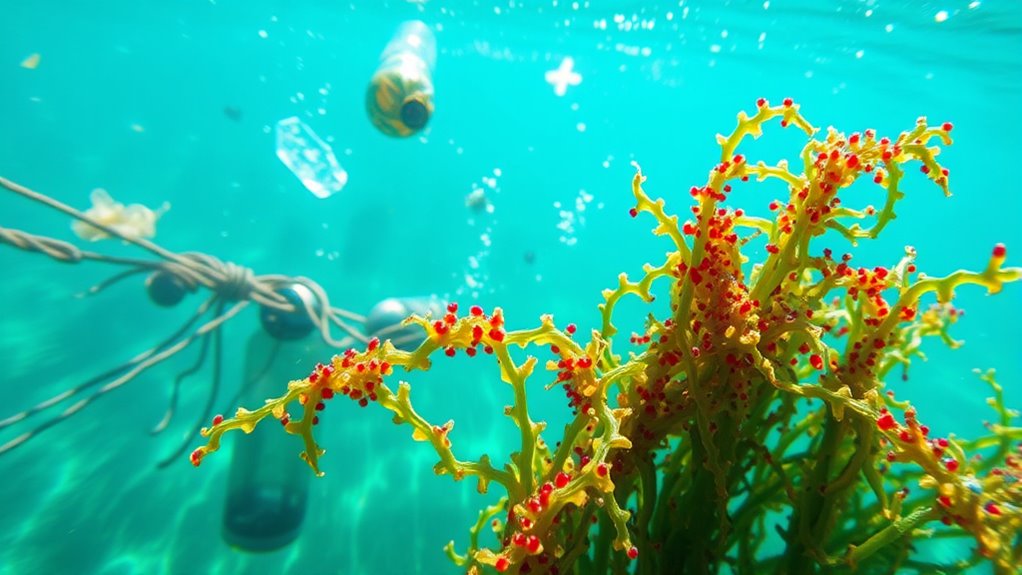
Plastic pollution has become one of the most pressing environmental issues of our time, threatening ecosystems, wildlife, and even human health. Every year, millions of tons of plastic waste end up in our oceans, breaking down into microplastics that infiltrate marine food chains and contaminate drinking water sources. Addressing this crisis requires innovative solutions that go beyond traditional waste management. Recycling innovations are playing a pivotal role in this fight, transforming how we process and reuse plastic materials. New technologies now enable us to recycle plastics more efficiently, turning discarded bottles and packaging into raw materials for manufacturing, reducing the need for virgin plastic production. These advancements make it easier for consumers and industries to participate in sustainable practices, decreasing the amount of plastic that escapes into the environment. Additionally, innovative recycling methods, such as chemical recycling, break plastics down to their fundamental building blocks, allowing for higher-quality reuse and less waste. These efforts are essential in curbing the ongoing influx of plastics into our oceans.
Simultaneously, ocean cleanup efforts have gained momentum as tangible ways to directly remove plastic debris from marine environments. Organizations and governments worldwide are deploying advanced cleanup technologies, like large-scale floating barriers and autonomous vessels, designed to capture floating debris before it sinks or disperses further. These efforts target the most polluted areas, such as the Great Pacific Garbage Patch, to extract plastics that would otherwise persist for decades, harming marine life. By removing debris directly from the water, these initiatives help restore ocean health and prevent microplastics from entering the food chain. Many of these cleanup projects also collaborate with local communities, raising awareness and fostering stewardship of marine environments. The combination of large-scale cleanup operations and preventative measures, like reducing plastic use and improving waste management infrastructure on land, creates a holistic approach to combat plastic pollution.
You can contribute to these efforts by supporting policies that promote recycling innovations and funding ocean cleanup projects. Recycling innovations make it easier for everyone to participate in reducing plastic waste, while supporting ocean cleanup efforts helps remove existing debris and protect marine ecosystems. Every small action, from choosing reusable products to advocating for stronger environmental regulations, adds up. As awareness grows, more innovative solutions are likely to emerge, making it possible to considerably reduce the amount of plastic polluting our oceans. It’s a collective effort—by staying informed and actively participating, you help safeguard marine environments for future generations. The fight against plastic pollution is ongoing, but with continued innovation and commitment, we can turn the tide and restore the health of our oceans.
Frequently Asked Questions
How Do Microplastics Affect Human Health?
Microplastics pose health risks to you because they can enter your body through pollution pathways like contaminated seafood, drinking water, or even inhalation. Once inside, they can cause inflammation, disrupt hormones, or carry harmful chemicals. You might not see immediate effects, but over time, these microplastics can accumulate and impact your health. Staying informed and reducing plastic waste helps minimize these pollution pathways and protect your well-being.
What Innovative Technologies Are Emerging to Remove Ocean Plastics?
You can leverage innovative cleanup and ocean technology to remove plastics effectively. Emerging solutions include autonomous drones and robotic systems that target debris in hard-to-reach areas. Ocean cleanup devices, like floating barriers and collection platforms, actively gather microplastics and larger debris. These innovations improve efficiency, reduce costs, and minimize environmental impact, making ocean cleanup more practical and scalable, helping protect marine ecosystems and human health from plastic pollution.
Can Plastic Pollution Be Fully Eliminated?
You can’t fully eliminate plastic pollution, as over 300 million tons of plastic are produced yearly, much of which pollutes oceans. While biodegradable plastics offer hope, they still require proper disposal to be effective. Changing consumer behavior is vital; reducing single-use plastics and recycling more can markedly decrease pollution. Though complete elimination is unlikely, collective efforts can drastically minimize plastic’s impact on marine environments.
How Do Microplastics Enter the Food Chain?
Microplastic ingestion occurs when tiny plastic particles, often from degraded debris, are mistaken for food by marine organisms. You might not see it, but these microplastics enter the marine food chain through fish and shellfish that consume contaminated water or prey. As you eat seafood, you could unknowingly ingest microplastics, leading to marine food contamination and potential health risks for humans and marine life alike.
What Policies Effectively Reduce Plastic Waste Globally?
Imagine a country implementing strict policies to curb plastic waste. International bans on single-use plastics and robust recycling initiatives prove highly effective. These policies reduce plastic production, encourage reuse, and prevent debris from entering oceans. For example, the European Union’s bans and recycling programs have markedly decreased plastic pollution. Such measures create a global impact, fostering awareness and sustainable habits that help fight microplastics and marine debris worldwide.
Conclusion
You might think cleaning up plastic pollution is impossible, but every small action counts. By reducing your plastic use, participating in local cleanups, and supporting policies that limit waste, you make a real difference. It’s easy to feel overwhelmed, but remember, collective efforts add up. Addressing microplastics and marine debris isn’t just a distant goal—it’s a responsibility we all share. Together, we can protect our oceans and preserve marine life for generations to come.