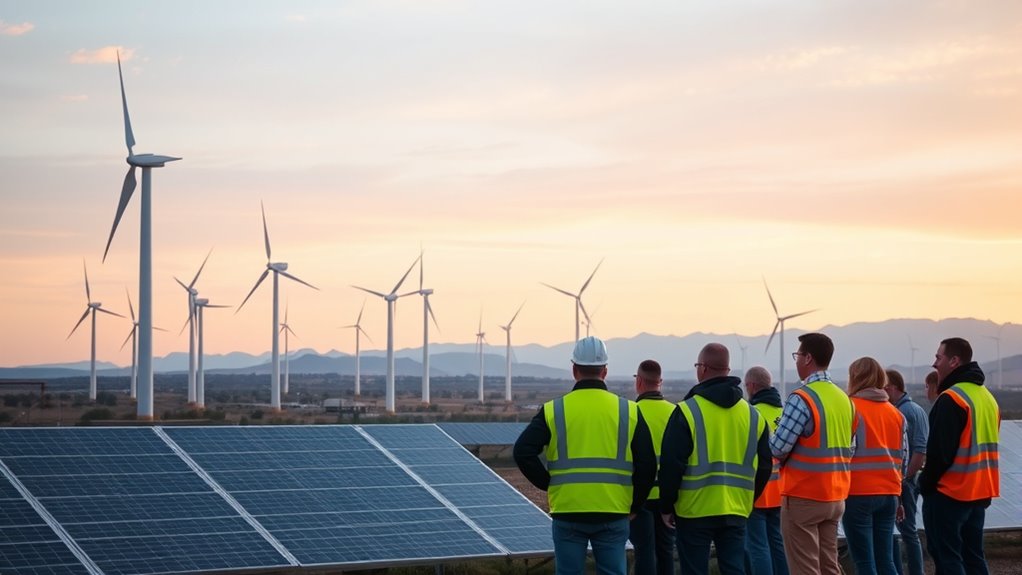

To overcome barriers to clean energy, you need to understand the challenges of reliability and integration. Weather-dependent renewables like solar and wind can be intermittent, so effective storage solutions are essential. Modern grid systems must adapt to manage fluctuating power, requiring upgrades and smart technology. Supportive policies and investments also play key roles. If you keep exploring, you’ll discover how innovation and strategic planning can make a sustainable energy future possible.
Key Takeaways
- Developing efficient, affordable energy storage solutions is essential to mitigate renewable energy intermittency.
- Upgrading existing grids with smart technology improves integration of variable renewable sources.
- Policy incentives and supportive regulations accelerate infrastructure investments and technological innovation.
- Overcoming high costs and technical challenges enables large-scale deployment of renewable energy systems.
- Strategic planning and public-private collaboration are vital for overcoming barriers and ensuring a sustainable energy future.
Are renewables truly ready to replace fossil fuels on a global scale? It’s a question many are asking as the push for clean energy accelerates. The answer depends on your perspective, but one thing is clear: significant hurdles remain before renewables can fully supplant traditional energy sources. Central to this challenge is the need for robust energy storage solutions and seamless grid integration. Without these, renewable energy’s intermittent nature can cause instability and limit its reliability as a primary power source.
Energy storage is essential because solar and wind power depend heavily on weather conditions and time of day. When the sun isn’t shining or the wind isn’t blowing, the energy produced drops sharply. To keep the lights on, you need ways to store excess energy during peak production and release it when supply dips. Advances in battery technology, such as lithium-ion and emerging alternatives, are promising, but widespread deployment remains costly and complex. You must consider not only the initial investment but also the lifespan, safety, and environmental impact of storage systems. Without sufficient storage capacity, renewable energy can’t guarantee a stable power supply, which is a major barrier to its broader adoption.
Energy storage is vital for reliable renewable energy due to weather dependence and capacity challenges.
Grid integration presents another challenge. Power grids were originally designed for centralized, controllable sources like coal and natural gas plants. Integrating decentralized, variable renewables requires significant upgrades to existing infrastructure. You need sophisticated control systems that can manage fluctuations in energy input and balance supply and demand in real-time. If the grid isn’t adaptable, renewable energy can cause instability, leading to blackouts or the need to rely on backup fossil fuel plants. Developing smarter grids with advanced sensors, automation, and demand response mechanisms is critical. These improvements enable your grid to handle large shares of renewables efficiently and reliably.
Policy and regulatory frameworks also influence how quickly renewables can be integrated. Incentives, tariffs, and standards shape investments in energy storage and grid upgrades. You, as a consumer or industry stakeholder, can advocate for policies that promote infrastructure development and technological innovation. Public and private sector collaboration is essential to finance large-scale projects and research new solutions. Moreover, integrating advanced automation in grid management can significantly improve system stability and efficiency.
While progress is evident, the path to replacing fossil fuels globally isn’t straightforward. Energy storage and grid integration are the linchpins that determine whether renewables can deliver consistent, reliable power at scale. Overcoming these barriers requires continued innovation, strategic planning, and policy support. If you stay informed and engaged, you’ll be part of the effort to transition toward a cleaner, more sustainable energy future.
Frequently Asked Questions
How Do Renewable Energy Costs Compare to Fossil Fuels Long-Term?
You’ll find that renewable energy costs are generally lower than fossil fuels over the long term. The cost comparison shows that renewables like solar and wind have decreasing prices due to technological advances and economies of scale. This makes them more financially viable, as they require less maintenance and fuel costs. Over time, investing in renewables provides better savings and stability, ensuring a more sustainable energy future for you and the planet.
What Are the Most Effective Policies to Promote Renewables?
You should implement policy incentives like tax credits and grants to make renewables more attractive. Utilize market mechanisms such as renewable energy certificates and feed-in tariffs to encourage investment and growth. These strategies lower costs, boost adoption, and create a stable environment for clean energy development. By combining policy incentives with effective market mechanisms, you can considerably accelerate the transition to renewable energy sources.
How Can Developing Countries Access Renewable Energy Technology?
Accessing renewable energy technology is like opening a door to new opportunities. You can overcome financing barriers by seeking international grants and partnerships that support technology transfer. Collaborate with global organizations and governments to access affordable financing options and share innovations. Building local capacity and fostering knowledge exchange will help you implement clean energy solutions more effectively, making renewables more accessible and sustainable for your community.
What Role Do Grid Upgrades Play in Renewable Integration?
Grid upgrades are essential for renewable integration because they enhance grid resilience, allowing you to handle fluctuating renewable energy inputs more effectively. Upgrading your grid enables better management of energy flow and reduces outages. Incorporating storage solutions helps you balance supply and demand, ensuring stability even when renewable generation is variable. These improvements make it easier for you to integrate clean energy sources and maximize their benefits securely and efficiently.
How Can Public Acceptance of Renewable Projects Be Increased?
You can increase public acceptance of renewable projects by actively engaging communities early on and maintaining open communication. Focus on community involvement to address concerns and involve local residents in decision-making. Additionally, work to reduce misinformation by providing clear, accurate information about renewable energy benefits and safety. Building trust and transparency fosters support, making it easier to implement projects successfully and accelerate the shift to clean energy.
Conclusion
You now see that overcoming barriers to clean energy isn’t impossible, but it takes effort and persistence. Embracing renewables benefits not just the environment, but your community and future generations. Remember, “Where there’s a will, there’s a way.” By staying informed and advocating for change, you can help steer the world toward a sustainable tomorrow. The challenge is great, but your actions can make a difference—don’t wait for others to lead the way.