Urban greening helps make cities more resilient to climate change by reducing heat islands, improving air quality, and supporting biodiversity. Planting trees, creating green corridors, and maintaining healthy vegetation can lower temperatures and provide shade, making neighborhoods cooler and more livable. These efforts also support ecosystems and promote community well-being. By actively participating in or advocating for green initiatives, you contribute to a stronger, sustainable city. If you continue exploring, you’ll discover how these strategies can transform urban spaces into climate-smart habitats.
Key Takeaways
- Urban greening reduces heat islands, lowering temperatures and enhancing city resilience during heatwaves.
- Incorporating native plants and biodiversity supports resilient ecosystems and aids climate adaptation.
- Green corridors facilitate wildlife movement and connectivity, strengthening ecological resilience in urban areas.
- Proper vegetation management and maintenance ensure healthy growth, preventing infrastructure interference and promoting sustainability.
- Community involvement and policy support amplify green initiatives, fostering climate-resilient, livable cities.
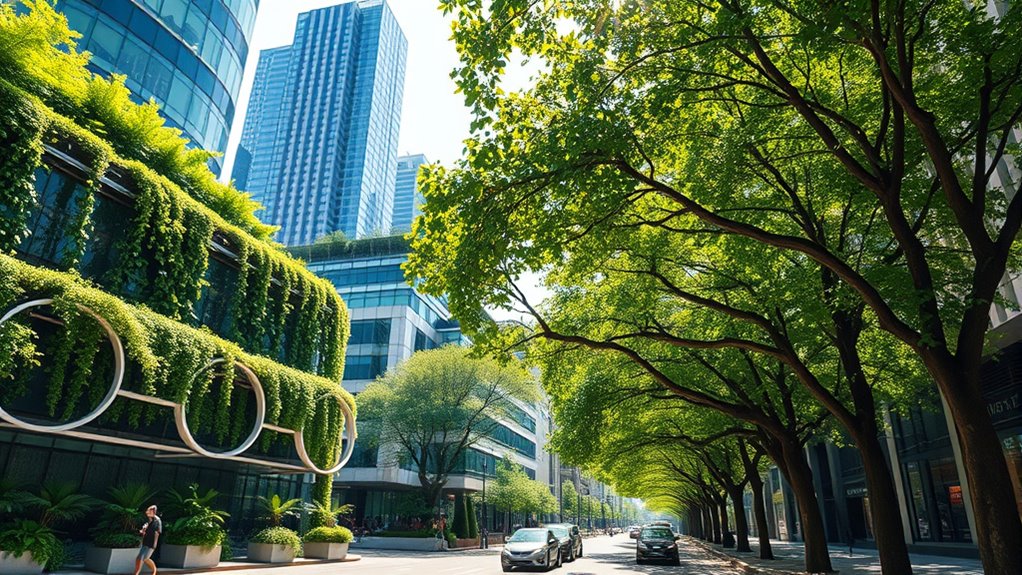
Have you ever wondered how cities can become healthier and more inviting places to live? The answer often lies in urban greening efforts that focus on smart vegetation management and enhancing urban biodiversity. When you think about creating a resilient city, it’s essential to consider how carefully managing vegetation can transform an environment, making it greener, cooler, and more sustainable. Vegetation management isn’t just about planting trees; it’s about selecting the right species, maintaining them properly, and ensuring they thrive without causing issues like overgrowth or interference with infrastructure. By carefully controlling which plants are introduced and how they are cared for, you help foster an environment where natural elements support urban life instead of hindering it.
Urban biodiversity plays a pivotal role in this process. When cities promote a diverse range of plant and animal life, they create more resilient ecosystems that can withstand the impacts of climate change, pests, and disease. You can boost urban biodiversity by designing green spaces that mimic natural habitats, including native plants that attract pollinators like bees and butterflies. These small changes can markedly improve the health of your city’s ecosystem, encouraging a vibrant web of life amid concrete and steel. This biodiversity not only benefits the environment but also enhances the quality of life for residents, offering more opportunities for recreation and education.
Implementing effective vegetation management strategies also contributes to cooling urban areas. As cities face increasing temperatures, especially during heatwaves, strategically placed trees and green spaces provide shade and reduce the urban heat island effect. This not only makes public spaces more comfortable but also lowers energy costs associated with air conditioning. Moreover, well-maintained green corridors can connect neighborhoods, allowing wildlife to move freely and safely across the city. These corridors support urban biodiversity by providing continuous habitats, reducing fragmentation, and increasing opportunities for species to thrive. Additionally, adopting vertical storage solutions can help organize green spaces better, making maintenance easier and more efficient.
You play a key role in this transformation by supporting or initiating green projects that prioritize sustainable vegetation management and biodiversity. Whether it’s planting native trees, creating community gardens, or advocating for policies that protect green spaces, your efforts contribute to building a climate-resilient city. Every green patch, when managed thoughtfully, acts as a small but powerful step toward combating climate change and making urban areas more livable. By understanding the importance of urban biodiversity and vegetation management, you help shape cities that are not only resilient but also vibrant, healthy places where both humans and nature can flourish.
Frequently Asked Questions
How Does Urban Greening Impact Local Air Quality?
Urban greening improves your local air quality by reducing urban heat and helping with pollution mitigation. When you add trees and green spaces, they absorb pollutants like carbon dioxide and particulate matter, making the air cleaner. Additionally, urban heat is lowered, which decreases smog formation. This creates a healthier environment for residents and encourages more outdoor activity, further enhancing overall urban sustainability and resilience.
What Are the Costs Associated With Urban Greening Projects?
Did you know urban greening projects can cost between $10,000 and $100,000 per acre? You’ll need to contemplate cost estimation carefully, including land acquisition, planting, maintenance, and infrastructure. Funding sources vary widely, from government grants and private investments to community fundraisers. While costs can be high initially, long-term benefits like improved air quality and climate resilience often outweigh expenses, making these projects a smart investment for your city’s future.
How Can Urban Greening Be Integrated Into Existing City Infrastructure?
You can integrate urban greening into existing city infrastructure through strategic green space planning, identifying underused areas for parks, green roofs, or street trees. Collaborate with city planners to incorporate vegetation into sidewalks, drainage systems, and building designs. Using infrastructure integration guarantees green spaces complement current structures, enhances resilience, and maintains urban functionality. This approach maximizes environmental benefits while minimizing disruption, making your city more sustainable and climate-resilient.
What Maintenance Is Required for Urban Green Spaces?
You need to regularly maintain urban green spaces by following proper watering schedules to keep plants healthy and hydrated. Plant pruning is essential to remove dead or overgrown branches, encouraging growth and preventing disease. Additionally, monitor soil conditions and weed control to verify plants thrive. Regular inspections help identify issues early, making sure your green spaces stay vibrant, sustainable, and resilient against climate impacts.
Are There Specific Plant Species Best Suited for Urban Environments?
Like choosing the right armor for a battle, selecting resilient plants matters. You should prioritize native species and drought-tolerant plants, which are better suited for urban conditions. These hardy options withstand pollution, limited water, and temperature fluctuations, helping your green spaces thrive. By planting such species, you’re fundamentally nurturing city resilience, much like an ancient oak standing firm amidst storms—strong, adaptable, and crucial for urban life.
Conclusion
So, next time you’re stuck in traffic with smog choking the air, just remember: planting a tree could be your secret weapon. Who knew that turning concrete jungles into lush, green havens might actually save the planet? It’s almost like cities are begging for a makeover—so why not give them one? After all, if we wait for governments to act, we’ll be waiting forever. Get your hands dirty, and let’s make cities climate resilient—one leaf at a time.