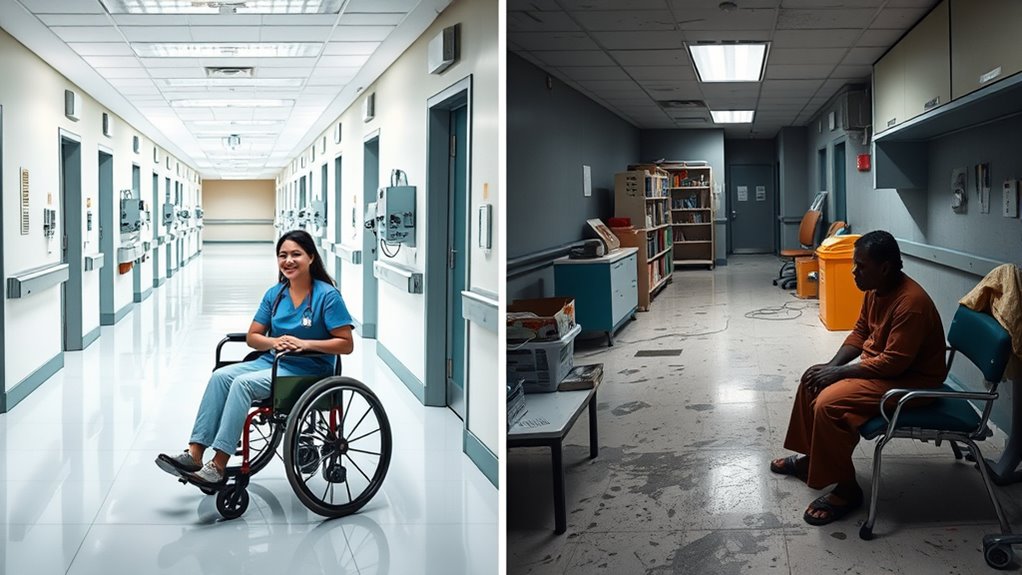

To address healthcare disparities, focus on improving access through community outreach, mobile clinics, and translation services. Recognize cultural differences by training providers in cultural competence, which builds trust and enhances care quality. Reduce systemic barriers like cost and transportation, and involve community leaders to ensure services meet local needs. By creating culturally respectful, patient-centered environments, you can help eliminate inequality, leading to better health outcomes for all. Continuing will reveal effective strategies tailored to diverse populations.
Key Takeaways
- Enhancing cultural competence training for healthcare providers to improve communication and build trust with diverse populations.
- Expanding access through mobile clinics, translation services, and subsidized care for underserved communities.
- Addressing systemic barriers by implementing policies that promote equitable healthcare infrastructure and resource allocation.
- Engaging community leaders and organizations to understand specific needs and develop culturally appropriate interventions.
- Promoting patient-centered care approaches that prioritize individual preferences, beliefs, and social determinants of health.

Have you ever wondered why access to quality healthcare varies so dramatically across different communities? The answer often lies in a complex mix of factors, including cultural competence and access barriers. When healthcare providers lack cultural competence, they may not fully understand or respect the diverse backgrounds of their patients. This can lead to miscommunication, misunderstandings, and even mistrust, which discourages people from seeking care or following medical advice. If providers are unaware of cultural differences, they might unintentionally offend patients or overlook important health beliefs, resulting in poorer health outcomes for marginalized groups.
Access barriers compound these issues further. These barriers can be physical, financial, or systemic, making it difficult for many individuals to receive timely and effective care. For example, people living in underserved areas may face long travel distances to clinics or hospitals, while those with limited financial resources may be unable to afford necessary treatments or insurance coverage. Language barriers also play a significant role, especially for non-English speakers who might struggle to communicate their symptoms or understand medical instructions. These access barriers often create a cycle of neglect, where preventable conditions worsen simply because patients cannot access the care they need.
Access barriers like distance, cost, and language hinder timely care and worsen health disparities.
Addressing these disparities requires a conscious effort from healthcare systems to improve cultural competence across all levels. This means training healthcare providers to recognize and respect cultural differences, as well as to adapt their communication styles accordingly. When providers understand their patients’ cultural backgrounds, they can build trust and foster a more welcoming environment. This not only improves patient satisfaction but also encourages better adherence to treatment plans. Healthcare organizations can also implement policies that reduce access barriers by expanding mobile clinics, offering translation services, and subsidizing costs for low-income patients. These strategies help bridge the gap between healthcare systems and underserved populations, making care more equitable.
Furthermore, community engagement is vital. When healthcare providers work with community leaders and organizations, they can gain insights into the specific needs of different populations. This collaborative approach ensures that interventions are culturally appropriate and accessible. Ultimately, closing healthcare disparities involves creating a system that values diversity, removes obstacles, and emphasizes patient-centered care. By improving cultural competence and reducing access barriers, you help foster a healthcare environment where everyone, regardless of their background or circumstances, can receive the quality care they deserve. This effort benefits not just individual patients but the entire community, leading to healthier, more resilient populations.
Frequently Asked Questions
How Do Socioeconomic Factors Influence Healthcare Disparities?
Socioeconomic factors directly influence healthcare disparities through economic barriers and educational gaps. You might struggle to afford medical services or insurance, limiting access to necessary care. Additionally, educational gaps can prevent you from understanding health information or maneuvering the healthcare system effectively. These factors create unequal opportunities for health, making it harder for you to receive timely, appropriate care and ultimately impacting your overall well-being.
What Role Does Cultural Competence Play in Reducing Inequalities?
Oh, sure, because ignoring cultural sensitivity and poor patient communication totally solve healthcare disparities, right? In reality, you play a vital role in reducing inequalities by embracing cultural competence. When you prioritize understanding diverse backgrounds and improve patient communication, you foster trust and guarantee everyone receives equitable care. Your efforts can break down barriers, making healthcare truly accessible and respectful for all, regardless of their culture or background.
Are There Successful Models Addressing Healthcare Disparities Globally?
Yes, successful models exist globally that address healthcare disparities through community partnerships and innovative funding models. You can look at programs like Brazil’s Family Health Strategy, which relies on local community engagement and flexible funding to improve access. These models empower communities, foster trust, and guarantee resources are directed where needed most, making a tangible difference in reducing inequalities and promoting equitable care worldwide.
How Can Technology Help Bridge Healthcare Access Gaps?
Technology can help bridge healthcare access gaps by promoting telemedicine adoption, allowing you to receive care remotely, especially in underserved areas. You should also support digital literacy initiatives, ensuring you and others can effectively use these tools. By increasing familiarity with technology and expanding telehealth services, you gain easier access to healthcare, reducing disparities and making care more equitable regardless of your location or background.
What Policies Effectively Reduce Healthcare Inequality at Local Levels?
You can reduce healthcare inequality locally by supporting policies that promote community engagement and policy innovation. For example, communities with active participation see a 30% improvement in health outcomes. Encourage local governments to involve residents in decision-making and pilot innovative programs like mobile clinics or telehealth services. These strategies guarantee that care is tailored, accessible, and equitable, directly addressing disparities and empowering underserved populations.
Conclusion
Just as the phoenix rises from ashes, you have the power to transform healthcare disparities into opportunities for equity. By addressing inequalities now, you can forge a future where every individual receives the care they deserve—regardless of background or circumstance. Remember, the path to justice is a journey, not a destination. With unwavering commitment, you can be the change that turns the tide, ensuring a healthier, more inclusive tomorrow for all.