

Virtual care and telemedicine make healthcare more accessible by allowing you to consult with providers from home using your smartphone, tablet, or computer. They enable remote diagnostics, virtual appointments, and easier communication, reducing wait times and travel needs. These technologies break down traditional barriers and support chronic condition management and urgent care. As you explore more, you’ll discover how these innovations continue to improve healthcare for everyone, no matter where they are.
Key Takeaways
- Virtual care reduces geographic and mobility barriers, making healthcare accessible to remote and underserved populations.
- Telemedicine offers convenient, real-time consultations that eliminate long wait times and minimize travel needs.
- Integration of digital tools and electronic health records enhances diagnosis accuracy and personalized treatment plans.
- Remote diagnostics and continuous monitoring enable proactive management of chronic conditions and urgent health issues.
- Virtual platforms promote equitable access to healthcare services, supporting early intervention and improved health outcomes.
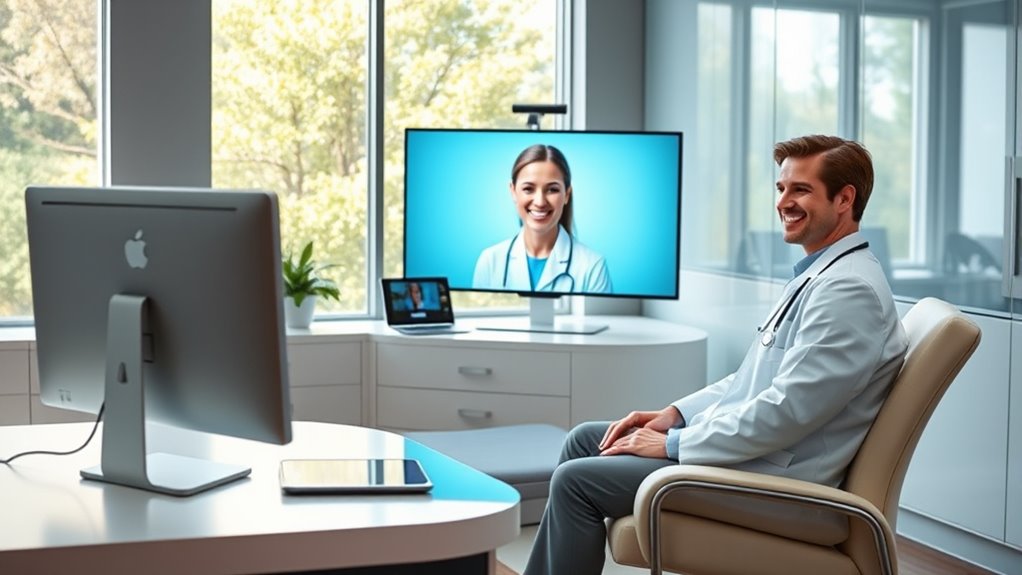
Have you ever wondered how technology is transforming healthcare? One of the most significant changes is the rise of virtual care and telemedicine, which are making healthcare more accessible than ever before. With remote diagnostics, you can now receive essential health assessments without leaving your home. These tools use advanced sensors and connected devices to gather critical signs, blood tests, and other health data. Your healthcare provider can analyze this information remotely, providing accurate diagnoses and treatment recommendations. This approach saves you time, reduces the need for in-person visits, and guarantees that even those in rural or underserved areas can access quality care.
Remote diagnostics enable healthcare assessments at home, making quality care accessible for everyone regardless of location.
Virtual consultations are another indispensable component of this digital revolution. Instead of scheduling an appointment at a clinic, you can now connect with your doctor or specialist through secure video calls. These virtual visits allow for real-time interaction, where you can discuss symptoms, review test results, and receive prescriptions or follow-up plans. Virtual consultations not only save you the inconvenience of travel but also enable quicker responses to urgent health concerns. They’re especially valuable for managing chronic conditions, mental health support, and routine check-ups, making ongoing care more manageable and less disruptive to your daily routine.
The convenience of remote diagnostics and virtual consultations is transforming the patient experience. You no longer have to wait weeks for an appointment or spend hours in a waiting room. Instead, you can access healthcare services directly from your device, whether it’s a smartphone, tablet, or computer. This ease of access promotes proactive health management, empowering you to seek medical advice when symptoms first appear, rather than delaying care until symptoms worsen. It also improves communication between you and your healthcare team, leading to more personalized and timely interventions.
Furthermore, virtual care platforms often integrate electronic health records and other digital tools, creating a seamless flow of information. This integration guarantees your healthcare providers have a complete picture of your health history, making diagnoses more accurate and treatments more effective. As technology continues to evolve, remote diagnostics and virtual consultations will become even more sophisticated, incorporating artificial intelligence, machine learning, and wearable devices to monitor your health continuously. Additionally, business innovations in this sector are driving new solutions that enhance the quality and scope of virtual healthcare services.
In essence, these innovations are breaking down traditional barriers to healthcare, making it more flexible, responsive, and patient-centered. Whether you’re managing a chronic condition, seeking a second opinion, or needing urgent advice, virtual care and telemedicine are reshaping your healthcare options and putting you in control of your health like never before.
Frequently Asked Questions
How Is Patient Privacy Protected During Virtual Consultations?
During virtual consultations, your privacy is safeguarded through data encryption, which secures your information from unauthorized access. Healthcare providers follow strict confidentiality protocols to ensure your personal details stay private. These measures include secure login processes and encrypted communication channels. By adhering to these practices, your sensitive health data remains confidential and protected throughout your virtual care experience.
What Are the Technical Requirements for Telemedicine Appointments?
For telemedicine appointments, you need reliable hardware like a smartphone, tablet, or computer with a camera and microphone. Make certain your device meets software compatibility requirements, such as updated browsers or telehealth apps. A stable internet connection is vital for smooth video and audio quality. Confirm your system has the necessary security features to protect patient data, and check that your software is compatible with your device’s operating system.
How Do Telemedicine Services Handle Emergencies or Urgent Care?
In emergencies or urgent care situations, telemedicine services follow established emergency protocols to guarantee patient safety. You’re guided to seek immediate in-person care or call emergency services if necessary. Telehealth providers often have an urgent response plan, including quick escalation procedures, to connect you with local emergency resources or advise on next steps. Always clarify these protocols beforehand so you know exactly what to do during urgent situations.
Are Virtual Care Services Covered by All Insurance Providers?
Think of insurance coverage for virtual care like a patchwork quilt—some pieces fit, others don’t. Not all insurance providers cover telemedicine services; reimbursement policies vary widely. I had a friend whose virtual appointment was fully reimbursed, but another struggled with coverage for urgent care. Always check with your insurer beforehand to understand what’s included, so you’re not caught off guard when you need care.
How Is the Quality of Care Maintained Compared to In-Person Visits?
You can trust that the quality of virtual care is maintained through strict telehealth standards and virtual bedside assessments. Providers use secure, reliable technology to guarantee thorough examinations and accurate diagnoses, just like in-person visits. Continuous training and adherence to clinical guidelines help sustain high care standards. This focus on quality ensures you receive safe, effective care, whether you’re consulting remotely or face-to-face.
Conclusion
As you embrace virtual care and telemedicine, you open doors to healthcare accessibility you once only dreamed of. Yet, remember, behind each screen lies a person seeking connection and compassion, not just convenience. While technology bridges gaps, it can never replace the human touch that truly heals. By expanding access, you’re not just improving health outcomes—you’re restoring hope for those who might otherwise be left behind. In this digital age, compassion must always lead the way.