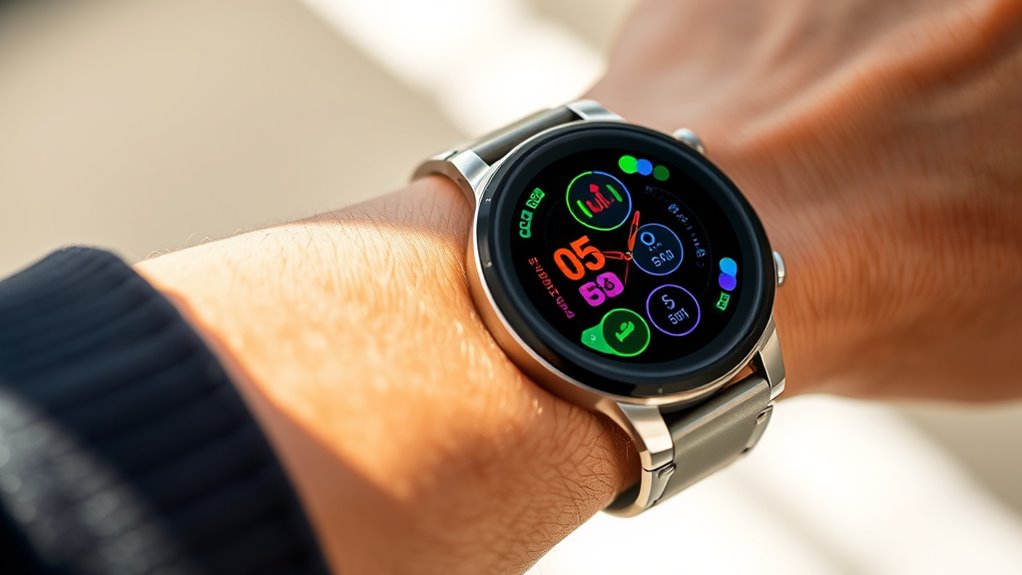

Wearable health tech helps you track essential wellness metrics like heart rate, sleep, and activity levels in real time. You can stay connected to your health data throughout the day, making it easier to understand your habits and make informed lifestyle choices. Many devices motivate you with features like gamification and social sharing. As you explore further, you’ll discover how privacy and user engagement play key roles in maximizing these devices’ benefits.
Key Takeaways
- Wearable health devices provide continuous, real-time monitoring of vital signs like heart rate, sleep, activity, and stress levels.
- They enable users to track health metrics instantly, facilitating prompt lifestyle adjustments and wellness decisions.
- Data privacy and security are critical, with manufacturers implementing encryption and users maintaining awareness of data sharing.
- Engagement features such as gamification, notifications, and social sharing motivate consistent use and health behavior improvement.
- Enhanced user interfaces and community support foster trust, active participation, and better understanding of personal health trends.
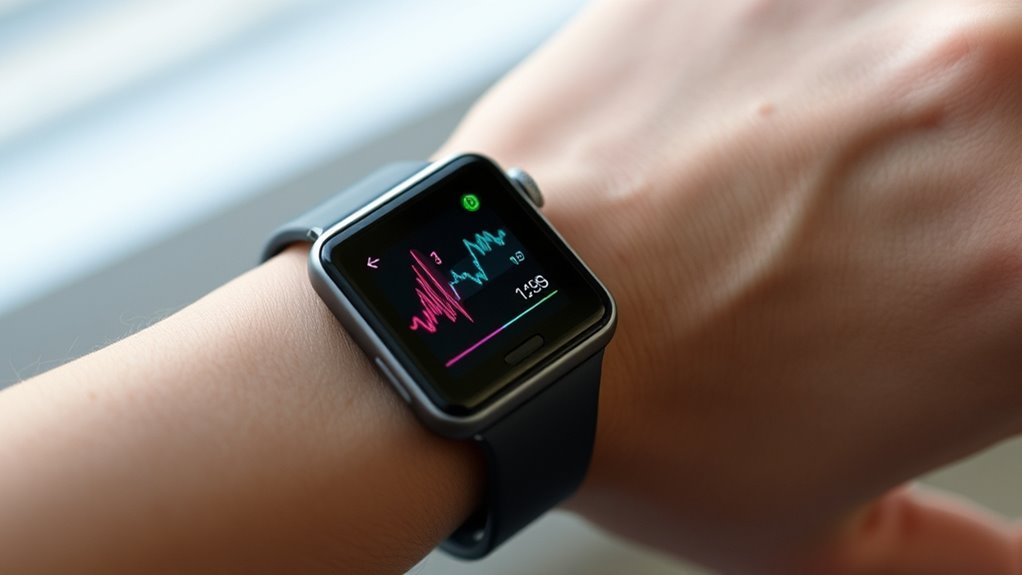
Wearable health technology has revolutionized how you monitor and manage your well-being. These devices give you real-time insights into your health metrics, empowering you to make informed decisions about your lifestyle. From tracking your heart rate and sleep patterns to measuring activity levels and stress, wearables keep you connected to your health data throughout the day. As beneficial as this constant stream of information is, it also raises important concerns about data privacy. You need to trust that your personal health information stays secure, especially since wearables often sync with apps and cloud services. Manufacturers are increasingly focusing on encryption and strict privacy policies to protect your data, but it’s essential to stay vigilant and understand how your information is being used and shared. When you’re aware of these privacy measures, you’re more likely to engage actively with your device without fear of compromising sensitive details.
User engagement plays a vital role in the effectiveness of wearable health tech. The more you interact with your device, the better you’ll understand your health trends and habits. Many wearables feature gamification elements or personalized goals that motivate you to stay consistent. For example, earning badges for reaching step targets or completing daily mindfulness exercises can boost your motivation. When your device sends timely notifications, reminders, or encouragement, it helps you stay committed to your wellness journey. This active engagement transforms passive data collection into a dynamic, interactive experience. As you become more involved, you’re more likely to notice patterns, identify triggers, and adjust your behaviors to improve health outcomes. Manufacturers are constantly refining user interfaces to make engagement intuitive and rewarding, ensuring you feel connected and empowered rather than overwhelmed. Additionally, understanding data privacy and how your health information is protected can help you use your wearable device with greater confidence and peace of mind.
Furthermore, the social aspect of wearables fosters community support and accountability. Sharing progress with friends or participating in challenges can increase your motivation and make health tracking more enjoyable. This social engagement not only enhances your commitment but also builds a sense of accountability, encouraging you to stick with your goals. However, it also underscores the importance of understanding data privacy policies, especially when sharing sensitive information. You want to be sure that your participation in social features doesn’t compromise your personal data or expose you to privacy breaches. Ultimately, the success of wearable health tech hinges on striking a balance: leveraging user engagement to maximize health benefits while safeguarding your data privacy. When you manage both effectively, these devices can serve as powerful tools to monitor your wellness in real time, helping you lead a healthier, more informed life.
Frequently Asked Questions
How Accurate Are Wearable Health Devices Compared to Medical-Grade Equipment?
Wearable health devices are generally accurate but can vary depending on sensor calibration and data reliability. You might notice some discrepancies compared to medical-grade equipment, especially for critical health decisions. Regular calibration improves accuracy, but for serious concerns, always consult healthcare professionals. While wearables provide valuable real-time insights, they should complement, not replace, professional medical assessments. Trust their data, but verify with clinical-grade tools when necessary.
What Privacy Concerns Are Associated With Wearable Health Technology?
You should be aware that privacy concerns with wearable health tech revolve around data security and user consent. As you use these devices, your personal health data could be vulnerable if not properly protected, risking unauthorized access. Always read the privacy policy and guarantee your device has robust security measures. Giving informed user consent is essential, so you understand how your data is collected, stored, and shared to protect your privacy effectively.
Can Wearable Devices Detect Early Signs of Serious Health Conditions?
Think of your wearable device as a vigilant sentinel, constantly watching over your health. It can detect early signs of serious conditions through symptom tracking and data analysis, allowing for early diagnosis. While it’s not a crystal ball, it alerts you to potential issues before they escalate. By catching warning signs early, you gain a critical advantage, empowering you to seek timely medical care and stay ahead of health risks.
How Long Do Wearable Health Devices Typically Last Before Needing Replacement?
Your wearable health device usually lasts between 1 to 2 years before needing replacement, depending on battery life and device durability. If you use it daily, expect the battery to degrade faster, requiring a recharge or replacement sooner. To extend its lifespan, avoid exposing it to extreme temperatures and keep it charged regularly. Proper maintenance helps guarantee your device continues to monitor your wellness effectively for as long as possible.
Are Wearable Health Tech Devices Suitable for Children and Elderly Users?
Wearable health tech devices can be suitable for children and elderly users when designed with safety and support in mind. You should look for options that prioritize child safety, like secure straps and limited data access, and that offer elderly support features such as fall detection and easy-to-read interfaces. These devices help monitor health in real time, giving you peace of mind while ensuring your loved ones stay connected and safe.
Conclusion
As you embrace wearable health tech, you’re stepping into the future of wellness monitoring. These devices put essential insights right at your fingertips, helping you stay ahead of health issues before they escalate. Remember, knowledge is power—if you don’t keep an eye on your health, it’s easy to get caught off guard. So, don’t let this opportunity pass you by; take control now and make your health a priority every single day.