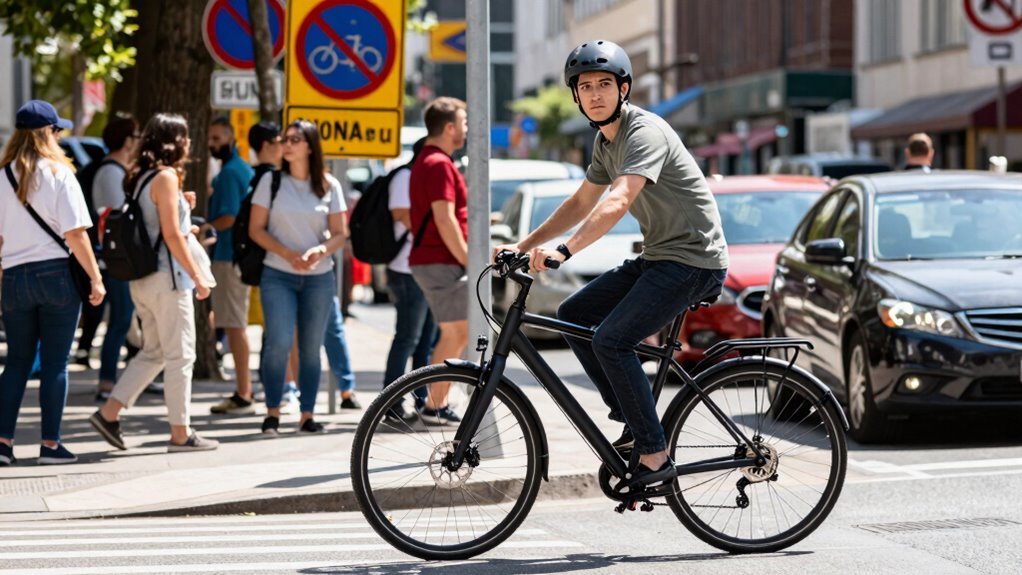

As a new rider, you’ll often find e-bike laws vary by location, making it easy to get confused. Regulations can differ on battery limits, licensing, and where you’re allowed to ride. Staying up-to-date on local rules is essential to avoid fines or legal issues. Since laws change often, it’s important to verify details with local authorities or official websites. If you want to navigate these rules smoothly, keep exploring—you’ll find the guidance you need.

Get audio and creator gear delivered free with Prime
- Fast, free delivery on millions of items
- Prime Video, Amazon Music and more included
- Member-only deals all year
Key Takeaways
- Regulations vary significantly by location, making it essential to research local laws before riding.
- Battery capacity and wattage limits are often strict and differ between regions, impacting legality.
- Some areas require licensing or registration for high-powered e-bikes, while others treat them as bicycles.
- Staying informed through official sources helps avoid fines and legal issues.
- Understanding local rules ensures safe, compliant riding and prevents accidental violations.

Exploring the world of e-bikes can be confusing for new riders, especially because regulations vary widely by location. One of the biggest challenges is understanding how local laws govern your e-bike’s use, particularly when it comes to battery laws and licensing requirements. These rules can be complex, and what’s legal in one city might be completely different in another. As a new rider, it’s easy to feel overwhelmed trying to keep up with these shifting regulations, but getting familiar with them is vital to avoid fines or legal trouble.
Battery laws are often a key part of local regulations. Some places set strict limits on the e-bike’s wattage or maximum battery capacity, which directly impacts how fast or powerful your bike can be. For example, certain areas restrict e-bikes with batteries over a specific voltage or wattage, classifying them differently and imposing different rules. Additionally, some jurisdictions may require you to carry a label showing the battery’s specs or even restrict the use of certain types of batteries altogether. Failing to adhere to these battery laws can mean your e-bike is no longer considered legal for road or trail use, so it’s essential to check the specifics in your area. Understanding local regulations is crucial for safe and legal riding. Knowing how regulations vary by location can help you adapt your riding habits accordingly. Staying informed about local laws also helps you identify any recent updates or changes that could affect your riding. Keeping up with these regulations ensures that you won’t inadvertently violate any rules, which is especially important as laws evolve rapidly.
Check local battery wattage limits and labeling requirements to ensure your e-bike stays legal and safe.
Licensing requirements are another area where confusion reigns. In some regions, riding an e-bike may be treated like riding a bicycle, meaning no license is needed. In others, especially if your e-bike exceeds certain power or speed limits, you might need to register your bike, obtain a license, or even take a safety course. These licensing requirements can be a headache, especially if you’re unsure whether your e-bike qualifies as a bicycle or a motor vehicle. Not knowing the distinctions can lead to accidental violations, like riding in bike lanes when you should be on the road, or vice versa.
The best way to navigate these regulations is to do your homework before hitting the streets. Check your local transportation department’s website or contact local authorities to get the most recent laws. Many regions publish clear guidelines on battery specifications and licensing rules. Remember, laws are always subject to change, so staying informed helps you stay compliant. Being proactive not only keeps you legal but also ensures you enjoy your rides without unexpected interruptions or penalties. Taking the time to understand your area’s rules is the smartest move you can make as a new e-bike rider.
electric bike battery capacity tester
As an affiliate, we earn on qualifying purchases.
As an affiliate, we earn on qualifying purchases.
Frequently Asked Questions
Are E-Bikes Legal on All Public Roads?
E-bikes are not legal on all public roads, as regulations vary by location. Typically, your E-bike’s battery and motor power determine where you can ride—many areas restrict bikes with high motor power or certain battery types. Always check local laws before hitting the road. If your E-bike has a motor power under a specific limit and a compliant battery, you’re more likely to be allowed on public roads, but rules differ everywhere.
Do E-Bikes Require Insurance?
In most places, e-bikes don’t require insurance if they meet specific legal standards, like speed limits and motor power. However, insurance requirements can vary depending on local laws and whether you use your e-bike for commercial purposes. To stay legally compliant, check your area’s regulations. If your e-bike is classified similarly to a motorcycle or motor vehicle, insurance might be mandatory. Always verify local rules to make certain you’re fully compliant.
How Do E-Bike Regulations Differ Between States?
Imagine a patchwork quilt, each square a different regulation. You’ll find e-bike classifications vary by state—some define pedal-assist bikes as low-speed, others as motorized vehicles. Battery regulations also differ, affecting charging and storage rules. In some states, you need a license or registration; in others, you ride free. Always check your local laws before hitting the road, so you’re riding smoothly through the legal landscape.
Are There Age Restrictions for E-Bike Riders?
Yes, age restrictions for e-bike riders vary by state. Some states require young riders to have E-bike licensing or permits, especially for higher-powered models. Helmet requirements are common, with many states mandating helmets for riders under a certain age. Always check local regulations before riding, so you’re aware of any specific age limits, licensing rules, and helmet laws to stay compliant and safe while enjoying your e-bike.
Can I Ride an E-Bike on Bike Paths?
Yes, you can ride an e-bike on bike paths, but always check local rules first. Think of bike paths as the arteries of cycling—smooth, safe, and bustling with fellow riders. To stay safe, prioritize bike safety and guarantee proper e-bike maintenance. Keep your speed in check and be mindful of pedestrians. Doing so helps you enjoy the ride while respecting the rules and keeping everyone safe on the trail.
As an affiliate, we earn on qualifying purchases.
Conclusion
Steering e-bike regulations can feel like charting a course through foggy waters, but don’t let the confusion dampen your ride. Think of these rules as the lighthouse guiding you safely along your journey, illuminating the path so you can enjoy the wind in your hair and the thrill of discovery. Keep your mind sharp and your wheels turning—soon, the rules will become familiar landmarks on your adventure, turning every ride into a breeze.
As an affiliate, we earn on qualifying purchases.
e-bike safety and registration kit
As an affiliate, we earn on qualifying purchases.
As an affiliate, we earn on qualifying purchases.
Halloween Picks
halloween
As an affiliate, we earn on qualifying purchases.