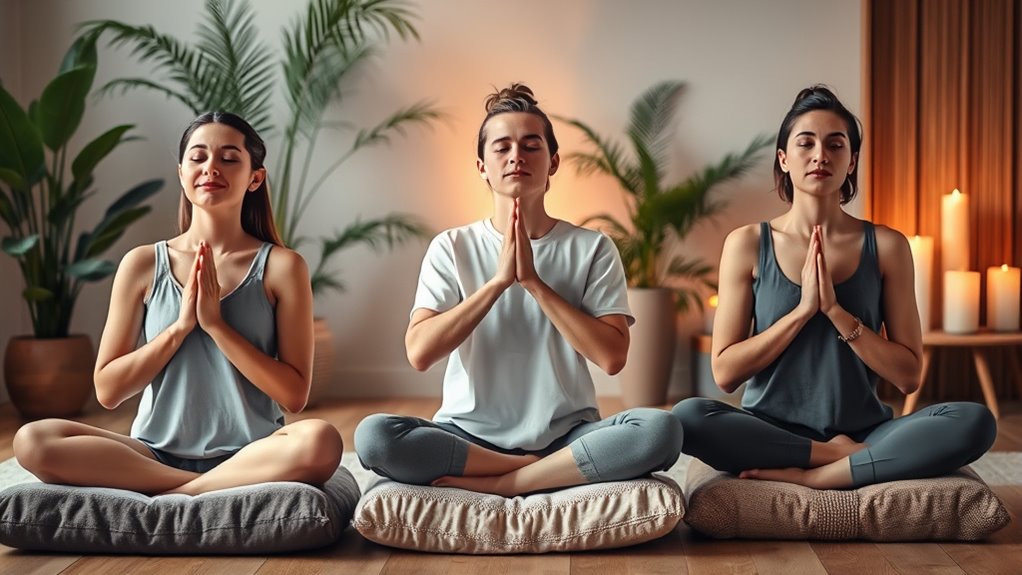

When comparing meditation methods like mindfulness, transcendental meditation, and guided imagery, you’ll find each offers unique benefits. Mindfulness focuses on present-moment awareness, helping reduce stress and improve mental clarity. Transcendental meditation uses mantras for deep relaxation, ideal for those seeking profound calm. Guided imagery engages your imagination to foster relaxation and emotional balance. Exploring these options can help you discover what best fits your lifestyle and goals—if you’re curious, you’ll uncover more ways to tailor your practice.
Key Takeaways
- Mindfulness meditation focuses on present-moment awareness through breath and sensations, promoting mental clarity and stress reduction.
- Transcendental Meditation involves repeating a specific mantra to achieve deep relaxation and transcend ordinary thought processes.
- Guided imagery uses visualization techniques to foster relaxation by imagining calming scenes and environments.
- Breathing techniques emphasize controlled, slow breaths to anchor awareness and quickly reduce anxiety during stressful moments.
- Choice of method depends on personal preferences, goals, and desired mental states, with flexibility allowing customization for effective practice.
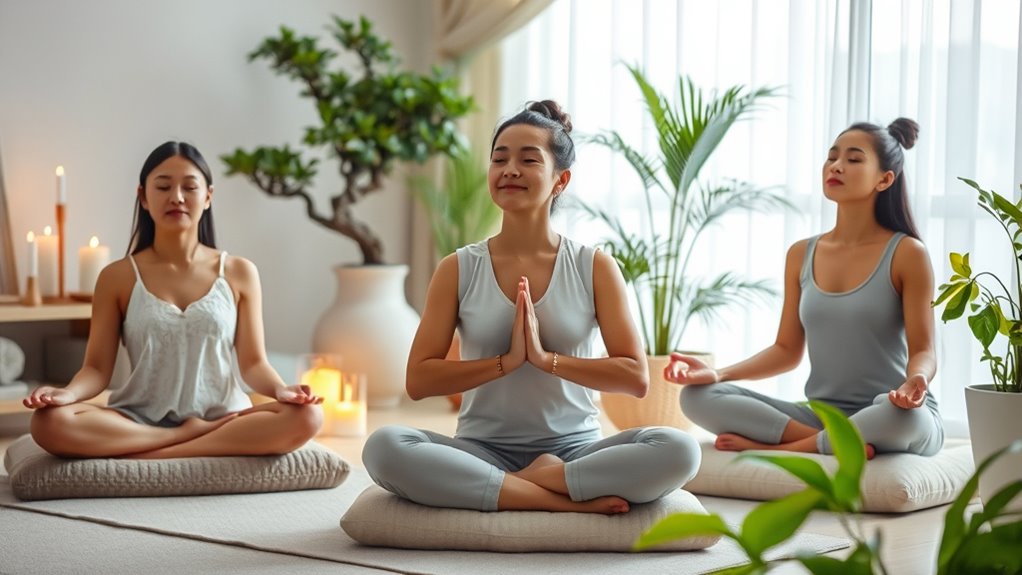
Have you ever wondered which meditation method might suit you best? Choosing the right approach depends on your personal preferences, goals, and the kind of mental state you want to achieve. For beginners, exploring different techniques can be an eye-opening journey. Some methods focus on calming your mind through breathing techniques, while others use guided imagery to create vivid mental scenes that foster relaxation and stress relief. Understanding these options helps you find what resonates most with you.
Breathing techniques are one of the simplest and most accessible forms of meditation. They involve paying close attention to your breath, often inhaling and exhaling slowly and deeply. This practice helps you anchor your awareness in the present moment and reduce anxiety. For example, deep diaphragmatic breathing can calm your nervous system, making it easier to manage stressful situations. You might also try alternate nostril breathing, which balances your energy and clears your mind. These techniques are practical and can be incorporated into daily routines, whether you’re at work, home, or on the go.
Guided imagery is another popular meditation method that engages your imagination to promote relaxation. Here, you listen to a recorded guide or follow instructions that lead you through a vivid mental journey. You might be asked to visualize a peaceful beach, a lush forest, or a serene mountain scene. As you immerse yourself in these mental images, your body responds as if you’re physically present in that environment, helping to reduce stress and enhance emotional well-being. Guided imagery is especially effective if you’re a visual thinker or find it easier to focus with mental pictures rather than abstract concepts.
Both breathing techniques and guided imagery can be tailored to your needs. For instance, if you’re feeling overwhelmed, a quick breathing exercise might be enough to bring immediate calm. Alternatively, if you’re looking to deepen your relaxation or explore your subconscious, guided imagery can provide a richer, more immersive experience. Many meditation apps and online resources offer guided sessions that combine these methods, making it easier to experiment and discover what works best for you.
Ultimately, the key is consistency and openness. Trying out different techniques allows you to see which ones fit your lifestyle and preferences. Whether you prefer focusing on your breath or creating mental scenes through guided imagery, these methods can serve as powerful tools to cultivate mindfulness, reduce stress, and improve your overall mental health. Keep an open mind, and remember that meditation is a personal journey—there’s no right or wrong way, just what feels right for you. Additionally, incorporating mindfulness practices can enhance your meditation experience by helping you stay present and aware throughout your day.
Frequently Asked Questions
How Long Should Beginners Meditate Daily for Optimal Benefits?
As a beginner, aim for about 10 to 15 minutes of meditation daily to build consistency and experience benefits. Starting with shorter sessions helps you stay committed and prevents frustration. Over time, gradually increase your meditation duration as you become more comfortable. The key is maintaining beginner consistency, so don’t worry about perfect length—regular practice matters more than long sessions early on.
Are There Any Health Risks Associated With Specific Meditation Techniques?
While meditation is generally safe, some techniques might gently touch on physical risks or emotional effects. You could experience minor discomfort or fleeting emotional upheavals, especially with intensive practices. If you have pre-existing health issues or emotional sensitivities, it’s wise to consult a professional. Mindfulness and transcendental methods are typically gentle, but always listen to your body and mind to avoid any undue stress or discomfort.
Can Meditation Replace Traditional Therapy for Mental Health Issues?
Meditation can complement therapy, but it shouldn’t replace traditional mental health support. While it offers valuable therapy alternatives for reducing stress and improving well-being, serious issues like depression or anxiety typically need professional treatment. You can incorporate meditation into your routine as an additional tool, but for effective mental health management, it’s best to seek guidance from a qualified therapist alongside meditation practices.
What Equipment or Accessories Are Necessary for Different Meditation Methods?
You don’t need much to start meditating—just a comfortable space and a few accessories. Meditation cushions help you sit comfortably for longer periods, while sound bowls create calming sounds that deepen your practice. Some methods might also benefit from incense or candles for ambiance. Ultimately, minimal equipment makes your experience more accessible, turning your space into a tranquil sanctuary where even the busiest mind can find peace.
How Do I Choose the Best Meditation Style for My Personality?
To choose the best meditation style for your personality, start with a personality assessment to understand your tendencies and preferences. If you’re more active or curious, mindfulness meditation might suit you, while those seeking deep relaxation may prefer transcendental meditation. Experiment with different methods to see which feels most compatible, and trust your intuition. Finding a meditation style that aligns with your personality boosts consistency and enhances overall benefits.
Conclusion
Now that you’ve explored various meditation methods like mindfulness and transcendental meditation, you can choose the one that suits your needs best. Remember, it’s not unlike the secret to a good scone—finding what works for you makes all the difference. So, give these techniques a try, stay consistent, and watch your stress melt away. Don’t forget, even a humble peasant in Elizabethan times knew the value of a peaceful mind—maybe it’s time you did too.