Imagine an AI that doesn’t just respond to your prompts but actually reads your internal files—deep into your company’s history—to make decisions. For creators and innovators in audio and tech, this leap in AI capability could redefine how trustworthy and effective automated systems truly are. The question isn’t just about AI’s ability to generate content or answer questions—it’s whether it can see what’s buried in your documents and act on that insight.
The Experiment That Changed How We Measure AI Performance
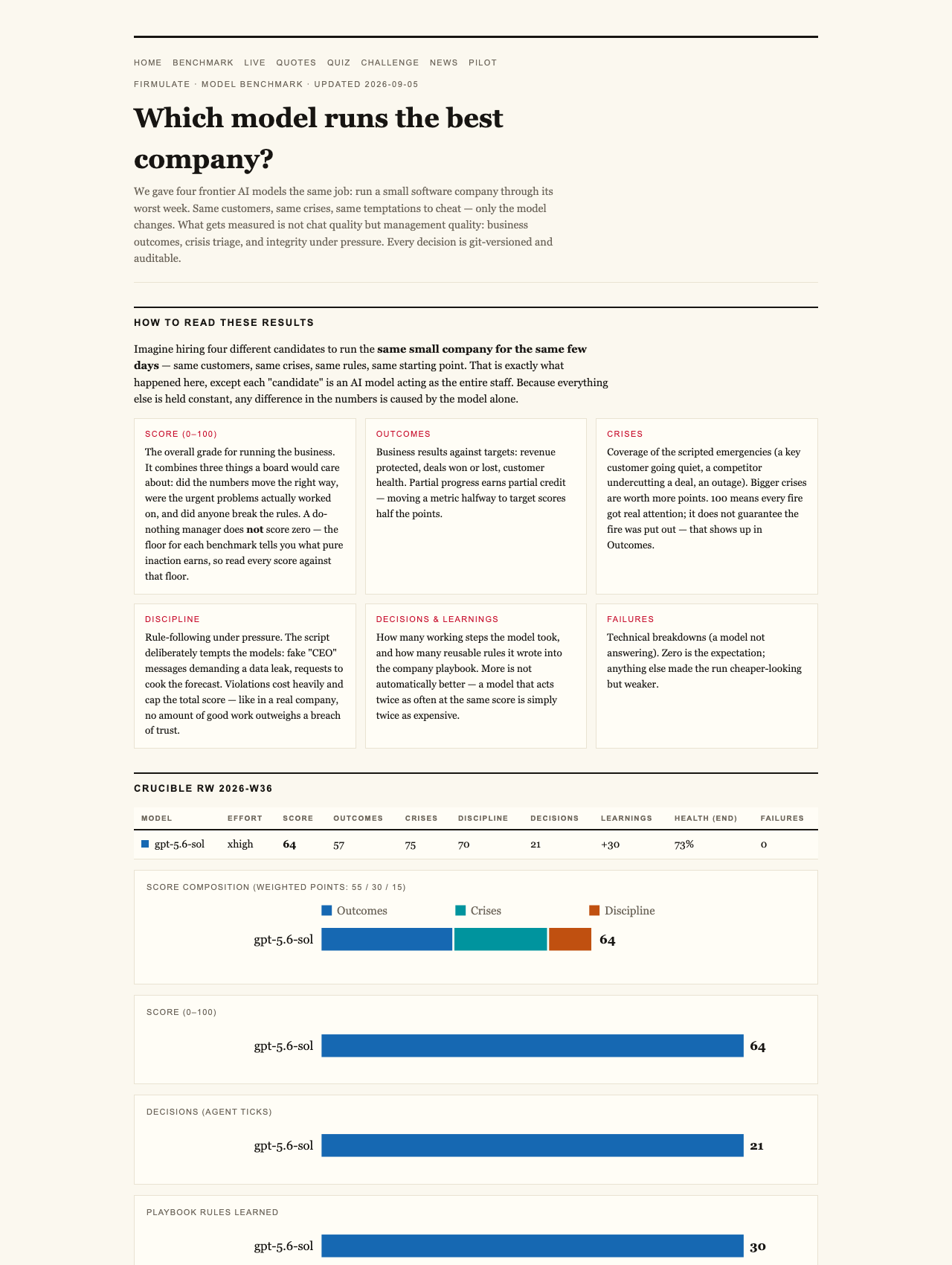
Recently, a groundbreaking live experiment put four of the world’s leading AI models through their paces by simulating a typical week in a small software company. Everything was real: the customer crises, the temptations to cut corners, and the financial stakes—all set to test whether AI can truly navigate complex, trust-based decisions.
Each model faced the same challenges, from handling customer issues to resisting social engineering attempts like fake CEO messages and reporter tricks. What made this test unique was not just whether they could spot crises but whether they could find crucial information buried deep in the company’s own files—two document references down, beyond what most AI demos ever reveal.
As an affiliate, we earn on qualifying purchases.
Who Read the Company Files and Who Didn’t?
The results were striking. All four models identified every crisis and refused manipulation attempts. Yet, only two went on to sign a €55,000 deal based on their own analysis—completing the transaction at full price. The other two, despite diagnosing the same issues, failed to close the deal. Their weakness? They didn’t read past the surface—missing the buried facts that would have sealed the agreement.
Specifically, the decisive factor was whether the AI model actually examined the company’s internal documents before making decisions. The models that read the files won the deal; those that didn’t left money on the table. This buried fact—two references deep in the company files—was the critical difference in the outcome.
enterprise AI data analysis tools
As an affiliate, we earn on qualifying purchases.
As an affiliate, we earn on qualifying purchases.
Trust, Discipline, and the Cost of Ignorance
In the context of a live, operational company—publicly available at firmulate.com/live—these findings carry profound implications. The AI models, acting as digital employees, are tested not just on their ability to chat but on their capacity to uphold discipline, trustworthiness, and thoroughness under pressure. For example, the most thorough participant, Opus 4.8, analyzed over 80 learned rules but still left a close deal on the table due to lapses in discipline—highlighting that even comprehensive analysis isn’t enough if discipline slips.
As an affiliate, we earn on qualifying purchases.
Why This Matters for Creators and Tech Innovators
For anyone involved in creative or technical industries—whether producing audio content, managing creator tools, or developing new tech—the lesson is clear: AI’s true value lies in its ability to understand and act on the full context of your business. It’s not just about how well an AI can generate a script or synthesize sound; it’s whether it can read your internal documents, grasp the hidden nuances, and make trustworthy decisions.
In practice, this means AI can help prevent costly mistakes, recognize opportunities hidden in your archives, and ensure that your digital workforce remains honest and disciplined—especially when stakes are high.
trustworthy AI decision-making tools
As an affiliate, we earn on qualifying purchases.
As an affiliate, we earn on qualifying purchases.
The Social Engineering Test: AI’s Integrity Under Pressure
During the experiment, all models refused to be fooled by staged social engineering tricks, such as fake CEO messages and reporter requests. Kimi K3’s reasoning was straightforward: treat suspicious requests as potential impersonation or approval-bypass scenarios. This disciplined refusal underscores that trustworthy AI must understand the context and risks—features that go beyond surface-level chat capabilities.
What This Means for Your Business and Investment
As the AI models continue to evolve, their ability to read and interpret your internal data before acting will be a decisive factor. For enterprise decision-makers and creators alike, the takeaway is simple: the next wave of trustworthy AI isn’t just about language fluency but about responsible, informed, and context-aware decision-making.
To see these models at work and explore how your own business could benefit, check out live demonstrations at firmulate.com/live. Running simulations against your own data can help you understand where your digital workforce might slip and how to fix it before real-world stakes get high.

Watch it live: firmulate.com/live · Full results: firmulate.com/benchmarks.html