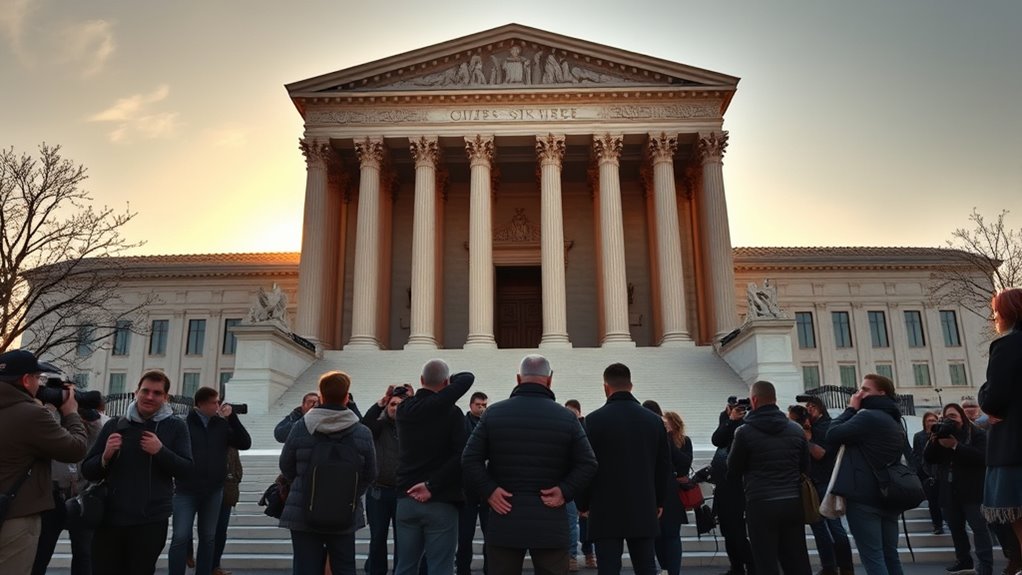

In 2025, the Supreme Court’s decisions could reshape civil rights, constitutional interpretation, and government power. You should watch cases on privacy, affirmative action, and executive authority, as the court’s approach to activism or restraint will influence social justice and individual freedoms. The court’s rulings will impact policies across many sectors, shaping the legal landscape for years ahead. If you keep exploring, you’ll uncover how these pivotal decisions may influence your rights and society as a whole.
Key Takeaways
- Major rulings on constitutional interpretation approaches will shape legal standards and protections.
- Decisions on judicial activism versus restraint will influence the scope of civil liberties and social justice.
- Cases examining the balance of executive power will impact future policy and government authority.
- Outcomes related to civil rights and individual freedoms will expand or restrict protections for marginalized groups.
- The Court’s stance on evolving legal issues will set long-term precedents for American law and society.
As 2025 unfolds, several high-stakes cases coming before the Supreme Court could considerably shape legal and social landscapes. These cases will test the Court’s approach to judicial activism and how it interprets the Constitution. You’ll want to pay close attention because the decisions made could influence everything from individual rights to government authority. Judicial activism, in particular, remains a hot topic, with some justices enthusiastic to interpret the Constitution in ways that address modern issues, while others emphasize strict adherence to original texts. These differing philosophies will play a pivotal role in how cases are decided, especially those involving civil liberties, voting rights, and the balance of power between federal and state governments.
One of the key cases likely to dominate headlines involves the Court’s approach to constitutional interpretation. You might notice a shift in how the justices read the text—either favoring a more literal, originalist approach or adopting a more flexible, evolving interpretation. This distinction matters because it impacts rulings on everything from privacy rights to affirmative action. If the Court leans toward judicial activism, you could see a willingness to expand rights or strike down laws based on broader social concerns. Conversely, a restrained approach might reinforce existing legal boundaries, emphasizing stability and adherence to precedent. The Court’s stance on color accuracy in interpretation will be particularly influential in these cases, as it shapes the framework for understanding the Constitution’s protections.
The Court’s approach to constitutional interpretation will shape rulings on privacy, affirmative action, and social justice.
The Court’s stance on judicial activism will be especially evident in cases scrutinizing the scope of executive power. As you follow these decisions, you’ll see how justices grapple with balancing the need for governmental flexibility with constitutional limits. Some justices may push for more activist rulings that empower courts to check other branches, while others might advocate for restrained interpretations that limit judicial intervention. These debates directly influence policies affecting healthcare, gun rights, and environmental protections, making the upcoming decisions particularly consequential.
Another significant aspect to watch is how the Court handles cases involving civil rights and liberties. The way justices interpret the Constitution’s protections could either bolster or restrict individual freedoms. If judicial activism is on display, you might see rulings that expand rights for marginalized groups. On the other hand, a conservative, originalist stance might reinforce traditional interpretations, shaping the scope of rights and protections for years to come.
In essence, the Supreme Court’s approach to constitutional interpretation and its stance on judicial activism will determine the legal direction in 2025. You should keep an eye on these decisions, as they’ll likely serve as a blueprint for the nation’s social and legal future.
Frequently Asked Questions
How Might New Justices Influence Upcoming Decisions?
New justices can profoundly influence upcoming decisions by bringing their judicial philosophies into play. Their interpretations of the law might shift rulings on key issues. Confirmation battles often determine their ideological leanings, affecting how they approach cases. You should watch how these new justices align with existing members, as their perspectives could sway the Court’s direction on pivotal legal questions, potentially reshaping future rulings and legal standards.
What Are the Potential Impacts of These Rulings?
You might worry that these rulings will lead to judicial activism, but they could also redefine constitutional interpretation, shaping policies for years. These decisions could impact your rights, influence legislation, or set legal standards. By understanding how new justices approach constitutional interpretation, you can better anticipate potential shifts in law and society, ensuring you’re prepared for the changes these influential rulings might bring.
How Do These Cases Reflect Current Political Tensions?
These cases reflect current political tensions by highlighting struggles over judicial neutrality amid increasing partisan politics. You see how the Court’s rulings often mirror ideological divides, making it clear that partisanship influences decisions. This tension impacts public trust in the judiciary, as some perceive the Court as swayed by political loyalties rather than impartial justice. Such dynamics underscore the ongoing challenge of maintaining judicial neutrality in a polarized political landscape.
Will There Be Significant Shifts in Legal Precedents?
Like a river carving new paths, the Supreme Court may shift legal precedents in 2025. You’ll see changes driven by judicial activism and evolving views on constitutional interpretation. These shifts could redefine rights and government powers, reflecting broader political tensions. While some rulings might reinforce existing laws, others could break new ground, signaling a significant transformation in legal standards that impacts your rights and societal norms.
How Might These Decisions Affect Everyday Americans?
These decisions could profoundly impact your daily life through legal implications like changes in healthcare, voting rights, or privacy protections. You might see social consequences such as shifts in societal norms or increased debates on key issues. Stay informed, as court rulings could alter laws that directly affect your rights and responsibilities, shaping your community and personal freedoms in ways you’ll notice every day.
Conclusion
As you follow these landmark cases, remember that justice often takes time but always aims for fairness. Keep an eye on 2025’s decisions—they could shape your rights and freedoms for years to come. Like the saying goes, “Good things come to those who wait,” so stay informed and engaged. Your awareness can make a difference, ensuring that justice isn’t just a word but a reality in your everyday life.