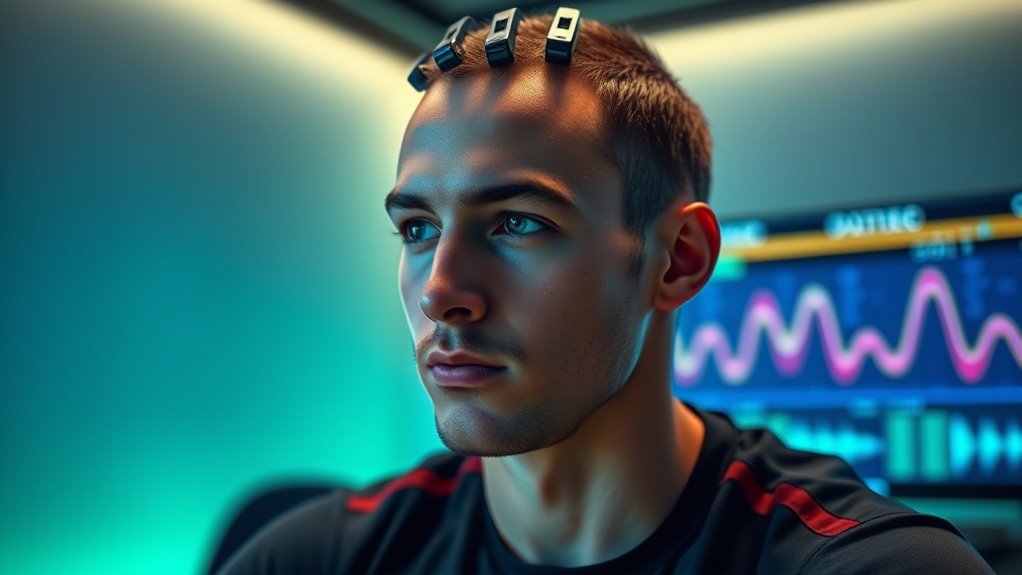

Neurofeedback training helps you reach peak performance by improving focus, emotional regulation, and mental resilience. It uses real-time brainwave monitoring to guide you in achieving ideal mental states, especially under pressure. Combining neurofeedback with mindfulness techniques enhances awareness of your internal signals, making it easier to stay calm and confident during competitions. As you continue exploring, you’ll discover how this powerful approach can release your full athletic potential.
Key Takeaways
- Neurofeedback provides real-time brainwave monitoring to optimize mental states like focus and relaxation during training.
- Combining neurofeedback with mindfulness enhances athletes’ awareness and control of their internal mental processes.
- Goal-oriented neurofeedback accelerates progress by targeting specific brainwave patterns associated with peak performance.
- Immediate feedback helps athletes quickly identify and shift mental states, improving focus during high-pressure situations.
- Long-term neurofeedback training builds mental resilience, leading to consistent performance and better stress management.

Have you ever wondered how some athletes consistently perform at their best under pressure? It’s not just talent or physical conditioning—mental resilience plays a pivotal role. Neurofeedback training is emerging as a powerful tool to enhance mental states, helping athletes sharpen focus, reduce anxiety, and maintain confidence during critical moments. When you combine neurofeedback with mindfulness techniques, you develop a heightened awareness of your brain’s activity, allowing you to regulate your emotional responses more effectively. This mental clarity translates into improved performance, especially when stakes are high.
Mental resilience and neurofeedback unlock peak performance under pressure.
Incorporating goal setting strategies into your training routine can further enhance the benefits of neurofeedback. Clear, well-defined goals give your mind a target to focus on, making it easier to channel your mental energy productively. As you work with neurofeedback, you learn to reinforce these goals by training your brain to enter desired states—calm, focused, or alert—at will. This reinforces a sense of control over your mental processes, which is essential during competition. Over time, neurofeedback helps you solidify these mental patterns, making goal attainment feel more natural and less stressful.
During neurofeedback sessions, sensors monitor your brainwaves in real-time, providing immediate feedback. This feedback helps you identify patterns associated with optimal performance, such as heightened alpha waves linked to relaxation or increased beta waves related to alertness. By practicing mindfulness techniques alongside neurofeedback, you become more aware of your internal states and learn to shift into these desired modes intentionally. For example, if anxiety creeps in before a big event, you can use breathing exercises or visualization strategies in conjunction with neurofeedback to calm your mind swiftly. This synergy improves your ability to stay present and focused, essential traits for peak performance.
Goal setting strategies also guide your neurofeedback training by giving you specific targets to achieve. Instead of vague intentions like “be more focused,” you set measurable goals such as maintaining a particular brainwave pattern for a set duration. This clarity accelerates your progress because you’re not just passively training; you’re actively working toward concrete outcomes. Over time, as your brain adapts and responds more reliably to these cues, you’ll notice a marked improvement in your mental resilience and overall performance. Furthermore, understanding how brainwave patterns influence mental states can help you tailor your training more effectively.
Ultimately, combining neurofeedback with mindfulness techniques and effective goal setting strategies empowers you to take control of your mental game. It’s about training your brain to operate at its highest potential, especially when it matters most. With consistent practice, you’ll learn to harness your mental states, perform under pressure, and push your athletic limits further than you thought possible.
Frequently Asked Questions
How Quickly Can Athletes Notice Improvements From Neurofeedback?
You might notice improvements from neurofeedback training within a few sessions, as your brain plasticity allows it to adapt quickly. Many athletes experience enhanced mental resilience and focus after just 10-20 sessions. The brain’s ability to rewire itself means that consistent practice can lead to faster results, helping you stay calm under pressure and perform at your best. Keep committed, and you’ll likely see progress sooner than you expect.
Is Neurofeedback Training Suitable for All Sports Disciplines?
Is neurofeedback training suitable for all sports? Think of it as a versatile tool, much like cross-training benefits your overall game. While sport-specific protocols target particular skills, neurofeedback can enhance focus, reaction time, and mental resilience across disciplines. Whether you’re a runner or a swimmer, this personalized approach helps optimize your mental state, proving its adaptability and effectiveness for athletes in any sport.
What Are the Potential Side Effects of Neurofeedback Training?
You might wonder about potential side effects of neurofeedback training. While adverse reactions are rare, some people experience temporary headaches, fatigue, or irritability. Long-term effects are generally positive, but ongoing research is needed to fully understand them. If you notice any discomfort during sessions, it’s important to inform your practitioner. Overall, neurofeedback is considered safe, with most users benefiting without significant adverse reactions.
How Does Neurofeedback Compare to Traditional Mental Coaching Methods?
You’ll find neurofeedback often provides faster, more targeted results than traditional mental coaching methods like mindfulness training or visualization techniques. While mindfulness encourages awareness and calmness, neurofeedback directly trains your brain to improve focus and reduce stress. It offers real-time feedback, making it easier to identify and change specific brain patterns. This makes neurofeedback a powerful supplement or alternative to conventional approaches for athletes seeking peak performance.
What Is the Typical Duration of an Effective Neurofeedback Training Program?
You might wonder about the typical duration of an effective neurofeedback training program. Training schedules usually span from 20 to 40 sessions, tailored to your specific goals. Program customization plays a key role, with sessions often scheduled 1-2 times weekly. This flexible approach guarantees steady progress, allowing your brain to adapt and optimize performance. Consistent, personalized training helps you reach peak results efficiently and sustainably.
Conclusion
As you explore neurofeedback training, it’s fascinating how your brain’s own patterns can release peak performance. Just like a well-tuned instrument, your mind responds to these subtle signals, aligning focus and calmness exactly when you need them most. It’s almost like your brain and training are working in perfect harmony—coincidence or not—helping you push limits you never thought possible. Embrace this connection, and watch as your game transforms in ways you’d never imagine.