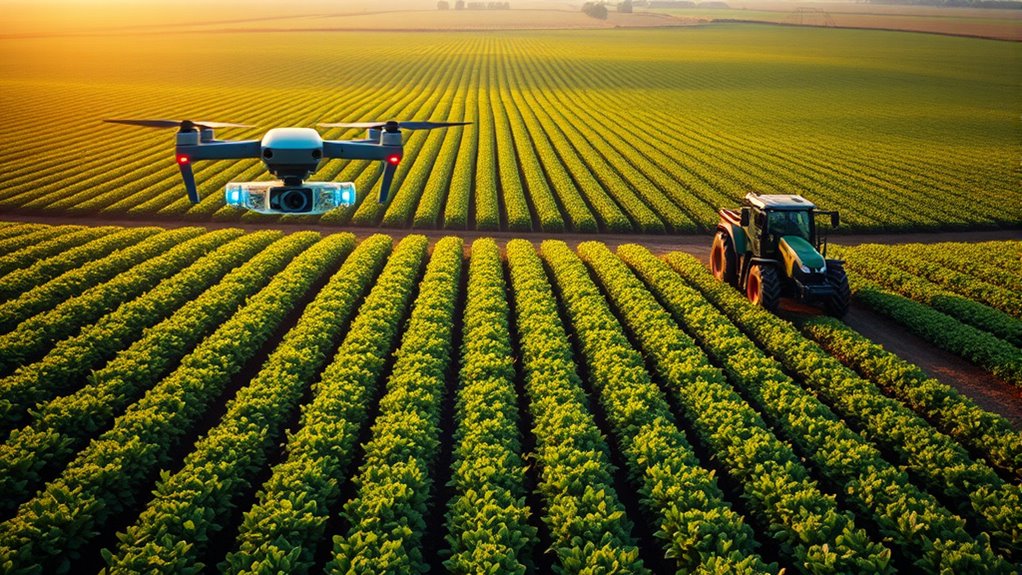

AI-driven precision agriculture helps you optimize your farming by using sensors, drones, and satellite imagery to monitor crops in real-time. This technology allows you to detect issues early, reduce pesticide use, and apply resources more efficiently, supporting sustainable practices. It minimizes environmental impact while increasing your farm’s productivity. If you’re interested in finding out how these innovations can transform your approach, there’s more to explore that can guide your efforts.
Key Takeaways
- Integrates AI-powered sensors, drones, and satellite imagery for real-time crop monitoring and early issue detection.
- Enables targeted interventions to reduce pesticide and chemical use, promoting environmental sustainability.
- Optimizes resource application, such as water and fertilizers, enhancing efficiency and minimizing waste.
- Uses AI-driven pest detection to precisely identify infestations and apply treatments only where needed.
- Boosts crop yields and farm profitability while supporting eco-friendly and sustainable farming practices.
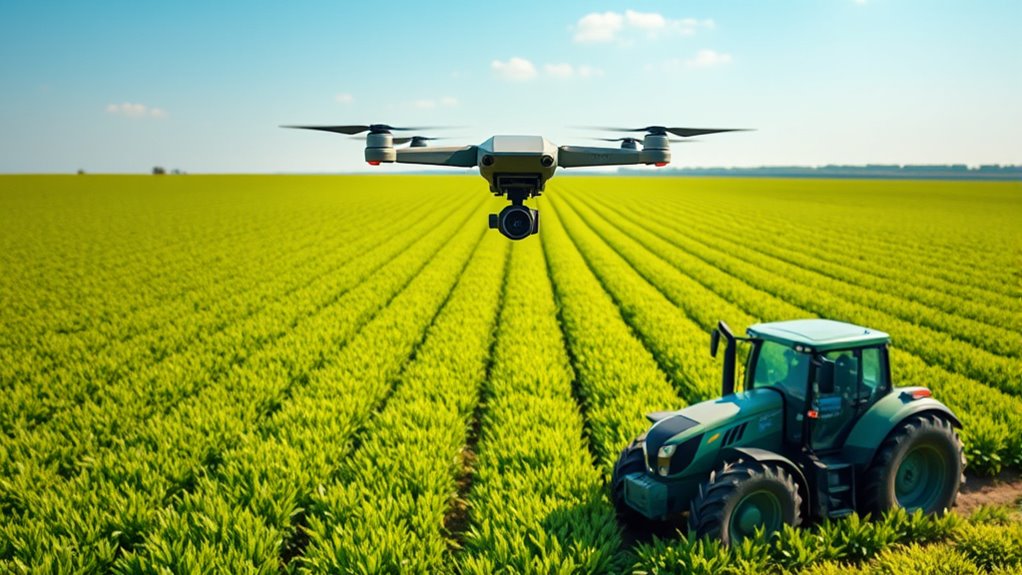
Have you ever wondered how technology can transform agriculture into a more sustainable practice? With the rise of AI-driven tools, you now have the power to optimize your farming operations like never before. One of the most impactful innovations is precision agriculture, which leverages artificial intelligence to make farming smarter, more efficient, and environmentally friendly. At its core, precision agriculture involves using advanced technologies to monitor and manage crops at a granular level, reducing waste and maximizing yield.
Crop monitoring is a fundamental component of this approach. Using AI-powered drones, sensors, and satellite imagery, you can continuously observe your fields in real time. These tools collect data on soil health, moisture levels, plant growth, and nutrient content, enabling you to make informed decisions quickly. Instead of relying on manual inspections, which are time-consuming and often inaccurate, AI systems analyze this data to identify patterns and detect problems early. This proactive monitoring helps you catch issues before they escalate, saving resources and minimizing environmental impact. For instance, AI can pinpoint areas where crops are underperforming or stressed, guiding targeted interventions that prevent unnecessary use of fertilizers or water. Additionally, leveraging local water resources more efficiently supports sustainable water management practices in your farm operations.
Pest detection is another critical aspect where AI profoundly enhances sustainability. Traditionally, pest management relied on visual scouting or scheduled pesticide applications, often leading to overuse and environmental harm. Now, with AI-enabled pest detection, you can identify pest infestations early through image recognition algorithms and sensor data. Drones equipped with cameras or ground-based sensors scan your fields and transmit images for analysis. The AI system then recognizes signs of pests or diseases with high accuracy, alerting you to take swift action only where necessary. This targeted approach reduces pesticide use, protecting beneficial insects, water quality, and surrounding ecosystems. It also lowers costs and minimizes chemical residues on your crops, aligning with sustainable farming principles.
Frequently Asked Questions
How Does AI Improve Crop Yield Predictions Accurately?
AI improves crop yield predictions by integrating sensors that collect real-time data on soil, weather, and plant health. You can rely on predictive modeling algorithms that analyze this data to forecast yields more accurately. This combination allows you to make informed decisions, optimize resource use, and increase productivity. With sensor integration and advanced modeling, you gain precise insights, helping you plan effectively and boost your farm’s overall efficiency.
What Are the Initial Costs to Adopt AI in Farming?
You should expect initial costs to adopt AI in farming to include a thorough cost analysis and infrastructure investment. These expenses cover purchasing sensors, drones, and data management systems, along with setting up reliable internet and computing power. While the upfront costs can be significant, they often lead to long-term savings and increased crop yields. Planning carefully helps you balance the investment against potential gains, making AI adoption more feasible.
How Does AI Handle Data Privacy Concerns?
Think of AI as a trusted farmhand that guards your data like valuable crops. It handles data security by encrypting your information and restricting access. AI systems comply with privacy legislation, ensuring your data isn’t misused or shared without consent. You can feel confident that your farm’s data remains private, protected from breaches, just like a well-fenced field keeps pests out. This balance helps you leverage AI’s benefits safely and responsibly.
Can Small Farms Benefit From Ai-Driven Agriculture?
Yes, small farms can benefit from AI-driven agriculture. AI helps with farm size optimization, allowing you to maximize productivity despite traditional farming challenges like limited resources or labor. By adopting AI tools, you can make smarter decisions, improve crop yields, and reduce waste. Even with smaller operations, AI provides tailored insights that make farming more efficient and sustainable, helping you compete effectively in today’s agricultural landscape.
What Are Future Innovations Expected in AI for Farming?
Future innovations in AI for farming could include robotic harvesters that increase efficiency and reduce labor costs. You might also see drone surveillance becoming more sophisticated, providing real-time data on crop health and pest outbreaks. These advancements will help you optimize resource use, boost yields, and promote sustainability. As AI technology evolves, you’ll find farming becoming more automated, precise, and environmentally friendly, transforming how you manage your farm.
Conclusion
As you embrace AI-driven precision agriculture, you’ll find yourself part of a remarkable coincidence—technology and nature working hand in hand for sustainability. Every decision you make helps nurture the land, ensuring future generations can thrive. It’s no accident that innovation brings us closer to harmony with the environment. Together, you’re shaping a future where farming is smarter, greener, and more resilient—proving that even small actions can create extraordinary change.