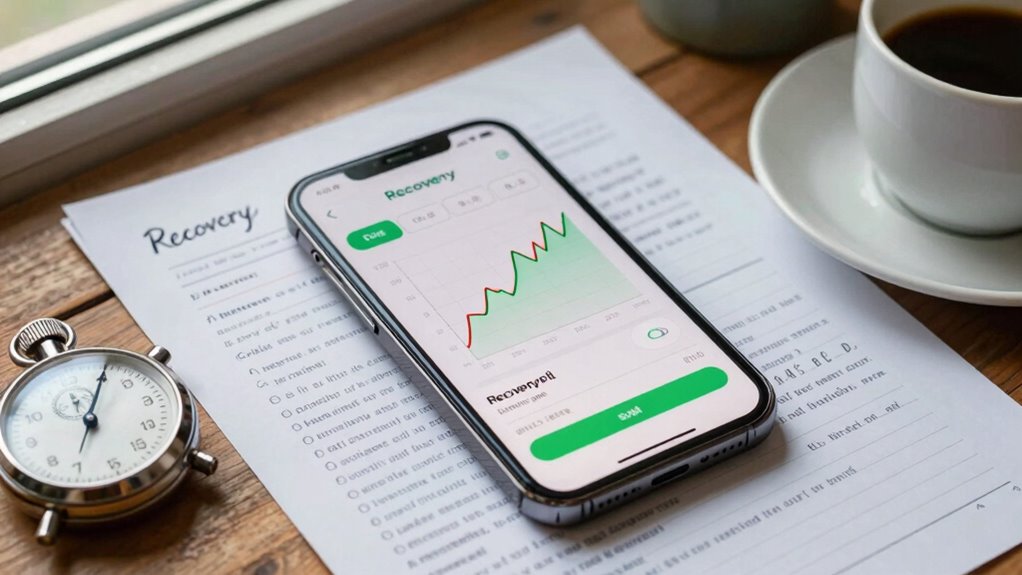

Recovery metrics on apps can’t truly capture your progress because they often ignore emotional, mental, and social factors that influence healing. You might see numbers or progress bars, but they don’t reflect how you’re feeling emotionally or how engaged you are in your recovery journey. These metrics can mislead you into thinking things are better than they are. To understand your true progress, it’s important to take into account the full story behind the numbers—there’s more to learn if you keep exploring.

Get audio and creator gear delivered free with Prime
- Fast, free delivery on millions of items
- Prime Video, Amazon Music and more included
- Member-only deals all year
Key Takeaways
- Numerical scores and progress bars often overlook emotional and psychological factors crucial for comprehensive recovery.
- Recovery is non-linear, involving fluctuations that app metrics may misinterpret without contextual understanding.
- Emotional well-being significantly impacts motivation, resilience, and long-term success beyond numerical indicators.
- True engagement encompasses active participation and emotional investment, which app metrics typically fail to measure.
- A holistic approach integrating personal stories and broader well-being metrics provides a more accurate view of recovery progress.

Recovery metrics are often viewed as straightforward indicators of success, but without context, they can be misleading. Many apps and digital tools offer numerical scores or progress bars that seem to quantify how well you’re doing. However, these numbers don’t tell the full story. They overlook the essential nuances of your individual journey, especially aspects like patient engagement and emotional well-being, which are indispensable to true recovery. When you focus solely on numbers, you risk ignoring how you feel emotionally or how actively you’re participating in your own healing process. Moreover, understanding the holistic nature of health involves recognizing that recovery encompasses more than just physical indicators; it includes mental, emotional, and social factors that influence your overall well-being.
For example, an app might show that your physical activity has increased, but if you’re feeling overwhelmed or disconnected from your recovery, those numbers don’t reflect your emotional well-being. Emotional health plays a fundamental role in recovery, influencing motivation, resilience, and overall outlook. If your emotional state isn’t improving, the physical gains might be short-lived or unsustainable. So, relying only on app metrics can give a false sense of progress, making you believe you’re improving when, in reality, underlying emotional or psychological challenges persist. Recognizing the importance of emotional health is crucial for a balanced view of recovery progress.
Patient engagement is another essential factor often missing from digital metrics. Engagement isn’t just about ticking off tasks or hitting step goals; it’s about actively participating in your recovery, understanding your condition, and making informed choices. When metrics ignore this engagement, they miss whether you’re truly connected to your recovery process or just going through the motions. You might see steady numbers, but if you’re disengaged or feeling disconnected from your health journey, those numbers are less meaningful. True recovery depends on your ongoing commitment and emotional investment, aspects that raw data can’t capture. Recognizing the holistic health is key to understanding the full scope of recovery.
Furthermore, recovery isn’t linear. Fluctuations happen, setbacks occur, and emotional states change. Apps might flag progress as stagnant or declining, but without context—like increased stress or emotional struggles—you might misinterpret these signals. Recovery metrics need to account for the complexity of your experience, including your mental health and level of patient engagement. Only then can they provide a more accurate picture of your genuine progress. Incorporating holistic health monitoring can help bridge this gap by capturing broader aspects of well-being and engagement. Additionally, understanding that recovery involves a dynamic process can help set realistic expectations and reduce frustration during setbacks.
In the end, numbers alone can’t replace a holistic understanding of recovery. Your emotional well-being and active engagement are foundational to lasting healing. To truly measure success, you need context—personal stories, emotional states, and your level of involvement—beyond what any app’s metrics can offer.
emotional well-being recovery journal
As an affiliate, we earn on qualifying purchases.
As an affiliate, we earn on qualifying purchases.
Frequently Asked Questions
How Do Recovery Metrics Vary Across Different Industries?
You’ll find recovery metrics vary across industries because each has unique benchmarks and customer expectations. For instance, healthcare focuses on patient outcomes, while retail emphasizes swift issue resolution to boost customer satisfaction. By comparing your recovery metrics against industry benchmarks, you can identify strengths and areas for improvement. Keep in mind, understanding the specific context of your industry helps you interpret these metrics accurately and enhance overall recovery strategies.
What Are Common Pitfalls in Interpreting Recovery Metrics?
You might think recovery metrics are straightforward, but beware the trap of data misinterpretation and metric oversimplification. Relying solely on numbers can be like reading a single page and missing the whole story. You risk missing nuances that reveal true progress. Always dig deeper, consider industry specifics, and avoid jumping to conclusions. Context transforms raw data into meaningful insights, guiding you toward effective recovery strategies.
How Can Organizations Collect Better Contextual Data?
To collect better contextual data, you should focus on understanding user behavior through detailed data collection methods. Implement tools like surveys, session recordings, and behavioral analytics to capture how users interact with your app. Track metrics that reveal user intent and challenges. Regularly analyze this data to identify patterns, and guarantee your data collection respects privacy laws. This thorough approach helps you interpret recovery metrics more accurately.
What Role Does User Behavior Play in Recovery Metrics?
User behavior plays a vital role in recovery metrics because it reflects user engagement and behavioral patterns. When you analyze how users interact during recovery, you gain insights into their motivations and challenges. Tracking these behaviors helps you identify why certain recovery efforts succeed or fail, allowing you to tailor strategies more effectively. Without understanding user behavior, recovery metrics lack the context needed to make meaningful improvements.
How Do External Factors Influence Recovery Data Accuracy?
External factors like environmental influences substantially impact recovery data accuracy. If weather, location, or device conditions change unexpectedly, they can distort your recovery metrics, making data less reliable. These influences threaten data integrity by introducing variables that aren’t controlled by the app. To get a clear picture of your recovery, you must consider these external factors, as they can skew results and lead to misguided conclusions about your progress.
As an affiliate, we earn on qualifying purchases.
Conclusion
Just like trying to navigate a maze with only partial clues, relying solely on app recovery metrics leaves you missing the full picture. Without proper context, these numbers can mislead your decisions, making recovery seem better or worse than it truly is. To truly understand progress, you need the full story behind the data—like adding a map to that maze. Only then can you make informed choices and truly guide your recovery in the right direction.
As an affiliate, we earn on qualifying purchases.
As an affiliate, we earn on qualifying purchases.
Halloween Picks
halloween
As an affiliate, we earn on qualifying purchases.