Finding wireless headphones for music production means choosing which compromise matters least: Bluetooth convenience, dependable wired monitoring, or a sound that helps expose mix details. My strongest wireless pick is the Sennheiser HDB 630, with adjustable EQ and wired USB-C audio for creators who want flexibility. The Audio-Technica ATH-M50xBT2 is a more straightforward wireless choice with long battery life, while the wired ATH-M50x is my practical pick for studio work where a cable is no problem.

Get audio and creator gear delivered free with Prime
- Fast, free delivery on millions of items
- Prime Video, Amazon Music and more included
- Member-only deals all year
These are not interchangeable tools. Bluetooth introduces latency that can interfere with recording and precise timing, and wireless playback may not match the signal path used for a final mix. I rank the Sennheiser first for its wider set of production-oriented listening controls, not because wireless headphones replace reference monitors. The two wired models rank highly for hands-on monitoring, while the OneOdio A70 suits a flexible, entry-level setup. The Sony MDR7506 provides established wired monitoring, but it is not wireless. I include it as a useful comparison for buyers whose real priority is studio monitoring rather than cutting the cable.
Complete the kit


Key Takeaways
- The Sennheiser HDB 630 is the most adaptable wireless option here, pairing customizable parametric EQ with USB-C wired audio; its high stated impedance makes source compatibility worth checking.
- The ATH-M50xBT2 offers a familiar over-ear wireless format, up to 50 hours of battery life and a wired cable, but Bluetooth is still a poor choice for latency-sensitive recording.
- The wired ATH-M50x is the more direct production tool of the two Audio-Technica models, with a detachable cable and swiveling cups for one-ear monitoring.
- The OneOdio A70 offers both 3.5 mm and 6.35 mm connections and long stated battery life, making it the flexible pick for mixed casual and home-studio use.
- The Sony MDR7506 is not wireless. I include it as a wired studio reference option for buyers who decide monitoring reliability matters more than wireless convenience.
| Sennheiser HDB 630 Wireless Headphones with Hi-Res Bluetooth Dongle, Lunar Silver |  | Best Overall Wireless Pick | Driver size: 42 mm dynamic transducers | Wireless codecs: aptX HD and aptX Adaptive | Wired audio: USB-C, up to 24-bit/96 kHz | VIEW LATEST PRICE | See Our Full Breakdown |
| Audio-Technica ATH-M50x Professional Studio Monitor Headphones, Black | 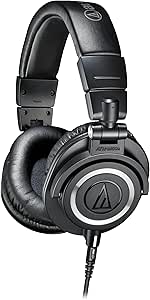 | Best for Wired Studio Monitoring | Driver size: 45 mm dynamic | Frequency response: 20 Hz–28,000 Hz | Impedance: 38 ohms | VIEW LATEST PRICE | See Our Full Breakdown |
| Audio-Technica ATH-M50xBT2 Wireless Over-Ear Headphones, Black |  | Best Familiar Wireless Studio-Style Option | Driver size: 45 mm | Battery life: Up to 50 hours | Bluetooth pairing: Multipoint, up to two devices | VIEW LATEST PRICE | See Our Full Breakdown |
| OneOdio A70 Bluetooth Over-Ear Headphones, Black |  | Best Flexible Entry-Level Pick | Driver size: 40 mm neodymium | Connectivity: Bluetooth and wired | Battery life: Up to 72 hours | VIEW LATEST PRICE | See Our Full Breakdown |
| Sony MDR7506 Professional Large Diaphragm Headphones | 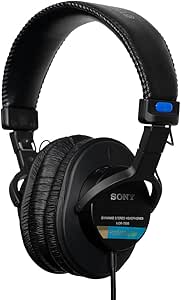 | Best Established Wired Alternative | Driver size: 40 mm | Frequency response: 10 Hz–20 kHz | Impedance: 63 ohms | VIEW LATEST PRICE | See Our Full Breakdown |
| wireless headphones for music production | Driver size | Impedance | Battery life | Weight |
|---|---|---|---|---|
| Sennheiser HDB 630 Wireless He | 42 mm dynamic transducers | 470 ohms | Up to 60 hours | 0.2 kg |
| Audio-Technica ATH-M50x Profes | 45 mm dynamic | 38 ohms | — | — |
| Audio-Technica ATH-M50xBT2 Wir | 45 mm | — | Up to 50 hours | — |
| OneOdio A70 Bluetooth Over-Ear | 40 mm neodymium | — | Up to 72 hours | 8.96 ounces |
| Sony MDR7506 Professional Larg | 40 mm | 63 ohms | — | 8 ounces |
More Details on Our Top Picks
Sennheiser HDB 630 Wireless Headphones with Hi-Res Bluetooth Dongle, Lunar Silver
The Sennheiser HDB 630 takes the top spot because it offers the broadest set of useful listening tools among the wireless models here. Its 42 mm transducers are described as neutral and detailed, and its customizable parametric EQ gives producers a way to tailor playback when comparing material or checking how tonal changes affect a mix. That flexibility makes it a more production-minded wireless option than the OneOdio A70, whose appeal is chiefly connection variety and long battery life.
For a desktop setup, the HDB 630’s USB-C wired audio up to 24-bit/96 kHz gives me an alternative to Bluetooth, which is the better route when timing matters. It also supports aptX HD and aptX Adaptive and includes a Bluetooth adapter. Those wireless capabilities are useful for listening away from the desk, but codec support does not remove Bluetooth latency or guarantee that every device will use the same codec. I would not use wireless playback to judge exact recording timing.
The drawbacks are real. Its listed 470-ohm impedance makes source compatibility worth checking for wired use, especially when connecting directly to a modest device rather than an interface or headphone amplifier. It is also a more feature-rich and involved choice than the ATH-M50xBT2, which keeps the wireless proposition simpler. I would choose the Sennheiser when adjustable listening and multiple connection modes matter more than plug-and-play simplicity; I would skip it if I wanted a straightforward wired studio pair.
Pros:- Parametric EQ allows more tailored listening than the other wireless picks listed here.
- USB-C wired audio provides a non-Bluetooth option for production sessions.
- Adaptive noise cancellation and Transparency Mode help when moving between a workspace and shared surroundings.
- Up to 60 hours of stated battery life supports extended wireless listening.
Cons:- The stated 470-ohm impedance calls for checking wired source compatibility.
- Bluetooth latency still makes wireless monitoring a poor fit for timing-sensitive recording.
- Its feature set is more involved than the simpler ATH-M50xBT2.
Best for: Producers who want wireless convenience for editing and reference listening, plus USB-C wired audio and EQ adjustment for a more flexible desk setup.
Not ideal for: Anyone who needs a simple, low-impedance wired monitor or plans to record and monitor through Bluetooth with tight timing.
- Driver size:42 mm dynamic transducers
- Wireless codecs:aptX HD and aptX Adaptive
- Wired audio:USB-C, up to 24-bit/96 kHz
- Impedance:470 ohms
- Noise control:Adaptive noise cancellation and Transparency Mode
- Battery life:Up to 60 hours
- Weight:0.2 kg
Our verdict“I recommend the HDB 630 as the most adaptable wireless pick here, provided its wired source requirements suit your setup.”
Audio-Technica ATH-M50x Professional Studio Monitor Headphones, Black
The Audio-Technica ATH-M50x is the pick I would make when production duties matter more than wireless freedom. It is not a Bluetooth headphone, but its 38-ohm impedance and detachable cable make it a practical wired match for many home-studio sources. Compared with the wireless ATH-M50xBT2, this model is built around direct monitoring rather than switching between Bluetooth listening and a cable.
The 45 mm drivers, sound-isolating earcups, and 90-degree swivel make it useful for tracking and one-ear monitoring. Swiveling a cup back can help a performer or engineer keep one ear open to the room, while the isolating design helps reduce outside sound. The detachable cable is also a meaningful advantage over the Sony MDR7506’s non-detachable lead: if the cable wears out, the ATH-M50x does not require the same all-or-nothing repair approach.
It is still not a perfect answer for every producer. The supplied description emphasizes deep, accurate bass, but that alone does not establish a neutral response for final mix decisions. I would compare mixes on speakers or other playback systems rather than rely on one headphone. Its over-ear shape is less compact than earbuds, and it lacks wireless playback, noise cancellation, and battery-powered convenience. Against the HDB 630, it gives up EQ and wireless flexibility in return for a simpler wired workflow.
Pros:- Detachable cable is easier to replace than the Sony MDR7506’s fixed cable.
- 90-degree swiveling earcups support one-ear monitoring.
- 38-ohm impedance suits a range of common wired audio sources.
- Sound-isolating earcups help limit distractions during recording.
Cons:- It has no wireless mode or battery-powered listening.
- The over-ear format is less compact to carry than small headphones.
- Deep bass emphasis should not be treated as proof of neutral mix translation.
Best for: Home-studio producers who want a direct wired monitoring headphone with a detachable cable and swiveling earcups.
Not ideal for: Buyers who require Bluetooth, wireless mobility, or a compact pair for commuting and casual listening.
- Driver size:45 mm dynamic
- Frequency response:20 Hz–28,000 Hz
- Impedance:38 ohms
- Sensitivity:99 dB
- Cable:Detachable
- Earcup swivel:90 degrees
- Noise control:Sound isolation
Our verdict“I would choose the ATH-M50x for straightforward wired production work, not for buyers who need wireless convenience.”
Audio-Technica ATH-M50xBT2 Wireless Over-Ear Headphones, Black
The ATH-M50xBT2 is the best fit for someone who wants a wireless pair that can also join a wired setup. Its 45 mm drivers and stated deep, accurate bass give it a studio-style sound profile, while up to 50 hours of battery life makes it convenient for long stretches of editing, listening, or moving between a desk and other spaces. It is a simpler wireless proposition than the HDB 630: there is no listed parametric EQ or adaptive noise cancellation, but the core controls and connection options are less elaborate.
Its included audio cable gives me a wired fallback for sessions where I do not want to rely on Bluetooth. That matters because Bluetooth latency can disrupt recording and performance monitoring, regardless of how long the battery lasts. Multipoint pairing is a practical convenience if I switch between a computer and phone, and the beamforming microphones are useful for calls. Those features support a mixed work-and-listening routine, although they do not make the headphones more accurate as a mixing reference.
The ATH-M50xBT2 also makes a useful comparison with its wired sibling. The regular ATH-M50x has a detachable cable and 90-degree swiveling cups listed for monitoring; the BT2’s supplied details highlight wireless functions and a cable, not those same monitoring features. Full charging takes 3.5 hours, so rapid charging helps when time is short but does not remove the wait after a depleted battery. I would select this model for wireless convenience, not when tracking reliability is the main priority.
Pros:- Up to 50 hours of stated battery life supports extended wireless use.
- Multipoint Bluetooth pairing connects to two devices at once.
- An included audio cable offers a wired listening alternative.
- Beamforming microphones support clearer calls than a basic built-in mic.
Cons:- Bluetooth remains unsuitable for precise latency-sensitive monitoring.
- A full charge takes 3.5 hours.
- It lacks the HDB 630’s listed parametric EQ and adaptive noise-control modes.
Best for: Producers who want long-lasting Bluetooth listening, multipoint device pairing, and a wired cable for sessions where wireless is unsuitable.
Not ideal for: People who need a dedicated wired monitoring tool with listed one-ear swivel support, or who expect Bluetooth to deliver zero-latency recording.
- Driver size:45 mm
- Battery life:Up to 50 hours
- Bluetooth pairing:Multipoint, up to two devices
- Microphones:Dual microphones with beamforming
- Charging connection:USB-C
- Full charge time:3.5 hours
- Included accessories:USB charging cable, audio cable, pouch
Our verdict“I recommend the ATH-M50xBT2 when wireless convenience is a priority and a wired fallback is still useful.”
OneOdio A70 Bluetooth Over-Ear Headphones, Black
The OneOdio A70 earns its place through connection flexibility, not a claim to be the most refined monitor in this group. It supports Bluetooth and includes both a 3.5 mm-to-3.5 mm cable and a 3.5 mm-to-6.35 mm cable. For a new producer with consumer devices and a studio interface in the same setup, those connectors reduce the chance of needing a separate adapter. The Sony MDR7506 also includes a 1/4-inch adapter, but it is wired only; the A70 adds wireless listening for less formal use.
Its stated up to 72 hours of battery life is the longest here, which can suit casual listening between sessions without frequent charging. Foldable, rotatable earcups and memory-cotton padding add everyday convenience, and the built-in microphone and audio-sharing feature serve use beyond mixing. That range makes it a sensible starter choice when one headphone has to cover music, calls, and occasional production work.
For critical work, the compromises are clearer. The supplied information lists 40 mm drivers but does not provide the same production-specific controls as the HDB 630, such as parametric EQ, or the detachable cable and one-ear monitoring details of the wired ATH-M50x. Bluetooth should not be used for timing-critical recording. The A70’s feature list is more than a casual listener may need, yet its wired connections can be genuinely handy for a small studio. I would choose it for flexibility and everyday use, not as my first choice for final mix decisions.
Pros:- Up to 72 hours of stated wireless playtime.
- Included cables support both 3.5 mm and 6.35 mm connections.
- Foldable and rotatable design is convenient for storage and travel.
- Built-in microphone and audio sharing add non-studio uses.
Cons:- Bluetooth latency makes it a poor choice for timing-sensitive recording.
- The supplied specifications do not list adjustable EQ or specialist monitoring controls.
- Its many connections and extra features may be unnecessary for a casual listener.
Best for: Beginners who want one affordable-to-use, multi-purpose headphone with wireless listening and both common 3.5 mm and 6.35 mm wired connections.
Not ideal for: Producers seeking documented mix-focused EQ tools, a dedicated reference workflow, or reliable low-latency Bluetooth monitoring.
- Driver size:40 mm neodymium
- Connectivity:Bluetooth and wired
- Battery life:Up to 72 hours
- Included cable connections:3.5 mm to 6.35 mm and 3.5 mm to 3.5 mm
- Microphone:Built-in HD microphone with noise reduction
- Design:Foldable and rotatable
- Weight:8.96 ounces
Our verdict“I would pick the A70 as a flexible first pair for mixed home use, but not as the roundup’s strongest critical-monitoring option.”
Sony MDR7506 Professional Large Diaphragm Headphones
The Sony MDR7506 is the wired-only outlier in a roundup about wireless headphones, and that limitation is the point of its role. It offers closed-back monitoring with 40 mm drivers, a 63-ohm impedance, and a long 9.8-foot cable. A long lead can be helpful at a recording desk, while the included 1/4-inch adapter makes it easier to connect to common studio equipment. Compared with the wireless A70, it gives up freedom of movement but keeps the signal path wired.
Its closed-ear design can help limit outside sound during recording, and the foldable frame and included soft case make storage more manageable. The ATH-M50x is the closer competitor for producers who want a wired monitor: that Audio-Technica model has a detachable cable and swivel support for one-ear listening. The Sony’s fixed cable is a notable disadvantage, because wear or damage can be harder to address than with the removable cable on the ATH-M50x.
The supplied description calls the MDR7506 an industry-standard monitoring choice, but that does not mean it is the right fit for everyone or a substitute for checking a mix on other systems. Its tight clamping force may become uncomfortable over long sessions, and its plastic construction may feel less substantial than alternatives. I include it for producers who value a wired, closed-back option and do not need Bluetooth. Buyers whose title search is strictly about wireless should choose the Sennheiser or one of the Audio-Technica wireless options instead.
Pros:- Closed-back construction helps reduce outside noise during monitoring.
- The long cable and included 1/4-inch adapter suit common studio connections.
- Foldable design and included soft case aid storage and travel.
- 63-ohm impedance is lower than the HDB 630’s stated 470 ohms.
Cons:- It is wired only, so it does not meet a strict need for wireless headphones.
- The non-detachable cable is a potential failure point.
- Clamping force may feel tight during long sessions, and the plastic build is not especially premium.
Best for: Producers who specifically want a closed-back wired headphone for recording and monitoring, and do not need wireless playback.
Not ideal for: Anyone requiring Bluetooth, a detachable cable, or a more relaxed fit for long uninterrupted sessions.
- Driver size:40 mm
- Frequency response:10 Hz–20 kHz
- Impedance:63 ohms
- Cable length:9.8 feet
- Connector:Stereo Unimatch plug with 1/4-inch adapter
- Design:Closed-back, foldable
- Weight:8 ounces
Our verdict“I recommend the MDR7506 only when wired closed-back monitoring matters more than wireless convenience.”
How We Picked
I ranked these headphones around the needs implied by music production, rather than treating wireless features as the whole story. I looked at how each model can connect to common recording and playback sources, whether it offers a wired listening path, how its design supports monitoring, and what limitations could affect long sessions or recording work. A pair can be convenient for editing, arranging, and checking a rough mix while still being a poor choice for tracking or timing-sensitive tasks over Bluetooth.
I gave added weight to connection flexibility and practical monitoring features. The HDB 630 stands out for its wired USB-C audio, EQ controls, and noise-control modes, although its stated impedance may make wired source matching less straightforward than with the low-impedance ATH-M50x. The ATH-M50x and Sony MDR7506 have no wireless mode, so they cannot win on convenience; they remain in the roundup because production buyers may prefer a direct wired signal. The ATH-M50xBT2 and OneOdio A70 earn their places by combining wireless listening with wired options, but neither turns Bluetooth into a dependable low-latency recording link.
I also considered the difference between product claims and decisions a producer can make from them. Driver size alone does not prove that a headphone is neutral, and battery life does not tell me whether a pair suits critical mixing. I therefore describe listed features in terms of likely use and retain meaningful drawbacks for every choice. The supplied details do not establish standardized measurements of frequency response accuracy or latency for every model, so I avoid presenting any as a guaranteed reference standard. My order favors useful production versatility, while making clear when a wired option is the better fit.
| wireless headphones for music production | Battery life |
|---|---|
| Sennheiser HDB 630 Wireless He | Up to 60 hours |
| Audio-Technica ATH-M50x Profes | — |
| Audio-Technica ATH-M50xBT2 Wir | Up to 50 hours |
| OneOdio A70 Bluetooth Over-Ear | Up to 72 hours |
| Sony MDR7506 Professional Larg | — |
Factors to Consider When Choosing Wireless Headphones For Music Production
The right choice depends on what “wireless for production” means in your workflow. I would separate convenient listening from recording and mixing decisions: a headphone can be useful for editing or checking a rough balance over Bluetooth, while a wired connection is usually the safer route for monitoring a live input.Use wireless for convenience, not timing-critical monitoring
Bluetooth is useful when I want to listen away from my desk, review an arrangement, or compare a rough export without a cable. It is less suited to recording a performer, playing a software instrument, or judging the exact timing of a live source because wireless audio can add latency. A wired option does not automatically make a headphone accurate, but it removes Bluetooth as a source of delay. Among these picks, the HDB 630, ATH-M50xBT2, and A70 offer wireless listening and a wired path; the ATH-M50x and MDR7506 are wired-only.
Check how a cable connects before buying. The HDB 630 uses USB-C wired audio, while the two Audio-Technica models and A70 list analog cable options. The A70 includes both 3.5 mm and 6.35 mm connections, which can help when moving between a laptop and an interface. The Sony includes a 1/4-inch adapter. If a wired path is central to your setup, confirm that it works with the output you actually use rather than assuming every headphone cable or adapter is interchangeable.
Treat tuning claims as a starting point
Specs such as driver diameter and frequency range do not establish how evenly a headphone reproduces sound. The product information describes the HDB 630 as neutral and detailed and the ATH-M50x as clear with deep, accurate bass, but those descriptions are not a substitute for standardized response data or listening comparisons. I would use any headphone to learn how familiar mixes sound on it, then cross-check important decisions on speakers or another playback device.
The HDB 630’s parametric EQ is the clearest listed tool for adjusting its playback response. That can help when tailoring listening to preference or comparing tonal changes, but it does not fix a mix automatically. The other products in this roundup do not list comparable parametric EQ controls. If EQ is a core part of your decision, the Sennheiser separates itself; if simple monitoring is more important, the wired ATH-M50x is easier to assess by its connection and physical monitoring features.
Match impedance and connection to your source
Impedance is one specification worth checking against the headphone output you plan to use. The HDB 630 lists 470 ohms, substantially higher than the 38-ohm ATH-M50x and 63-ohm MDR7506. That does not by itself decide sound quality, but it can make the source and available drive level more relevant. If you plan to connect directly to a laptop, phone, or small interface, check the manufacturer’s guidance and your source’s capabilities before settling on the Sennheiser for wired use.
Connector format matters too. A 6.35 mm plug is common on studio equipment, while 3.5 mm is common on consumer devices. The A70 includes cables for both sizes, and the MDR7506 includes a 1/4-inch adapter. The HDB 630 uses USB-C for wired audio, which suits compatible digital sources but is not the same as plugging an analog cable into an interface. Confirm the connection path you need before purchase.
Prioritize fit and isolation for longer sessions
Comfort can influence how long I can work before needing a break. The supplied product information gives weights for the A70, MDR7506, and HDB 630, but not every model, and weight alone cannot predict fit. Clamping force, earcup depth, padding, heat, and glasses all affect comfort. The MDR7506 is specifically described as potentially tight, so it is a less safe choice for someone sensitive to pressure. Foldable design helps with storage, but does not necessarily mean a headphone will feel comfortable during a long session.
Closed-back or sound-isolating designs can help when monitoring in a noisy room or recording near a microphone, but they may feel warmer than an open design. The ATH-M50x lists sound isolation, and the MDR7506 is closed-back; the HDB 630 adds adaptive noise cancellation for general listening. Noise cancellation is not the same as passive isolation or a guarantee of suitable recording monitoring. For tracking, I would focus on fit and sound leakage as well as convenience features.
Decide whether your priority is studio work or everyday use
For a dedicated desk pair, the wired ATH-M50x offers a detachable cable and 90-degree swiveling cups, while the Sony gives a closed-back, wired alternative with a long lead. For everyday use alongside production, the ATH-M50xBT2 adds multipoint pairing and long battery life, and the A70 supplies a broad selection of connectors and audio sharing. The HDB 630 combines wireless playback with EQ and USB-C audio, making it the most feature-rich option here.
I would not pay attention to battery life if the headphones will stay plugged in, just as I would not prioritize a detachable cable if wireless listening is the main use. The key is choosing the compromises you can live with. Wireless convenience is the point of the first three wireless choices; direct monitoring features are stronger reasons to choose a wired model. None should be treated as a complete replacement for checking mixes across multiple playback systems.
Frequently Asked Questions
Can I produce music over Bluetooth headphones?
Yes, for tasks such as arranging, editing, or reviewing an export, but Bluetooth latency can make live performance and recording feel delayed. I would use a wired connection for tracking, software instruments, and other timing-sensitive work. The HDB 630, ATH-M50xBT2, and OneOdio A70 all offer a wired listening alternative, though their cable types differ.
Which option here is the most production-focused wireless headphone?
I rank the Sennheiser HDB 630 first because it combines wireless listening with customizable parametric EQ and wired USB-C audio. That makes it more adaptable for a production desk than the ATH-M50xBT2 or A70, which emphasize battery life and everyday wireless convenience. Its listed 470-ohm impedance means I would check source compatibility before relying on wired use.
Why include wired headphones in a roundup about wireless headphones?
Some buyers search for wireless headphones but discover that their main need is dependable monitoring rather than freedom from a cable. The ATH-M50x and Sony MDR7506 show the tradeoff directly: neither is wireless, but both offer a wired production path. I include them as alternatives, not as wireless products, so a buyer can compare convenience against monitoring features.
Is the ATH-M50xBT2 better for production than the wired ATH-M50x?
It depends on the job. The ATH-M50xBT2 is better suited to someone who wants Bluetooth, multipoint pairing, long battery life, and a wired fallback. The wired ATH-M50x is the more direct production tool in this lineup, with a detachable cable and 90-degree swiveling earcups for one-ear monitoring. Neither model removes the need to check mixes on other playback systems.
What should I check before using the HDB 630 with studio equipment?
Check that your intended source supports its USB-C wired audio path and can provide the output level you need. The HDB 630 lists a 470-ohm impedance, higher than the 38-ohm ATH-M50x and 63-ohm Sony MDR7506, so source matching deserves attention. If you plan to use Bluetooth, remember that codec support does not remove the latency concern for recording or live monitoring.
Conclusion
My recommendations depend on the work you do most. For a single wireless-first option with the widest listed production-oriented controls, I would choose the Sennheiser HDB 630, after checking its wired source compatibility. If I wanted wireless listening with simpler device switching and a wired fallback, I would pick the ATH-M50xBT2. For a first pair that needs to work with multiple connector sizes and casual listening, the OneOdio A70 is the flexible choice.
For tracking and straightforward desk monitoring, I would step away from wireless and select the wired ATH-M50x, especially if detachable cabling and one-ear monitoring matter. The Sony MDR7506 suits a buyer who wants a closed-back wired alternative and accepts its fixed cable and potentially tight fit. Whichever model you choose, I would use Bluetooth for convenience rather than latency-sensitive work, and I would check important mix decisions on more than one playback system.